






kostel Všech svatých (Staré Hvězdlice) Church
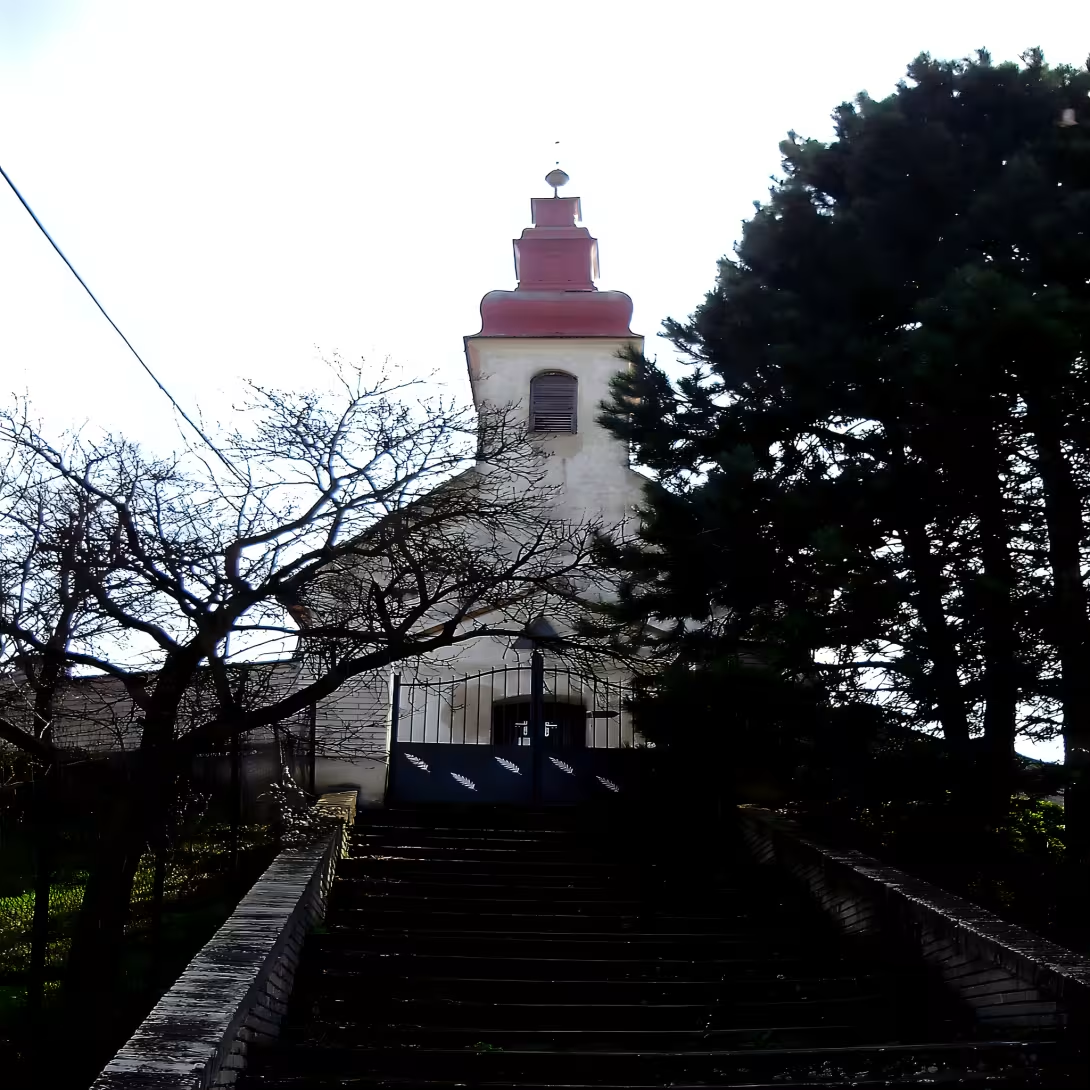
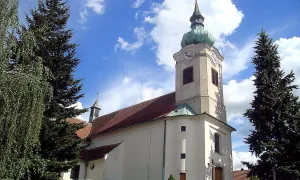
The Church of All Saints in the Low Star Mountains is one of the ancient sacral structures of the Czech countryside. It is a filial church of the parish of Starzdlice and is under state protection as a cultural monument. The church is traditionally dedicated to All Saints, although literature also records the assignment to St. Cyril and Methodius according to their depiction on an altar painting dating back to 1854.
The church comes from its original late Romanesque stage from the mid thirteenth century. Its construction reflects the period of gradual transition between the Romanesque and Gothic styles, which was typical of the Czech architecture. In the seventeenth century, during the general Baroque transformation of the landscape, the church underwent a substantial reconstruction. However, this intervention was carried out with regard to the original structure - the medieval core of the building was preserved and thus remains visible in the present form of the temple. In 1827 there was another repair that ensured the sustainability of the construction. The most frequent and extensive intervention in his condition occurred around 2012, when the church underwent a comprehensive reconstruction, which included renovation of internal and external space.
From the church's equipment is worth mentioning the Renaissance bell hung in the tower, which was cast in 1568 by Master Philip of Israel. This bell represents a valuable artifact over half a millennium old tradition of ringing and testifies to the craftsmanship that the local workshop was able to achieve.
The temple stands in a high place right in the village in the middle of the cemetery. This location - on the top above the surrounding landscape - is typical of medieval churches and highlights their spiritual and administrative role in agricultural communities. The cemetery around the temple keeps some valuable tombstones that testify to the long-term historical continuity of the place. When entering the cemetery, the visitor meets the cast iron cross, which is another element of the traditional sacral landscape. Behind the cemetery stands a memorial tree - a centuries-old oak tree - which is one of the natural dominance of local memory and creates a characteristic composition of the village center along with the temple.
Church All saints represent the value of the visitor's interest not only in religious and architectural qualities, but also as a living place of the local community and part of the cultural heritage of the Czech village.
Then and now
Drag the slider to compare how the landmark may have looked when it was built with the view today.
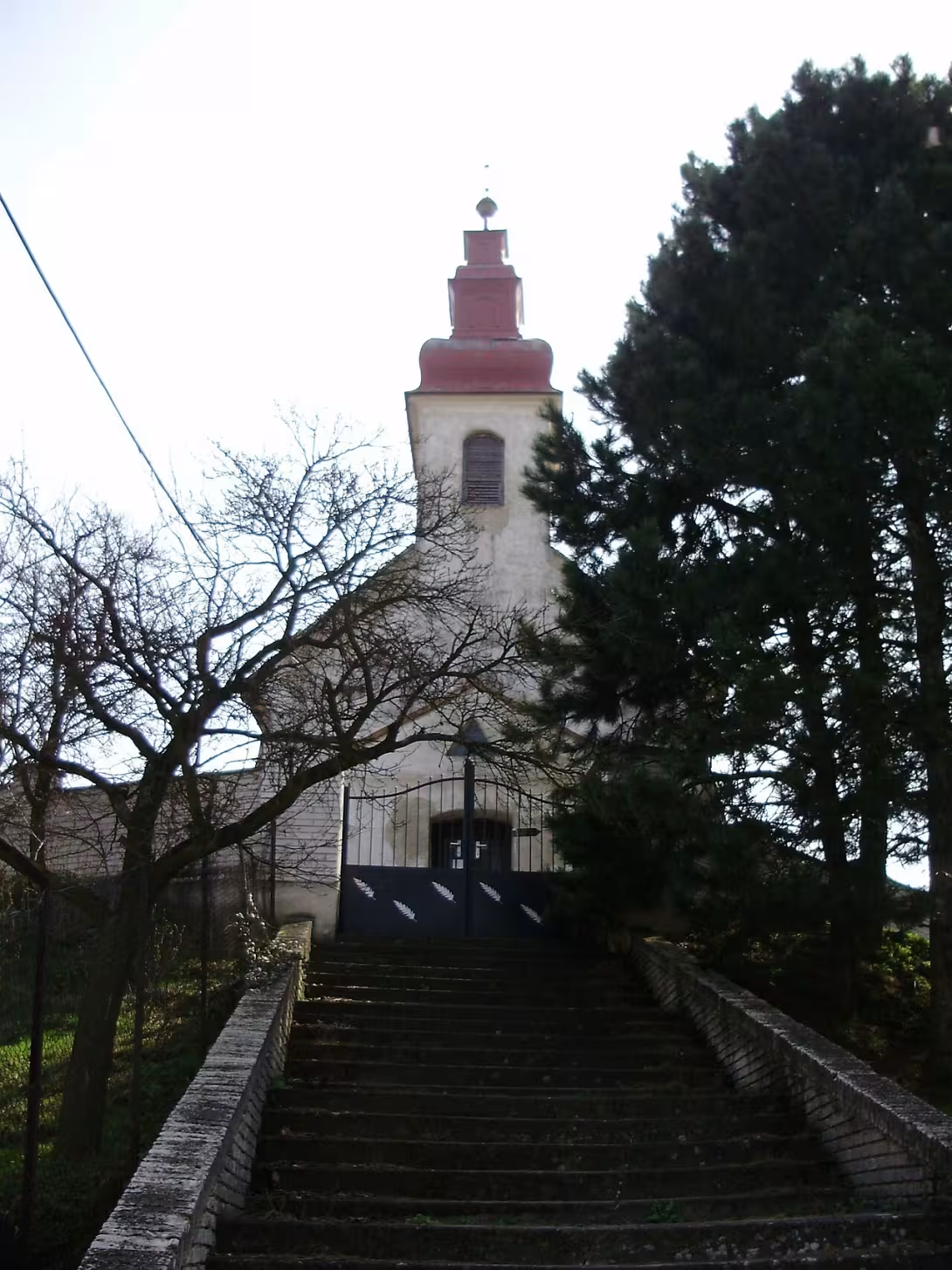
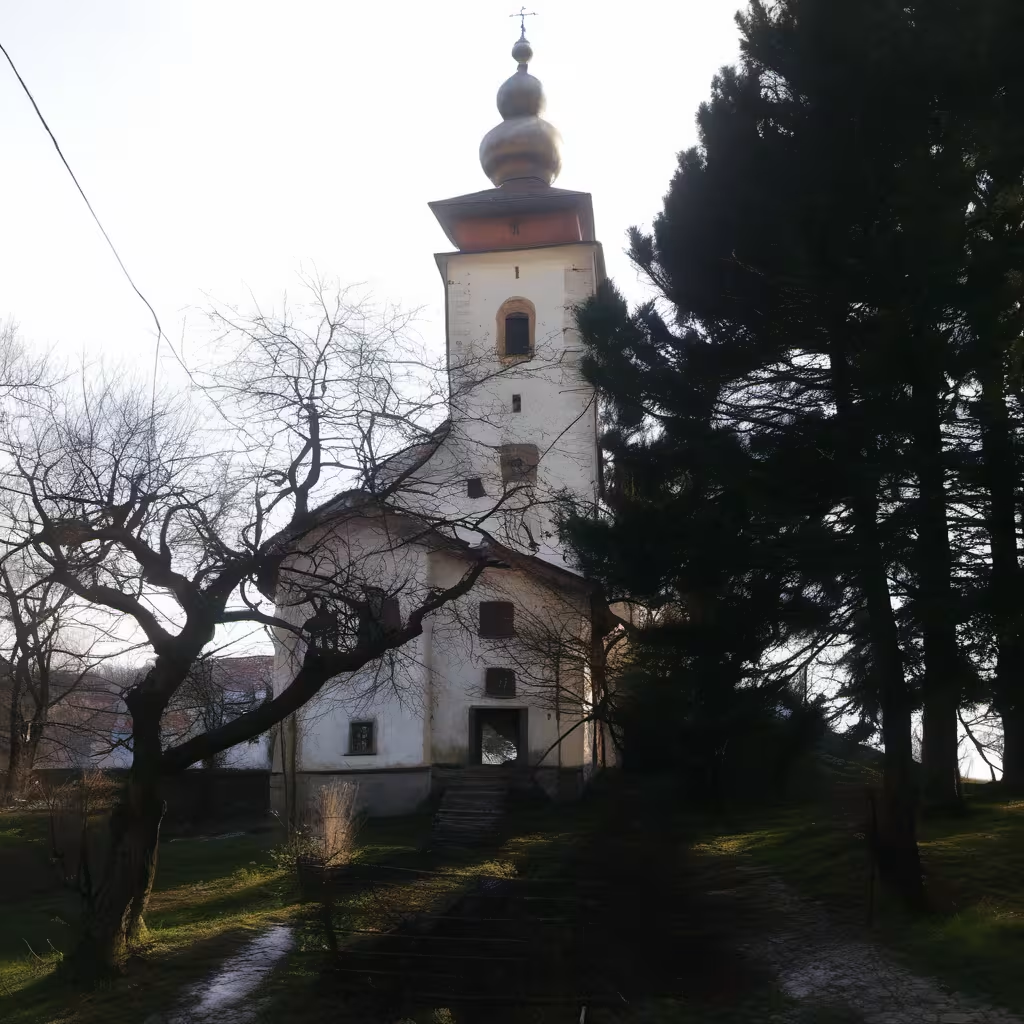
The historical appearance on the left is an AI-generated visualisation and serves as inspiration only.
Historical milestones
- 1568
- The hanging of the Renaissance bell made by Master Philip.
Architectural development
The church was originally built in late Romanesque style and underwent a Baroque reconstruction in the 17th century, which preserved its basic structure. In 1827 repairs took place, and around 2012 a total renewal was carried out.
Historical events
- 17th Century
- Baroque church reconstruction.
- 1827
- Church repair.
- 2012
- Total restoration of the church.
Owners
parish
municipality
Points of interest
- The church dates from its original late Romanesque phase of the mid-13th century. - In the seventeenth century the church went through a substantial Baroque reconstruction which preserved the medieval core of the building. - In the tower is the Renaissance bell cast in 1568 by Master Philip of Israel. - The temple stands in a high place right in the village in the middle of the cemetery. Behind the cemetery is a memorial tree, a centuries-old oak tree.
Guide
This guide is narrated by a synthetic voice generated by artificial intelligence.
Show guide text
This text was created by artificial intelligence and has not been editorially reviewed. It may contain inaccuracies.
Welcome to the Old Stars. Right now you're standing in front of the Church of All Saints, which in a quiet way tells the story of many centuries. Stop for a moment and feel the atmosphere of this place. Note above all where the temple stands. It is located in an elevated location, thanks to which it naturally dominates the surroundings and becomes a visible landmark. It is this location that gives the building a sense of grandeur and peace that accompanies anyone who accedes to it. Look at the total silhouette of the building and try to imagine what this place looked like hundreds of years ago, when faith was the center of every day and the bell of the church determined the rhythm of work and rest of the whole village.
Now let's look deeper into history together to understand what you're seeing. This temple is not just an ordinary building, but a layer of time. Its origins date back to the mid-13th century. At that time it was built as a late Romanesque church. So imagine that the foundations on which you stand today commemorate the period of medieval bloom, when Christian faith was established in this area and the first stone sacral buildings were built. The Romanesque style at that time was characterized by its rugged and simple nature, making the church a safe haven and a spiritual sanctuary.
But time passes, and people's needs change, which reflected the appearance of this temple. In the seventeenth century, when the Baroque era ruled in Europe, the church underwent a substantial reconstruction. The Baroque brought dynamism, light and new aesthetics to architecture. It is fascinating, however, that despite these extensive changes, the original medieval core of the building has been preserved. That means that even though you see the baroque face of the church today, inside its walls and construction still hides the original Romanesque soul from the 13th century. It's a fascinating combination of two completely different epochs that coexist in one building in complete harmony.
Now pay attention to the architecture itself and to what you can see right in front of you. Take a look at the facade and overall available buildings. Although we do not know the names of the particular architects who worked on the construction, their craftsmanship is obvious. Notice how the Baroque elements intersect gently with the original structure. I suggest you now slowly go around the building and see how its appearance changes depending on the point of view. Follow the roof lines and the way the building is entered into the field. The whole building is today protected as a cultural monument, which is a well-deserved recognition of its historical and artistic value for the whole Jihomoravský kraj.
Speaking of this place, we can't ignore the question of initiation that carries a certain element of mystery. Officially, the church is dedicated to all saints, which is a tradition that unites the entire church community in respect of the unknown saints. However, if we look at an altar painting from 1854, there is an interesting alternative. The painting suggests that the temple could also be dedicated to Saint Cyril and Methodius, the apostles of the Slavs. This ambiguity gives the memory some depth. It is a reminder of how priorities could change over time or how new meanings were added to the original initiation, which were important for the local community in the nineteenth century.
Now I'd like you to focus your attention above, towards the tower. That is where one of the most precious jewels of this church is located. There is a Renaissance bell in the tower that was cast in 1568. His creator was highly respected Scouts Master Philip. Imagine the moment in the 16th century when the bell first rang over the Old Star. The chimes at the time were a combination of precise science and art. Master Filip has put his experience and skills into this piece of metal to create a sound to be heard in the surrounding fields and forests. This bell survived wars, fires and regime changes, and it's still here as a living witness to history that connects today to the time of the Renaissance.
It is fascinating to think how many times this bell has announced the birth of a new member of the village, called the faithful to prayer or warned against danger. The sound of the bell is basically the only thing that has barely changed in the last 400 years. It's an audio trail of the past that still resonates in the present.
Now, when you look around you, remember that you are standing in a place where Romanesque customs, Renaissance precision and baroque elegance meet. The Church of All Saints is not only a building of stone and mortar, but a monument to human faith, patience and effort to preserve its identity throughout centuries. The fact that we have managed to preserve the medieval core in the Baroque cloak today is proof of respect for the ancestors.
Before we say goodbye, I suggest you remain silent for a while. Try to take one last look at the elevated place where the temple stands and feel the calm that radiates from it. Perhaps in your mind, you can imagine Master Philip casting a bell or craftsmen who, in the seventeenth century, lovingly transformed Roman walls into baroque shapes.
Thank you for coming through the history of the Church of All Saints in the Old Star. I hope this short trip over time has helped you to better perceive the beauty and importance of this sacral structure. Now invited to further explore the surroundings and discover other hidden corners of this beautiful region. I wish you a pleasant rest of the day and many other inspirational experiences on your travels. Goodbye.
Tips for visitors
Best time to visit the church All the saints in the Old Starfish are early spring or late autumn, when the weather is usually pleasant and fewer people visit the memory. This time of year also offers a beautiful opportunity for bright light photography and live greenery of surrounding fields.
Parking can be found near the church, but due to limited capacity we recommend using public transport. The room can also be reached by car, for the current connection it is recommended to use online search engines.
When visiting the sights, remember the suitable suit and shoes - the journey can be a little uncomfortable, especially in mountain terrain. Don't forget to also bring sunglasses, sun-resistant ties and plenty of drinking.
For the photography of the church it is best to wait for the time before dusk, when the light particularly radiant highlights architectural details. Also remember to explore the surrounding terrain, which offers views of the church from all sides.
It is possible to visit the historical headquarters of Starzdělice and its park. For families with children, a walk on the garden grounds, where children can play in the open air.
Frequently asked questions
Is kostel Všech svatých (Staré Hvězdlice) open to the public?
Yes, the church is open to the public all year round. Admission is free.
How do I get to the place by car / public transport?
The church is located in the heart of the village Staré Hvězdlice. The best mode of transport is a car that can be parked in front of the church. The alternative is to use public transport from nearby cities.
How much is the entrance fee and is it paid on the spot?
Free admission to church.
Is the tour suitable for children and seniors?
Yes, a church tour is also suitable for families with children and seniors. The church offers a quiet atmosphere and interesting historical information.
How long does the tour take?
The church tour takes approximately 30 minutes.
What are the opening times and booking is required?
The church is open throughout the year, but we recommend a visit during working days from 9: 00 to 17: 00. Reservation is not necessary.
What's interesting in the immediate vicinity?
Near the church is located the historical center of the village Staré Hvězdlice, where you can see other monuments and objects from the 14th century.
For kids
Imagine going back to the past. The place where you are today is now a dense forest and there are birds hissing around you. But suddenly in the distance you hear the bells of the church. The Church of All Saints in the Old Star Star was built in the reign of Emperor Charles IV.
It was like a game of conquest, but instead of a chateau it was a church! The builders had to resist many difficulties and obstacles. They must have won the battle with the wind fog and snow that caused unnecessary trouble.
Businesses nearby
Do you run a restaurant, accommodation, shop, museum, rental, wellness or other visitor service near this monument? Show yourself directly to the people heading to it — this is how they will see you in the app and on the web:
Events nearby
Zdroj akcí: otevřená data měst a obcí ČR (Národní katalog otevřených dat) a kalendář akcí Národního památkového ústavu.
Nearby
Located in the village Staré Hvězdlice.
Accommodation nearby
Trips and activities nearby
Guided tours, tickets and activities nearby from GetYourGuide
Affiliate link: if you buy from the partner, we may receive a commission. The price for you does not change.
Search tours and activities →Themed route
1. Exterior of the church All saints - architecture. A tour of the exterior facade and an observation of the architectural style of the construction. 2. Interior of the church All saints - sacral space. Exploring the inner space and perception of the spiritual atmosphere. 3. Main altar - artistic element. Focus on the most important part of the temple facilities. 4. Area Church - surrounding area. A short walk in the immediate vicinity of the monument.
Seasonal recommendations
Spring: In the spring season, the Church of All Saints in the Old Star Mountains appears in a beautiful green dress when trees and grass bloom around. Sun rays illuminate the stone architectural elements of the church, adding something magical to its historical appearance. This is the perfect time to visit when nature wakes up and the surrounding environment takes on a life. Visitors should be dressed in mild clothing because temperatures are usually medium with weather possibilities. The best time to visit is an early afternoon, when the large amount is decreasing and you can enjoy a quieter atmosphere.
Summer: In the summer, the Church of All Saints in the Old Stellar offers sunny days that amplify its historical beauty. The sun lights up roofs and facades, which is ideal for photography. However, more tourists may appear during this period, especially in the main summer months. It is advisable to visit the church early in the morning or later in the afternoon to avoid strong sunlight and crowds. Light clothing and UV protection are recommended.
Autumn: In autumn, the Church of All Saints is surrounded by colorful leaves that form a lovely landscape. The sunny days are beautiful and clearly illuminate architecture, while cooler evenings bring a calmer attendance. In a period with fewer tourists it is the perfect time for personal exploring the sights without a lot of people. Visitors should be dressed in mild clothing, ready for colder weather. The best time to visit is an early afternoon or evening.
Winter: In the winter period, the Church of All Saints in the Old Stars is transformed into a room lit with glaciers and snow, adding something completely new to its historical character. Winter sunlight illuminates the church in breathtaking colours, but temperatures are usually cold and opening hours can be limited. Visitors should be well prepared for cold with warm clothing and wind protection. The best time to visit is early morning when the weather usually best and the crowds are not too much.
Visualizations and artistic views


The visualisations are generated by artificial intelligence and serve as inspiration.
Photos from the area
Real photos taken near the monument

Zdroj a licence jsou uvedeny u každého snímku.
Atmosphere of the place
This atmospheric visualisation of the place and period was generated by artificial intelligence. It is not real footage of the location.
Tips from visitors
No tips yet. Be the first!
Log in and add your tip.
Sources and literature
Fotografie: Pernak1 / CC BY-SA 3.0, rozlišení zvýšeno umělou inteligencí — Wikimedia Commons. The author and licence also appear when you hover over the image.
Faktickým podkladem tohoto textu byl článek na Wikipedii, jehož autory jsou přispěvatelé Wikipedie. Článek je dostupný pod licencí CC BY-SA 4.0.
Location on the map


Příběhy a pověsti
Legendy, pověsti a příběhy spjaté s touto památkou
Fotografie návštěvníků
Zatím žádné fotografie. Buďte první, kdo přidá fotografii z návštěvy!
Přihlaste se a přidejte svou fotografii nebo hodnoťte.
Za ověřenou návštěvu v aplikaci získáte víc bodů — poznáme podle GPS, že jste na místě.
Reviews and comments