






Kostel Všech svatých (Třebešice) Church
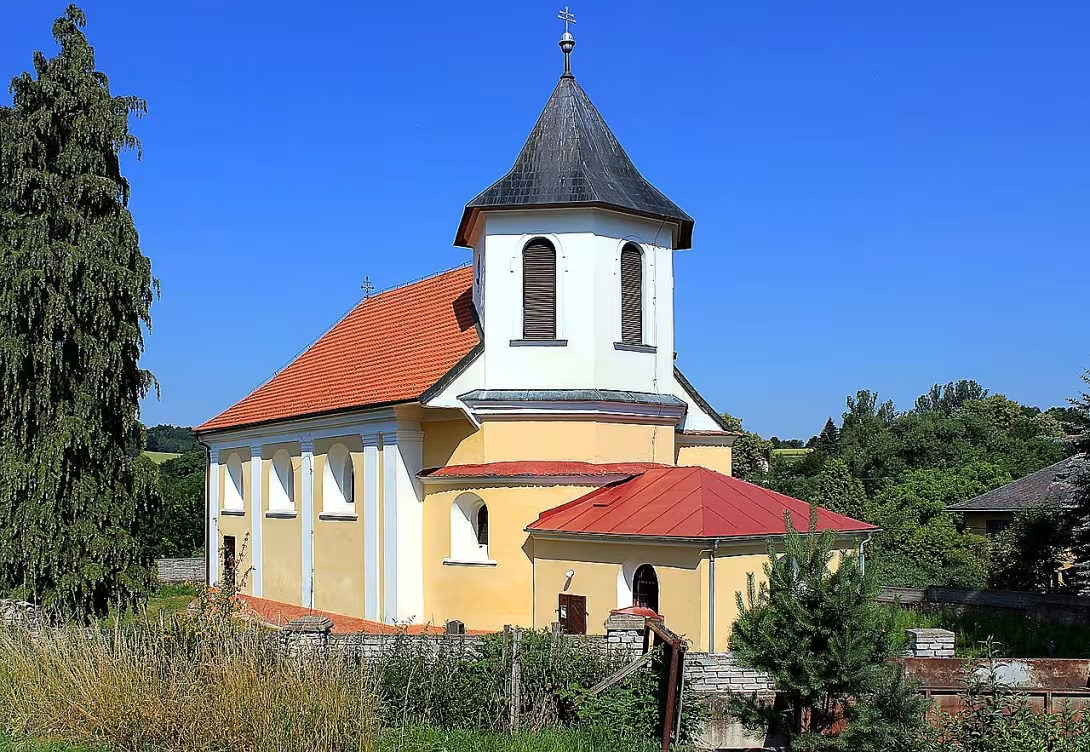
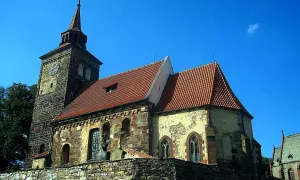
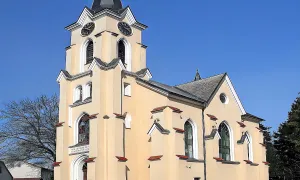
The Church of All Saints in Třebešice is a Romanesque church dating back to the mid-13th century. Situated in the picturesque village of Třebešice within the Central Bohemian Region, this historical monument exemplifies architectural evolution and cultural significance. Originally built during King Wenceslaus I's reign amid political and religious changes, it has undergone significant transformations over the centuries. These include Baroque renovations in 1769 and an extension in 1829. Its inclusion in the state list of cultural monuments since 1965 underscores its enduring historical importance.
Initially constructed as a Romanesque structure by local lords from Třebešice Castle, it reflects the architectural style prevalent across Europe at that time. The presence of a round apse highlights its ancient origins and Romanesque design elements. Over time, it evolved through various renovations, notably adopting Baroque features in 1769, which included replacing an old wooden roof with a new vaulted ceiling and installing a new roof. In 1829, the church was extended by adding a new section to the nave, enhancing its architectural complexity.
Ownership of the church transitioned significantly over time. Initially under local lords' jurisdiction, it came into the possession of the Emauzské Opaticství Benedictine Monastery in 1752. This monastery opened a school in Třebešice in 1760, marking an important educational development for the community. The church functioned as a local church from 1787 until it was elevated to parish status in 1857, reflecting its growing religious significance.
Throughout its history, the Church of All Saints has witnessed pivotal events that shaped its narrative. In the early 14th century, it was documented under the name Debrník and served as a parish church within the Kouřim Archdeaconry. During the Hussite Wars, the local population adhered to Utraquism, showcasing the region's religious diversity. Following Emperor Ferdinand II's decree in 1624, Třebešice's last non-Catholic preacher departed, leading to Catholic administration from Divišov.
Today, the Church of All Saints stands as a well-preserved monument that continues to attract visitors interested in its rich history and architectural beauty. It has undergone various restorations over the years, including significant repairs after a tornado in 2001. The church's historical significance, coupled with its picturesque location within Třebešice, makes it a worthwhile destination for those keen on exploring Bohemia's cultural heritage. Visitors are invited to experience this remarkable site and appreciate its enduring legacy.
Then and now
Drag the slider to compare how the landmark may have looked when it was built with the view today.
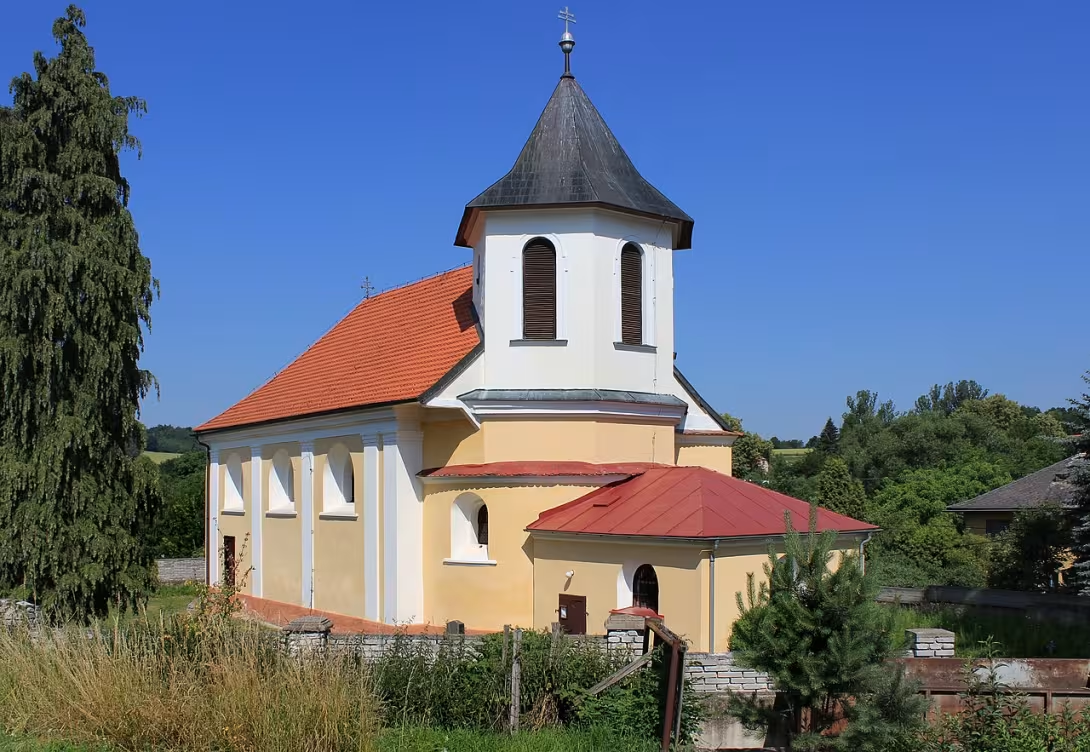
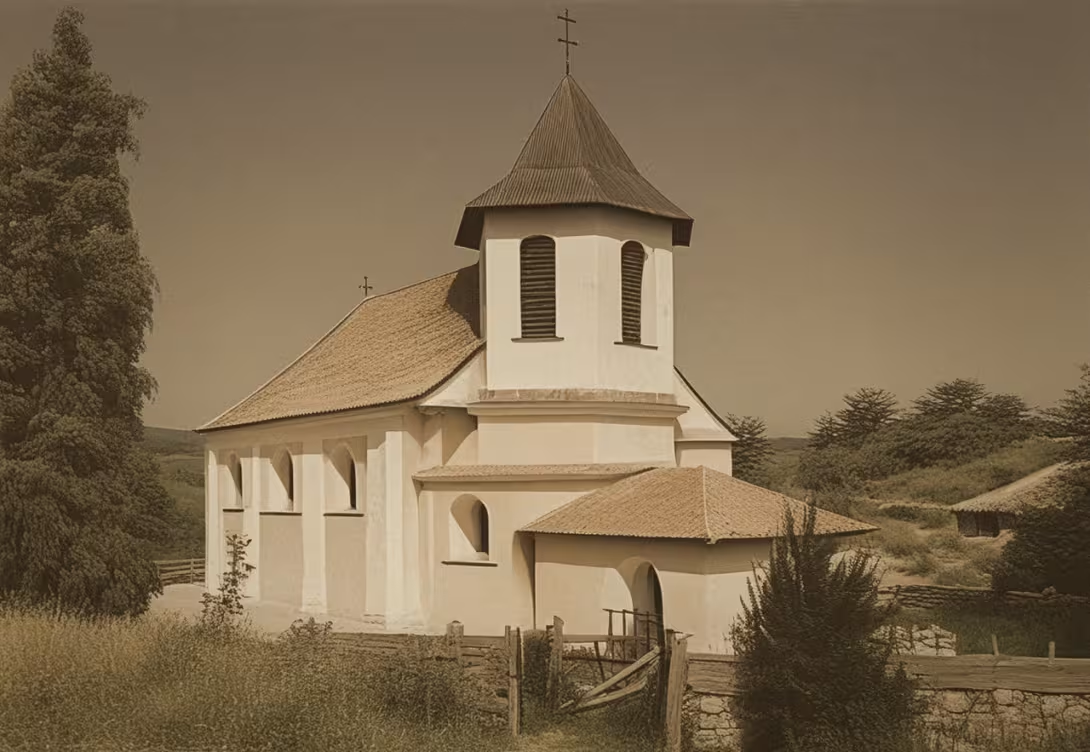
The historical appearance on the left is an AI-generated visualisation and serves as inspiration only.
Historical milestones
- 1250
- The establishment of a church in the Romanesque style during the reign of King Václav I.
- 1624
- The departure of the last non-Catholic preacher following an edict by Emperor Ferdinand II.
- 1752
- The church was taken over by the Emauzské Benedictine convent.
- 1760
- The opening of a school in Třebešice by the monastery.
- 1769
- A Baroque renovation with a new vault and roof.
- 1829
- An extension was added to the church nave.
Architectural development
The church began as a Romanesque structure with a round apse. It was Baroque renovated in 1769 and extended in 1829, adding a new nave section. Over the years, it has seen various restorations including a new roof in 1973, electrical installations in 1974, and significant repairs after a tornado in 2001.
Historical events
In the early 14th century, the church was documented under the name Debrník and served as a parish church within the Kouřim Archdeaconry. During the Hussite Wars, the local population adhered to Utraquism.
Following the decree of Emperor Ferdinand II in 1624, Třebešice's last non-Catholic preacher left, leading to Catholic administration from Divišov.
Owners
The church was initially under the jurisdiction of local lords residing on Třebešice Castle. In 1752, it came into the ownership of the Emauzské Opaticství Benedictine Monastery and later, in 1760, a school was opened by the monastery. From 1787 to 1857, it functioned as a local church before being elevated to a parish.
Points of interest
- The Church of All Saints was originally documented under the name "Debrník" in the early 14th century, reflecting its historical evolution and regional identity.
- During the Hussite Wars, Třebešice's local population practiced Utraquism, highlighting the village's role in Bohemia's religious diversity during a time of widespread conflict.
- In 1624, following Emperor Ferdinand II’s decree, Třebešice saw its last non-Catholic preacher leave, marking a significant shift to Catholic administration and altering the region's religious landscape.
- The church underwent Baroque renovations in 1769 that included replacing an old wooden roof with a vaulted ceiling, showcasing architectural adaptation over centuries.
- In 1829, Třebešice witnessed another transformation when the Church of All Saints was extended by adding a new section to the nave, enhancing its structural and historical complexity.
Guide
This guide is narrated by a synthetic voice generated by artificial intelligence.
Show guide text
This text was created by artificial intelligence and has not been editorially reviewed. It may contain inaccuracies.
Welcome to the Church of All Saints in Třebešice, a remarkable testament to centuries of architectural evolution and cultural history. As you stand before this venerable structure, take a moment to absorb its presence: a Romanesque silhouette softened by time, with elements that whisper tales from the mid-13th century onwards.
The Church of All Saints was originally constructed in the Romanesque style around 1250 during the reign of King Václav I. This period marked an era when religious architecture began to flourish across Bohemia, reflecting both devotion and community identity. Over time, this church has witnessed significant transformations, most notably a Baroque renovation in 1769 that introduced new roofing and ceiling designs, as well as an extension added in 1829.
As you gaze upon the building now, notice its round apse—a distinctive feature pointing to its ancient origins. This architectural detail is not just a stylistic choice but a historical marker of the church's enduring legacy. The inclusion of the church in the state list of cultural monuments since 1965 further underscores its significance as a cherished piece of heritage.
The history of this site is rich with narratives and personalities that have shaped its journey through time. In 1624, the last non-Catholic preacher left Třebešice following an imperial decree by Ferdinand II—a pivotal moment reflecting the broader religious shifts in Bohemia. By 1752, the church had come under the stewardship of the Emauzský benediktinský klášter, marking a new chapter in its history. This period also saw the opening of a school in Třebešice by the monastery in 1760, signifying its role as both a spiritual and educational center.
One intriguing tidbit about this church is its original name, "Debrník," documented in the early 14th century. This name reflects not only its historical evolution but also its regional identity within Bohemia. During the tumultuous times of the Hussite Wars, Třebešice embraced Utraquism, illustrating the village's active participation in Bohemia’s religious landscape.
As you explore this sacred space, let your imagination wander through time, contemplating the lives and stories that have intersected here across centuries. The Church of All Saints invites you to delve deeper into its history, perhaps uncovering more layers and secrets with each visit.
We invite you to continue exploring Třebešice and its surroundings, where every corner holds a story waiting to be discovered. Thank you for joining us on this journey through time at the Church of All Saints. Safe travels as you venture further into the rich tapestry of history that surrounds you.
Tips for visitors
The best time to visit the Church of All Saints in Třebešice is during late spring or early autumn when the weather is mild, and the natural landscape around the church is particularly picturesque. This period offers pleasant temperatures for walking and exploring the surrounding areas, including remnants of Třebešice Castle. Additionally, visiting outside of peak tourist seasons can provide a more serene experience, allowing you to appreciate the historical architecture without large crowds.
Parking and transportation options are convenient for visitors traveling by car or public transport. There is parking available in the vicinity of Třebešice, making it easy to access the church with your vehicle. For those preferring public transport, various routes can bring you close to the area, though specific line numbers should be checked through a local transportation search tool prior to your visit. This flexibility makes planning your trip straightforward regardless of how you choose to travel.
When visiting the Church of All Saints, it's advisable to wear comfortable walking shoes as there may be some walking involved, especially if you plan to explore nearby historical sites such as the remnants of Třebešice Castle. Additionally, consider bringing a camera or smartphone with a good camera for capturing the church’s architectural details and the surrounding landscape. A small bottle of water and perhaps a light snack can also enhance your visit, ensuring comfort throughout your exploration.
For photography enthusiasts, early morning or late afternoon are ideal times to capture the best lighting around the Church of All Saints. The soft natural light during these periods highlights the Romanesque architecture and Baroque renovations beautifully. Outside the church, explore nearby spots for panoramic views that include both the church and remnants of Třebešice Castle, offering a unique backdrop for your photos.
Families with children will find the area around the Church of All Saints in Třebešice to be engaging due to its natural beauty and historical significance. Exploring the remnants of Třebešice Castle can be particularly exciting for kids interested in history or adventure, offering a tangible connection to the past within a 30-minute walk from the church. The surrounding landscape also provides opportunities for leisurely walks and picnics, making it an ideal spot for family outings.
Businesses nearby
Do you run a restaurant, accommodation, shop, museum, rental, wellness or other visitor service near this monument? Show yourself directly to the people heading to it — this is how they will see you in the app and on the web:
Events nearby
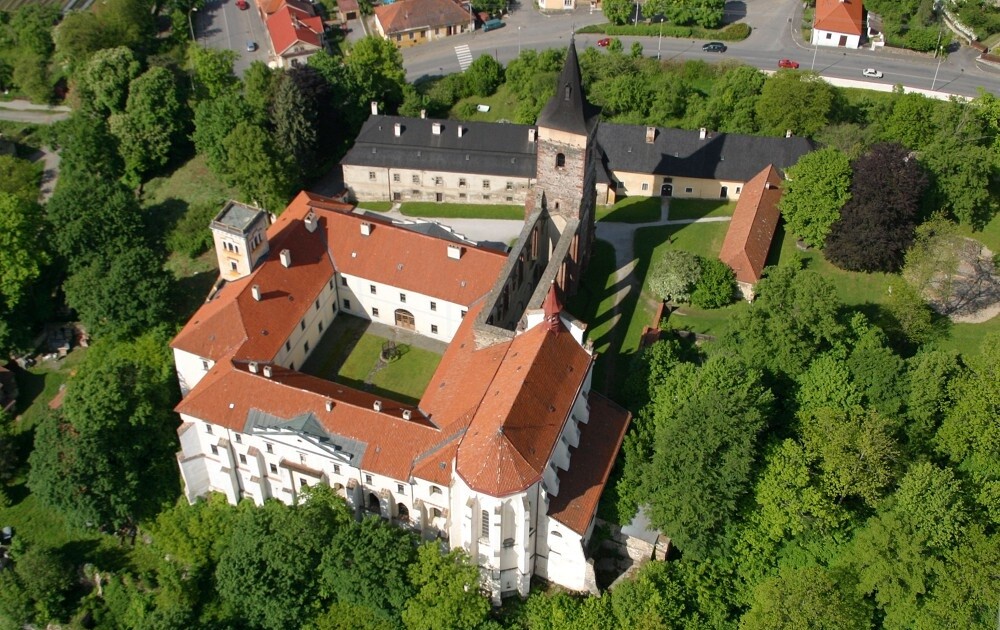
Zdroj akcí: otevřená data měst a obcí ČR (Národní katalog otevřených dat) a kalendář akcí Národního památkového ústavu.
Nearby
Třebešice is located in a picturesque landscape within the Central Bohemian Region. The area features natural beauty and historical sites, including remnants of Třebešice Castle.
Accommodation nearby
Themed route
Třebešice Thematic Tour
1. Kostel Všech svatých (Třebešice) - Church Begin your journey at the heart of Třebešice with the *Kostel Všech svatých*. This church is a significant historical and architectural landmark, offering visitors a glimpse into the region's rich religious heritage. Its serene atmosphere makes it an ideal starting point for exploring local history.
2. Remains of Třebešice Castle - Historical Ruins A short walk from the church will lead you to the remnants of *Třebešice Castle*. These ruins provide a fascinating insight into the medieval past of the area, showcasing the strategic importance and architectural style of historical fortifications. The site is perfect for history enthusiasts interested in exploring the stories behind these ancient stones.
3. Local Village Square - Cultural Spot Continue your exploration by visiting the local village square. This central spot offers a charming view into the daily life and culture of Třebešice, with its quaint buildings and traditional atmosphere. It's an excellent place to appreciate the community spirit and perhaps enjoy some local refreshments.
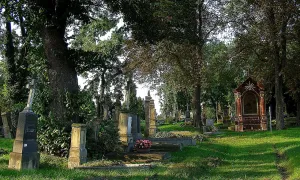
4. Church Surrounding Park - Natural Retreat Conclude your tour in the peaceful park surrounding *Kostel Všech svatých*. This green space provides a tranquil setting for reflection, allowing visitors to relax amidst nature while taking in the scenic beauty of the area. It's an ideal spot for photography or simply enjoying a quiet moment after exploring the historical sites.
This thematic route offers a comprehensive experience of Třebešice's cultural and historical offerings within its picturesque landscape.
Seasonal recommendations
Spring: Visiting the Church of All Saints in Třebešice during spring offers a unique experience as nature begins to awaken, with blooming flowers and lush greenery surrounding the historic site. The soft light filtering through budding trees creates a serene atmosphere perfect for appreciating the church's architectural details. Visitors should dress in layers, as temperatures can vary between cool mornings and warmer afternoons. While crowds are generally moderate, arriving early can provide a more peaceful exploration before larger groups gather.
Summer: Summer is an ideal time to visit the Church of All Saints with its vibrant atmosphere enhanced by long daylight hours. The surrounding landscape is at its most picturesque, making it perfect for outdoor photography and leisurely walks. However, this season also attracts more visitors, so planning your visit early in the day can help avoid crowds. Comfortable walking shoes and light clothing are recommended to stay cool under the sun, while carrying water is advisable due to increased temperatures.
Autumn: Autumn brings a stunning display of colors as the leaves around the Church of All Saints turn into shades of red, orange, and gold, creating an enchanting backdrop for photography. The cooler weather makes it comfortable to explore the church grounds without the summer heat. This season typically sees fewer visitors, offering a quieter experience. Dressing in layers is advisable due to fluctuating temperatures, and carrying a light jacket can be beneficial as evenings become chillier.
Winter: Winter transforms the Church of All Saints into a serene winter wonderland, with snow-covered surroundings adding a magical touch to its historic architecture. The shorter days mean visiting early to make the most of natural lighting for photography or exploration. While the church may have reduced hours during this season, it provides a peaceful atmosphere away from summer crowds. Visitors should dress warmly in layers and wear comfortable shoes suitable for potentially icy conditions, ensuring a safe and enjoyable visit.
Visualizations and artistic views


The visualisations are generated by artificial intelligence and serve as inspiration.
Photos from the area
Real photos taken near the monument


Zdroj a licence jsou uvedeny u každého snímku.
Tips from visitors
No tips yet. Be the first!
Log in and add your tip.
Sources and literature
Fotografie: This file is available under Creative Commons BY-SA license. Basically: You can use this picture for any purpose, provid / CC BY-SA 4.0 — Wikimedia Commons. The author and licence also appear when you hover over the image.
Faktickým podkladem tohoto textu byl článek na Wikipedii, jehož autory jsou přispěvatelé Wikipedie. Článek je dostupný pod licencí CC BY-SA 4.0.
Location on the map
Příběhy a pověsti
Legendy, pověsti a příběhy spjaté s touto památkou
Příběh: Kostel Všech svatých (Třebešice)
Bylo to v pondělí ráno, kdy Jan z Třebešic, mladý sedlák s očima plnými neklidu, se pustil do cesty směrem ke kostelu Všech svatých. Jeho nohy unášely staré …
Číst příběh
Pověst: Kostel Všech svatých (Třebešice)
Podle místní pověsti, která se mezi starousedlíky Třebešic traduje po celé generace, nesl třebešický kostel odjakživa jméno, jež si vymohl sám kraj. Staří ob…
Číst příběhFotografie návštěvníků
Zatím žádné fotografie. Buďte první, kdo přidá fotografii z návštěvy!
Přihlaste se a přidejte svou fotografii nebo hodnoťte.
Za ověřenou návštěvu v aplikaci získáte víc bodů — poznáme podle GPS, že jste na místě.
Reviews and comments