



kostel Zmrtvýchvstání Church
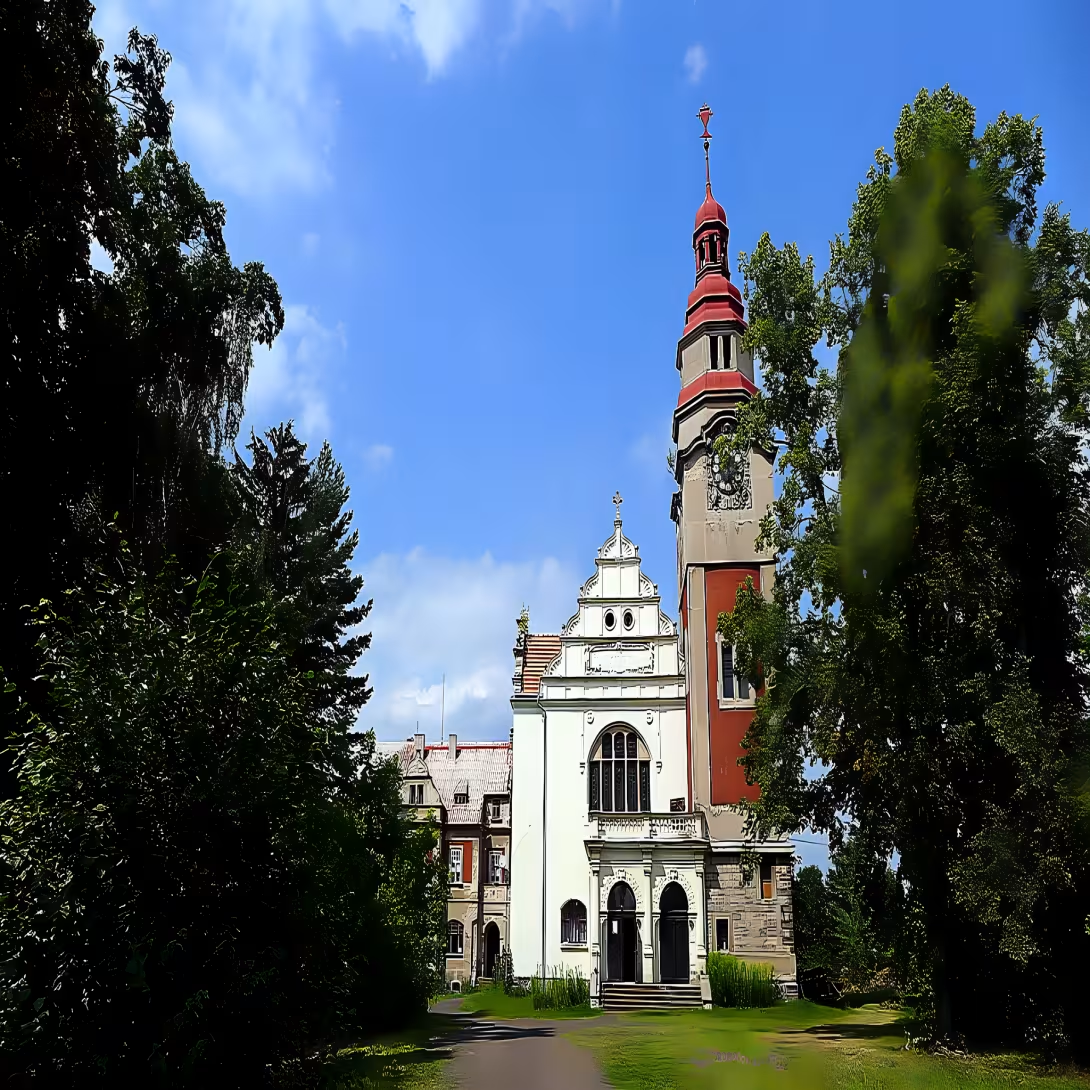
The Church of the Dead with the rectory stands in the Broum part of the Great Vi. It is declared a cultural monument of the Czech Republic and is one of the interesting buildings that deserves the attention of any visitor interested in the architecture of the early twentieth century.
The construction was initiated by the German Lutheran Church between 1902 and 1903. The project was developed by the famous Viennese architect Heinrich Wolf, who was born in 1868 and died in 1915. The architectural solution is based on German Neo-Renaissance style enriched by Art Nouveau elements. The consecration of the church was attended personally by Tomáš Garrigue Masaryk, which shows the importance of the building. It was later owned by the Husova Choir of the Czechoslovak Church. In the following years, the construction required an extension - between 1907 and 1909 it was built a rectory which honours the same architectural style as the original church. In 1997 he transferred the property to the social cooperative Diakonia Broumov. Between 1999 and 2001, the church was subject to a complete reconstruction.
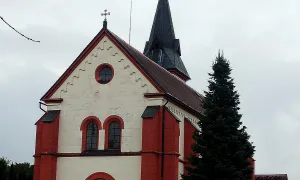
The architecture of the building is worth a closer look. It's a building made of unwashed bricks built on a stone suspect with an irregular rectangular plan. The interior is dominated by a five-field hall ship with a rolling arch and lunnets. The orientation of the building is heading north. The sacristy is locked to the northwest corner of the ship. The south facade with a tower is particularly attractive - the entrance consists of a double portal with a segment ending dominated by pilasters with balustradoes. Behind the balcony is a large window composed of glass tables which illuminates the circle. The five-stage facade shield is членene with vertical lizens and decorated with bellows on the edges; the corners of the shields decorate the balls on the plinth, the shield is closed with a cross. The tower stands in the southeast corner and passes in the second period into an eight-sided shape divided by a ledge. The upper part of the spur contains a bell tower with narrow pairs of windows covered by blinds. The tower serves the practical function of the second-class geodetic point.
Today, the church is part of the cultural heritage of the region and its architectural details remind us of the time when German and Czech culture met in Broum. It is worth visiting it mainly because of its unique stylistic solution and rich architectural decoration.
Then and now
Drag the slider to compare how the landmark may have looked when it was built with the view today.
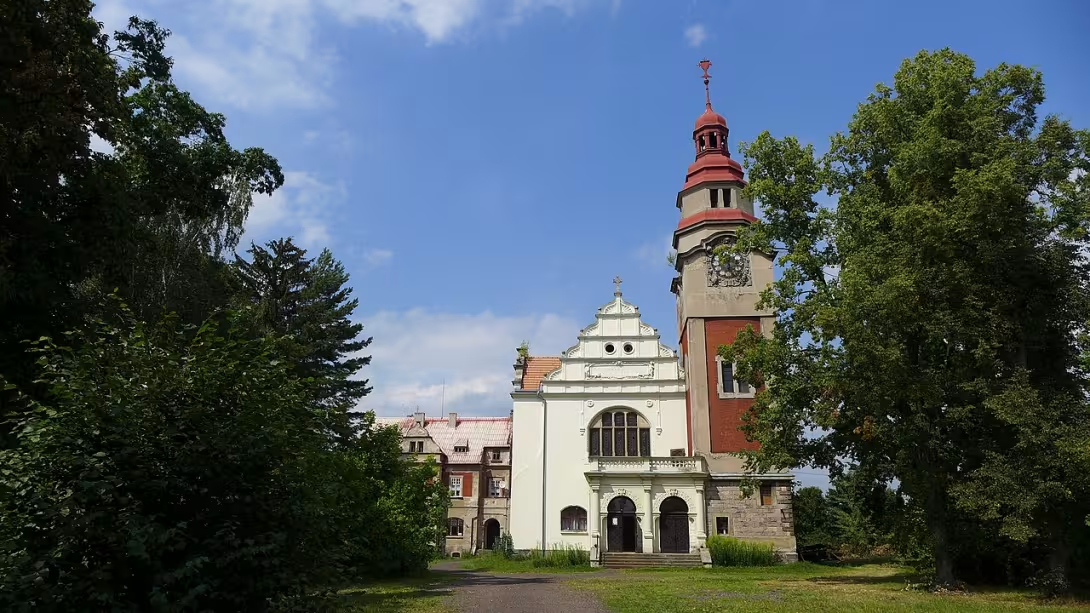
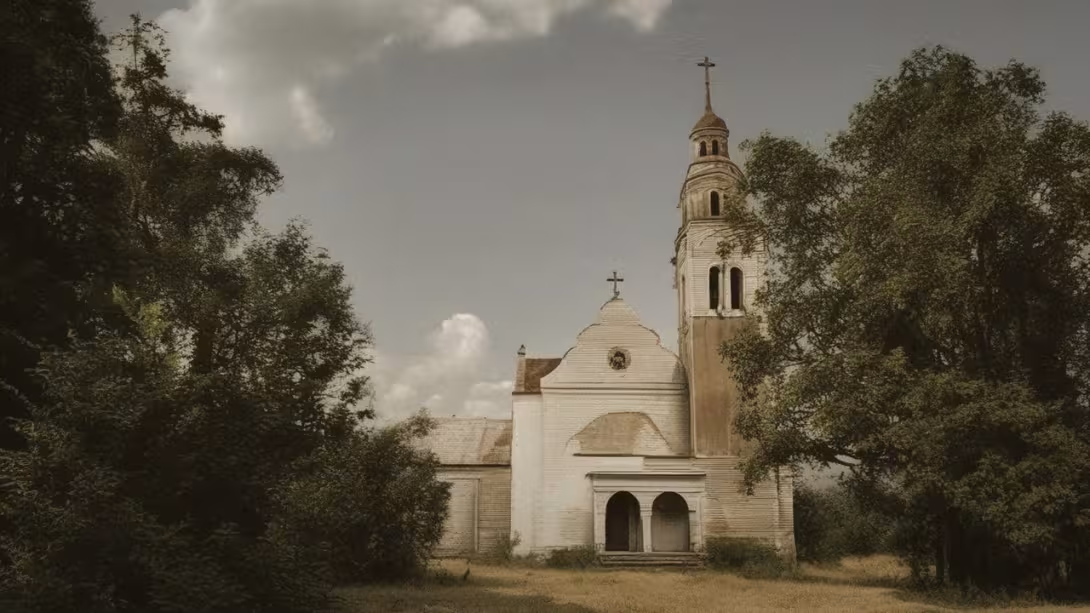
The historical appearance on the left is an AI-generated visualisation and serves as inspiration only.
Historical milestones
- 1903
- The consecration of the church by the presence of T.G. Masaryka.
Architectural development
The church was built from unwashed bricks on an irregular rectangular plan with a stone suspect. The hall ship has a vaulted vault and lunettes, oriented north. The church is supplemented by a sacristy attached to the northwest corner of the ship. The south facade with a double entrance and pilasters ending with a balustrade is characteristic of its architecture.
Historical events
- 1903
- The consecration of the church by the presence of T.G. Masaryka.
- 1999
- The reconstruction of the church lasted until 2001.
Owners
In the years 1902- 1903 he built the German Lutheran Church, later he owned the Husova Choir of the Czechoslovak Church. Since 1997, he has been the property of the social cooperative Diakonia Broumov.
Points of interest
- The Church of the Dead with the rectory stands in the Breum part of the Great Vsi and is declared a cultural monument of the Czech Republic. - The construction was initiated by the German Lutheran Church between 1902 and 1903, the project was developed by the Vienna architect Heinrich Wolf. Tomáš Garrigue Masaryk attended the church. - Later, the rectory was built between 1907 and 1909, which honours the same architectural style as the original church.
Guide
This guide is narrated by a synthetic voice generated by artificial intelligence.
Show guide text
This text was created by artificial intelligence and has not been editorially reviewed. It may contain inaccuracies.
The Church of the Resurrection stands together with its rectory in Velká Ves, which is today part of the city of Broumov. The entire complex is a cultural monument.
The church was built between nineteen hundred and two and nineteen hundred and three by the German Lutheran Church. Thomas Garrigue Masaryk personally attended its consecration. The plans were prepared by Viennese architect Heinrich Wolf, who lived from eighteen sixty-eight to nineteen fifteen. He chose German neo-Renaissance style and supplemented it with elements of Art Nouveau. In the same spirit, the rectory was created between nineteen hundred and seven and nineteen hundred and nine. Later the church belonged to the Hussite congregation of the Czechoslovak Church. Since nineteen ninety-seven it has been owned by the social cooperative Diakonie Broumov and underwent reconstruction between nineteen ninety-nine and two thousand and one.
The building is made of unplastered brick and stands on a stone foundation. It has an irregular rectangular floor plan and is oriented to the north. Inside is a hall nave with five bays, vaulted with a barrel vault with lunettes. A sacristy adjoins the northwest corner of the nave.
The main facade is on the south side, which is projecting and adjoins the tower. It has a double entrance with a segmental arch. Pilasters divide it on the sides and in the middle, above which lie ledges with a balustrade. Behind the balustrade is a large window composed of glass panes that illuminates the gallery. The facade is crowned with a five-step gable. This gable is divided by vertical lesenes, wavy lines border it on the edges and spheres on plinths stand at the corners. On the top of the gable is a cross.
The tower stands at the southeast corner of the nave. At the bottom it has a square floor plan, in the second third it transitions into an octagon divided by a cornice. In the upper part of the octagon is the belfry with narrow pairs of windows covered with louvers. An interesting feature is that the tower serves as a geodetic point of the second class.
Tips for visitors
The best time to visit the Church of Resurrection in the Great Ves is during spring or autumn, when vegetation in the surrounding countryside is best visible and temperatures are pleasant. This time of year also offers ideal light for photography, which emphasizes architectural details of the church.
For those arriving by public transport, it is advisable to verify the current connection to the Velké Ves using an online search engine or local timetable distribution.
When visiting the church we recommend taking a purse, especially if you plan to explore the surrounding garden and rectory. Fill your inventory with an umbrella or protective clothing because the weather can suddenly be variable.
For photography is the best place around the church to choose a time near dawn or dusk when light gives the architecture a romantic and dramatic effect. Remember also to explore the interior of the church, which can offer interesting details in various types of lighting.
The church is surrounded by a rectory and garden, which are part of a cultural ensemble. These places can be interesting accessories for your visit, especially if you like historical buildings and garden architecture.
For families with children it is advisable to visit the church within a short walk along the surrounding valley of the Wall. Children can be fascinated by history and architecture, while parents enjoy a quiet rest in nature.
Frequently asked questions
Can the monument be visited?
Religious buildings are usually open mainly during services; at other times a visit is normally arranged with the parish or the operator. We have not verified specific times.
Where is the monument?
Location: Velká Ves, Královéhradecký kraj. The map on this page shows the exact spot.
Why is the monument protected?
It is listed in the Central List of Cultural Monuments of the Czech Republic as a cultural monument (register no. 49205/6-5997).
For kids
Imagine going back 123 years to a time when there was no church and instead it was just a big forest. That was our country before the first church started here. It was a big change.
At that time, there were people living in these places who fed on animal husbandry and vegetable cultivation. They had small estates and worked hard to eat on the table. In the winter, they made a fire and cooked food on it. It was hard work, but they were happy for their homes.
Businesses nearby
Do you run a restaurant, accommodation, shop, museum, rental, wellness or other visitor service near this monument? Show yourself directly to the people heading to it — this is how they will see you in the app and on the web:
Nearby
The church is located in the valley of Zonava and is part of a set that includes a rectory and garden.
Accommodation nearby
Themed route
Thematic cruise route: Church of the Dead in the Great Vi
1. Church of the Dead * Type: * Religious monument * Why is it worth visiting: * This church is an architectural work located in the picturesque valley of the Wall. Its history and impressive construction attract lovers of old monuments. It is not only a place of prayer but also a witness to the rich cultural past of the village.
2. Fara * Type: * Historical object * Why is it worth visiting: * Fara is an integral part of the church file and represents an important part of local history. It is advisable to explore its interior, which offers a view of the life of the priests of the past.
3. Garden at the rectory * Type: * Green oasis * Why is it worth a visit: * This garden is a place of peace and rest where you can enjoy natural beauty. It is ideal for a moment of relaxation after exploring the church and rectory.
4. Church Tower * Type: * Architectural element * Why is it worth a visit: * The tower offers an excellent view of the surrounding landscape, especially when you look down into the valley of the Wall. It is also a place with rich history and technical solutions from past times.
5. Church tank * Type: * Meeting space * Why is it worth a visit: * The tank is ideal for a short break during the trip. You can enjoy a meal or look at the details of the church architecture from a comfortable perspective.
This route offers a comprehensive view of the cultural and historical importance of the Church of the Dead and its immediate surroundings.
Seasonal recommendations
In the spring, the surroundings of the church awaken to life and the colors of fresh green create a pleasant contrast with historical construction. The morning sun, thanks to the lower angle, lights the facade beautifully and creates fine shadows. We recommend a visit in the morning when the air is fresh and there are not so many people around. Due to the variable weather, clothes are suitable in several layers, which can be easily adjusted according to the current temperature.
The summer season offers the longest days and intense sunlight that highlights the details of architecture. The atmosphere is the most lively at this time, even though it is calmer in small villages than in large cities. For the best experience it is advisable to come early in the morning to avoid the greatest heat and possible summer visitors. Don't forget light summer clothes and sun protection.
Autumn moons bring melancholy beauty and golden shades of leaves, which surround the memory. Morning fog gives the place mystery and depth, which is ideal for photography. It is advisable to wear firmer shoes in case of wet terrain and warmer layer of clothing. The best time to walk around the church is in the afternoon when light turns to warm and golden.
In winter, the church is very majestic and peaceful in the countryside, especially if everything is covered with snow. The light is weaker at this time and the days are short, so plan to visit around the noon hours when the most light is. It is necessary to prepare for cold and choose very warm clothes. In advent time, the atmosphere can be particularly quiet and spiritual.
Visualizations and artistic views


The visualisations are generated by artificial intelligence and serve as inspiration.
Photos from the area
Real photos taken near the monument


Zdroj a licence jsou uvedeny u každého snímku.
Atmosphere of the place
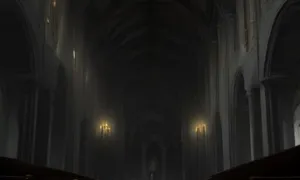
This atmospheric visualisation of the place and period was generated by artificial intelligence. It is not real footage of the location.
Tips from visitors
No tips yet. Be the first!
Log in and add your tip.
Sources and literature
Photos: Koutne1 / CC BY-SA 4.0, rozlišení zvýšeno umělou inteligencí — Wikimedia Commons. The author and licence also appear when you hover over the image.
Faktickým podkladem tohoto textu byl článek na Wikipedii, jehož autory jsou přispěvatelé Wikipedie. Článek je dostupný pod licencí CC BY-SA 4.0.
Location on the map

Příběhy a pověsti
Legendy, pověsti a příběhy spjaté s touto památkou
Fotografie návštěvníků
Zatím žádné fotografie. Buďte první, kdo přidá fotografii z návštěvy!
Log in a přidejte svou fotografii nebo hodnoťte.
Za ověřenou návštěvu v aplikaci získáte víc bodů — poznáme podle GPS, že jste na místě.
Reviews and comments