



Kotlářka (Košíře) House
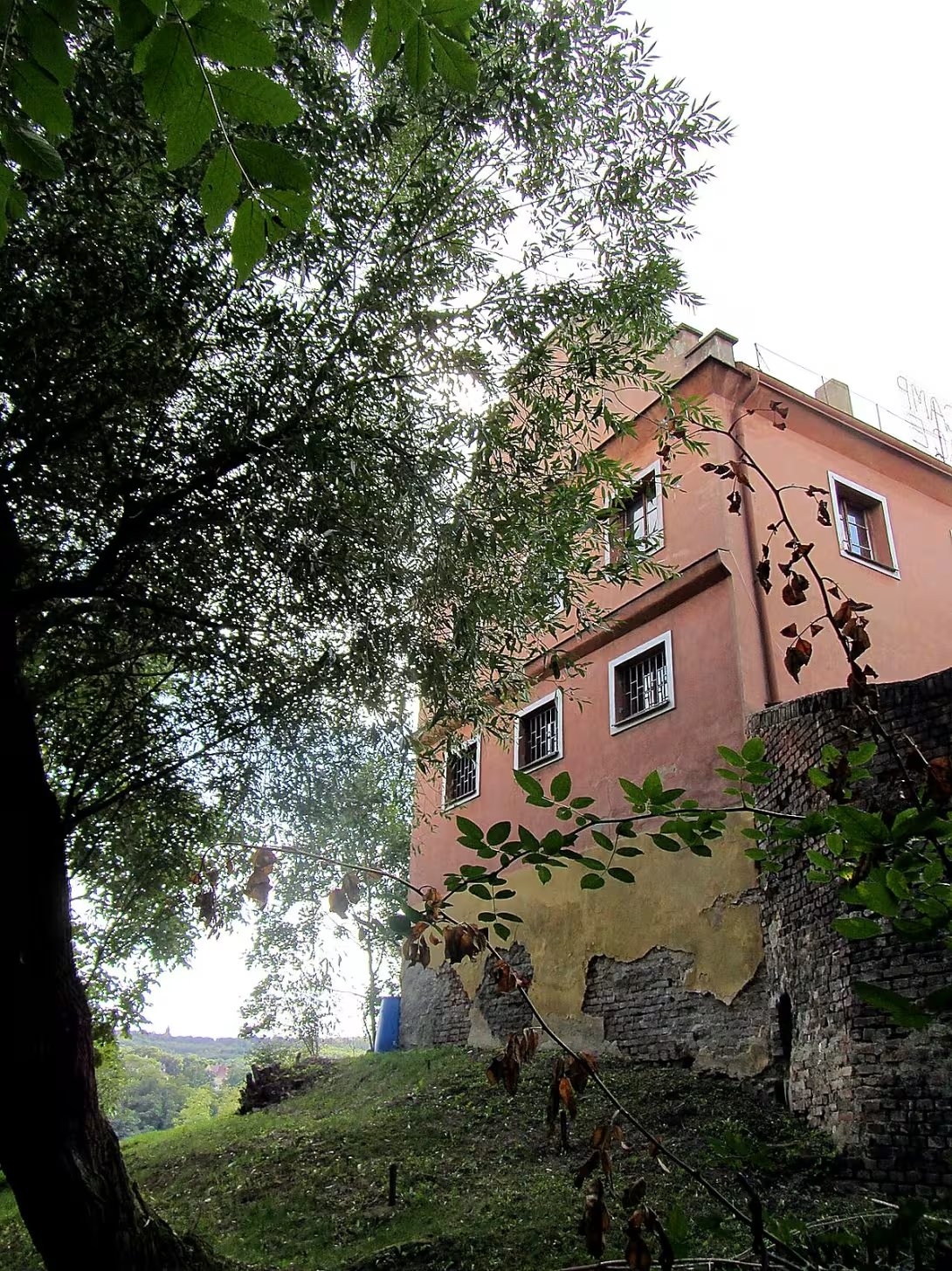
Anchor, a historical vineyard estate located in Prague's city area Košíře, is a monument protected object with a rich history dating back to the 15th century. This estate, named after its original owner of the boiler house Melichar Werschauer, is important not only for its architectural value, but also for its history associated with the vineyard. The estate boasts a complex of buildings built at the end of the eighteenth century and rebuilt in the style of English Gothic in 1840, which gave their unique character.
The history of Kotlarka dates back to the 15th century, when the first vineyards were established here. In the middle of the seventeenth century, ownership was transferred to Melichar Werschauer, a new-town boiler who named the estate after his occupation. This period was a late Middle Ages for Czech countries, when wine-growing developed as an important economic activity. In 1735 there was a merger with the neighboring vineyard Kanickaker named after the old-town shoelace Christopher Štoff. However, wars in 1742 destroyed the area and the estate was founded only at the end of the eighteenth century.
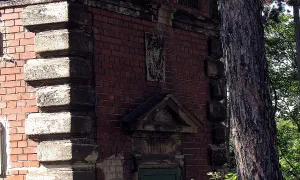
The architecture of Kotlarka is characteristic of its position at the end of the eighteenth century, when the buildings were designed with an open pillar staircase and tiered shields. After the fire in 1840, the reconstruction took place in the style of English goth, which gave the estate its present form. The complex includes two residential buildings and four economic buildings with a barn, surrounded by pillars on the south side for stability. The main entrance is located from the north side, which gives the settlement a symmetrical and harmonious look.
The ownership of Kotlarka has changed over the years, with Melichar Werschauer as the key figure. After that there were various changes and dramatic events such as the fire in 1801 and another fire in 1840 which led to changes in the structure of the estate. In 1964, Kotlářka was declared a monument protected object, highlighting its historical and cultural value.
The anchor is now commercially used as a restaurant and guesthouse. Although the estate was renovated for the plant protection centre at the State Property of the capital of Prague in 1974, it preserved its historical character and original elements. At the estate there is a building of the original vineyard press from the end of the eighteenth century and preserved wine cellars provide the place with authenticity.
The visit to Kotlarka is a valuable experience for those interested in the history of Czech vineyards and architecture. The estate not only offers a view of the past, but also provides an opportunity for relaxation in an idyllic environment. Its protected status ensures the preservation of historical elements and allows visitors to feel connected to the past when they walk through its corridors and enjoy a view of the surrounding landscape. The anchor is therefore not only a monument, but also a place that lives because of its history and current use.
I call on every inquisitive tourist to examine Kotlářka and appreciate her rich history and architectural beauty. It's a place where the past meets the present, offering a unique experience for every visitor.
Historical milestones
- 1657
- Melichar Werschauer bought the original vineyard.
- 1742
- The vineyards were damaged as a result of the wars.
- 1801
- The estate was destroyed by a fire.
- 1840
- Rebuilding the estate in English Gothic style.
- 1964
- The building is declared to be protected.
Architectural development
The estate was built in the late eighteenth century. After the fire in 1840, the reconstruction took place in English Gothic style. The current complex includes two residential buildings and four economic buildings with a barn.
Historical events
1657 purchase of the vineyard Melichar Werschauer, 1742 destruction of vineyards by wars, 1801 fire of the estate, 1840 rebuilding into the style of English Gothic, 1964 declaration for a monument protected object.
Owners
1657 Melichar Werschauer
Points of interest
- Anchor is a historic wine estate located in Prague's city area Košíře and is a monument protected object. The estate was named after its original owner, Melichar Werschauer. - The architecture of Kotlarka includes buildings built at the end of the eighteenth century and rebuilt in English Gothic style in 1840. - The ownership of Kotlarka has changed over the years, the key figure was Melichar Werschauer. - In 1964, Kotlářka was declared a protected object.
Guide
Show guide text
This text was created by artificial intelligence and has not been editorially reviewed. It may contain inaccuracies.
Welcome to the Baskets. You have just stopped in front of a place that carries the incredible power of the past and peace that is hardly sought in today's hasty world. You're standing in front of Kotlářka, a historic estate that is much more than just a set of buildings. He's a living witness for centuries who's been around here, even though the world around him was constantly changing. In front of your eyes is a complex that connects living spaces, economic buildings and mysterious wine cellars. Feel the atmosphere, feel the fragrance of history mixed here with the calm of the city area Košíře. You may think it's just the old walls, but each of them has a story that will wait for you now.
Let's move further into time together and understand how this place came to be. The roots of this estate go very deep into the earth, until the 15th century. That was the time when the vineyards were first started here. Imagine these hills, once filled with green, and how carefully grapes were grown here to make wine. The vineyards were the foundation of life and prosperity at the time. It is this tradition of vine cultivation that has determined the fate of the whole place for centuries. The key moment for further development was the period of 16, 57. Then Melichar Werschauer purchased the original vineyard and thus laid the foundations for what we see today.
But history has not always been about growth and success. The place had to face many trials that fate brought. In seventeen hundred and forty, the local vineyards were heavily damaged as a result of the devastating wars that were then going through the whole countries. People had to rebuild, re-plant, and believe in tomorrow. And then came the year eighteen hundred and one, which brought the next exam. The relentless fire struck the estate and destroyed it almost completely. It may seem as if it was the end, but that is where the power of this place lies. The anchor refused to surrender.
Now pay attention to what you see around you, because the current look that admires you is the result of an incredible recovery. In 1840, a major reconstruction took place. The architects of the time decided on a style called English Gothic. Even if you can't look at every detail, try to perceive the overall character of these buildings. This style brings a certain noble feeling, uniting strength and elegance. The whole object forms a harmonious whole, where residential houses intersect with economic parts. Feel the structure of how buildings are deployed to serve both people and the economy and, of course, the wine cellars that are absolutely essential to this place. This architecture is not just about stone and smallware, it is about trying to create a place that will be beautiful and functional.
When you look at these buildings, you can ask who left their trail. Names like Melichar Werschauer or Kryštof Štoff are not just names in historical records. It's the people who lived here, worked and decided what this place would look like. Melichar Werschauer was a character that defined this place in the seventeenth century. His influence and decision have honored later generations. Although you may not hear his name on every corner today, his legacy is here in every corner of this estate.
And this is where we come to something that might surprise you. You may be asking why this place is called the Anchor. It's an interesting thing that connects the craft to the vineyards. The name does not come from a random word, but refers to the original owner, Melichar Werschauer, who was a boiler man. Imagine the interesting combination. The man who was involved in the production of containers became owner of large vineyards. This combination of craft tradition and agricultural life is absolutely unique to Kotlářka. It is a reminder of how different worlds interconnected in the past and how people sought their place within a social structure.
This place is so valuable that in a thousand and nine hundred and sixty-four it was declared a protected monument. It means that everything you see is protected from oblivion and change so that future generations can experience the same feeling that you feel right now. The anchor is not just geçmişlost, it's part of our common identity.
Now is the time to continue your journey. Let yourself be drifted by the atmosphere of the Baskets and try to find other hidden details that this space offers you. Look around, see the relationship between buildings, and try to imagine how it was hundreds of years ago, when wine cellars were filled with new wine and when there were many more people in economic buildings. Thank you for spending this moment with us and for being interested in the history of this special place. We wish you a nice walk and many other interesting experiences while exploring the surroundings. Goodbye.
Tips for visitors
Best time to visit The boiler room is in spring months or autumn when it is quieter and nature offers beautiful colors. This period also offers ideal light for shooting historical buildings.
You can use public transport or a passenger car to reach the Kotlárny. We recommend checking the current connection before visiting to avoid delays.
When planning a visit, remember comfortable shoes and clothes suitable for the climate. If you intend to take pictures, bring a high-quality camera with different lenses.
In the vicinity of Kotlárny is located the City of Košíře in Prague, which offers several interesting places to walk. Take advantage of the opportunity for a short tour of the historical environment.
For families with children, Kotlarna is a suitable place to learn about the history and importance of the vineyard. Bring toys or books for small visitors to make the trip more interesting.
Frequently asked questions
Can the monument be visited?
This is a residential or farm building, not a museum with opening hours. Please view it from public space and respect the owners' privacy. We have no information about access to the interior.
Where is the monument?
Location: Košíře. The map on this page shows the exact spot.
Why is the monument protected?
It is listed in the Central List of Cultural Monuments of the Czech Republic as a cultural monument (register no. 1000001627).
Businesses nearby
Do you run a restaurant, accommodation, shop, museum, rental, wellness or other visitor service near this monument? Show yourself directly to the people heading to it — this is how they will see you in the app and on the web:
Events nearby

Zdroj akcí: otevřená data měst a obcí ČR (Národní katalog otevřených dat) a kalendář akcí Národního památkového ústavu.
Nearby
Městská část Košíře v Praze.
Accommodation nearby
Trips and activities nearby
Guided tours, tickets and activities nearby from GetYourGuide
Affiliate link: if you buy from the partner, we may receive a commission. The price for you does not change.
Search tours and activities →Themed route
Thematic cruise route from Komoší
1.Kotlářka (Košíře)
Type: Historical site
Why is it worth a visit: The anchor is one of the oldest monuments in Kosíří, which dates back to the 14th century. It is a place with a rich history and provides insight into the past of this part of Prague.
2. Square of Kotlářský
Type: Square
Why is it worth a visit: This place is the center of Koší and offers a comfortable stopping point for rest after exploring Kotlářka. It is also an ideal room for walking around several historic buildings that contribute to the atmosphere of the neighborhood.
3. Kosland Park
Type: City Park
Why is worth a visit: The park is an ideal place for relaxation and a short walk after exploring historical monuments. It offers green spaces where you can enjoy quiet moments in a pleasant environment.
4. Koslansky Bridge
Type: Bridge
Why is it worth a visit: This bridge is not only a practical link between different parts of the Koší, but also offers beautiful views of the surrounding landscape. It's a great place to visit after a walk in the park.
5. Kosland Library
Type: Public Library
Why is it worth a visit: If you are interested in local culture and history, the Košlská Library offers a rich collection of materials related to Košířemi. It is also a place for quiet reading or studying.
This route allows you to learn about the history and culture of Koší, while offering opportunities for short rest and relaxation.
Seasonal recommendations
Spring: Nature is awakening around the building and everything is beginning to green. The trees are full of new buds, which creates a fresh and light mood. The light is soft and pleasant in this period, so the details of the building are not distorted by sharp shadows. For visiting it is advisable to choose layered clothes because morning temperatures can still be low. The best thing is to come in the morning when the air is the cleanest.
Summer: In summer days, the surrounding area is densely covered with leaves that provide shade. The sun shines strongly and the days are very long. The mood is warm and alive. I recommend taking light clothes and not forgetting the sun protection. For the best viewing experience it is better to visit the place in late afternoon when light loses its roughness and colors are more saturated.
Autumn: Autumn season brings shades of yellow and brown to the landscape. Leaves fall on the ground and create a soft foundation beneath the feet. There is often a fog that gives the building a calm and mysterious charge. It's important to wear a waterproof jacket and firmer shoes because the soil can be damp. Morning hours with morning fog offer the most charming views.
Winter: Zimą is the surrounding area more machined and without leaves, which allows you to see the construction in a wider frame without obstacles to green. If dreamed, everything seems very quiet and clean. The light is weak and gray in this period, which is why it is the best time for a tour around noon. It is necessary to dress well in warmer layers and to wear solid shoes suitable for frost or snow.
Visualizations and artistic views

The visualisations are generated by artificial intelligence and serve as inspiration.
Photos from the area
Real photos taken near the monument


Zdroj a licence jsou uvedeny u každého snímku.
Tips from visitors
No tips yet. Be the first!
Log in and add your tip.
Sources and literature
Photos: Pavel Dušek / CC BY-SA 3.0 — Wikimedia Commons. The author and licence also appear when you hover over the image.
Faktickým podkladem tohoto textu byl článek na Wikipedii, jehož autory jsou přispěvatelé Wikipedie. Článek je dostupný pod licencí CC BY-SA 4.0.
Location on the map


Příběhy a pověsti
Legendy, pověsti a příběhy spjaté s touto památkou

Fotografie návštěvníků
Zatím žádné fotografie. Buďte první, kdo přidá fotografii z návštěvy!
Log in a přidejte svou fotografii nebo hodnoťte.
Za ověřenou návštěvu v aplikaci získáte víc bodů — poznáme podle GPS, že jste na místě.
Reviews and comments