






Šmukýřka Homestead
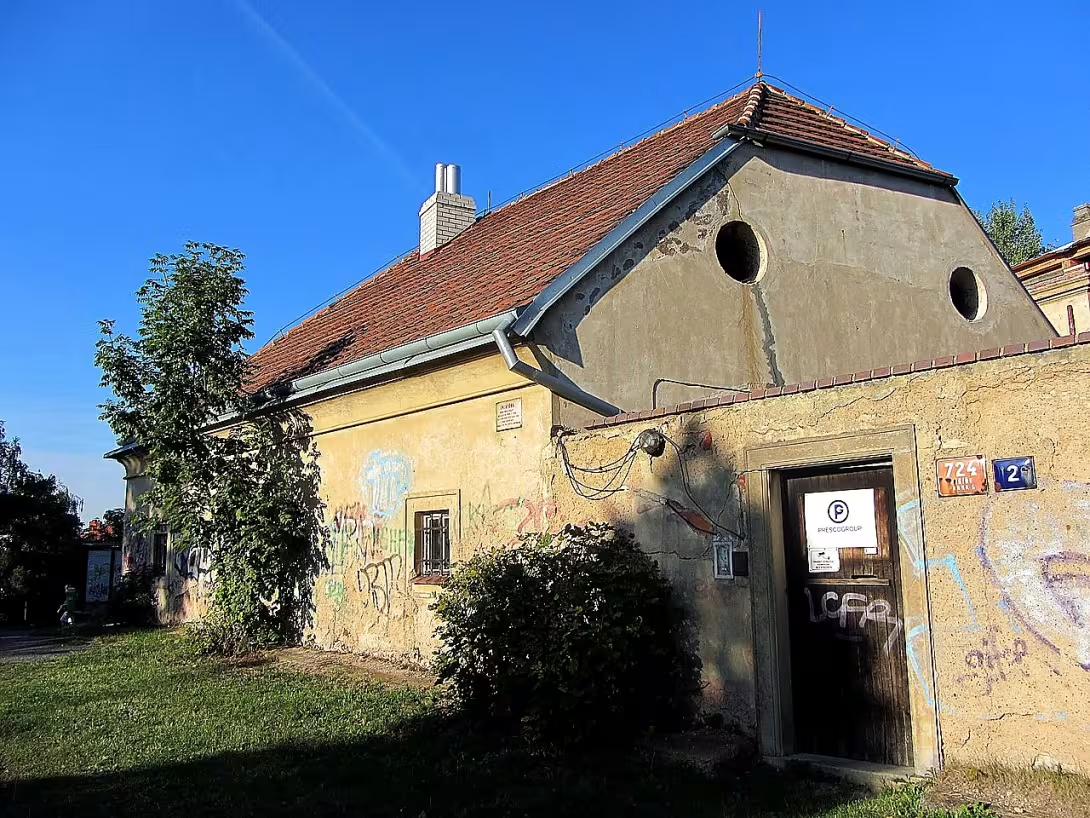
Šmukýřka is an extensive historical estate. Located on the hill in Košíří in close proximity to the final stop of bus number 123, in the places of the former Carthusian vineyard Starka. This Baroque object, the present form of which was formed during the eighteenth and early nineteenth centuries, is important in its construction history, the Baroque chapel of St. Prokop and preserved by the painting of the painter Mikolas Alš from 1908.
The history of the place dates back to the 15th century. At that time, the extensive Carthusian vineyard was 50 strychelles, corresponding to just over 14 hectares. After the destruction of the Carthusian monastery in Smíchov, the vineyard was confiscated by the Prague village. In 1442, she sold it to the old town town of Václav from the tomb. Six years later, Kliment Krček bought it, after which the top was called Krček Mountain. The name Šmukýřka itself first appeared in the vineyard books around 1695. He refers to one of the first wealthy owners who was an ornament or a smurf. The homestead is only documented in Šmukyřice since 1713.
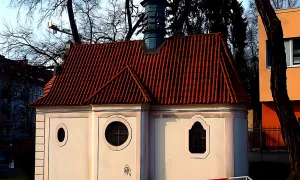
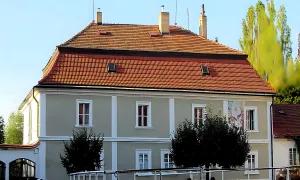
The farm architecture is an example of the summer residence associated with the agricultural operation. The main residential building is storey. It has a half-floor and a valb roof, the foundation of which dates back to the late eighteenth century. The building bears the elements of the classicist adaptation from the first quarter of the nineteenth century. The yard facade is symmetrical with segmented doors on the middle axis. The windows of the half-storey are semi-circular, the street facade is smooth with a belt shampoo around the windows. Around the large rectangular courtyard with two entrances are grouped economic buildings. They include stables, sheep houses, shed, barn and granary, in whose basement the remains of the original Baroque estate are hidden. A part of the complex in the inaccessible part of the garden is also the Baroque chapel of St. Prokop on an elongated hexagon floor plan with a needle roof and lantern, sala terrena and garden house.
Owners history includes Prague village, Václav z Hrobka from 1442, Klimenta Krčka from 1448 and from the mid-nineteenth century to 1921 the family of Linharts. Josef Linhart was an important Czech municipal politician, builder and mayor of Smíchov. His family owned a small empire, including other basketball houses, Turbo and the extinct Vojanka. The post-war period is linked to the reconstruction of the Košíř cadastrum, where the area of the Mejhoří region has been transferred and other settlements such as Božinka, Mechurka, Bulovka or Solomon. During the twentieth century Šmukěřky's garden served the school for teaching and part was used for the construction of garages. During the decade, the building served various warehouse purposes for Prague wholesale, Presco Group and Prague City Theatre.
Key events include the year 1442 and the sale of the vineyard, the year 1713 with the first documented mention of the estate and the period 1904 to 1909, when mass was held in the repaired chapel of St. Prokopa. The year 1964 is also important when Šmukýřka was included in the list of cultural monuments. The year 1908 is an extraordinary attraction. Then the painter Mikoláš Aleš, during his visits to the Linhart family, created a charcoal coat of arms of King George of Poděbrad on the wall of the estate. It's probably his only preserved handmade painting on the wall.
Currently, this monument-protected object is in poor building-technical condition. Economic buildings are damaged and painted and the premises are not freely accessible to the public. After restitution, eight natural persons share ownership. They gradually cultivate the garden and parts of the property, including the chapel of St. Prokop. Šmukýřka represents valuable evidence of historical development of suburban settlements. It is worth paying attention to its preserved building layers and unique cultural footprints.
Historical milestones
- 1442
- The village of Prague sold the vineyard to the old town town of Václav from the tomb.
- 1713
- It is documented by its own homestead in Sluggerface.
- 1908
- The painter Mikoláš Aleš created on the wall a charcoal sketch of the coat of arms of King George of Podebrad.
- 1964
- The residence Šmukýřka was entered in the list of cultural monuments.
Architectural development
Originally, it was a winegrowing farm with a vineyard press, which was converted into an estate during the eighteenth century. The main building and the chapel underwent classical modifications in 1820. Part of the complex is also the Baroque Chapel of St. Prokop on an elongated hexagonal floor plan with a needle roof and lantern.
Historical events
1442: Sale of the vineyard by the municipality of Prague to the old town town of Václav from the tomb. 1713: First documented written mention of the estate. 1904 to 1909: Masses in the repaired chapel of St. Prokop. 1964: Registration of the estate Šmukýřka in the list of cultural monuments.
Owners
Prague village, Václav z Hrobky (from 1442), Kliment Krček (from 1448), family of Linharts (from mid-19th century to 1921)
Points of interest
- The present form of the Baroque building was formed during the eighteenth and early nineteenth centuries and is located on the hill in Košíří in the places of the former Carthusian vineyard Starka. - The name Šmukýřka itself first appeared around 1695 and refers to one of the first rich owners to whom he was an ornament or a smurf. - In the basement of the granary, which belongs to the economic buildings grouped around the large rectangular yard, the remains of the original Baroque estate are hidden. - A part of the complex in the inaccessible part of the garden is the Baroque chapel of St. Prokop on an elongated hexagonal plan with a needle roof and lantern, sala terrena and garden house. - An extraordinary interesting year is 1908, when the painter Mikoláš Aleš during his visits to the Linhart family created a preserved painting on the wall of the estate.
Guide
Show guide text
This text was created by artificial intelligence and has not been editorially reviewed. It may contain inaccuracies.
Welcome to this beautiful place. You are standing in front of an extensive historical estate called Šmukýřka, located on a hill in Prague's Baskets. Look around you and see the unique atmosphere that this monument radiates. In front of you is an area whose roots go deep into the past and which carries stories of many generations.
Now let's look at how this corner came into being and what its historical context is. The whole story starts in the 15th century. In fourteen hundred forty-two, the village of Prague sold the vineyard to an old town townsman named Václav z Hrobky. The place was then located in the places of the former Carthusian vineyard called Starka. With time, the resemblance of the estate changed. The first documentary proof of the estate itself in Šmukyřice dates back to seventeen hundred thirteen. The name Šmukýřka itself first appeared around the year sixteen hundred ninety-five and refers to one of the first wealthy owners. The present form of this Baroque building was formed during the eighteenth and early nineteenth century, when there were further modifications in classical style.
Now pay attention to the architecture itself. Look in front of you at the main estate building and notice its shapes and lines. The whole area also includes the historic Baroque chapel of St. Prokop, which will take its shape, which has a polygonal plan. With this sacred place and the whole estate adjoining the adjoining garden, which complements the picturesque character of the whole area. Although the names of creators and builders do not cause us to know their specific details because architects remain unknown, the work itself speaks for itself.
A number of interesting stories and key personalities relate to this place. In addition to the mentioned Václav from the Grave over the centuries, there were also other people, such as Kliment Krček or Josef Linhart. A very special chapter is the year nineteen hundred and eight. There was an emergency on the wall. The famous painter Mikoláš Aleš created on the wall a charcoal sketch of the coat of arms of King George of Podebrad. This gesture left an indelible trail of one of the most important Czech artists in the estate.
Looking back into the twentieth century, we see how important this monument was to society. During the twentieth century, her fate today, culminating in nineteen hundred and sixty-four. This year, the Šmukýřka estate was officially included in the list of cultural monuments, which officially recognised its unbiased historical and artistic value for the whole country.
In conclusion, we would like to invite you to explore this wonderful place again. Take a walk around, perceive the genius loci and let the spirit of the old times take effect on you, leaving their tracks. Thank you for listening to our audio guide, and we wish you a wonderful experience from the visit to Šmukířki. Goodbye.
Tips for visitors
The best time to visit Šmukyřka is in the spring or autumn period, when the green areas and surrounding landscape elements are in their most beautiful condition. This time of year offers quiet moments for walking and using the natural environment without excessive heat.
When visiting, it is recommended to take with you shoes suitable for walking along lawn and hilly terrain. Fill your supply with drinks because restaurants or cafés may not be available in the surrounding environment.
The best place for photography is on the hill, where the view of the Yinonic valley opens. The most beautiful light offers a period before and after the sun, when the lighting is less intense and the shade of green creates an eye-catching effect.
There are other historical settlements such as Bulovka, Turbo, Božinka, Mechurka and Solomon. These places offer an interesting opportunity to explore local architecture and culture. For families with children it is advisable to visit these settlements, which often also have gardens or parks suitable for play.
Frequently asked questions
Can the monument be visited?
This is a residential or farm building, not a museum with opening hours. Please view it from public space and respect the owners' privacy. We have no information about access to the interior.
Where is the monument?
Location: Košíře, Hlavní město Praha. The map on this page shows the exact spot.
Why is the monument protected?
It is listed in the Central List of Cultural Monuments of the Czech Republic as a cultural monument (register no. 1000001724).
Businesses nearby
Do you run a restaurant, accommodation, shop, museum, rental, wellness or other visitor service near this monument? Show yourself directly to the people heading to it — this is how they will see you in the app and on the web:
Events nearby

Zdroj akcí: otevřená data měst a obcí ČR (Národní katalog otevřených dat) a kalendář akcí Národního památkového ústavu.
Nearby
Usedlost se nachází v Košířích v blízkosti jinonického údolí a sousedních historických usedlostí, mezi které patří Bulovka, Turbová, Božinka, Měchurka a Šalamounka.
Accommodation nearby
Trips and activities nearby
Guided tours, tickets and activities nearby from GetYourGuide
Affiliate link: if you buy from the partner, we may receive a commission. The price for you does not change.
Search tours and activities →Themed route
1.Šmukýřka Type: historical estate Why it is worth a visit: This main destination of our trip represents an important building monument in Košíří. It offers the discovery of a magical historical atmosphere near the picturesque natural valley.
2. Bulovka Type: historical estate Why is it worth a visit: Located in the vicinity of the main monument. It is another interesting stop when exploring the old Prague estates.
3. Turbo Type: historical estate Why is it worth a visit: This neighboring monument complements the historical nature of the entire area. It fits perfectly in the sightseeing tour of the basketball estate.
4. Divine Type: historical estate Why is it worth visiting: Another of a number of historical buildings in the location. Her visit will enrich the knowledge of local architecture.
5. Slug and Solomon Type: historical settlements Why is it worth a visit: these two nearby settlements close the circle of historical places in the neighbourhood. It offers a view of other examples of old construction in Baskets.
Seasonal recommendations
Spring in this Prague district brings awakening nature, when the old trees along the roads begin to bloom and the morning fog slowly rises over the historic walls. Light is soft and creates long shadows ideal for discovering hidden corners of the complex. In this period, you will meet few people here, which guarantees total peace. We recommend to take your fixed shoes into a slightly damp terrain and start off in the morning when the air is the cleanest and the sun warms pleasantly without sharp rays.
Summer offers a lush green vault made up of fully foliage trees that provide a welcome shade during the hot afternoon. The atmosphere is more lively thanks to the afternoon walks of the local people, while the golden late afternoon light perfectly illuminates the trees. The practical council commands either early in the morning or in the evening to avoid the greatest heat of the day. Don't forget to bring enough drinking water to the supply and light headgear for moments in open spaces.
Autumn turns the whole scenery into a colourful picture full of yellow, red and brown shades of leaves that crunch under your feet. Light is very dramatic due to the low sun and creates a melancholy mood of old times. Due to more frequent precipitation and humid air, it is necessary to choose waterproof shoes and a warm windbreaker. The best time to visit is around noon, when the temperature reaches its daily maximum and the fog from the morning is already completely scattered.
Winter covers the whole estate in silence, which sometimes only disturb the snow crunch under the shoes and bare branches of trees looming against the grey sky. The atmosphere is very chamber-friendly, because tourists hardly come here in these months and the whole area seems closed and mysterious. For this season warm winter clothes, gloves and hats are essential, because due to early dimming it is necessary to expect to cool quickly. Visit the memory best around noon, when daylight reaches its greatest intensity, and do not forget the fixed sole due to possible slippery surface.
Visualizations and artistic views

The visualisations are generated by artificial intelligence and serve as inspiration.
Photos from the area
Real photos taken near the monument


Zdroj a licence jsou uvedeny u každého snímku.
Tips from visitors
No tips yet. Be the first!
Log in and add your tip.
Sources and literature
Photos: Pavel Dušek / CC BY-SA 3.0 — Wikimedia Commons. The author and licence also appear when you hover over the image.
Faktickým podkladem tohoto textu byl článek na Wikipedii, jehož autory jsou přispěvatelé Wikipedie. Článek je dostupný pod licencí CC BY-SA 4.0.
Location on the map


Příběhy a pověsti
Legendy, pověsti a příběhy spjaté s touto památkou
Fotografie návštěvníků
Zatím žádné fotografie. Buďte první, kdo přidá fotografii z návštěvy!
Log in a přidejte svou fotografii nebo hodnoťte.
Za ověřenou návštěvu v aplikaci získáte víc bodů — poznáme podle GPS, že jste na místě.
Reviews and comments