



Krajinná památková zóna Čimelicko-Rakovicko Landscape heritage zone
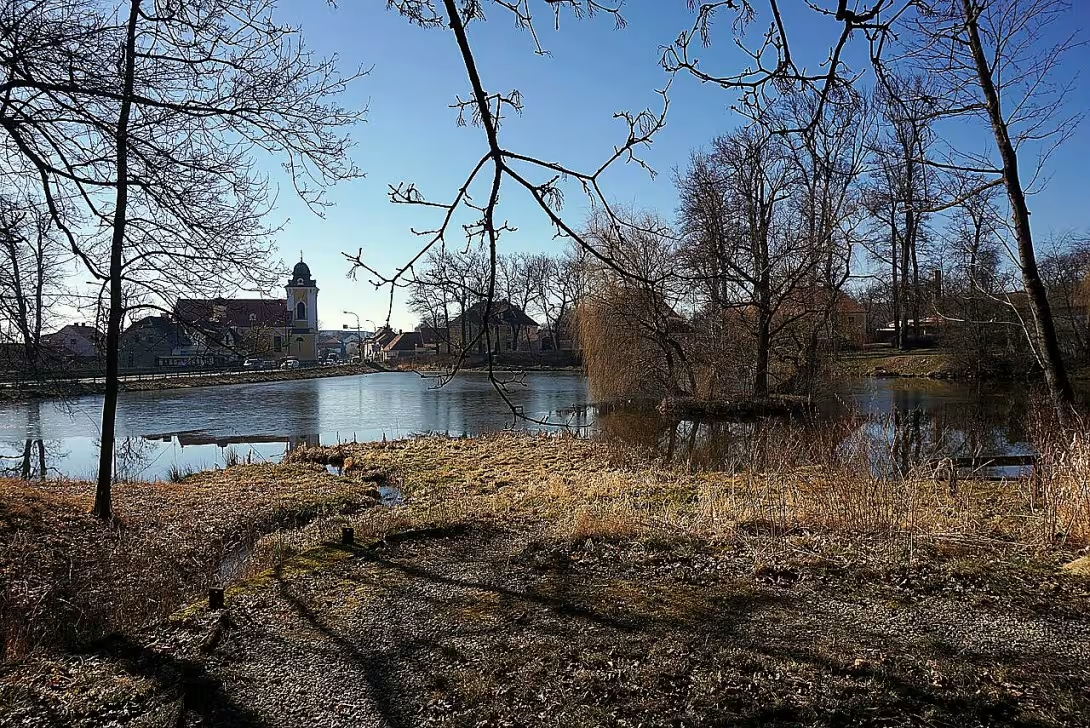
Krajinná památková zóna Čimelicko-Rakovicko is a protected cultural landscape of eight square kilometres. Located in the Sand district of South Bohemia. It includes the municipalities of Čimelice, Rakovice, Nejazice, Smetanova Lhota and Králové Lhota including their local parts. The area is characterised by a harmonious connection of natural components - arable land, meadows, pastures, forest areas and ponds - with historical building monuments built since the 17th century. This territory constitutes a unique document of landscape development under the influence of the human activity of several noble families.
The oldest settlement is witnessed by preserved remains of the castle from the 12th century on the hill of the Castle. The village of Rakovice itself belonged in the 13th century to the Monastery of March, in whose possession it remained until Hussite wars. Later she became the owner of the House of Dejms. The village of Chemelice is first mentioned in writing in 1446. In the 17th century, its masters became Bissingenové, who joined their estate to Rakovice, Nerestka and the courts in the Mountains. During the period of the classicism of the landscape, rod Vratislavů z Mitrovic completed. In the second half of 19th and 20th century, the Schwarzenbergs modified the area. The territory was declared a monument zone in 2002 in order to preserve this historically valuable space.
The architectural form carries traces of building development from the Middle Ages to the Renaissance and the Baroque to the Classicism. The most important building elements include the Renaissance fortress in Rakovice and the Baroque castle in Čimelice with a ornamental garden and the economic court of Bissingrov. There is also the Church of the Holy Trinity in Chimelice, a cemetery with a morgue, chapel, tomb, column of the Holy Trinity, niche chapel of St. Wenceslas, bridges with statues, divine torture and a contributional grande in Rakovice. The building fund is complemented by folk architecture. It includes historical estates, houses with monuments protected gates, a tourist pub Zavadilka and a residence on the Dwarf.
The historical fates of space are linked to a number of important owners. After the monastery in March he held Rakovice rod Dejmů, who built a Renaissance fortress here in the 17th century. The subsequent owners of the Bissingen family built a chimelic castle and founded the Stejskal pond. During the period of Classicism, the Vratislavová of Mitrovic entered the face of the landscape by setting up alleys and tree ranges, editing the castle park and building a rectory, a school or a tourist inn. Schwarzenberg was the last noble family to participate in the land modification in the 19th and 20th centuries.
The key landscape element was historically a lime alley with stone sculptures. It connected the chimellic lock and the coffin fort, and later the sculptures were moved. Among the attractions are the stone triangular needles of St. Vintír at the foot of the hill Chlum. Also remarkable is the hunting landscape with pheasants and branches that Schwarzenbergs set up around ponds. The water economy of the region is completed by the River Skalice, Vrábský potok, Rakovický potok and the ponds Zrož or Rípice.
This landscape monument zone offers a remarkable view of the changes in rural space from baroque colonization and the construction of the manor to modern large farms within the Habsburg monarchy. Visiting this region in the Písek district allows you to recognize the connection of historical architecture with the maintained natural scenery. It is therefore worth the attention of any interested person in the Czech cultural heritage.
Historical milestones
- 1150
- Dochovaled remnants hradiste on hill Castle
- 1250
- The village of Rakovice patrila brevnovskemu klaster
- 1446
- First story about the village of Cimelice
- 1650
- Rod Bissingen became Mr. Cimelic and built a castle
- 2002
- Land declared by landscape memory zone
Architectural development
The area bears traces of building development from the medieval castle to the Renaissance fortress in Rakovice to the Baroque mansions and classicist modifications of the villages. A significant component of the building fund are sacral structures such as the Church of the Holy Trinity in Chimelice, the niche chapel, God's torture, bridges with statues, granaries and folk architecture including historical settlements and gates.
Historical events
In the twelfth century, the castle was built on the hill of the Castle. In the thirteenth century, Rakovice was the property of the monastery of St John's and after Hussite wars switched to rod Dejmů. In the seventeenth and eighteenth centuries, the manor was acquired by Bissingenové, who built the Baroque chateau and established a lime alley. In the classicism of the landscape, rod Vratislavů z Mitrovic completed it and in the nineteenth and twentieth centuries it was modified by the Schwarzenberg family.
Owners
Monastery in Břevnov, rod Dejmů, House of Bissingen, rod Vratislavů z Mitrovic, House of Schwarzenberg.
Points of interest
- Krajinná památková zóna Čimelicko-Rakovicko has an area of eight square kilometres and is located in the Sand district of South Bohemia. - The oldest settlement is evidenced by preserved remains of the castle from the twelfth century on the hill of the Castle. - The territory has been declared a landmark zone in the year of the current year of two thousand and two in order to preserve historically valuable space. - Building elements include Renaissance fortress in Rakovice and Baroque castle in Čimelice with ornamental garden and the farm yard of Bissingrov. - Among the attractions are the stone triangular needles of St. Vintír in the foot of the hill Chlum and also hunting landscape with pheasants and ranges.
Guide
Show guide text
This text was created by artificial intelligence and has not been editorially reviewed. It may contain inaccuracies.
Welcome. Right now you're standing in an amazing place, the landscape monument zone of Chimelicka-Rakovicko. It is situated in the Sand district of South Bohemia and occupies an area of eight square kilometres. Look around you. Before you, a landscape has developed, shaped by human work and nature itself for centuries. You can admire the vast forest fields, fertile fields, green meadows and pastures, which take turns with the shimmering surface of the ponds on the Vrábský creek and its presence. This whole territory has several settlements within which the municipalities of Čimelice, Rakovice, Nezezice, Smetanova Lhota and King Lhota, including all their local parts, belong. Feel the peace and harmony of this space, which remembers ancient ages.
Let's move forward in time and look at how this remarkable landscape has developed and evolved. The oldest settlement is witnessed by the preserved remains of the castle on the hill of the Castle, which have been remembered for a year a thousand hundred and fifty. The traces of human presence and settlement here have deep roots. We know from historical sources that the village of Rakovice belonged to the monastery of Břevnov. That's where the next layer of stories of this region unfold. The first written mention of the village of Čimelice dates back to fourteen hundred forty-six. A significant break in the history of the mansion was the period around the year sixteen hundred and fifty, when the noble family Bissingen became master of Chimelic and built a castle there. The long development and unique value of this territory led to the official declaration of the landscape monument zone in the year two thousand and two.
Now pay attention to the appearance of the landscape itself and the details that are right in front of your eyes. Follow the shapes of the fields, the line of the stream, and a carefully arranged system of ponds that naturally fit into the nature. The architects who would plan this landscape on a one-off basis remain unknown, because its face was made up of generations of local inhabitants, peasants, ponds and nobles. Note how the forest units with open areas of meadows and pastures are alternated. Each element here fulfils its role in a harmonious whole cultural landscape that combines natural beauty with human work.
Behind this landscape are also human fates, important families and powerful personalities that have influenced life throughout the region. The historical personalities associated with this place include rod Dejmů, the nobleman family Bissingen, rod Vratislavů z Mitrovic and, last but not least, the mighty family Schwarzenberg. They all left their traces on this territory, whether through the administration of the manor, building modifications or care of the local economy, forests and ponds.
An interesting thing to think about is the connection of the ancient past to today's landscape. If you look at the wooded hills, you might imagine people who lived here centuries ago. The oldest testimony in the form of the remains of the fort on the hill of Castle shows that this place attracted the inhabitants in the twelfth century. Today's area of eight square kilometers carries traces of a man's constant coexistence with nature, which ultimately led to a well-deserved conservation in two thousand and two.
We hope you enjoyed this walk through history and nature. We call on you to further explore the local communities such as Chimelice, Rakovice, Nezezice, Smetanova Lhota or King Lhota. Discover other hidden corners, go to the ponds or to the woods and let the genius loci of this South Bohemian region work on you. Thank you for listening to our audio guide, we wish you a wonderful experience and goodbye.
Tips for visitors
The best time to visit the Regional Monument Zone Chimelicka-Rakovicko is in the spring and autumn season when the most beautiful colors of nature are. This time also offers a quieter environment without large crowds of tourists. When visiting, notice how the shape of the region changes with the seasons.
To arrive by public transport, check the current connection in the online search engine because time tables can be variable.
When you visit, bring suitable shoes and clothes according to the weather. It is also important to bring drinking water, especially in warmer months. Don't forget your coat or umbrella for unpredictable weather.
For photography there are ideal places around the River Skalice and around Zhůř and Rípice ponds. The best light offers morning or late afternoon hours when the sun is lower in the sky and shading is mild.
In the vicinity of interest you can visit villages such as Smetanova Lhota or King Lhota. These sites offer the opportunity to explore local culture and history. It is advisable for families with children to organize hiking trips or finding wild flowers along surrounding forest areas.
Frequently asked questions
Can the monument be visited?
This is a structure in a public space that can usually be seen from outside free of charge. We have not verified that this particular one is freely accessible.
Where is the monument?
Location: Jihočeský kraj. The map on this page shows the exact spot.
Why is the monument protected?
It is listed in the Central List of Cultural Monuments of the Czech Republic as a cultural monument (register no. 1000463761).
Businesses nearby
Do you run a restaurant, accommodation, shop, museum, rental, wellness or other visitor service near this monument? Show yourself directly to the people heading to it — this is how they will see you in the app and on the web:
Events nearby

Zdroj akcí: otevřená data měst a obcí ČR (Národní katalog otevřených dat) a kalendář akcí Národního památkového ústavu.
Nearby
V okolí se nachází řeka Skalice, Vrábský potok, Rakovický potok, vrch Chlum, vrch Hrad, lesní porosty, soustava rybníků včetně rybníka Zhoř a Řepice a okolní vesnice Smetanova Lhota, Králova Lhota, Nevězice a Vrábsko.
Accommodation nearby
Themed route
I propose a thematic cruise route focused on the natural and landscape beauty of South Bohemian nature around the main destination.
1.Krajinná památková zóna Čimelicko-Rakovicko Type: Landscape Monument Zone Why is it worth a visit: This area offers a uniquely shaped cultural landscape full of greenery, historical tracks and natural scenery that connect local water flows and forests.
2. Top Chlum and top Castle Type: Natural elevated points and forest crops Why is it worth a visit: These wooded hills stand in the landscape and provide a great environment for peaceful walks through deep forest forests around the main destination.
3. System of ponds including pond Zhůr and Rípice Type: Water areas Why is worth a visit: Water tanks and ponds in this location create picturesque natural scenery that complement local streams such as the Rakovická stream and the Vrábský stream.
4. Smetanova Lhota and King Lhota Type: Ambient villages Why is it worth a visit: These traditional rural settlements set in the countryside near the Skalice River show the typical character of the local settlement.
Seasonal recommendations
Spring brings awakening nature, when centuries-old parks and nearby ponds are reflected in the first warm rays of the sun. The trees are starting to bloom and the landscape is getting fresh green, which creates a calm and romantic mood for long walks. In this period you will meet few visitors here, so you will enjoy complete peace without crowds. We recommend fixed waterproof shoes because field roads and parkways can be drenched after the tidal and spring rains. The best time to visit is in the morning, when morning fog slowly retreats and the landscape opens to daylight.
Summer offers a lush full of greenery, which provides a pleasant shade under the bony crowns of historical trees during the steam days. The sunlight penetrates through the leaves and creates interesting light effects on the water surface, while the overall atmosphere is alive and airy. There are a lot more tourists coming here in the season, especially on weekends. Put on light breathtaking clothes and don't forget the headgear and the effective insect agent at the local ponds. The best time for a trip is early morning hours or late afternoon, avoiding the greatest heat and sharp light in the morning.
Autumn turns the whole area into a colorful palette of shades of yellow, orange and red, making it a paradise for lovers of nature photography. The low sun creates long shadows and gives the castle alleys and forest vegetation a melancholy but very impressive character. The number of tourists falls significantly, so you can see the sights and surrounding nature in silence. Because of the colder winds and morning freezers, we can use layered clothes, windbreaker and warmer hats. The ideal time for a walk is around noon, when the sun will warm the air for at least a while and disperse the dripping herpes.
Winter covers the landscape zone in silence under the snow cover, which calms all the rush and offers a view of clean, black and white graphics of bare trees and frozen water areas. Fast dark days and oblique sun rays create a mysterious and peaceful atmosphere ideal for contemplation. Visitors here are the absolute minimum in winter. The need is the quality winter footwear with anti-slip soles, warm jacket, gloves and scarf for protection against freezing weather. The best time to visit is clear noon and early afternoon hours until there is enough natural light out there.
Visualizations and artistic views


The visualisations are generated by artificial intelligence and serve as inspiration.
Tips from visitors
No tips yet. Be the first!
Log in and add your tip.
Sources and literature
Photos: MartinVeselka / CC BY-SA 4.0 — Wikimedia Commons. The author and licence also appear when you hover over the image.
Faktickým podkladem tohoto textu byl článek na Wikipedii, jehož autory jsou přispěvatelé Wikipedie. Článek je dostupný pod licencí CC BY-SA 4.0.
Location on the map




Příběhy a pověsti
Legendy, pověsti a příběhy spjaté s touto památkou

Fotografie návštěvníků
Zatím žádné fotografie. Buďte první, kdo přidá fotografii z návštěvy!
Log in a přidejte svou fotografii nebo hodnoťte.
Za ověřenou návštěvu v aplikaci získáte víc bodů — poznáme podle GPS, že jste na místě.
Reviews and comments