



Kuglvajt (Brloh) Ruin
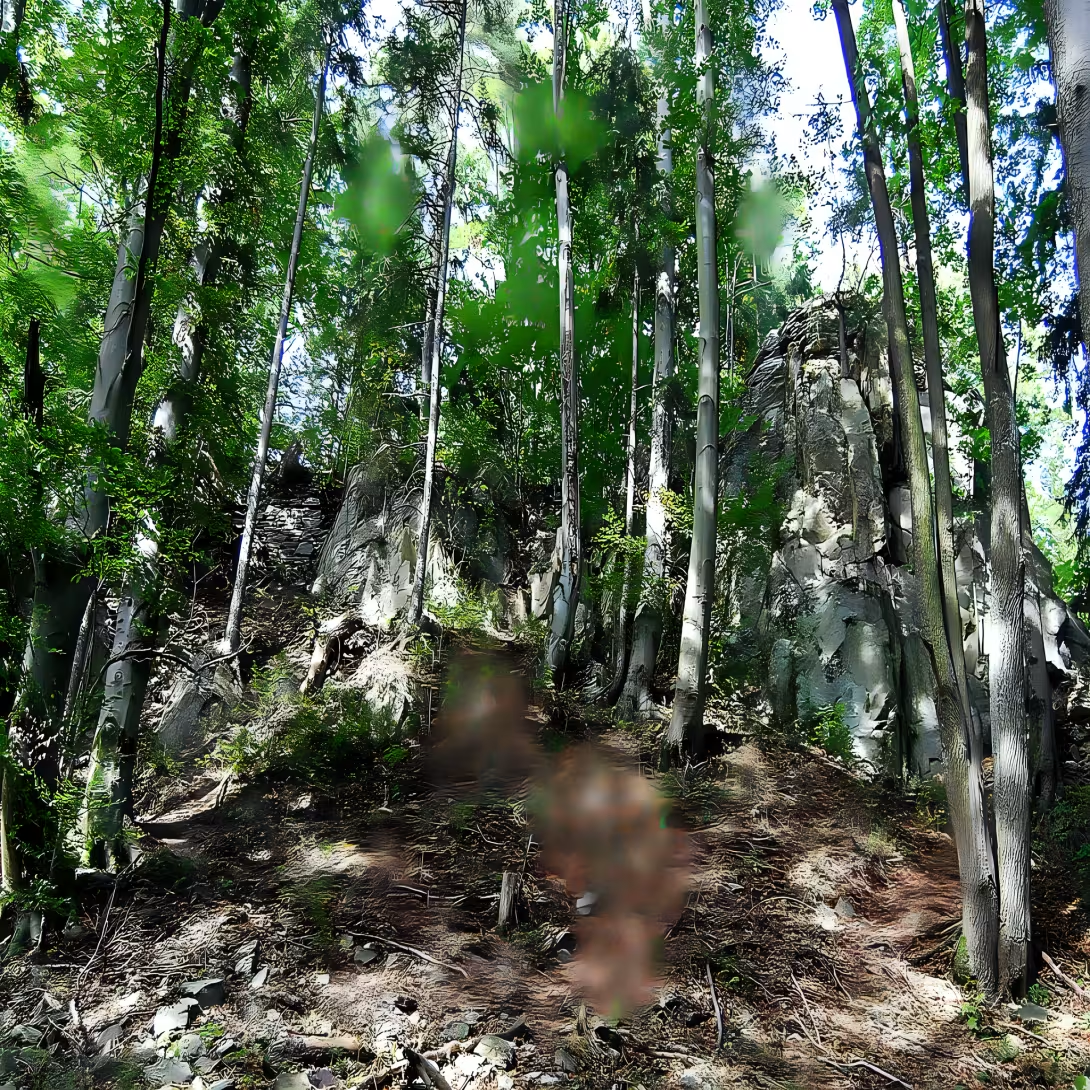
Kuglov (Brloh), also known as Kuklov Castle, is a historical monument situated above the village of Kuklov near Brloh in the Český Krumlov District. This ruined castle stands on a granitic hilltop overlooking the Krámy Stream, offering commanding views and exemplifying medieval fortification architecture. The site's name likely derives from Latin and Germanic roots, reflecting its historical significance as a strategic stronghold. First documented in 1357 under Dětřich z Portic, Kuglov has witnessed various ownerships and conflicts, particularly during the reign of King Wenceslaus IV.
The castle's origins are intertwined with medieval Bohemia's political dynamics. It was first mentioned in historical records in 1357 when it belonged to Dětřich z Portic, a significant ecclesiastical figure at the court of King Charles IV and bishop of Minden. After Dětřich's death, Kuglov came under royal control. During King Václav IV's reign, the castle was managed by Václav ze Švamberka, whose actions led to disputes with both the king and Archbishop Jan z Jenštejna. These tensions culminated in 1395 when Jindřich z Rožmberka's forces besieged and destroyed the castle amidst broader conflicts involving the Panská jednota (Noble League) against King Václav IV.
Architecturally, Kuglov was heavily influenced by its rugged terrain. The site featured a lower ward with remnants of a circular defensive wall, while the main keep stood on higher ground, connected to the ward via partially preserved communication structures. A moat and narrow rock ledge fortified the western side, complemented by a slender tower with rounded corners. This strategic design highlights the castle's role as a formidable medieval stronghold.
Ownership of Kuglov changed hands several times throughout its history. After Dětřich z Portic's death, it became part of the royal domain under King Václav IV. The subsequent appointment of Václav ze Švamberka as purkrabí (castellan) led to conflicts with both secular and ecclesiastical authorities. Following its destruction in 1395 by Jindřich z Rožmberka, the castle was granted to him by King Václav IV and became part of the Maidštejn estate. After this period, Kuglov was abandoned.
Key events at Kuglov include its initial documentation in 1357 and its destruction in 1395 during a power struggle involving Jindřich z Rožmberka and King Václav IV. These episodes reflect the broader political turbulence of Bohemia during this era, marked by conflicts between nobility and monarchy.
Today, Kuglov is accessible to visitors as a ruin perched on a hilltop above the village of Kuklov. The remnants are located near road II/143 and can be reached via a blue-marked tourist trail from Netolice to Kleť. Despite its destruction in the late 14th century, parts of the castle remain visible, offering insights into medieval fortification techniques and the historical landscape of the region.
Kuglov stands as a testament to the complex history of Bohemia during the Middle Ages, reflecting both architectural ingenuity and turbulent political dynamics. Its ruins invite visitors to explore a significant chapter in Czech history while enjoying scenic views over the Krámy Stream.
Historical milestones
- 1357
- Kuglov Castle first documented under Dětřich z Portic.
- 1395
- Castle besieged and destroyed by Jindřich z Rožmberka's forces.
Architectural development
The castle's structure was heavily influenced by its rugged terrain. It featured a lower ward with remnants of a circular defensive wall, while the main keep stood on higher ground, connected to the ward via partially preserved communication structures. A moat and narrow rock ledge fortified the western side, complemented by a slender tower.
Historical events
First documented in 1357 under Dětřich z Portic.
In 1395, the castle was besieged and destroyed by Jindřich z Rožmberka's forces during conflicts with King Wenceslaus IV.
Owners
Dětřich z Portic (1357)
Král Václav IV
Václav ze Švamberka
Jindřich z Rožmberka
Points of interest
- Despite its grandiose name, Kuglov Castle is often overshadowed by the more famous Český Krumlov Castle nearby, yet it offers a unique glimpse into medieval fortification strategies with its strategic hilltop position and remnants of circular defensive walls.
- The castle's connection to Dětřich z Portic links it not only to Bohemian history but also to ecclesiastical politics in medieval Europe; as an influential bishop at King Charles IV’s court, his involvement highlights the intertwining of religious and royal powers during this era.
- One intriguing aspect of Kuglov is its architectural adaptation to rugged terrain, featuring a moat and narrow rock ledge that served as natural defenses—a testament to how medieval builders utilized their environment for strategic advantage.
- After its destruction in 1395 by Jindřich z Rožmberka, the castle was granted to him and became part of the Maidštejn estate. This transition illustrates the fluid nature of land ownership during turbulent times when castles could change hands following conflicts or political shifts.
- The site's name, Kuglov (or Brloh), is believed to have Latin and Germanic roots, reflecting its historical significance as a strategic stronghold; this etymological curiosity underscores the cultural and linguistic influences that shaped medieval Bohemia.
Guide
This guide is narrated by a synthetic voice generated by artificial intelligence.
Show guide text
This text was created by artificial intelligence and has not been editorially reviewed. It may contain inaccuracies.
The ruins of Kuglvajt Castle lie above the settlement of Kuklov, west of Brlohu in the Český Krumlov region. The castle stood on a rocky summit of a granulite hill that rises to a height of 740 meters above sea level above the Křemžský stream.
The unusual name is explained in several ways. It most likely comes from the Latin word cuculla, meaning a hood or cowl, because the conical hill resembles a monk's hood. The second part of the name derives from the German word Weid, which means pasture. Literally, it would be a hood-like pasture. Another explanation seeks the origin in the Old Slavonic word kukle, meaning kitchen, and in the Celtic weid, meaning forest. The name would then mean a forest kitchen or hermitage. In written sources, the castle also appears as Kuglveit, Kuklvejt or Kuklov, and in German as Kugelwait and Kugelweit.
The first written mention dates from 1357. At that time, Dětřich of Portic, bishop of Minden and an important figure of the church at the court of King Charles the Fourth, claimed the castle. After his death, it passed to the royal chamber. During the reign of Václav the Fourth, the castellan was Václav of Švamberek, who sparked a dispute between the king and Archbishop Jan of Jenštejn.
The fate of the castle was sealed by the battles of the nobles' league against Václav the Fourth. In 1395, Kuglvajt was conquered and destroyed by the army of Jindřích of Rožmberk. After settling the disputes, the king donated the castle to Jindřích. He attached it to the estate of Maidštejn Castle and Kuglvajt remained abandoned from then on.
The structure had to adapt to the rugged rocky terrain. In the lower part lay the outer ward, and only a rampart-like remnant of the fortification survived from its defenses. The castle core stood higher on the rock formation. A communication building connected it with the outer ward, of which only fragments remain. On the west, the core was protected by a ditch cut into the rock. On the opposite side, a narrow rocky ridge extended from the core with a slender tower that had rounded corners. The main building of the core was a two-room palace, separated from the ditch by a palisade.
The remains of the castle are located by the road above Kuklov, on a blue-marked hiking trail from Netolic to Kleť.
Tips for visitors
The best time to visit Kuglvajt Castle is during late spring or early autumn, when the weather is pleasant for exploring the ruins without the crowds of summer tourists. During these months, you can enjoy comfortable temperatures and lush greenery surrounding the site. Additionally, visiting in the morning provides softer light that enhances photography opportunities, capturing the castle's dramatic silhouette against a clear sky.
You can drive there as it is accessible via road II/143. Always check current routes and schedules in advance for a smooth journey.
When visiting Kuglvajt Castle, it's advisable to bring comfortable walking shoes as the terrain around the ruins can be uneven. Don't forget a hat, sunscreen, and water, especially if you plan to explore the surrounding trails or spend time outdoors taking photographs. A camera with a zoom lens will help capture detailed shots of the castle’s architecture from various angles.
For photography enthusiasts, some of the best spots around Kuglvajt Castle are at the base where you can get close-up views of the ruins and on higher ground for panoramic shots of the Krámy Stream valley. The golden hours—shortly after sunrise or before sunset—are ideal for capturing dramatic lighting effects that highlight the castle’s features.
Nearby attractions within a 30-minute drive include the charming village of Kuklov, known for its picturesque setting and local history. You can also visit Kleť, which is accessible via the blue tourist trail from Netolice to Kleť. This area offers hiking opportunities and stunning views of the landscape, making it perfect for nature lovers.
For families with children, visiting Kuglvajt Castle can be an educational experience. The site provides a glimpse into medieval architecture and history. Ensure you bring snacks or pack a picnic as there are no facilities on-site. Engage your kids by encouraging them to imagine what life was like in the castle centuries ago, making it both fun and informative.
Frequently asked questions
Can the monument be visited?
This is a ruin. Such sites are often freely accessible, but some can only be visited with a guide or are closed for safety reasons. We have not verified the current situation – take care and respect any restrictions.
Where is the monument?
Location: Brloh, Jihočeský kraj. The map on this page shows the exact spot.
Businesses nearby
Do you run a restaurant, accommodation, shop, museum, rental, wellness or other visitor service near this monument? Show yourself directly to the people heading to it — this is how they will see you in the app and on the web:
Events nearby

Zdroj akcí: otevřená data měst a obcí ČR (Národní katalog otevřených dat) a kalendář akcí Národního památkového ústavu.
Nearby
Located near the village of Kuklov, Kuglvajt Castle offers views over the Krámy Stream. The area is traversed by road II/143 and features a marked blue tourist trail from Netolice to Kleť.
Accommodation nearby
Trips and activities nearby
Guided tours, tickets and activities nearby from GetYourGuide
Affiliate link: if you buy from the partner, we may receive a commission. The price for you does not change.
Search tours and activities →Themed route
Tematická výletní trasa kolem Kuglvajtu (Brloh)
1. Kuglvajt (Brloh) - Zřícenina Typ: Historická zřícenina Proč stojí za návštěvu: Tato zřícenina, nacházející se poblíž vesnice Kuklov, vás přenesou do minulosti s jejími impozantními ruinami a panoramatickým pohledem na potok Krámy. Je to ideální místo pro ty, kteří mají rádi historii a krásné zvětralé kamenné struktury.
2. Potok Krámy - Přírodní vodní tok Typ: Přírodní atrakce Proč stojí za návštěvu: Potok Krámy, který protéká oblastí kolem Kuglvajtu, nabízí klidnou a příjemnou procházku. Jeho tiché vodní tokové proužky jsou ideální pro relaxaci a poslouchání přírodní hudby potoka.
3. Cesta II/143 - Historická silnice Typ: Kulturně historický prvek Proč stojí za návštěvu: Tato cesta, která prochází oblastí kolem Kuglvajtu, je nejen důležitou dopravní arterií, ale také nabízí pohled na místní krajinu a historický kontext regionu. Procházka po této cestě vám umožňuje ocenit jak moderní infrastrukturu, tak i historii oblasti.
4. Modrá turistická trasa - Netolice – Kleť Typ: Turistická stezka Proč stojí za návštěvu: Modrá trasa vede přes Kuglvajt a nabízí krásnou procházku, která spojuje historické s přírodními atrakcemi. Je to ideální volba pro cyklisty i chodce, kteří chtějí využít možnost prozkoumat region na delší vzdálenosti a zároveň si užít přírodní krásy.
Tato trasa nabízí kombinaci historických i přírodních atrakcí, které jsou snadno dostupné a poskytují bohatý dojem o regionu Jihočeského kraje.
Seasonal recommendations
Spring: Visiting Kuglvajt (Brloh) during spring offers a unique experience as nature begins to awaken around the historic ruins, with blooming wildflowers and budding trees creating a picturesque landscape that enhances the site's mystical atmosphere. The soft morning light casts gentle shadows across the ancient stones, adding an ethereal quality to your exploration. This is an ideal time for photography enthusiasts seeking natural beauty combined with historical intrigue. With fewer visitors than in summer, you can enjoy a more tranquil visit. Dress comfortably in layers, as temperatures can vary, and be prepared for occasional rain showers typical of spring weather.
Summer: The summer months at Kuglvajt (Brloh) are characterized by long daylight hours that illuminate the ruins beautifully, making it an excellent time for photography and exploration. However, this is also peak tourist season, so expect larger crowds, especially on weekends and holidays. Arrive early in the morning to avoid the midday heat and the busiest times. Wear light, breathable clothing and comfortable shoes suitable for walking over uneven terrain. Don't forget sunscreen, a hat, and plenty of water to stay hydrated during your visit.
Autumn: Autumn transforms Kuglvajt (Brloh) into a stunning canvas of warm colors as deciduous trees around the site change hues from green to rich oranges, reds, and yellows. The cooler temperatures make for pleasant walking conditions, and the reduced number of visitors compared to summer allows for a more serene experience. The soft autumn light can create dramatic contrasts between the ruins and their surroundings, perfect for capturing the historical ambiance. Dress in layers to adapt to varying temperatures throughout the day.
Winter: Winter at Kuglvajt (Brloh) presents a stark yet captivating landscape with snow-covered ruins that offer a unique perspective on this historic site. The shorter days mean you'll need to plan your visit during daylight hours, and it's wise to check ahead for any seasonal closures or limited access due to weather conditions. Dress warmly in insulated layers and wear waterproof boots to navigate potentially icy paths safely. Despite the chillier temperatures, winter can provide a peaceful atmosphere with fewer visitors, allowing for quiet reflection amidst the historical remnants.
Visualizations and artistic views


The visualisations are generated by artificial intelligence and serve as inspiration.
Photos from the area
Real photos taken near the monument


Zdroj a licence jsou uvedeny u každého snímku.
Tips from visitors
No tips yet. Be the first!
Log in and add your tip.
Sources and literature
Photos: Chmee2 / CC BY-SA 3.0, rozlišení zvýšeno umělou inteligencí — Wikimedia Commons. The author and licence also appear when you hover over the image.
Faktickým podkladem tohoto textu byl článek na Wikipedii, jehož autory jsou přispěvatelé Wikipedie. Článek je dostupný pod licencí CC BY-SA 4.0.
Location on the map


Příběhy a pověsti
Legendy, pověsti a příběhy spjaté s touto památkou
Fotografie návštěvníků
Zatím žádné fotografie. Buďte první, kdo přidá fotografii z návštěvy!
Log in a přidejte svou fotografii nebo hodnoťte.
Za ověřenou návštěvu v aplikaci získáte víc bodů — poznáme podle GPS, že jste na místě.
Reviews and comments