



kulturní dům Cultural centre
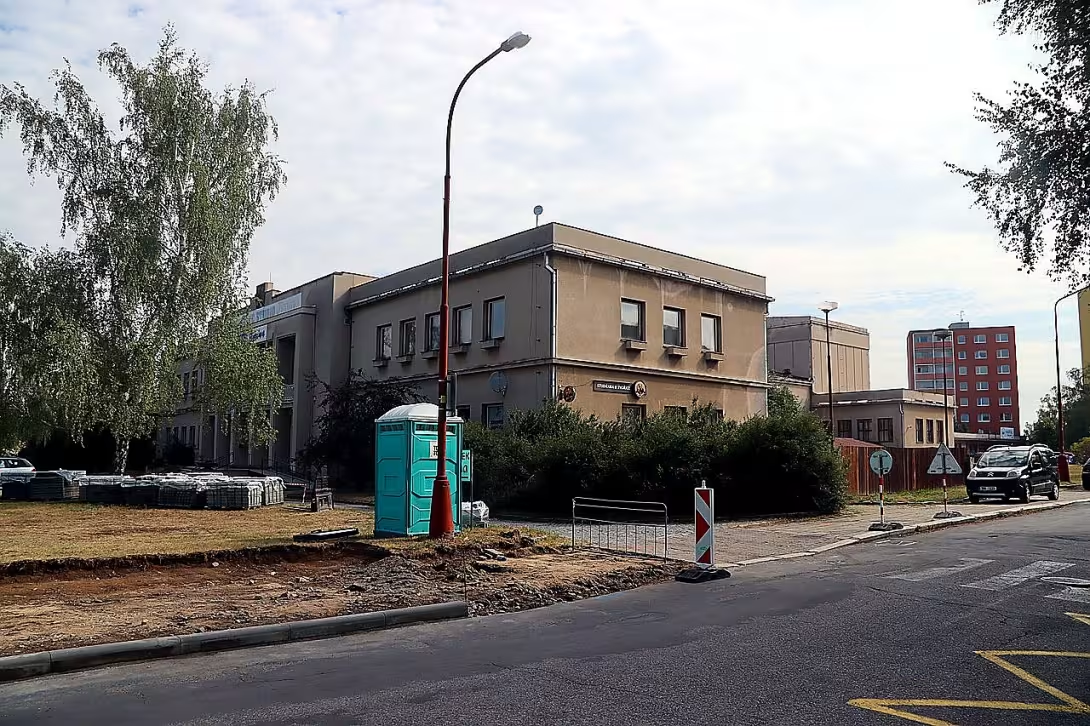
The cultural house in Borno, also known as Kulturák, is an important construction of late modern with influences of Brussels style. It is located on the Workshop Square in Třebíči. The building was created at the turn of the 1950s and 1960s as a background for employees of local plants. At present, a complete reconstruction is being prepared to restore the building's original cultural function.
The construction was created during the period of political relaxation following the success of Czechoslovak exhibition at Expo 58. At that time, post-war reconstruction and development of industrial centres took place in Europe, leading to the construction of equipment for the working class. In Třebíči the object grew up simultaneously with the adjacent settlement to serve the employees of Gustav Kliment, earlier races of Tomas Bati and later BOPO. The building permit was issued in 1957 and the building was collapsed in 1960.
This unique object has been preserved until today without significant modifications. Architecturally, it is one of the late modern features of the Brussels style. The building has brick supporting structure and concrete ceilings. It is oriented lengthwise in the east-west direction and is formed by the main hall, which is connected by the west wing with the main entrance and front. The interior includes a lobby, theatre hall, games rooms, smoking rooms, administrative facilities, lounge and dressing room. A cafe and a kitchen are located on the north side of the hall. The exterior is characterized by a razor facade with artistic details and metal windows and doors. In 1981, the building was extended to include an annex serving as a storehouse of chairs.
Over the years, the owners changed. The original investor was Gustav Kliment's Races. In 2004, the city of Třebíč sold the building to a private entity for CZK 4 million and its purpose turned into a furniture shop. In February 2022 the council decided to buy back CZK 24 million in order to preserve cultural use and possibly establish a coworking centre. In 2025 the project documentation was prepared for the overall reconstruction, whose costs amounted to almost CZK 10 million. The recovery itself is planned after 2026.
Theatre performances, concerts, tea parties and puppet theatre production were held in the cultural house. For example, the actor Jiří Pecha, who performed in the building, remembered the activity here. A bronze statue of Gustav Kliment was previously placed in the park surrounding the house.
This object represents valuable evidence of architectural development and social life in the industrial district of Borovina. The visit to the site offers insight into the history of postwar construction and recalls the importance of cultural houses for the then community.
Historical milestones
- 1957
- Permission to build a cultural house.
- 1960
- Granting permission to use the building.
- 1981
- Expansion of the building by the storage annex.
- 2025
- Preparation of project documentation for reconstruction.
Architectural development
The building was built as a unique whole with no significant reconstruction using brick supporting structure and concrete ceilings. In 1981, the building was extended to include an annex serving as a storehouse of chairs. The project documentation is currently being prepared for the overall reconstruction of the building planned after 2026.
Historical events
1960: Authorisation to use the building as a cultural house. 2004: Change of use in furniture shop. 2022: City decision on the repurchase of the building.
Owners
Races Gustav Klimenta (original investor), city Třebíč, private entity (since 2004), city Třebíč (since 2022)
Points of interest
- The building was created in the late 1950s and 1960s as a facility for employees of local plants. - Architecturally, the construction is one of the late modern ones with influences of the Brussels style and has been preserved without any significant modifications. - In 1981, the building was extended to include an annex that served as a storage unit for chairs. - A bronze statue of Gustav Kliment was previously placed in the park around the house. - The city of Třebíč sold the building in 2004 for four million crowns, but in 2022 it bought it back for twenty-four million crowns.
Guide
Show guide text
This text was created by artificial intelligence and has not been editorially reviewed. It may contain inaccuracies.
Welcome to Workshop Square in Třebíči, you are standing in front of one of the most prominent buildings of the city - Cultural House in Borina. The building, also known as Kulturák, is an excellent example of late modern with the influence of Brussels style. Look up and you will see its unique slate facade, which still captures the attention of local and visitors.
Let's look at the history of this place. In 1957 a building permit was granted and four years later, in 1960, the building could be used. The cultural house was created at the turn of the 1950s and 1960s as a background for the employees of Gustav Kliment's local plants, making it not only an architectural but also a cultural centre for the workers and residents of Třebíče.
The architect Jiří Herzán noticed the modern trends of his time in the design and intervened in this building. Notice its brick structure, which harmoniously intersects with the shale facade. The building was designed to serve as a cultural centre and therefore included a theatre hall, lobby and other premises where employees and residents could enjoy various events.
The key personalities associated with this building include Gustav Kliment, whose races were an important part of the local economy, and architect Jiří Herzán, who created not only a building but also a place for meeting people. In 1981, the building was extended to a storage annex, which further enhanced its functionality.
The interesting thing is that despite its age and architectural changes, the building was preserved without significant modifications. This gives visitors the opportunity to feel the atmosphere of the past when it was at the heart of the cultural life of the local community.
Let's move on and explore other stunning places Třebíče. Every corner of this historic monument has stories to tell, and we are only at the beginning of your adventure. I hope you enjoyed it here and will be pleased to explore more of this fascinating city. Goodbye!
Tips for visitors
A tour of the exterior of this late modern building recommend planning for the morning hours when the sun lights up the main front of the building and highlights the typical architectural elements of the Brussels style. Due to the ongoing reconstruction, it is advisable to choose days with quieter operation to visit the facade details from the Dělnický Square in peace. It is ideal for shooting architecture to use a wide-angle lens that captures the overall composition of the building in the context of the surrounding building. Don't forget to wear comfortable shoes, as the route around the building and adjacent settlement Borovina invites you to take a longer walk. In the immediate surroundings, you can admire the industrial legacy of the former BOPO races, which form an interesting contrast to the modern building, or go to the nearby stream of the Jihlava River, where you can find quiet places to relax in nature.
Frequently asked questions
Can the monument be visited?
The building is in use (offices, a school, shops and the like). The interior is generally accessible only during operating hours and tours are not usually offered; we have not verified the details. You can see the exterior from the street. According to the heritage register restoration is under way, so access may be restricted.
Where is the monument?
Location: Třebíč. The map on this page shows the exact spot.
Why is the monument protected?
It is listed in the Central List of Cultural Monuments of the Czech Republic as a cultural monument (register no. 1999990721).
Businesses nearby
Do you run a restaurant, accommodation, shop, museum, rental, wellness or other visitor service near this monument? Show yourself directly to the people heading to it — this is how they will see you in the app and on the web:
Nearby
Sídliště Borovina, bývalé závody BOPO, řeka Jihlava.
Accommodation nearby
Themed route
Třebíč: Cultural trip
1. Cultural House Třebíč - Type: Cultural Center - Why is it worth visiting: The cultural house is the heart of local culture and art, offering various exhibitions, concerts and cultural events. It's the perfect place to know local life and traditions.
2. Borovina Manor - Type: City section - Why is it worth a visit: Borovina is a modern example of urban development where you can explore the architectural style and learn the history of the origin of this residential area. It is particularly interesting for those interested in urban planning.
3. Former BOPO races - Type: Historical industrial site - Why is it worth a visit: Former BOPO races witness the history of industry in Třebíči. You can look at the ruinography and imagine today's life here when this place was full of activities.
4. The Jihlava River - Type: Natural water flow - Why it is worth visiting: The Jihlava River is not only a natural body, but also an important element of the local ecosystem. You can dive into a quiet atmosphere and enjoy the beauty of nature as you walk along its shores.
This route offers you an insight into the cultural and historical aspects of Třebíče and its surroundings.
Seasonal recommendations
In the spring, the surrounding area wakes up and the trees start to green, creating fresh sets to look at the building. The light is soft and pleasant in this period. I recommend wearing layered clothes because the morning cold can still smell. The best time to walk is in the morning when the air is the cleanest.
In summer days, the surroundings are rich in thick greenery and the sun illuminates the work scaffolding. Days are long, which allows quiet movement around until late evening. It is advisable to choose light clothes and protect yourself from the sun. The best thing is to visit a place in the early hours of the morning to avoid the greatest heat.
Autumn brings golden colors and morning fog to the city, which provide the surrounding melancholy atmosphere. The light is low at this time and creates interesting shadows on the facades. Prepare waterproof shoes and warmer layers of clothing, as moisture and cold may increase. The perfect time is the afternoon, when the color of the leaves shines most.
In winter, the atmosphere is quiet and grassy, the trees are without leaves and reveal the surrounding architecture. The light is weak and the days are short, so it is best to come around noon. It is necessary to carry a warm jacket, scarf and gloves. The walk in the freezing time offers an interesting view of the historical environment in a white glare.
Visualizations and artistic views

The visualisations are generated by artificial intelligence and serve as inspiration.
Photos from the area
Real photos taken near the monument


Zdroj a licence jsou uvedeny u každého snímku.
Tips from visitors
No tips yet. Be the first!
Log in and add your tip.
Sources and literature
Photos: Jiří Sedláček / CC BY-SA 4.0 — Wikimedia Commons. The author and licence also appear when you hover over the image.
Faktickým podkladem tohoto textu byl článek na Wikipedii, jehož autory jsou přispěvatelé Wikipedie. Článek je dostupný pod licencí CC BY-SA 4.0.
Location on the map
More monuments – Třebíč
Show all in the municipality
Příběhy a pověsti
Legendy, pověsti a příběhy spjaté s touto památkou
Fotografie návštěvníků
Zatím žádné fotografie. Buďte první, kdo přidá fotografii z návštěvy!
Log in a přidejte svou fotografii nebo hodnoťte.
Za ověřenou návštěvu v aplikaci získáte víc bodů — poznáme podle GPS, že jste na místě.
Reviews and comments