






Lázeňská poliklinika Hospital
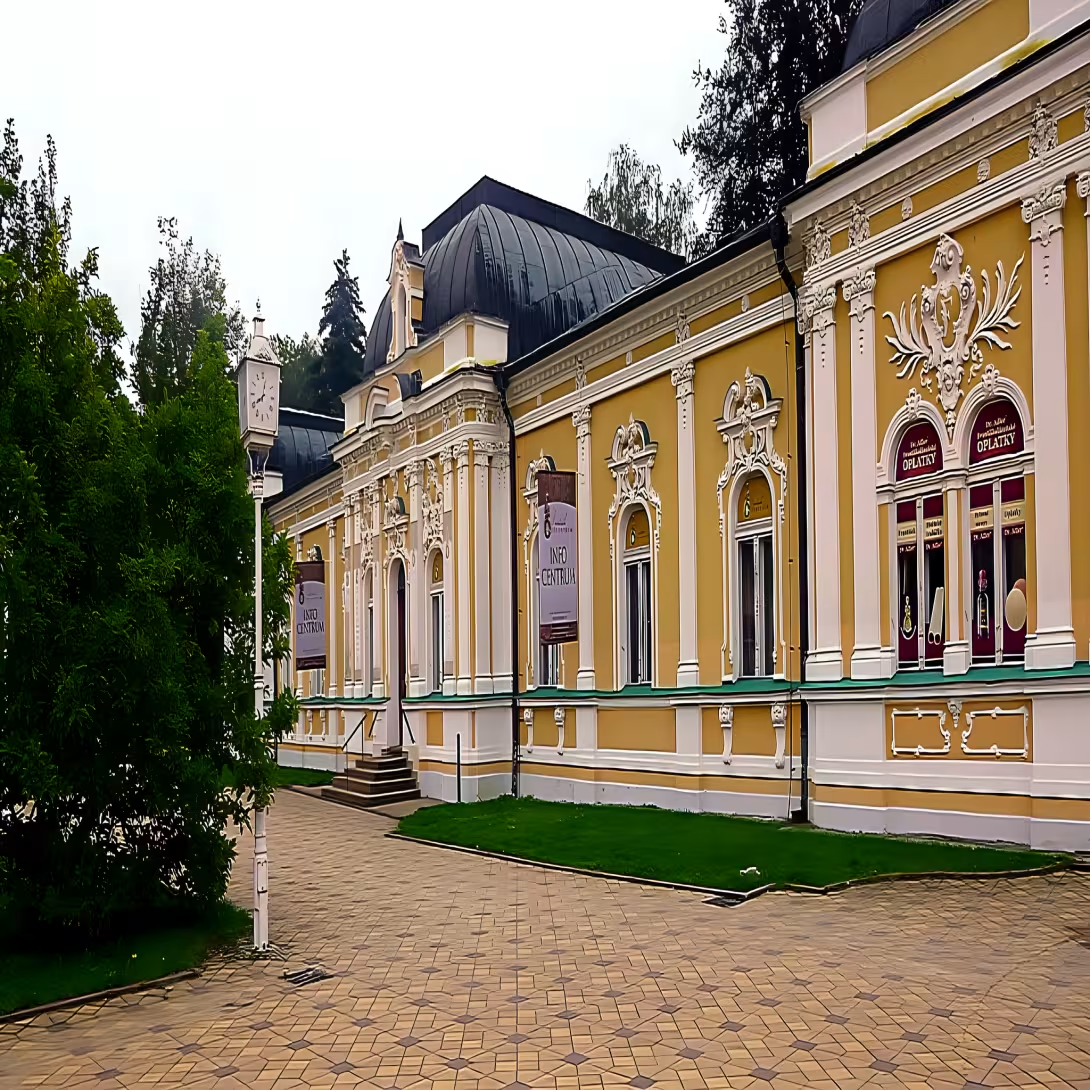
The Lázeňská poliklinika in Františkovy Lázně is a heritage-protected, single-story Neo-Baroque building constructed in 1892 as a mineral water bottling plant. Located at Národní 16/19, this significant site evolved from a 17th-century spa inn and earlier wooden filling stations into a representative civic structure designed by architect Josef Pascher. Today, the building stands as a testament to the industrial and health-oriented development of the town, reflecting the broader boom of European spa culture.
The history of the site dates back to the 17th century. A spa inn and mineral water filling station are documented near the Chebský spring as early as 1661. This early bottling plant handled the sought-after mineral water from the peat bogs, known as Moorbrunn, which was exported to Germany. Historical records indicate that by 1700, sales of this water reportedly exceeded the volume from all German spas combined. After the original log and half-timbered structure was demolished in 1814 due to poor technical condition, a new wooden, single-story building with a mansard roof was erected on reinforced foundations in 1816.
In 1822, Cheb entrepreneur Josef August Hecht leased the stagnating bottling plant and began exporting bottled mineral water abroad, becoming a pioneer of mineral water bottling in the Austrian monarchy. His innovative methods laid the foundation for the industrial bottling and expedition of natural healing sources, paving the way for later magnates like Heinrich Mattoni. By 1850, Hecht exported 250,000 bottles, and a year later, the city resumed operation of the facility. After decades of use, this second structure was demolished in 1891, and the current Neo-Baroque building was erected in 1892. In its earlier iterations, the property also housed the spa administration, as noted by the writer Božena Němcová in her correspondence.
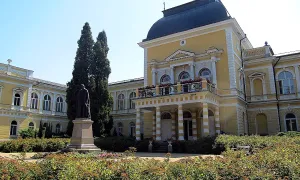
The architecture of the 1892 building is characterized by a single-story longitudinal design featuring a saddle roof and low domes over its risalits. The main facade comprises 13 window axes articulated by pilasters with volute capitals on a high plinth, which appear coupled on the risalits. The windows feature stucco framing with rich supraports and rest on a continuous sub-window cornice. The main and side entrance portals are accentuated by edicules with a masonry dormer set into the domes. The structure retains its original window frames and single-leaf wooden entrance doors with glazed semicircular transom windows and bevelled glass panes.
Ownership of the site transitioned over the centuries. For much of its history, the bottling plant belonged to the city of Cheb, which owned a majority of the public buildings in the area. In 1904, the newly independent city of Františkovy Lázně purchased the bottling plant from Cheb. Following the end of bottling operations during the First Republic, the building hosted a branch of the Cheb Savings Bank and later served as the spa directorate. In the 1950s, the Central Investigative Institute was established here, and the building officially received the name Lázeňská poliklinika in 1967.
Recent developments include plans announced in the summer of 2024 to convert the structure into an information center and exhibition space, supported by a grant from the Ministry for Local Development under the IROP program. The reconstruction project included the renewal of the roof and truss system. Updated plans indicate that the property will house an information center and a visitor center featuring an innovative exhibition dedicated to the UNESCO values of Františkovy Lázně.
Situated in the center of Františkovy Lázně within the designated UNESCO zone, the Lázeňská poliklinika offers visitors a tangible link to the region's rich industrial and spa history. Exploring this Neo-Baroque landmark provides insight into the pioneering days of mineral water export and the architectural evolution of a world-renowned health resort.
Historical milestones
- 1661
- A spa inn and mineral water filling station were established near the Chebský spring.
- 1822
- Josef August Hecht leased the bottling plant and pioneered the export of mineral water in the Austrian monarchy.
- 1892
- The current Neo-Baroque building was constructed according to the design of Josef Pascher.
- 1904
- The city of Františkovy Lázně acquired the building from the city of Cheb.
- 1967
- The building received the name Lázeňská polik
Architectural development
The site previously hosted a 17th-century inn and a wooden structure from 1816. The current 1892 building is a single-story longitudinal structure with 13 window axes, pilasters with volute capitals, and a saddle roof. It retains its original window frames and features entrance portals set into edicules.
Historical events
1892: Completion of the current Neo-Baroque bottling plant. 1967: The building was officially named Lázeňská poliklinika. 2024: Announcement of the building's conversion into an information center and exhibition space.
Owners
Owned by the city of Cheb until 1904, when it was purchased by the city of Františkovy Lázně.
Points of interest
- The Lázeňská poliklinika in Františkovy Lázně is a heritage-protected Neo-Baroque building constructed in 1892 as a mineral water bottling plant. - Located at Národní 16/19, the site evolved from a 17th-century spa inn and earlier wooden filling stations into a representative civic structure designed by architect Josef Pascher. - The history of the site dates back to 1661 with a documented spa inn and mineral water filling station near the Chebský spring. - In 1822, entrepreneur Josef August Hecht leased the bottling plant, becoming a pioneer in mineral water bottling within the Austrian
Guide
Show guide text
This text was created by artificial intelligence and has not been editorially reviewed. It may contain inaccuracies.
Welcome to Františkovy Lázně. As you stand here right now, take a deep breath and let the peaceful atmosphere of this remarkable town wash over you. Right in front of you stands the historic Lázeňská poliklinika, a heritage-protected building that holds a fascinating place in the local spa history. Take a moment to simply look at the structure before your eyes, a handsome building situated at Národní 16/19, commanding your attention with its elegant presence and historical weight.
To truly appreciate what you are seeing today, let us step back in time and uncover how this site came to be. The history here reaches back centuries before the current structure was ever imagined. As early as 1661, a spa inn and a mineral water filling station were established near the Chebský spring. Over generations, this location became a vital hub for utilizing the precious healing waters of the region. By 1822, a significant milestone was reached when Josef August Hecht leased the bottling plant. He did something truly pioneering for the era: he successfully initiated and advanced the export of mineral water throughout the Austrian monarchy, turning local spring water into a product sought after far and wide.
As the years rolled on and the reputation of these healing springs continued to grow, the original facilities simply could not keep up with the demands of a thriving spa destination. This led to the pivotal year of 1892, when the current building that you are gazing at today was constructed. The municipal authorities and visionaries of the time wanted something grand, representative, and worthy of the town's rising status. To achieve this, they turned to architect Josef Pascher, who designed the structure we see today. Later, in 1904, the city of Františkovy Lázně acquired the building from the city of Cheb, cementing its role in the civic and municipal life of the community. Finally, in 1967, the building received the official name Lázeňská poliklinika, marking yet another chapter in its remarkably versatile existence.
Now, bring your gaze back to the physical structure standing right in front of you and let us examine its architectural character. Designed by architect Josef Pascher, the building is a representative example of Neo-Baroque architecture. Take a closer look at the facade. Notice how it features richly decorated surfaces that showcase the craftsmanship of the late nineteenth century. As your eyes wander across the structure, observe the low domes situated on its risalits, adding a distinct rhythmic profile to the roofline and breaking up the horizontal expanse of the building. Every decorative element on these facades tells a story of an era when civic and industrial spa architecture was treated as a true art form.
This place is not just about brick, mortar, and architectural styles, however. It is deeply intertwined with the lives of notable historical personalities who shaped the cultural and economic landscape of the region. We have already mentioned Josef August Hecht, whose business acumen transformed mineral water export during the nineteenth century. But the cultural resonance of this area extends even further, touching the legacy of iconic figures such as Božena Němcová, whose spirit and literary presence remain woven into the historical fabric of Františkovy Lázně. Walking these streets and standing before buildings like the Lázeňská poliklinika connects you directly to the era when these influential individuals lived, worked, and found inspiration in the healing environment of the spa town.
Consider the remarkable evolution of this single spot on the map. It began as a modest seventeenth-century spa inn accompanied by simple wooden filling stations, designed purely to capture and distribute the natural bounty of the earth. Over time, as commerce and spa culture evolved, those humble beginnings gave way to a grand, representative civic structure designed by Josef Pascher in 1892. Over the decades, the building has transitioned through various roles, effortlessly adapting to the changing needs of the city and its visitors, shifting from industrial water bottling to civic health and care.
As your audio guide draws to a close, we encourage you to linger a little longer in front of the Lázeňská poliklinika. Take another slow look at the decorated facades, appreciate the historical continuity of the space beneath your feet, and let your imagination picture the bustling activity of the bottling plant and the nineteenth-century carriages that once passed this very spot. Thank you for listening, and we wish you a wonderful continuation of your journey through the timeless streets of Františkovy Lázně.
Tips for visitors
The best time to visit Lázeňská poliklinika in Františkovy Lázně is during the shoulder seasons of spring and early autumn. During these months, the spa town is less crowded, allowing you to peacefully admire the historic architecture, and the mild weather makes walking around the town very pleasant.
For transport and parking, the building is centrally located within Františkovy Lázně. You can easily reach the site on foot if you are staying in the town center, or arrive by car and public transport; please check current connections and local parking regulations in your travel planner.
When preparing for your visit, remember to bring comfortable walking shoes, as the surrounding area is designed for leisurely strolls. It is also wise to pack weather-appropriate clothing since you will be exploring outdoors, along with a camera to capture the stunning historic details of architect Josef Pascher's 1892 creation.
For photography enthusiasts, the best spots are right in the center of Františkovy Lázně where the building is situated. Early morning or late afternoon light offers the softest illumination, perfectly highlighting the architectural features and the UNESCO-recognized values of the surrounding area.
Families with children will enjoy a relaxed visit here, as the central spa area is pedestrian-friendly and safe for kids. You can combine a walk around the heritage-protected building with a gentle stroll through the town's parklands, making it an easy and stress-free outing for all ages.
Businesses nearby
Do you run a restaurant, accommodation, shop, museum, rental, wellness or other visitor service near this monument? Show yourself directly to the people heading to it — this is how they will see you in the app and on the web:
Nearby
Located in the center of Františkovy Lázně, within the area recognized for its UNESCO values.
Accommodation nearby
Themed route
1. Lázeňská poliklinika - Type: Architectural and healthcare landmark - Why visit: This is the main destination, located right in the heart of the spa town. It represents a key historical building within the area recognized for its UNESCO values.
2. Františkovy Lázně town center - Type: Urban area / UNESCO zone - Why visit: Situated right in the center of the town, this surrounding area showcases the unique architecture and historical atmosphere that earned the location its prestigious UNESCO recognition.
Seasonal recommendations
Spring brings a fresh awakening to Františkovy Lázně, perfectly complementing the neoclassical architecture of Lázeňská poliklinika. As the surrounding parklands bloom, the soft morning sunlight highlights the scaffolding and ongoing restoration work, contrasting the historic facade with modern renewal. The atmosphere is peaceful and rejuvenating, ideal for quiet strolls before the bustling tourist year begins. For practical advice, expect mild and unpredictable weather, so dressing in comfortable layers and wearing waterproof footwear for damp park paths is essential. Crowds are minimal during early spring, making weekdays the best time to visit and observe the exterior architecture without rush.
Summer envelops Lázeňská poliklinika in lush greenery and vibrant park life during the peak holiday season. The intense midday sun casts bright, sharp shadows across the construction site, while the late afternoon golden hour creates a warm glow on the historic detailing of the building. The atmosphere is lively and energetic, filled with the gentle hum of visitors enjoying the famous spa town. To manage the summer heat and larger crowds, the best time to visit is early in the morning. Practical recommendations include wearing lightweight, breathable clothing, bringing sunglasses, and staying hydrated while walking around the spa zone.
Autumn transforms the setting of Lázeňská poliklinika into a picturesque landscape of golden, amber, and russet leaves. The diffused, misty daylight of crisp autumn mornings gives the historical structure a melancholic, romantic charm as the reconstruction continues against a backdrop of falling foliage. The atmosphere is calm, reflective, and noticeably quieter than the summer months. Practical preparation requires warm coats, scarves, and sturdy shoes to handle slippery leaf-covered walkways. The ideal time for photography and viewing the exterior is mid-afternoon, just before the early dusk sets in.
Winter casts a serene, often snow-dusted quiet over Františkovy Lázně and the Lázeňská poliklinika. The low winter sun provides a brief, pale light, and early twilight descends rapidly, accentuating the stark architectural lines of the building amidst bare park trees. The atmosphere is still and contemplative, offering a true sense of historic isolation. Given the cold temperatures, practical necessities include heavy winter coats, gloves, thermal layers, and non-slip boots for icy paths. Visiting during daylight hours, preferably around noon when it is slightly warmer, is strongly advised, keeping in mind that shorter days limit the ideal viewing window.
Visualizations and artistic views


The visualisations are generated by artificial intelligence and serve as inspiration.
Photos from the area
Real photos taken near the monument


Zdroj a licence jsou uvedeny u každého snímku.
Tips from visitors
No tips yet. Be the first!
Log in and add your tip.
Sources and literature
Fotografie: Hawwah / CC BY-SA 3.0, rozlišení zvýšeno umělou inteligencí — Wikimedia Commons. The author and licence also appear when you hover over the image.
Faktickým podkladem tohoto textu byl článek na Wikipedii, jehož autory jsou přispěvatelé Wikipedie. Článek je dostupný pod licencí CC BY-SA 4.0.
Location on the map

Příběhy a pověsti
Legendy, pověsti a příběhy spjaté s touto památkou
Fotografie návštěvníků
Zatím žádné fotografie. Buďte první, kdo přidá fotografii z návštěvy!
Přihlaste se a přidejte svou fotografii nebo hodnoťte.
Za ověřenou návštěvu v aplikaci získáte víc bodů — poznáme podle GPS, že jste na místě.
Reviews and comments