






Dvorana Glauberových pramenů Villa
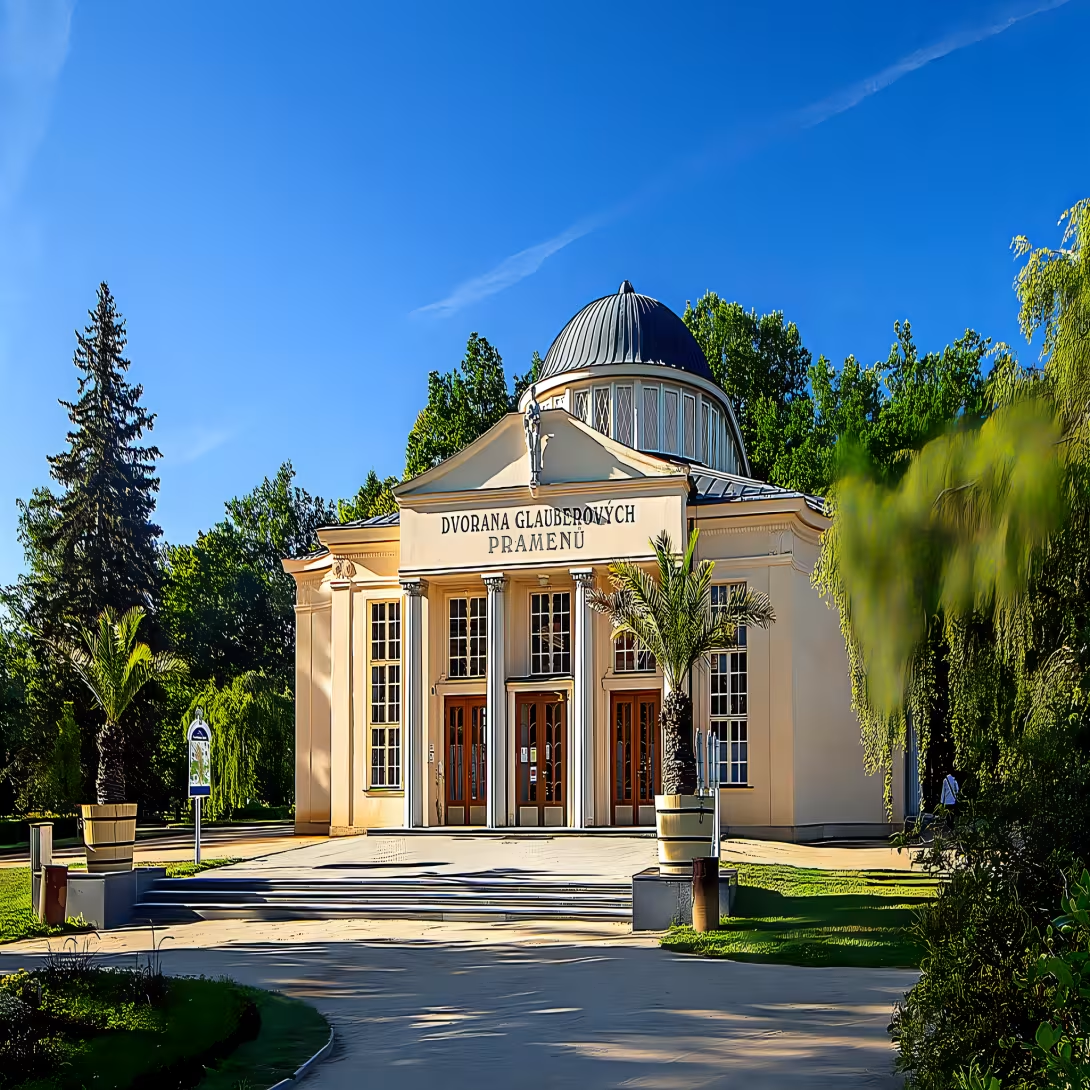
Dvorana Glauberových pramenů is a representative spa pavilion standing in Františkova Spa Park southeast of the Square of Peace. This commemorative protected building from 1930 is one of the key structures that shaped the spa during the twentieth century. Even before the First World War, it was clear that natural mineral water resources were not enough for an increasing number of visitors - more than doubled between 1900 and 1911, from 7 606 to 16 086.
After the war, the city council decided to look for new resources. In 1919, the then central inspector of the healing springs Dr Josef Knett of Vienna submitted a plan of deep wells which should discover new healing springs with high carbon dioxide content. The city council approved the proposal without any semantics. Vrty was carried out by G. Rumpel A. G. of Teplice-Shanova, and in 1920 it was a success: three new springs appeared - Church, Glauber III and Glauber IV. In particular, the source of Glauber IV, found at a depth of 92 metres, was characterised by exceptionally high content of Glauber salt.
After the first wells in 1923, nature managed to build a basic background - a small wooden pavilion in Swiss style. However, with the increasing interest of the guests, the city council felt the need for a more representative building. In 1927 she decided to publish an architectural competition. The projects of Sokolovský architect Heinrich Scherrer and local builder Ernst Engelhardt entered the finals. On 8 November 1928 the City Council elected Engelhardt's proposal as a winner. Construction works were carried out by Prosch and Engelhardt, the building was completed in 1930.
The ceremonial opening took place on 29 May 1930 on the Day of Ascension of the Lord. The ceremonial speech was given by the mayor of Dr. Franz Indra, the consecration of the building was performed by the local vicar Friedrich Kindermann. The hall was led by a more remote church spring pipe.
Architecturally, it is a new classicist building with elements of modern, art deco and crystalline expressionism. Its inspiring source is an ancient temple architecture with Egyptian Empire elements. The building has a rectangular floor plan with concave-bent corners and is dominated by a pillar porticus with a shield. The interior acts as an impression of the ancient hall - free-standing canned columns support the plains at the walls, and in the middle, the columns rise to the massive dome. The space is illuminated by windows and upper lighting in the tambur, which gives it a basillic character.
The building is decorated with the works of Cheb sculptor Adolf Mayerl. There is a granite statue in the timpanone of the facade in life size representing the healing power of the springs. In the interior there are four bronze vases in art deco style between columns.
Dvorana served not only drinking treatment, but also as a space for exhibitions. In 1975 there was an exhibition of aquarium fish, in 1976 lectures on the treatment of heart and vascular diseases. During the celebration of 200 years Františková Lazne in 1993 she hosted an exhibition on the history of the city. The building was renovated in 2018. To date, it remains an important part of the spa area and welcomes both therapeutic guests and visitors interested in the architecture and history of Františkova Lazne.
Then and now
Drag the slider to compare how the landmark may have looked when it was built with the view today.
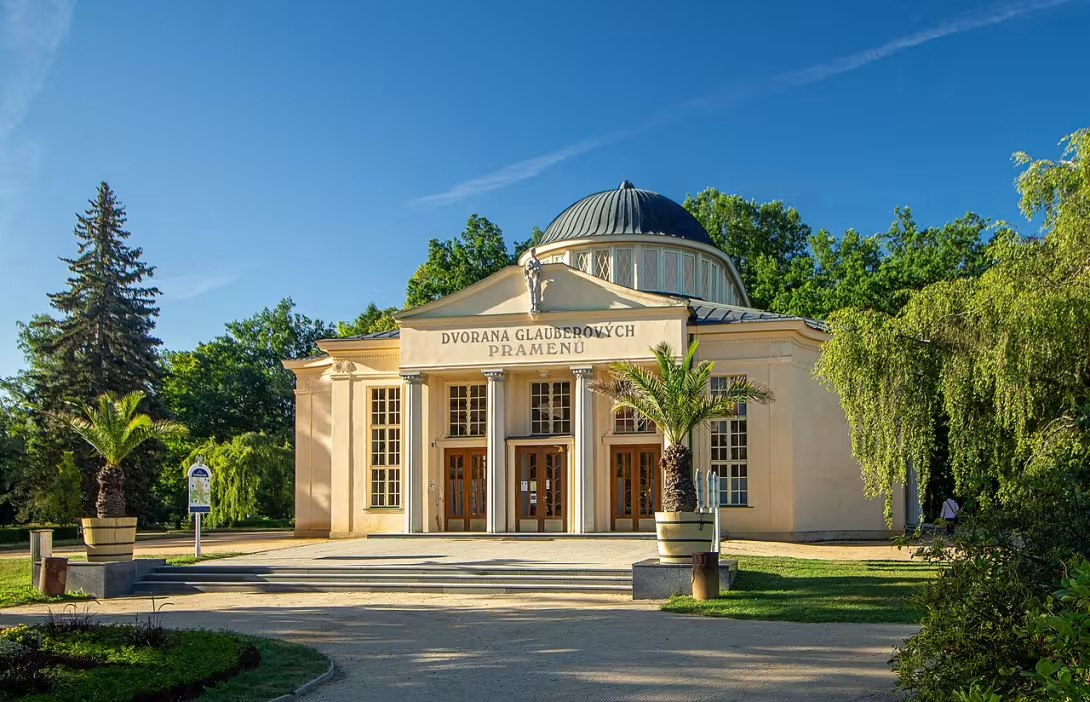

The historical appearance on the left is an AI-generated visualisation and serves as inspiration only.
Historical milestones
- 1920
- The discovery of Glauber's sources by G. Rumpel A. G.
- 1928
- The city council selected Ernst Engelhardt's proposal.
- 1930
- Completion of the building and festive opening of the courtyards.
- 2018
- Reconstruction of the building has been carried out.
Architectural development
The construction was carried out on a rectangular plan with concave corners. The facade is dominated by a pillar porticus with a shield, while the inner space breaks down the canned columns carrying the dome. Adolf Mayerl's sculptures, including granite allegory in tympanone, were used for decoration.
Historical events
1920: Discovering three mineral springs (Church, Glauber III and IV). 1928: Selection of Ernst Engelhardt's winning design. 1930: Ceremonial opening of the courtyards on May 29.
Owners
City of Františkovy Lázně
Points of interest
- Dvorana Glauberových pramenů is a monument-protected building from 1930, which stands in Františkova Lazne Park. - Three new springs were discovered in 1920, with the source Glauber IV found at a depth of 92 metres containing a high amount of Glauber salt. - Construction architecture combines neoclassicism with elements of modern, art deco and crystalline expressionism, drawing inspiration from ancient temple architecture. - There is a granite statue in the tympanon of the facade of the building, which represents the healing power of the springs. - Dvorana did not serve only for drinking
Guide
This guide is narrated by a synthetic voice generated by artificial intelligence.
Show guide text
This text was created by artificial intelligence and has not been editorially reviewed. It may contain inaccuracies.
Welcome to Františkova Spa. Right now you're standing in the heart of one of the most beautiful spa parks and you have a building in front of you that immediately captures your view with its nobility and unusual character. Dvorana Glauberových pramenů is not just an ordinary spa object. When you look at it, you probably feel it is facing something much older and more important, such as the Ancient Temple. Its presence in this green environment gives the place a sense of peace, stability and historical dignity. Before you go any further, stop for a moment and just feel the atmosphere of this place where the power of nature and human art are combined.
To understand why this building is standing here and why it is so special, we have to go back a century in time. The whole story began in 1920, when there was an event that fundamentally affected the future of this city. At that time, G. Rumpel A. G. discovered three completely new mineral springs in her works. One of them, who was named Glauber IV, was found at a considerable depth of ninety-two meters below the surface of the earth. This finding was absolutely revolutionary because the water from this spring contained a very high amount of Glauber's salt, making it an extremely valuable therapeutic source.
But with this discovery came new challenges. The number of spa guests in these years has steadily increased and the need to create a dignified and representative place where these new springs could be roofed and quality care offered to guests has become urgent. It was clear that the Františkovy Lázně needed a structure that matched their growing knowledge and significance.
Now pay attention to the architecture itself that you are currently observing. The path to its creation was long and carefully thought out. Already in 1928, the city council decided to choose the best possible design to combine functionality with high artistic expression. This lucky winner was the architect Ernst Engelhardt. Now if you look at the shapes of the building, notice how different worlds intersect. The architecture of the court is a fascinating combination of several styles. There is an obvious classicism that gives the building its symmetry and seriousness, which again reminds of the ancient temple that I was talking about.
At the same time, in its details, you will feel the modern breath of the time. You will find art deco elements that bring elegance to the building and a kind of luxury that was so sought after between the two world wars. And then there's something very specific - crystalline expressionism. This style gives the building its unusual dynamism and sharpness, which reflects the mineral structures and crystals that are so typical in this area. This whole architectural project was completed in 1930, when the court was ceremonially opened and became an immediate symbol of the modern Františková Lázna.
Looking at this memory, however, we can not only remember the stones and shapes, but also the people who have come close to this place and its development. The history of the spa is intertwined by the names of personalities who helped build the glory of this region. In connection with the development of spa care and social life at this time, figures such as Josef Knett, Franz Indra, Friedrich Kindermann or Adolf Mayerl have often appeared here. Although their roles may seem distant, their presence and efforts to develop the spa have created the rich culture that you still feel in this park today.
You might find one interesting thing that connects the depths of the earth to the surface that you're standing on right now. Imagine the incredible power of water that was raised from a depth of over 90 meters. The salty, healing water, which was so unique, was the main engine that led to such a magnificent courtyard. It is a fascinating combination of geology and human ambition - the deep darkness beneath the ground has become an architecture that shines in the middle of the park.
And even though this building is almost 100 years old, it's not just a dead monument to the past. To serve us, she had to go through modern care. In 2018, a thorough reconstruction was carried out in the building to ensure that its majestic appearance and historical value were preserved for future generations. This allows you today to perceive its beauty in almost intact form, as people saw in 1930.
But we will not delay you any longer. Dvorana Glauberových pramenů is just one of the many treasures that Františkovy Lázně offers you. We recommend you continue to walk through the park, view the building from different angles and let yourself drift by the calm of this place. Feel the shadows that cast its shapes and enjoy the atmosphere created here by the combination of history, architecture and healing forces of nature. We thank you for your time and wish you a pleasant continued journey along the spa promenade.
Tips for visitors
The best time to visit is in the morning during the weekdays when you avoid the greatest burden of spa guests and enjoy the peaceful atmosphere of the pavilion in the morning light, which lights up the architecture beautifully.
Transport to Františková The spa is possible by train and bus, near the courtyard you can use the marked parking lot. The exact connection and parking possibilities we recommend to verify in the current traffic search engines.
Take with you a spa cup for tasting springs and comfortable shoes that will allow you to enjoy a walk through adjacent parks without fatigue.
It is ideal to use soft light in the morning or late afternoon hours when the details of the building from 1930 stand out. The best shots are taken from the front of the court.
For families with children, the surroundings of the courtyard are ideal thanks to large parks in the surroundings of Peace Square, where children can run freely while you relax near the spa colonnade.
Frequently asked questions
Is Dvorana Glauberových pramenů open to the public?
The yard is usually open to visitors, but it is recommended to contact the official website before the trip or contact the local tourist information service.
How do I get to the place by car / public transport?
The location is well accessible both by car and public transport. For precise connection we recommend using online route search engines.
How much is the entrance fee and is it paid on the spot?
Admission fees are usually paid on the spot. Current prices can be found on the official site of the sights or contact the administrator directly.
Is the tour suitable for children and seniors?
The tour is generally suitable for families with children and seniors. The site offers a quiet environment, but for older people it may be necessary to consider the length of walks.
How long does the tour take?
The tour of the Dvorana Glauber springs usually takes from 30 minutes to an hour, depending on how much time you want to spend getting to know history and architecture.
What are the opening times and booking is required?
Opening hours may vary depending on the season. We recommend checking the current information about opening times and booking options before visiting.
What's interesting in the immediate vicinity?
In the area you can visit the spa centres of Františkova Lazne, which offer various relaxation options and beautiful gardens. Natural parks nearby are also ideal for short walks.
For kids
More than a hundred years ago, exactly 96 years ago, a beautiful and mysterious building, called Dvorana Glauberových pramenů, spread out in a small town of Františkova Lazne. It was like a wizard decided to build a wild and beautiful palace in a beautiful Swiss garden park that could be home to a whole book or more of Harry Potter. But instead of magic, the secrets of mineral waters and health good were hidden in this place.
Businesses nearby
Do you run a restaurant, accommodation, shop, museum, rental, wellness or other visitor service near this monument? Show yourself directly to the people heading to it — this is how they will see you in the app and on the web:
Nearby
Františkovy Lázně, parks around Peace Square, spa colonnade.
Accommodation nearby
Themed route
1. Františkovy Lázně - Municipality. The starting point of the journey in the picturesque setting of the spa town. 2. Parks around Peace Square - Green area. A place for a peaceful walk and admiration of surrounding vegetation. 3. Spa Colonnade - Architectural element. Traditional space for walks that connects spa elements. 4. Dvorana Glauberových pramenů - Monuments. Top of the route where there are significant healing springs.
Seasonal recommendations
In the spring the surrounding beds flourish and the park gets fresh, green color. The atmosphere is full of hope and the morning sun gently hits the columns of the colonnade. We recommend to dress in layered clothes because the weather in this area is usually variable. The ideal time to visit is in the morning when the air is the cleanest.
The summer season brings rich greenery and an energetic atmosphere full of visitors. The sun creates sharp shadows under the vaults, which is suitable for photography. For the high season, come first thing in the morning to avoid the biggest crowds. Choose light, breathable clothes and don't forget the sun protection.
Autumn in the spa fascinates golden leaves and frequent morning fog, which give the monument a mysterious touch. The environment acts calmer and encourages deep contemplation. Moisture resistant shoes and lighter jacket are suitable. The best thing is to visit the place in the afternoon when the light softens.
In winter, silence and freezing cleanliness dominates, while snow highlights architectural details of the building. The atmosphere is cut but cozy, especially in advent time. It is necessary to have warm thermal clothing and count on shortened opening times. We recommend arriving around noon to help you with maximum daylight.
Visualizations and artistic views


The visualisations are generated by artificial intelligence and serve as inspiration.
Photos from the area
Real photos taken near the monument


Zdroj a licence jsou uvedeny u každého snímku.
Atmosphere of the place
This atmospheric visualisation of the place and period was generated by artificial intelligence. It is not real footage of the location.
Tips from visitors
No tips yet. Be the first!
Log in and add your tip.
Sources and literature
Fotografie: VitVit / CC BY-SA 4.0, rozlišení zvýšeno umělou inteligencí — Wikimedia Commons. The author and licence also appear when you hover over the image.
Faktickým podkladem tohoto textu byl článek na Wikipedii, jehož autory jsou přispěvatelé Wikipedie. Článek je dostupný pod licencí CC BY-SA 4.0.
More monuments – Františkovy Lázně
Show all in the municipality

Příběhy a pověsti
Legendy, pověsti a příběhy spjaté s touto památkou

Fotografie návštěvníků
Zatím žádné fotografie. Buďte první, kdo přidá fotografii z návštěvy!
Přihlaste se a přidejte svou fotografii nebo hodnoťte.
Za ověřenou návštěvu v aplikaci získáte víc bodů — poznáme podle GPS, že jste na místě.
Reviews and comments