



Lázně Kyselka Building complex
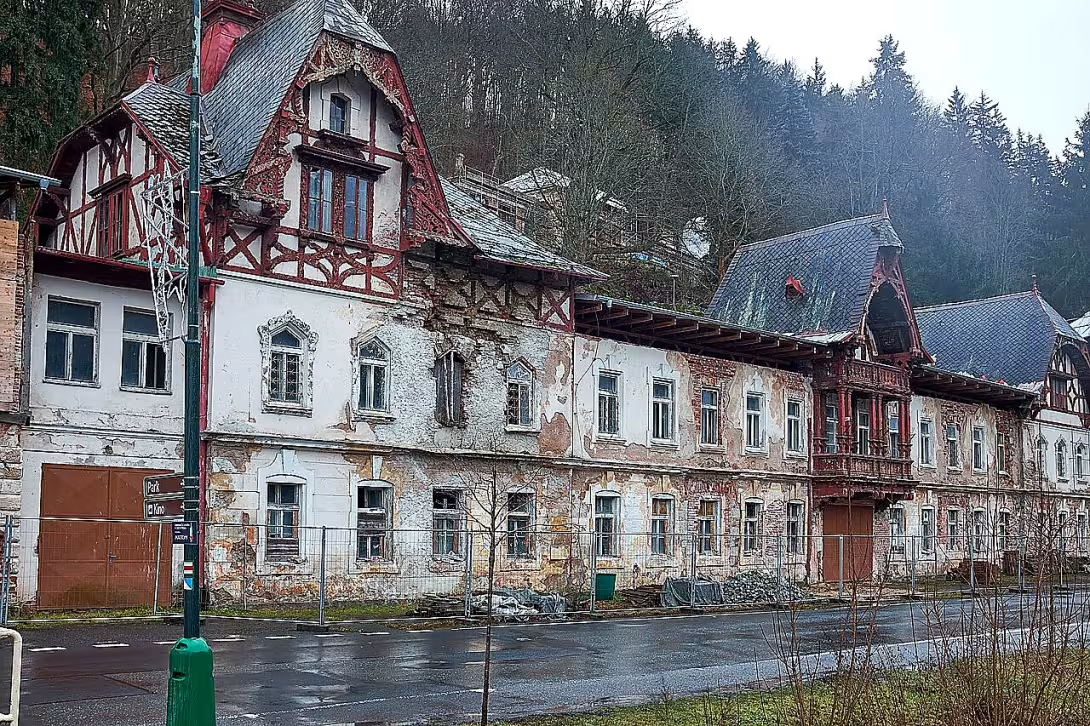
Lázně Kyselka, formerly known as Kysibl and Bad Gießhübl in German, is a historical complex of former baths in the village Kyselka near Karlovy Vary. This complex is located in the south of the village itself, through the Ohří and below the top of Bučina (582 m above sea level), which is the western outturn of the Doupovský mountains. Lázně Kyselka is known for its sources of mineral water, especially Mattoni's mineral water, which contributes to its historical and cultural value.
The existence of these sources was recognised centuries ago. The first written mention of them dates back to 1522, suggesting long-term knowledge and exploitation of these sources. In 1614 it was already demonstrated that the springs were fenced and their surroundings cleaned properly, suggesting organised use of the spa. The interesting thing is that drinking the "beech acid" had to be paid until in 1687 the earls of Chernínová allowed their subject springs to drink for free. The first chemical analysis of the water was carried out by Friedrich Halle in 1724, which recommended mineral water for use.
It was in these spas that the industrial use of the rich springs began in 1793. The new owner of the estate, Count Johann Josef Stiebar z Buttenheimu, had the idea to export mineral water and set up a factory for the production of stoneware jugs. The sale of local water started three years later in Vienna, Prague and Karlovy Vary themselves.
The first spa buildings were built between 1826 and 1834 by Wilhelm von Neuberg. The glory of the spa and tasty water grew, as confirmed by the visit of the Greek King Ota I in 1852. In his honor, the main source was named.
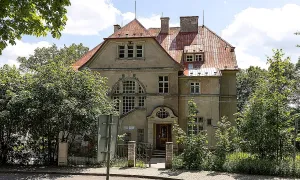
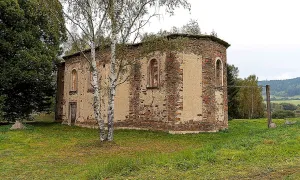
Epoch spa Kyselka was mainly the activity of Heinrich K. Mattoni, who rented the main spring in 1867 and began to wrap it in glass bottles. In 1873 he purchased the whole spa and subsequently expanded it and reworked it. Mattoni built a new colonnade, sanatorium, water treatment institute, hotels, restaurants, promenades, cableway, chapel of Saint Anne (1884) and monumental residence "Castle." He also brought the railway to the village in 1894 so that the spa peace would not disturb the wagons.
After World War II, the spa was converted into a children's recovery facility and operated under the Czechoslovak state spa until 1990. After this time, the site began to fall, although some maintenance was carried out.
The current state of the spa is the result of several changes in owners and attempts to revitalize. Since 2013, the utility company Lázně Kyselka has provided protection and restoration of the premises. As part of the reconstruction, the buildings in her property were repaired, as well as on the premises of Karlovy Vary mineral waters a.s., which belong to Italian businessman A. Pasquale.
The spa area Kyselka is today a monument protected building complex that attracts interest in its history and architecture. Visiting the spa Kyselka means a journey to the past, where we can learn more about the development of the 19th century European spa culture and the industrial revolution that enabled the mass bottling plant and the distribution of mineral waters.
Lázně Kyselka is not only a monument to the past, but also a testament to the historical importance of spa traditions. Their renewal is an important step towards preserving cultural heritage and reminds us of how important health care and relaxation were and are still. Visiting the spa Kyselka means not only exploring history, but also appreciating efforts to preserve them for future generations.
Historical milestones
- 1522
- First written mention of the existence of springs.
- 1724
- First chemical analysis of the water carried out by Fridrich Hall.
- 1852
- Visit of the Greek King Ota I, whose honor was named the main source.
- 1876
- Exports of mineral water in excess of a million bottles.
Architectural development
The first spa buildings were built in 1826-1834 by Wilhelm von Neuberg. A new colonnade, a sanatorium including the Swiss House, a water treatment institution, a chapel of St. Anne from 1884 and a monumental chateau were established in the Mattoni era.
Historical events
1867: Hire of Heinrich Mattoni's main source; 1873: The purchase of the whole Mattonim Spa; 1894: Bringing the railway to the municipality Kyselka.
Owners
Count Černínová, Count Johann Josef Stiebar z Buttenheimu (1793), Wilhelm von Neuberg (1826), Heinrich K. Mattoni (1873), descendants of Mattoni (until the end of World War II), Czechoslovak state spa and springs (until 1990), various private owners (U. Markard, Š. Chalitujev, P. Dostál), o.p.s. Lázně Kyselka and Karlovy Vary mineral waters a.s.
Points of interest
The main spring was named after the Greek King Ota I. After World War II, the campus served briefly as a refugee camp for orphans from the Greek Civil War. Mattoni also built his own hydroelectric power plant and cableway.
Guide
Show guide text
This text was created by artificial intelligence and has not been editorially reviewed. It may contain inaccuracies.
Welcome to Kyselka. You stand in a place that is deeply connected to the rhythm of water and the power of nature. In front of your eyes is a vast complex of buildings that once represented the peak of luxury and health care. Feel the calm that brings to this place the proximity of the Ohre River, which flows in the vicinity and whose charms accompany your step. Above this whole place is the top of Bučina, which creates a protection frame for this area. Feel the atmosphere of this place where the wilderness of nature is combined with the human effort to create space for rest and healing.
Now let's go back deep into the past to understand how this place came to be. The story of the springs here is not new. In the year fifteen hundred twenty-two, the first mention of the existence of these sources appeared in the period records. But back then, it was little secrets hidden in the landscape. But the real scientific basis for future glory was laid by a man named Fridrich Halle. In the year seven hundred and twenty-two four performed the first chemical analysis of the water, proving that the mineral drink here has real strength and unique composition. This was the moment when only springs became a place that began to attract knowledge and treatment.
Now pay attention to the architecture and overall arrangement that surrounds you. While time was changing, this complex maintained its important structure. Feel the space that makes up colonnades, sanitariums and hotels. Look at how these buildings are located in the landscape. The colonnades were designed to allow visitors to walk in a quiet and protected environment while enjoying the healing effects of water. The whole complex acts as a harmonious whole, where architecture not only solves the function, but also how people in this space will feel peace and dignity. Feel the lines that lead the eye from one building to another, and imagine how people in the past used to move around here looking for rest.
To understand why this place is so special, we need to talk about the personalities who left their trail. The most important figure, without which Kyselka would not be what it is today, was the businessman Heinrich Mattoni. He was a man with a tremendous vision and relentless energy. In the second half of the nineteenth century he took this resort into his own hands and spread it considerably. He wasn't just a builder, he was the creator of the whole world around mineral water. Thanks to his efforts, Kyselka became known worldwide.
Another important figure on behalf of which this place is joined is the Greek King Ota first. His visit in the year one thousand eight hundred fifty-two was the moment of the greatest glory for the spa. It was such an important moment that the main source was named after him to his honor. Imagine the excitement and prestige that such a visit has brought. Kyselka became a place where politics, royal dignity and natural wealth met.
If you look at the scope of this place, you might be interested in the incredible size of the success at that time. In the year of a thousand eight hundred seventy six, over a million bottles of mineral water were exported from the premises. This is a number that shows how huge the impact this place had on the world. But Mattoni didn't just end up selling water. He was a modern man of his time. Within this area he also built his own hydroelectric power plant and even a rope track, which at that time represented a technological peak and a demonstration of progress.
But the place also hides less celebrated, but very human stories. After World War II, this area went through a very difficult time. He served here briefly as a camp for orphans who came from the Greek Civil War. It is a fascinating and sad contrast - a place that was created for the luxury and rest of kings, became a haven for children seeking safety and a fresh start. This layer of history gives this place depth and reminds us that the spa is not only about buildings, but above all about people and their fates.
Now, I want to invite you to take another journey through this area. See the individual parts, feel the atmosphere and try to imagine the times when the footsteps of kings and the noise of water in new facilities were heard. Every corner here tells a story. Whether you decide to continue along the river or go towards the buildings, let yourself be carried away by the history of this extraordinary place. Thank you for being with us, and we will wait you out on your next survey of Acid.
Tips for visitors
Best time to visit Spa Kyselka is the period from spring to autumn when nature is in full beauty and the temperature is pleasant. This time of year offers ideal conditions for relaxation and walking in surrounding forests.
You can find current information about routes online.
When visiting, remember suitable shoes for walking on more permanent paths, protective sunglasses and warm clothes in winter. If you plan to relax at the springs, it may be useful to bring a handkerchief or a plaid.
Photography at the Spa Kyselka offers a beautiful view of the River Ohře and the surrounding mountain landscape. The best light for photos is usually in the early morning or evening when the sun illuminates the mountains with golden light.
In the vicinity of the Spa Kyselka is located the Upper Bučina and Doupov Mountains. These places are ideal for short trips, which can be done with children. It is advisable for families with small children to prepare a luggage with a sunshade and a drink.
Frequently asked questions
Can the monument be visited?
Some buildings of this kind are open for guided tours, others serve another purpose or are privately owned. We have not verified whether and when this monument is open – please ask the operator. According to the heritage register the structure is in poor condition – do not enter it and take care nearby.
What are the opening hours and admission?
We have not verified the opening hours or admission. Current information is published by the operator.
Where is the monument?
Location: Kyselka. The map on this page shows the exact spot.
Why is the monument protected?
It is listed in the Central List of Cultural Monuments of the Czech Republic as a cultural monument (register no. 1000131913).
Businesses nearby
Do you run a restaurant, accommodation, shop, museum, rental, wellness or other visitor service near this monument? Show yourself directly to the people heading to it — this is how they will see you in the app and on the web:
Nearby
Vrch Bučina, řeka Ohře, Doupovské hory.
Accommodation nearby
Trips and activities nearby
Guided tours, tickets and activities nearby from GetYourGuide
Affiliate link: if you buy from the partner, we may receive a commission. The price for you does not change.
Search tours and activities →Themed route
Thematic cruise route from Spa Kyselka
1. Lázně Kyselka (Main objective)
Type: Field spa complex
Why is worth a visit: This spa location is famous for its mineral springs and relaxation environments. The history of the spa dates back to the 19th century, which brings an interesting past for visitors.
2. Top of Bučina
Type: Horizontal exclusion
Why is it worth a visit: This hill offers a beautiful view of the surrounding countryside, especially the River Ohře and the Doupo Mountains. It is an ideal place for picnic or exploring nature in a quiet atmosphere.
3. River of the Bend
Type: Water flow
Why is worth a visit: The river is a popular place for relaxation and short walks along its shore. It is a place where you can enjoy a quiet moment in nature with the opportunity to observe wild flora and fauna.
4. Doup Mountains
Type: Horstrike
Why is worth a visit: This mountain area offers many possibilities for hiking, including walking mountains and observing views of the surrounding countryside. It is an ideal place for people looking for natural beauty and fresh mountain air.
This route offers a combination of relaxation, nature views and possibilities to explore the history and landscape around the Spa Kyselka.
Seasonal recommendations
Spring: In the spring season Lázně Kyselka offers a unique view of the rebuilding nature when flowering shrubs and trees of the garden park create beautiful flower tapestries. Sunny days provide ideal light for photography, while long spring days allow extensive walks around historic buildings. Visitors should choose light clothes with the possibility to add a layer because temperatures may vary significantly during the day. This time of year is ideal for those who want to enjoy more peaceful visits without large crowds.
Summer: In summer, Lázně Kyselka is transformed into a place full of life, where the green garden is in full bloom and the sunlight fills historical architecture. Hot days can be intense, so visitors should not sleep with sun protection coat or bandana and plenty of drinking water.
Autumn: In the autumn period Lázně Kyselka melancholic charm is acquired when tree leaves colour green and red palette. Sunshine days are short, but light can create a magical effect on old stone facades. Visitors should not sleep on warm clothes and perhaps an umbrella, because autumn weather is variable. This time of year offers a peaceful atmosphere for enjoying history and nature without fear of the summer crowd.
Winter: Winter at Spa Kyselka brings a quiet and snow paradise, where the whole monument is covered with white tarp. The light is colder and shielded, giving a strange atmosphere to the old architecture. Visitors should not sleep on warm clothes including leather gloves and hat to enjoy their walk without cold sickness. Winter season is ideal for those looking for quiet moments in a unique environment where history and nature become part of the snow region.
Visualizations and artistic views

The visualisations are generated by artificial intelligence and serve as inspiration.
Photos from the area
Real photos taken near the monument


Zdroj a licence jsou uvedeny u každého snímku.
Tips from visitors
No tips yet. Be the first!
Log in and add your tip.
Sources and literature
Photos: Lubor Ferenc / CC BY-SA 4.0 — Wikimedia Commons. The author and licence also appear when you hover over the image.
Faktickým podkladem tohoto textu byl článek na Wikipedii, jehož autory jsou přispěvatelé Wikipedie. Článek je dostupný pod licencí CC BY-SA 4.0.
Location on the map

Příběhy a pověsti
Legendy, pověsti a příběhy spjaté s touto památkou

Fotografie návštěvníků
Zatím žádné fotografie. Buďte první, kdo přidá fotografii z návštěvy!
Log in a přidejte svou fotografii nebo hodnoťte.
Za ověřenou návštěvu v aplikaci získáte víc bodů — poznáme podle GPS, že jste na místě.
Reviews and comments