



Lesní pramen Other
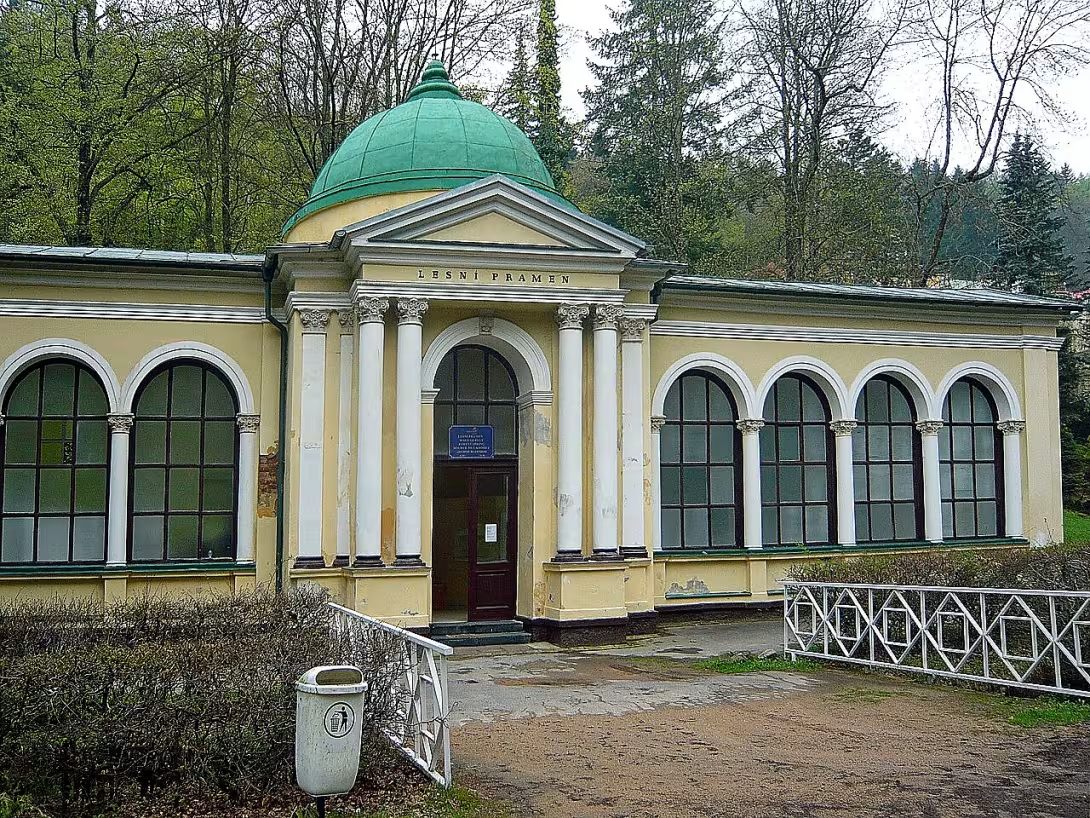
Lesní pramen is a mineral resource in Mariánska Spa. His pavilion is protected as a cultural monument of the Czech Republic. This ferrous acid rises in the northern part of town in the spa park near Třebízský creek. The building excels with specific water composition and classical architecture.
The source was already known in 1683 under the German name Schneidsaeuerling. The name Lesní pramen was acquired around 1828. In 1827 the spring was captured and three years later, in 1830, he received a wooden pavilion. The northern and eastern part of this building was subsequently glazed in 1834.
The development of the construction continued in 1840. Abbot Melchior Mahr had the wooden pavilion demolished and replaced it with a circular pace with 16 Corinthians columns. The current classical form of the building was obtained in 1869 thanks to the builder Friedrich Zickler. At the beginning of the second half of the 20th century, the building was glazed during reconstruction.
The temperature of the water broth is approximately 7,6 ° C and its composition is significantly different from the other sources in the site. Due to its ability to slightly alkalise stomach contents, it is suitable for the treatment of the digestive tract. It is also used for inhalation, lavage and gargling during upper respiratory problems. In the past, this mineral drink was often diluted with whey or seasoned with lemon juice.
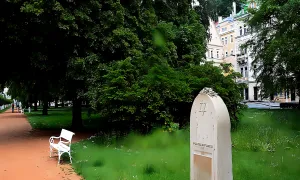
There are several monuments in the area. These include the statue of Goethe and Muse from 1975, the author of which is German sculptor Heindrich Drake. To honor the writer Václav Beneš Třebízský, who spent the last days of his life here in 1884, the local memorial stone serves. There is also a newly built musical pavilion for the summer performance of orchestras in the surrounding area, which is one of the most beautiful park modifications in the city.
The source is available every day from 6:30 to 12:00 and from 16:00 to 18:00. The water is also freely available from the pipeline directly at the Třebízský creek.
Unique healing properties of water and classical architecture make the Forest Spring a valuable place. It is an ideal destination for those looking for a peaceful walk in the historical park.
Historical milestones
- 1683
- The source was known as Schneidsaeuerling.
- 1827
- The spring has been captured.
- 1830
- The spring was covered with a wooden pavilion.
- 1869
- The pavilion has acquired its classical form today thanks to the builder Friedrich Zickler.
Architectural development
Originally, the spring was covered with a wooden pavilion in 1830, which was later partially glazed. In 1840 it was replaced by a circular pace with Corinthians' columns. Today's classical form was obtained in 1869 and in the second half of the 20th century it was glazed during reconstruction.
Historical events
1683 - source known as Schneidsaeuerling; 1840 - building a circular temple with 16 columns; 1869 - the emergence of today's classical form of pavilion.
Points of interest
- The source was already known in 1683 and the name Lesní pramen was acquired around 1828. - In 1840, Abbot Melchior Mahr built a circular temple with sixteen columns. - Water from the spring has often been diluted with whey or seasoned with lemon juice in the past. - The statue of Goetheus and Muse from 1975 and the memorial stone of Václav Benes Třebízský is situated in the area. - Pavilion is protected as a cultural monument of the Czech Republic and stands out with classical architecture.
Guide
Show guide text
This text was created by artificial intelligence and has not been editorially reviewed. It may contain inaccuracies.
Welcome to the quiet and green part of Marian Spa. Right now, you're standing in front of a place where nature encounters human architecture in complete harmony. In front of you is the pavilion of the Forest Spring, which acts as a peaceful port in the middle of the spa park. Feel the air around you, the smell of the surrounding trees and the view of this building, which for many years has served as a home for one of the precious waters of this city. It's a place that immediately transmits you to another time away from the hustle and bustle of the modern world.
Now let's look together at how people got to this place. The history of this spring goes much deeper than you would have seen from the perspective of the current building. The water has been rising here since very long ago and its existence was already known at the end of the seventeenth century, namely in the year one thousand six hundred eighty-three. At that time, people knew him under a different German name, but with the advancing time he lived up and consolidated the name Lesní pramen, which probably won around a thousand eight hundred twenty-eight. Imagine what this place looked like when there were no paths or pavilions built here, and the water just came out of the ground in a wild forest environment.
The interest is to see how the way people treated this water gradually changed. The first steps to capture it were taken in the first half of the nineteenth century. Exactly in the year one thousand eight hundred twenty-seven the spring was captured so that it could be handled better and the water was protected from impurities. Only three years later, in the year one thousand eight hundred thirty, the spring was first covered. At that time, however, it was not a stone building like you see today, but a simple wooden pavilion. It was a modest start, but it confirmed the high value of the water here.
Now pay attention to the architecture itself that surrounds you. If you look at the building, you will see its present form, which is the result of the work of a builder named Fridrich Zickler. It was in the year of the thousand eight hundred sixty-nine that he transformed the original wooden structure into a building in a classical style. Note the purity of the lines and balance of the whole. Classicism tried to return to the ideals of the ancient, which manifests itself in the calm and dignity of this building. Look at the facade and feel the atmosphere of elegance, which is so typical for the whole spa area. This pavilion is not just an ordinary building, it is a protected cultural monument that shows how much weight people used in nineteenth century healing springs.
When we think about the people who were connected to this place, we must not forget the personalities who left their mark. One of them was Abbot Melchior Mahr. It was in the year of a thousand eight hundred forty that he had built a circular temple that decorated sixteen columns. Imagine this scene before the building turned into today's. Václav Beneš Třebízský also plays a role in the history of this place, which are the names that are firmly linked to the development and management of the region.
Let us now stop at what is actually flowing from this spring. It's iron acid. This means that water contains iron and carbon dioxide, which gives it specific properties. It is thanks to this composition that water from the Forest Spring is used to treat the digestive tract and also to help with upper respiratory tract diseases. It is fascinating to think how many thousands of people have come here over the centuries with hope of recovery and how many hours they have spent in the silence of this park while slowly drinking healing water.
And now I'm going to transfer you to some interesting things you might not find in the regular guides. The water from this spring has tasted different in the past than we know it today. People were looking not only for health but also for taste. It was often the case that the water was diluted with whey or seasoned with lemon juice to make it more pleasant to drink. It's a little detail that shows us how people have experimented with curative bark in the past and how they've tried to combine health with culinary pleasure.
When you look around the premises, your attention should not escape the sculpture of Goetheus and Muse. It is a beautiful element that gives the whole space depth and reminds us of the connection between the healing power of nature and the inspiration that great poets and artists sought. This statue recalls that Mariánské Lázně was not only a place for the sick, but also a centre of culture and intellectual meeting.
Now imagine the whole journey this spring has traveled. From a forgotten resource in the woods in the seventeenth century, to a simple wooden shelter, to today's elegant pavilion. It all shows respect for the country and its gifts. You are standing in a place where time has stopped and where every drop of water tells its own story about the people who are here looking for peace and health.
Let's enjoy this moment for a while. Try to take a deep breath and feel the silence that exists here in the northern part of town. Lesní pramen is a symbol of endurance and purity. It's a place where you can turn off all your worries for a while and just be present at this moment.
Now that you know the story of this place, I suggest you go through the surroundings of the pavilion, see the details of the classical architecture and maybe stop by the Goethe sculpture so that you can relax and realize the atmosphere of this unique corner of Mariánské Spa. I hope that your visit to the Forest Spring has enriched you and that you have felt the same peace that visitors have felt here over a century ago.
I wish you a pleasant journey along other beautiful sights of this city. Continue to follow the paths of the spa park and discover other secrets that hide these places. Thank you for your attention and quiet farewell to you at this beautiful spring.
Tips for visitors
The best time to visit is spring or autumn, when the colors of the spa park complement the atmosphere of this place in the northern part of town. Transport to the area is possible by car and public connections; Check specific routes in current search engines. In the park we recommend to take comfortable shoes suitable for nature walks and your own water container if you wish to taste ferrous acid. We recommend to the photographers to look for morning or late afternoon lights that highlight the details of the pavilion and the surrounding greenery. During the visit, focus on the surrounding monuments in the area. You can admire the sculpture of Goetheus and Muse, the memorial stone of Václav Benes Třebízský or the modern musical pavilion, which stands near the Třebízský creek. For families with children it is ideal to combine a visit to the spring with a walk along the creek.
Frequently asked questions
Can the monument be visited?
We have not verified whether this monument is accessible. Please ask the owner or operator, or the local municipal office.
Where is the monument?
Location: Mariánské Lázně. The map on this page shows the exact spot.
Why is the monument protected?
It is listed in the Central List of Cultural Monuments of the Czech Republic as a cultural monument (register no. 1000130103).
Businesses nearby
Do you run a restaurant, accommodation, shop, museum, rental, wellness or other visitor service near this monument? Show yourself directly to the people heading to it — this is how they will see you in the app and on the web:
Events nearby

Zdroj akcí: otevřená data měst a obcí ČR (Národní katalog otevřených dat) a kalendář akcí Národního památkového ústavu.
Nearby
V areálu se nachází sousoší Goethe a Múza od Heindricha Drakeho, pamětní kámen Václava Beneše Třebízského a moderní hudební pavilon. Pramen leží u Třebízského potoka v rámci parkových úprav.
Accommodation nearby
Themed route
Here is a proposal for a thematic walk on the premises:
1. Lesní pramen (natural monument) - The main destination of the road, which originates in the Třebízský creek as part of the park modifications. 2. The memorial stone of Václav Benes Třebízský (monument) - A place reminiscent of an important personality, located near the spring. 3. The statue of Goethe and Muse (the work of art) - Statue by Heindrich Drake, which decorate the common space of the complex. 4. Music pavilion (construction) - Modern space designed for cultural experiences, which complements the park landscape.
Seasonal recommendations
In spring, the surroundings of the spring awaken to life and the forest path is covered with fresh greenery. The air is moist and smells of blooming nature, creating a refreshing atmosphere. We recommend mud resistant shoes and a visit in the morning when dew is still visible on the leaves.
In the summer months the densification of the forest provides a pleasant shade and cool shelter from the heat. Light penetrates the treetops in the rays, creating a shadow game on the ground. It is advisable to choose light clothes and repellent against insects, while the best is to set off in the noon heat, when the forest is the most quiet.
Autumn brings to the landscape a colorful colour of leaves and a misty wound that gives the place a mysterious touch. The atmosphere is quiet and melancholy, accompanied by the shrub of falling leaves. It is practical to take a waterproof jacket and visit a place in the afternoon when the sun gently glows the surroundings.
In winter, the landscape can be covered with snow, which soothes all sounds and highlights the purity of the forest landscape. The site acts dreamy and exposed, with a freeze-crystallizing moisture at the water source. Hot winter equipment and solid footwear with anti-slip soles are essential, ideally on a clear winter day.
Visualizations and artistic views

The visualisations are generated by artificial intelligence and serve as inspiration.
Photos from the area
Real photos taken near the monument


Zdroj a licence jsou uvedeny u každého snímku.
Tips from visitors
No tips yet. Be the first!
Log in and add your tip.
Sources and literature
Photos: Panejad / CC BY-SA 3.0 — Wikimedia Commons. The author and licence also appear when you hover over the image.
Faktickým podkladem tohoto textu byl článek na Wikipedii, jehož autory jsou přispěvatelé Wikipedie. Článek je dostupný pod licencí CC BY-SA 4.0.
Location on the map


Příběhy a pověsti
Legendy, pověsti a příběhy spjaté s touto památkou
Fotografie návštěvníků
Zatím žádné fotografie. Buďte první, kdo přidá fotografii z návštěvy!
Log in a přidejte svou fotografii nebo hodnoťte.
Za ověřenou návštěvu v aplikaci získáte víc bodů — poznáme podle GPS, že jste na místě.
Reviews and comments