



Lhotice Fortress
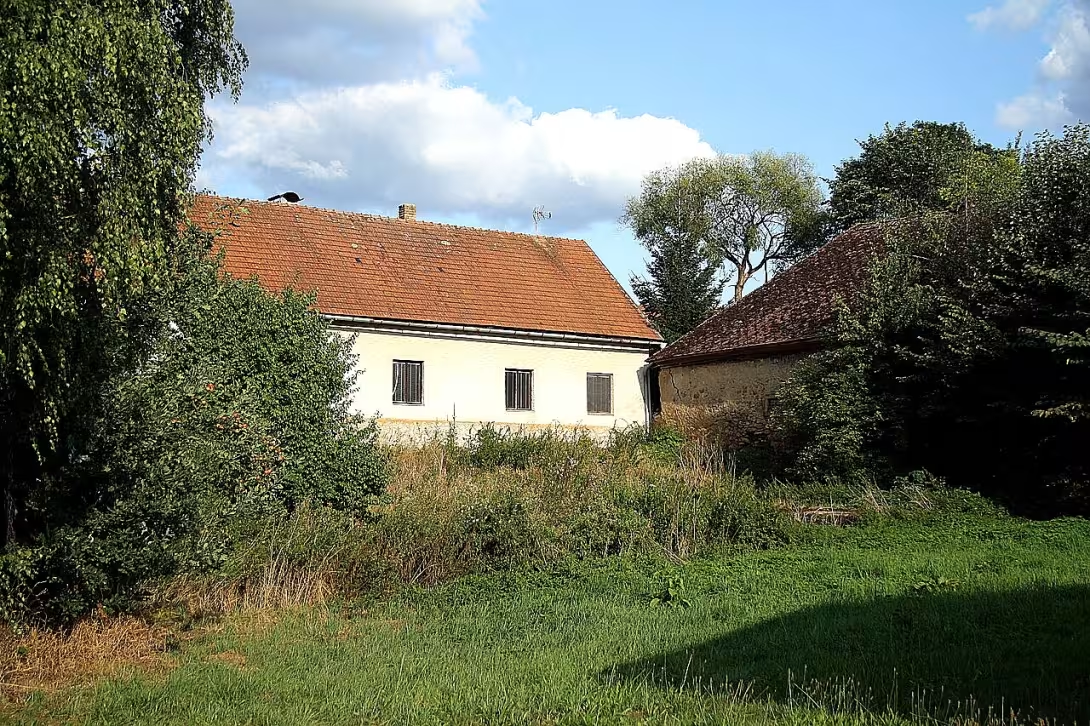
Lhotice, also known as Šádova Lhotice, is a historical monument located in the village of Lhotice within the municipality of Želiv. It lies in the Třebíč District of the Vysočina Region in the Czech Republic. The site features ruins of a younger castle that began as a medieval fortress and later evolved into a baroque residence. This transformation reflects significant architectural changes over time, marking it as an important historical site due to its layered past and connection with notable figures from Bohemia's history.
The origins of Lhotice date back to the early 16th century when Jiří Dobrovítský z Újezda commissioned its construction. Built during a period marked by political and religious upheaval in Bohemia, including the rise of Protestantism and tensions leading to the Thirty Years' War, these contexts influenced land ownership dynamics among noble families across Europe. This set the stage for Lhotice's significance as both a defensive structure and later, a residential estate.
Architecturally, Lhotice began with a medieval fortress design characterized by a square layout, defensive walls, and a moat on its northern side. Over time, it underwent significant transformations, particularly during the baroque period when Alžběta Františka Tengnaglová converted it into a baroque residence. The western section of the palace was adapted for residential use, while the northern wall's tower was transformed into an oriel, showcasing its evolution from defense to ornate functionality.
Ownership of Lhotice changed hands several times throughout history, reflecting the shifting fortunes of noble families in Bohemia. After Jiří Dobrovítský z Újezda's death, his daughter Anna inherited it and later married Matěj Salava z Lípy. The estate passed through various owners including Meduna Kalenicová z Biskupic and Jindřich Sasla z Vacovic, before being acquired by Johanna Vickelhoferová z Loutkova in 1628 after Ondřej z Ostešova's exile due to his involvement in a rebellion. The estate continued to change hands until Alžběta Františka Tengnaglová played a crucial role in its transformation into a baroque residence.
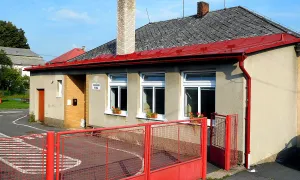
Key events at Lhotice include its confiscation in 1623 during Ondřej z Ostešova's participation in a rebellion and its subsequent return to Johanna Vickelhoferová z Loutkova in 1628. Another significant change occurred in 1832 when the upper floor was demolished, and the remaining structure was repurposed into a school, illustrating the adaptive reuse of historical buildings over time.
Today, the ruins of Lhotice are situated within a private estate and are not freely accessible to the public. Despite this limitation, the site remains an intriguing destination for those interested in exploring Bohemia's rich history and architectural evolution. Its proximity to other medieval sites enhances its appeal as part of a broader historical landscape. Visitors can appreciate the remnants of its baroque transformation and reflect on the lives of the noble families who once inhabited it.
Lhotice stands as a testament to the dynamic history of Bohemia, offering insights into the region's architectural and social transformations over centuries. Its ruins invite curiosity and exploration, making it a worthwhile visit for those interested in delving into the layers of Czech history.
Then and now
Drag the slider to compare how the landmark may have looked when it was built with the view today.
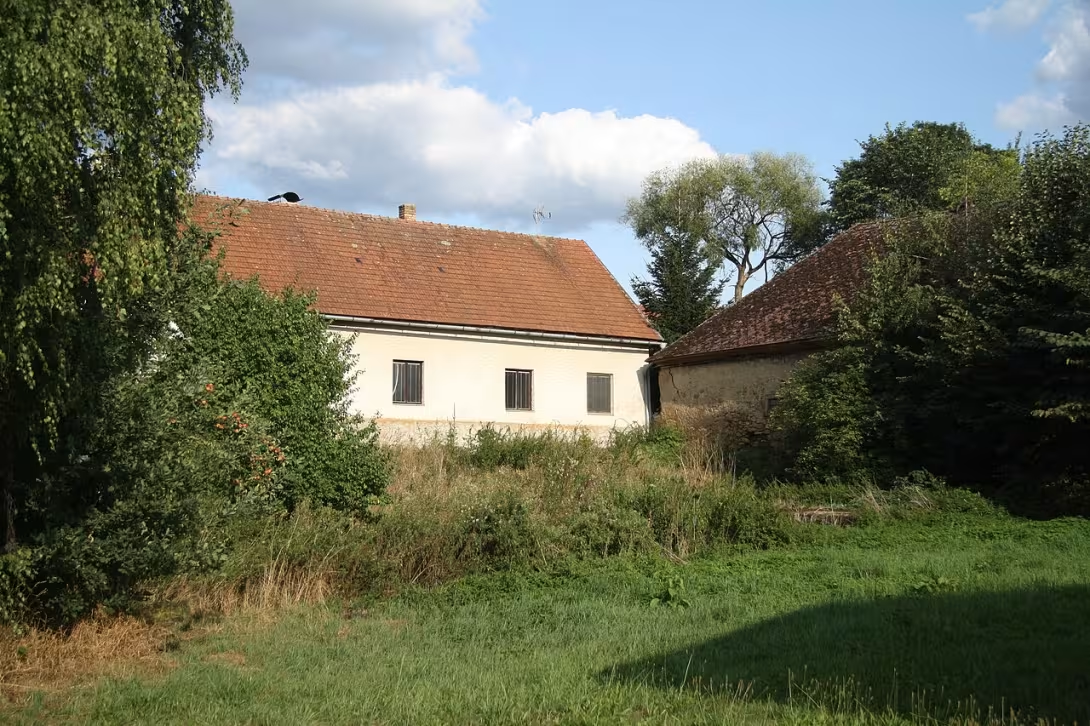

The historical appearance on the left is an AI-generated visualisation and serves as inspiration only.
Historical milestones
- 1533
- First documented mention of the castle.
- 1628
- Johanna Vickelhoferová z Loutkova acquired the estate after Ondřej z Ostešova's exile.
Architectural development
The castle began as a medieval fortress and was later transformed into a baroque residence. Initially featuring a square layout with defensive walls and a moat on the north side, it underwent significant changes over time. The western palace section was adapted for residential use, while the northern wall featured a tower that was converted into an oriel during the baroque renovations.
Historical events
Built at the beginning of the 16th century by Jiří Dobrovítský z Újezda.
Confiscated in 1623 due to Ondřej z Ostešova's participation in a rebellion, returned in 1628.
Owners
Jiří Dobrovítský z Újezda (early 16th century)
Anna, Jiřího dcera (after her father's death)
Matěj Salava z Lípy (married to Anna)
Meduna Kalenicová z Biskupic († 1579)
Jindřich Sasla z Vacovic († 1595)
Jindřich Vrchotický z Loutkova (1599–1601)
Ondřej z Ostešova (1616, later exiled in 1623)
Johanna Vickelhoferová z Loutkova (after 1628)
Kateřina Amanová (1637)
Alžběta Františka Tengnaglová (1642–1674)
Points of interest
- Despite its transformation into a baroque residence, the northern wall's tower at Lhotice was ingeniously converted into an oriel, blending defensive architecture with residential elegance.
- The estate of Lhotice changed hands multiple times due to political and religious upheavals, including being confiscated in 1623 because Ondřej z Ostešova participated in a rebellion against the Habsburgs during the Thirty Years' War.
- In 1832, part of Lhotice underwent significant alteration when its upper floor was demolished and the remaining structure was repurposed as a school, showcasing an early example of adaptive reuse long before it became a modern architectural trend.
- The site's connection to notable Bohemian figures is highlighted by Alžběta Františka Tengnaglová, who played a crucial role in its transformation into a baroque residence, reflecting the personal influence individuals had on historical architecture.
- Although Lhotice is now privately owned and not open to the public, it remains an intriguing part of Bohemia’s historical landscape due to its layered past and proximity to other medieval sites.
Guide
This guide is narrated by a synthetic voice generated by artificial intelligence.
Show guide text
This text was created by artificial intelligence and has not been editorially reviewed. It may contain inaccuracies.
Lhotice, also called Šádova Lhotice, are the ruins of a younger fortified manor in the village of the same name near Želiv. In its size, the manor approached a small castle. Its remains today lie in the area of a private farm.
The original noble residence in Lhotice was the so-called Old Fortress. From it, a fortress mound has been preserved west of the village. The new fortress was founded directly in the village by Jiří Dobrovítský z Újezda at the beginning of the sixteenth century. The first written mention of it, however, comes only from 1533. Jiří Dobrovítský bequeathed the estate to his daughter Anna, who married Matěj Sala z Lípy.
After that, a series of owners succeeded each other. Among them were Meduna Kalenicová z Biskupic, who died in 1579, and Jindřích Sasla z Vacovic, who died in 1595. Between 1599 and 1601, the fortress was bought by Jindřích Vrchotický z Loutkova and in 1616 by Ondřej z Ostešova. He lost the village because he participated in the Estates Rebellion. In 1623 he did get it back, but in 1628 he left the country. Before that, he sold it to Johanna Vickelhoferová z Loutkova. In 1637, the estate belonged to Kateřina Amanova and in 1642 to Alžběta Františka Tengnaglová. Under these owners, the fortress was rebuilt.
After Alžběta's death, the indebted estate was sold in 1674 to the Želiv monastery. The monastery had the fortress reconstructed in the Baroque style. It served as a summer residence and as the seat of the manager of the agricultural court. In 1832, the upper floor was demolished and the remainder of the building became a school. At the beginning of the twentieth century, it became a residential house.
The fortress mound has an almost square ground plan. From the north, it was protected by a fishpond, on the south an agricultural courtyard adjoined it. A palace stood along the western side. Its renovated ground floor has been preserved in the standing buildings. The area was enclosed by a fortification wall, which has remained intact on the northern side. It is pierced by windows that were later bricked up. In front of the wall, a rectangular bastion projects here with a later brick superstructure and keyhole-shaped loopholes. On its façade, remnants of engraved sgraffito have been preserved. Towards the interior of the area, the bastion was originally open. It was only bricked up during the Baroque reconstruction, when it became a pavilion. A similar bastion probably also protected the eastern side of the fortress.
Tips for visitors
The best time to visit the Lhotice ruins is during late spring or early autumn when the weather is mild, making it comfortable for walking around the site. These seasons offer pleasant temperatures and beautiful natural surroundings, enhancing your experience as you explore the historical landscape. Additionally, visiting outside of peak tourist season can provide a more serene atmosphere, allowing you to appreciate the tranquility of the rural setting.
It’s recommended to verify current routes and schedules using a transportation search tool before your visit to ensure smooth travel arrangements.
When visiting Lhotice, consider bringing comfortable walking shoes as there are uneven paths around the ruins. A hat and sunscreen are advisable for protection against the sun, especially during summer months. Additionally, carrying a water bottle is essential to stay hydrated throughout your exploration of the site. A camera or smartphone will be helpful for capturing the picturesque views and historical details.
For photography enthusiasts, the best spots at Lhotice include areas where you can capture the contrast between the ruins and the surrounding natural landscape. Early morning light provides a soft glow that enhances the textures of the stone structures, while late afternoon offers dramatic shadows. The ponds nearby also create reflective opportunities for unique shots.
In the vicinity of Lhotice, within 30 minutes by car or public transport, you can visit other historical sites such as the medieval town of Želiv. This area is rich in history and features several attractions that complement your exploration of Lhotice. For families with children, these nearby locations offer educational experiences about local history and culture.
Frequently asked questions
Can the monument be visited?
This is a ruin. Such sites are often freely accessible, but some can only be visited with a guide or are closed for safety reasons. We have not verified the current situation – take care and respect any restrictions.
Where is the monument?
Location: Želiv, Kraj Vysočina. The map on this page shows the exact spot.
Why is the monument protected?
It is listed in the Central List of Cultural Monuments of the Czech Republic as a cultural monument (register no. 1438980103).
Businesses nearby
Do you run a restaurant, accommodation, shop, museum, rental, wellness or other visitor service near this monument? Show yourself directly to the people heading to it — this is how they will see you in the app and on the web:
Nearby
Lhotice is situated in a rural landscape with historical significance due to its proximity to other medieval sites. The area features natural elements such as ponds that were part of the original defensive system.
Accommodation nearby
Themed route
Thematic Vltour: Medieval Heritage and Natural Defenses
1. Lhotice (Tvrz) - Type: Historical Castle Ruins - Why Visit: Begin your journey at the heart of medieval history with Lhotice, a castle ruin that offers a glimpse into the past strategic importance of this area. Explore the remnants of fortifications and imagine life in the medieval era.
2. Defensive Ponds - Type: Natural Historical Feature - Why Visit: Just a short walk from the ruins, these ponds were integral to Lhotice's defensive system. They provide insight into how natural landscapes were utilized for protection and defense strategies during medieval times.
3. Lhotice Village Center - Type: Cultural Heritage Site - Why Visit: Stroll through the quaint village center near the castle, where traditional architecture and local history come alive. This area offers a peaceful setting to reflect on the historical significance of Lhotice within the broader medieval landscape.
4. Lhotice Surrounding Fields - Type: Rural Landscape - Why Visit: Explore the open fields surrounding Lhotice, which offer panoramic views and a serene environment. These fields connect you with the rural setting that has been part of this region's history for centuries.
5. Return to Lhotice (Tvrz) - Type: Historical Reflection - Why Visit: Conclude your tour back at the castle ruins, reflecting on the day’s journey through time and nature. Consider how each element you visited contributed to the historical narrative of this medieval site.
This thematic route offers a comprehensive exploration of Lhotice's rich history and its natural surroundings, providing both educational insights and tranquil experiences.
Seasonal recommendations
Spring: The arrival of spring at the Lhotice (tvrz) ruins in Želiv is marked by a gentle transformation as nature reawakens around the historic site. Visitors can enjoy the soft pastels of budding flowers and the fresh greenery that begins to envelop the ancient stones, creating a picturesque setting. The lighting during this season is particularly enchanting, with longer days providing ample natural light for photography and exploration. It's an ideal time for nature enthusiasts as local flora starts to bloom, offering a lush backdrop to the historical architecture. To fully appreciate the site, visitors should consider bringing binoculars or a camera to capture the interplay of history and new life. While crowds are moderate, arriving early in the day can help avoid larger groups and provide a more serene experience.
Summer: Summer at Lhotice offers vibrant landscapes filled with lush greenery and blooming flowers that create a stunning contrast against the ruins' aged stones. The atmosphere is lively, with warm sunshine casting long shadows across the site, perfect for photography enthusiasts. This season attracts the most visitors due to its favorable weather conditions, so it's advisable to arrive early in the morning or later in the afternoon to avoid crowds and enjoy a more tranquil visit. Comfortable walking shoes and light clothing are recommended, along with sun protection such as hats and sunscreen, to make the most of your exploration during this peak season.
Autumn: Autumn at Lhotice is characterized by a breathtaking display of fall colors that envelop the ruins in hues of orange, red, and gold. The cooler temperatures and crisp air enhance the serene atmosphere, making it an ideal time for those who appreciate the beauty of nature's seasonal changes. As the days grow shorter, lighting conditions are softer, providing a unique opportunity to capture the historical site in a warm, golden glow. Visitors should dress warmly and consider bringing layers as temperatures can vary throughout the day. The reduced number of tourists compared to summer allows for a more peaceful experience, perfect for leisurely exploration.
Winter: Winter transforms Lhotice into a quiet and mystical landscape, where snow blankets the ruins and creates a serene, almost otherworldly atmosphere. The site is particularly enchanting under the soft glow of winter sunlight or during early morning hours when frost adds delicate details to the stone structures. Visitors should dress warmly in layers, with insulated clothing and sturdy boots for walking on potentially icy paths. Due to shorter daylight hours, planning your visit earlier in the day will ensure you have ample time to explore. The quietness of this season provides a unique opportunity to reflect on history without the bustle of larger crowds, making it an intimate experience for those who venture out during the colder months.
Visualizations and artistic views


The visualisations are generated by artificial intelligence and serve as inspiration.
Tips from visitors
No tips yet. Be the first!
Log in and add your tip.
Sources and literature
Photos: Jiří Sedláček / CC BY-SA 4.0 — Wikimedia Commons. The author and licence also appear when you hover over the image.
Faktickým podkladem tohoto textu byl článek na Wikipedii, jehož autory jsou přispěvatelé Wikipedie. Článek je dostupný pod licencí CC BY-SA 4.0.
Location on the map



Příběhy a pověsti
Legendy, pověsti a příběhy spjaté s touto památkou
Fotografie návštěvníků
Zatím žádné fotografie. Buďte první, kdo přidá fotografii z návštěvy!
Log in a přidejte svou fotografii nebo hodnoťte.
Za ověřenou návštěvu v aplikaci získáte víc bodů — poznáme podle GPS, že jste na místě.
Reviews and comments