






Libeňská vodárenská věž Water tower
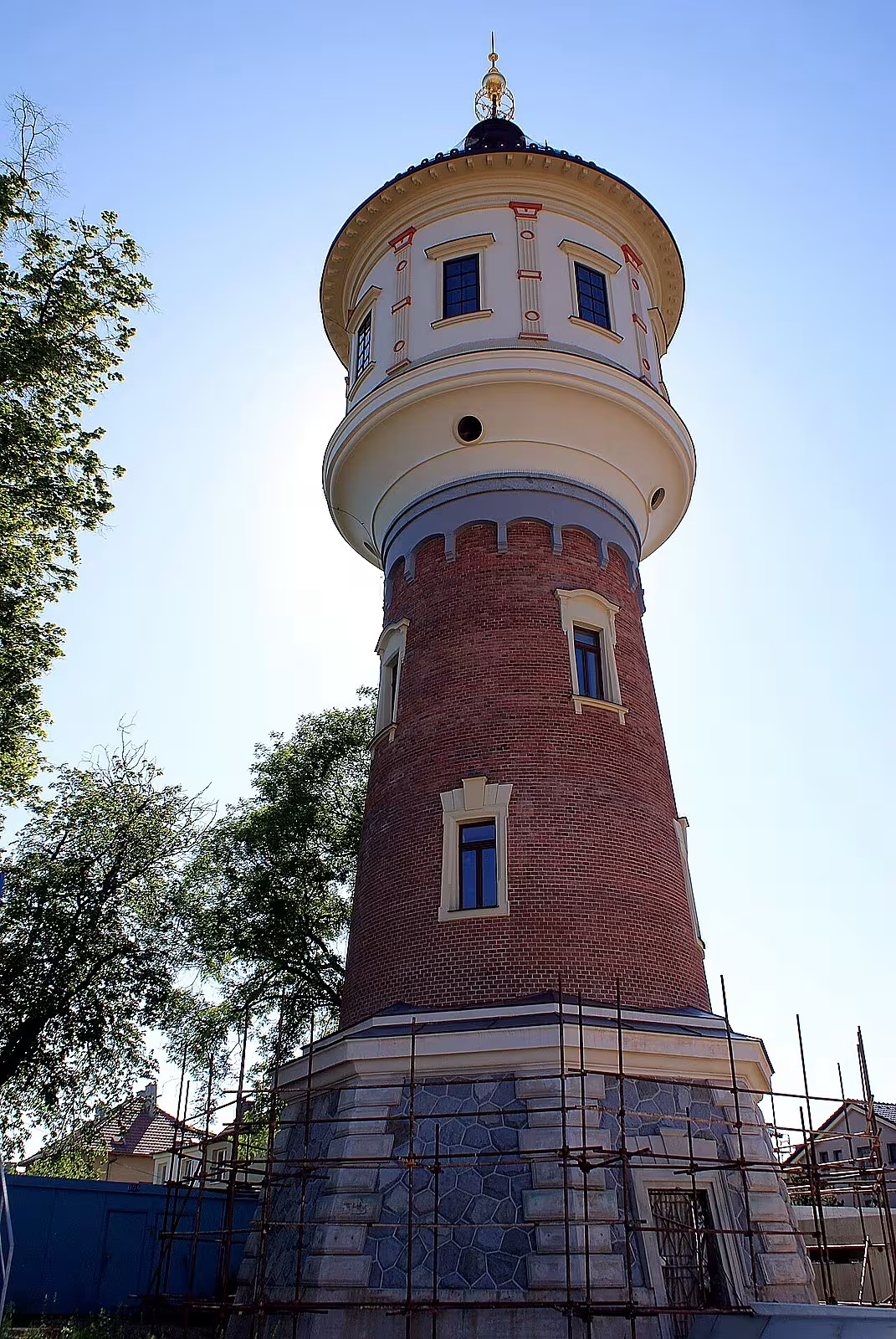
Libeňská vodárenská věž, a neobarical stone building from the beginning of the 20th century, stands in Prague 8 at the intersection of the streets of Davidkov and Na Slovance. It is one of Prague's smallest water towers and originally supplied drinking water to nearby rental houses.
The tower project was developed in 1903 by the building office of the capital city of Prague. The realization was then entrusted to the architect and builder Franz Schlaffer. The construction was completed and collapsed in 1905. It was created at the time of the Austrian-Hungarian monarchy when Prague underwent rapid urbanization and modernization of infrastructure. In then Europe, water networks were expanding and water towers became symbols of progress and public health.
The building has a circular plan and a neobarical style, with its appearance resembling a Dutch lighthouse. This stone building from brick blocks reaches a height of 42 meters. In the interior there was water with a diameter of 6.5 metres and a height of 5.7 metres with a capacity of up to 178 m ³ of water.
The tower was part of a water system powered by Karan. She lost her job in the late 1960s. Until 1988 it belonged to the city of Prague, then it was transferred to the city area. However, it did not use it, which led to a gradual deterioration of the construction. Since 1991 the building has been protected as a cultural monument of the Czech Republic.
The tower has been owned by private investor Martin Sluka since 2007. In the summer of 2008 he started reconstruction according to the project Zbyňka Pšenicky from Faber Project. The purpose of the reconstruction was to transform the object into a three-storey duplex apartment with elevator. A garage, warehouse and technological and relaxation centre were built underground in the neighbourhood. The historical function of the site is also referred to by the names of the surrounding streets of Za Vodarna and Pod Vodárenská tower.
Today the tower presents a unique example of historical architecture in Libni. It is surrounded by residential blocks and is located near the park of the Libyan waterfront.
Libeňská vodárenská věž is a valuable technical and architectural witness to the modernization of Prague at the turn of the century. Its unusual silhouette in urban space makes it an interesting destination for every interested person in Prague history.
Then and now
Drag the slider to compare how the landmark may have looked when it was built with the view today.
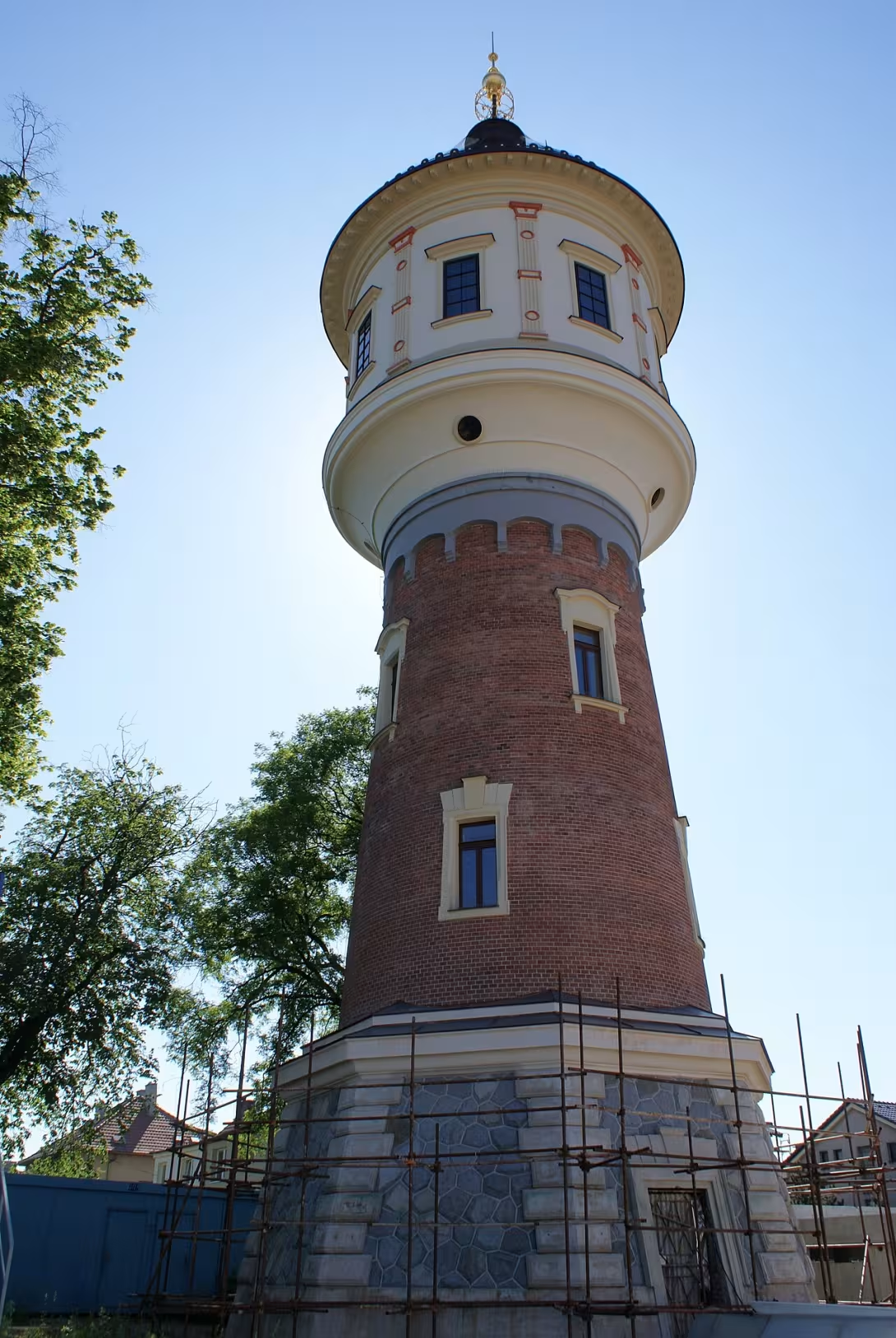
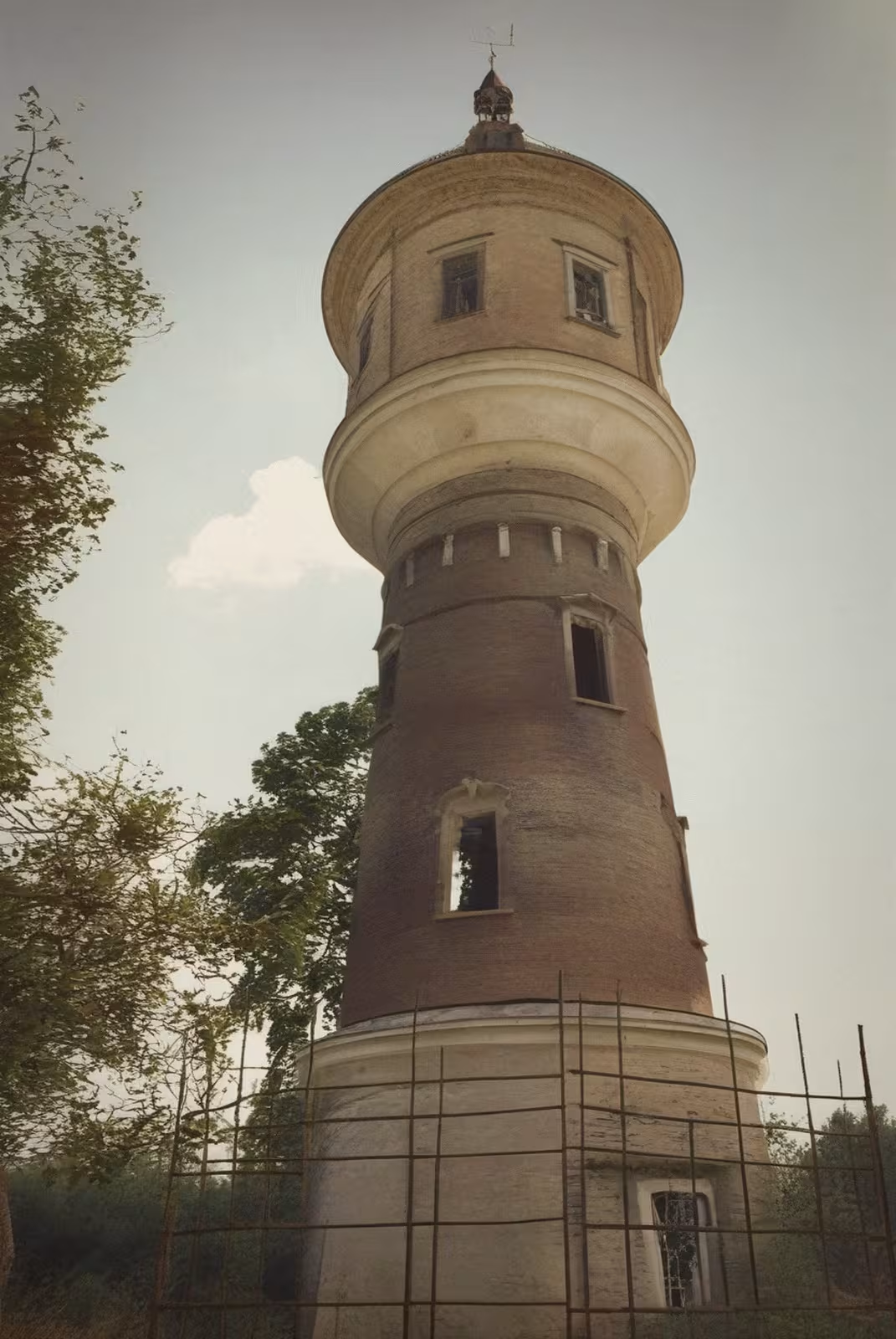
The historical appearance on the left is an AI-generated visualisation and serves as inspiration only.
Historical milestones
- 1905
- completion and housekeeping
- 1991
- inclusion in the list of cultural monuments
- 2008
- start of conversion into a residential building
Architectural development
The original construction made of brick blocks and stone was designed in a historic non-Baroque style. In the 1960s, the building was not used and began to decay. In the years 2008-2010 the reconstruction was carried out according to the project Zbyňka Pšeníčka, which was to turn the tower into a three-storey mezonet apartment with elevator and underground spaces.
Historical events
1905 - completion and approval; end of the 1960's - out of activity; 1988 - transfer to the city; 1991 - inclusion in the list of cultural monuments; 2008 - start of the reconstruction into a residential building.
Owners
City of Prague (until 1988), town district of Libeň (1988- 2007), private investor Martin Sluka (from 2007)
Points of interest
- It is one of Prague's smallest water towers and originally supplied drinking water to nearby rental houses. - The building has a circular plan and looks like a Dutch lighthouse. - The stone tower reaches a height of 42 meters and has water capacity up to 178 m ³ in the interior. - Since 1991 the building has been protected as a cultural monument of the Czech Republic. - As part of the reconstruction, the tower was transformed into a three-storey duplex apartment with elevator.
Guide
Show guide text
This text was created by artificial intelligence and has not been editorially reviewed. It may contain inaccuracies.
Welcome to the Liberian Water Tower. You are standing at one of the most distinctive and interesting buildings in this whole part of Prague. Before you go any further, stop for a moment and look straight ahead. What do you see? You're likely to be immediately interested in the unusual, tall stone structure that rises directly above your heads. Its appearance is truly unique and you certainly feel that you might expect a coastal lighthouse in such an object rather than an urban technical building. And that feeling isn't random. This tower really resembles a Dutch lighthouse in its form and with a powerful force, which shines in the middle of the sea even though you are here in the heart of Prague's city district. Feel the monumentality, the strength of the stone, and the unusual geometry that goes up to forty-two meters high.
Let us now return together in time and understand why this building was built in the first place. Imagine Libeň in the early 1920s. The city grew, people moved to new rental houses and with them the need for modern lifestyle, whose basic pillar was clean and reliable drinking water. Libeňská vodárenská věž was not only an aesthetic element, it was a key part of the vital water system. This whole mechanism was powered from Karan, where the water was transported to this place so it could supply the surrounding houses. The whole process was completed and the tower was officially operational in 1905. Back then, it was a symbol of progress and technical art that ensured that the inhabitants of Libna would have water in their homes.
Now pay close attention to the architecture itself, which you are currently observing. This neobarical stone building is the result of the work of two important architects, which were František Schlaffer and Zbyněk Pšenička. Notice her circular plan. This geometry is not only a matter of appearance, but also of functionality. The tower was designed to be stable and capable of carrying the enormous weight it carried. When you look at her stone walls, feel the mass. This building is one of the smallest water towers in Prague, but its compact and strong appearance makes it a very important point in the landscape. The architects were able to combine a purely technical function with an aesthetic value that fascinates us even for over a century.
Now imagine what happened inside this high structure. What you see from the outside is just a cover for something much more impressive. High in the inside of the tower there was water. Although it may seem hard to grasp, this water line had a diameter of six and a half meters and its height was less than six meters. The capacity of this space was incredible - it was able to accommodate up to 150 780 meters of cubic water. Imagine the massive mass of fluid that was at some point held high above the ground, ready to flow into the net through gravity and power the household. The engineering work that had to be carried out in the construction of such a water tower at such a height was a top technology for the time being.
The history of this tower is not only a story about water and technology, it is also a story about the changes of the city itself. After long years of service, when the tower was performing its important function, it came to an end in the 1960s. The system developed, the technology changed and this tower gradually became useless for modern water supply needs. The object was abandoned and for several decades it became a silent witness to the changing Libna. Although the tower was abandoned at some point, its meaning did not disappear. On the contrary, people began to realize its historical and aesthetic value. This is why it was included in the list of cultural monuments in 1991, thus ensuring its protection for future generations.
Perhaps you are now being told how such a historic structure can be saved from extinction. Since 2008, a whole new chapter has begun to be written in the history of this place. Instead of remaining a blank monument to the past, its reconstruction into an apartment building began. This means that space once used to store thousands of litres of water is now turning into a modern home for people. It is a fascinating transformation - from an industrial building that served the entire neighborhood, it becomes a private space that still retains its unique face and historical soul.
The interesting thing that may interest you when you look at the tower is the constant line between its original purpose and how we perceive it today. It's one of those structures that makes you think about how our needs change and how our city adapts to new times. This tower, which was once a symbol of hygiene and modern standard of living, is today a symbol of heritage conservation and the city's ability to use its old structure again. It is a fascinating contrast between its original, practical focus and today's, comfortable use.
I hope that this short journey through the history of the Liberian Water Tower has enriched you, and that you are now looking at this building a little differently than you did a few minutes ago. You don't just see a tall stone tower anymore, but you see a technical miracle from the early 1960s, you see the work of architects Schlaffer and Wheat, and you feel the weight of the water that once flowed here. Continue to walk around and pay attention to other details of this neighborhood. Libeň has many other stories waiting to be discovered. Thank you for your trip and we'll wait you out on the next tour.
Tips for visitors
The best time to visit the Liberian Water Tower is the autumn or spring season when the weather is pleasant and the sunlight of the sun is ideal for photography. This time of year also offers a softer visit compared to the season of summer trips.
Parking and access to the Liberian Water Tower are possible both by car and public transport. For those travelling by car, it is recommended to find a parking spot on the surrounding streets. Public transport is a comfortable way to get to Libna; specific connections and times can be verified in the route search.
When visiting the tower, it is advisable to take a high-quality camera to capture architectural details and panoramic view from the top. Fill your inventory with a protective coat or jacket, especially in colder months, because the square and surrounding parks offer a beautiful place to relax.
Photography of the Liberian Water Tower is best from the street Davidkov, where you can understand its historical architecture and observe the square. The best light for photography is usually in the afternoon when the sun lights the tower from the side.
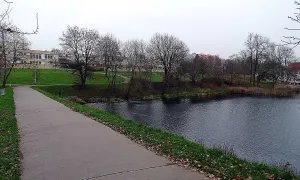
In the vicinity of the Liberian Water Tower there is a park called the Liberian waterfront, which is an ideal place for relaxation and a short walk. Children will also enjoy it here because the park offers space for playing. In addition, there is another historical object nearby - the water station Karaná, which can be visited as part of an extended visit program.
Businesses nearby
Do you run a restaurant, accommodation, shop, museum, rental, wellness or other visitor service near this monument? Show yourself directly to the people heading to it — this is how they will see you in the app and on the web:
Events nearby

Zdroj akcí: otevřená data měst a obcí ČR (Národní katalog otevřených dat) a kalendář akcí Národního památkového ústavu.
Nearby
Věž stojí na křižovatce ulic Davídkova a Na Slovance v Libni, v blízkosti ulic Za Vodárnou a Pod Vodárenskou věží. V okolí se nachází obytné bloky, park Libeňské nábřeží a další historické vodárenské objekty, např. vodárna Káraný, vše v dosahu pěší chůze do centra Prahy.
Accommodation nearby
Trips and activities nearby
Guided tours, tickets and activities nearby from GetYourGuide
Affiliate link: if you buy from the partner, we may receive a commission. The price for you does not change.
Search tours and activities →Themed route
Libeňská vodárenská věž - historical water tower. Dominant building at the intersection of the streets of Davidkov and Na Slovance, from which there is a view of Libeň, the river Vltava and surrounding residential blocks.
Liberec waterfront park - public park. Just 300 m along the trail along the Vltava you will find a green refuge with benches, trees and views of water architecture, ideal for relaxing after a tour of the tower.
Water plant Karané - historical water building. Approximately 500 m from the park, near the streets of Za Vodárna and Pod Vodárenská tower, represents the technical heritage of the 19th century and allows you to look into the operation of old water systems.
Seasonal recommendations
Spring brings awakening greenery around the tower and fresh air. The atmosphere is full of hope and the building in the spring light looks brighter, despite ongoing repairs. I recommend wearing layers of clothing because the weather is variable. The best is to visit the place in the morning when peace and nature are the most fresh.
The summer season offers the most intense colors and full crowns of trees that shielded access to the monument. The sun highlights the facade details, which is interesting even when looking at scaffolding. Due to the summer crowds and heat, come very early in the morning. Choose light, breathable clothes and don't forget the sun protection.
Autumn in Libni is characterized by golden leaves and frequent fog that give the tower a mysterious and melancholy form. Soft evening light is ideal for viewing architecture from a distance. It is practical to take a waterproof jacket and visit the location in the afternoon when the atmosphere is most relaxed.
In winter, the construction works harder, especially if it is covered by snow or frost. The bare branches of trees reveal the tower in full breadth, which is hidden behind the leaves in other seasons. It is necessary to wear warm winter clothes and solid shoes. Count on a shorter daylight time and I recommend planning a visit in the morning.
Visualizations and artistic views


The visualisations are generated by artificial intelligence and serve as inspiration.
Photos from the area
Real photos taken near the monument


Zdroj a licence jsou uvedeny u každého snímku.
Tips from visitors
No tips yet. Be the first!
Log in and add your tip.
Sources and literature
Photos: Feťour / Public domain — Wikimedia Commons. The author and licence also appear when you hover over the image.
Faktickým podkladem tohoto textu byl článek na Wikipedii, jehož autory jsou přispěvatelé Wikipedie. Článek je dostupný pod licencí CC BY-SA 4.0.
Location on the map
Příběhy a pověsti
Legendy, pověsti a příběhy spjaté s touto památkou

Fotografie návštěvníků
Zatím žádné fotografie. Buďte první, kdo přidá fotografii z návštěvy!
Log in a přidejte svou fotografii nebo hodnoťte.
Za ověřenou návštěvu v aplikaci získáte víc bodů — poznáme podle GPS, že jste na místě.
Reviews and comments