






Libocký hřbitov Cemetery
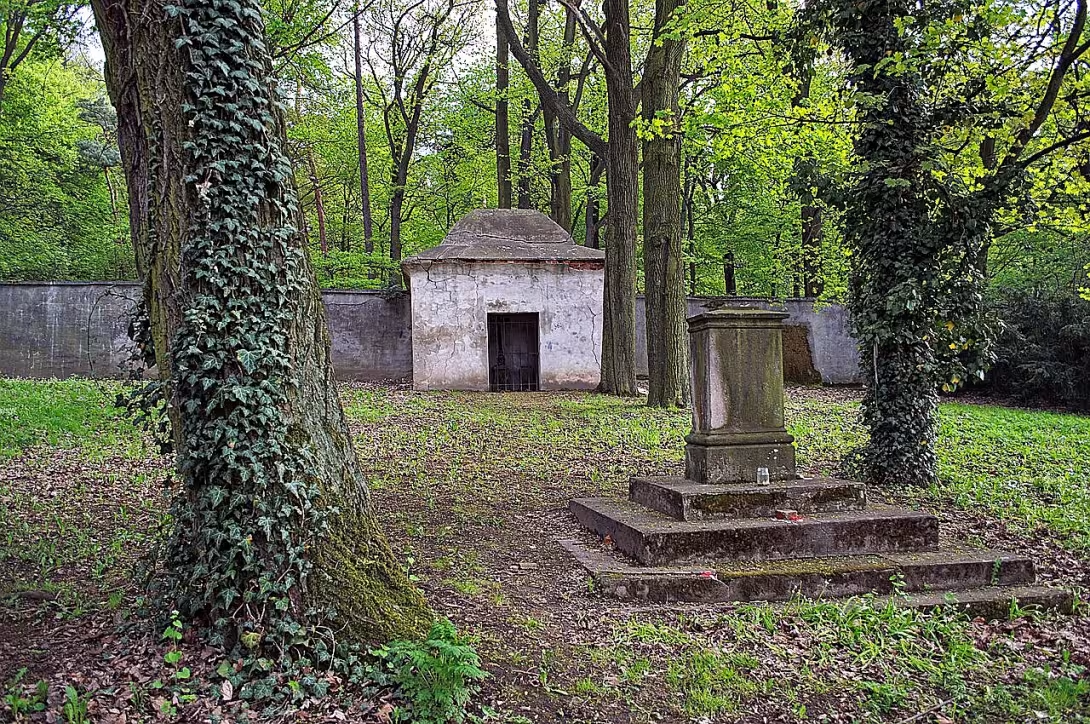
Libocký hřbitov is a historic cemetery located in Prague 6, Liboc. Established in 1842, it served as the final resting place until its closure in 1902.
The cemetery originated in 1842 when the old cemetery at the Church of St. Fabian and Sebastian in Liboc was closed due to its location surrounding the church from all sides. The new cemetery was situated between the Královská obora wall and Libocká street, accessible from two directions: south through a gate in the obora and north through the village.
The original design and architecture of the cemetery are unknown, but it is believed to have been a simple burial ground with no notable features. The cemetery's layout has undergone significant changes over time, with many graves being exhumed and reburied elsewhere.
Libocký hřbitov was once a popular burial site for locals, with families choosing to inter their loved ones there. However, by the early 20th century, the cemetery had become too small to accommodate Liboc's growing population, leading to its closure in 1902. The last burials took place on July 1, 1902.
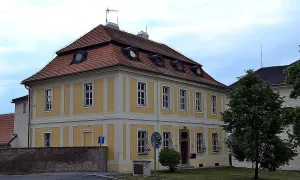
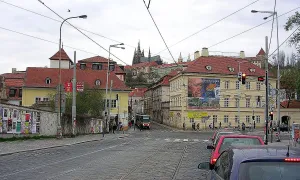
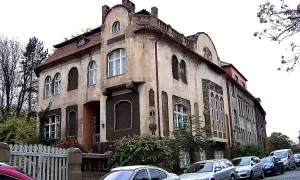
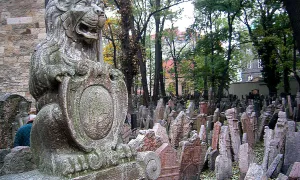
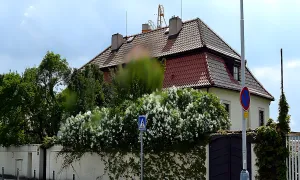
Today, the cemetery is no longer used for burials and has fallen into disrepair. Many original grave markers have been lost or destroyed over time, leaving behind only a few remnants of the once-thriving burial ground. The surrounding landscape has undergone significant changes, with residential buildings now occupying the area.
Despite its current state, Libocký hřbitov remains an important piece of Prague's history and a testament to the city's rich cultural heritage. Visitors can still see the original mausoleum, three stone pedestals, and three grave markers that remain from the cemetery's heyday. While the site may not be as grand as it once was, its historical significance makes it worth visiting for anyone interested in exploring Prague's past.
Then and now
Drag the slider to compare how the landmark may have looked when it was built with the view today.
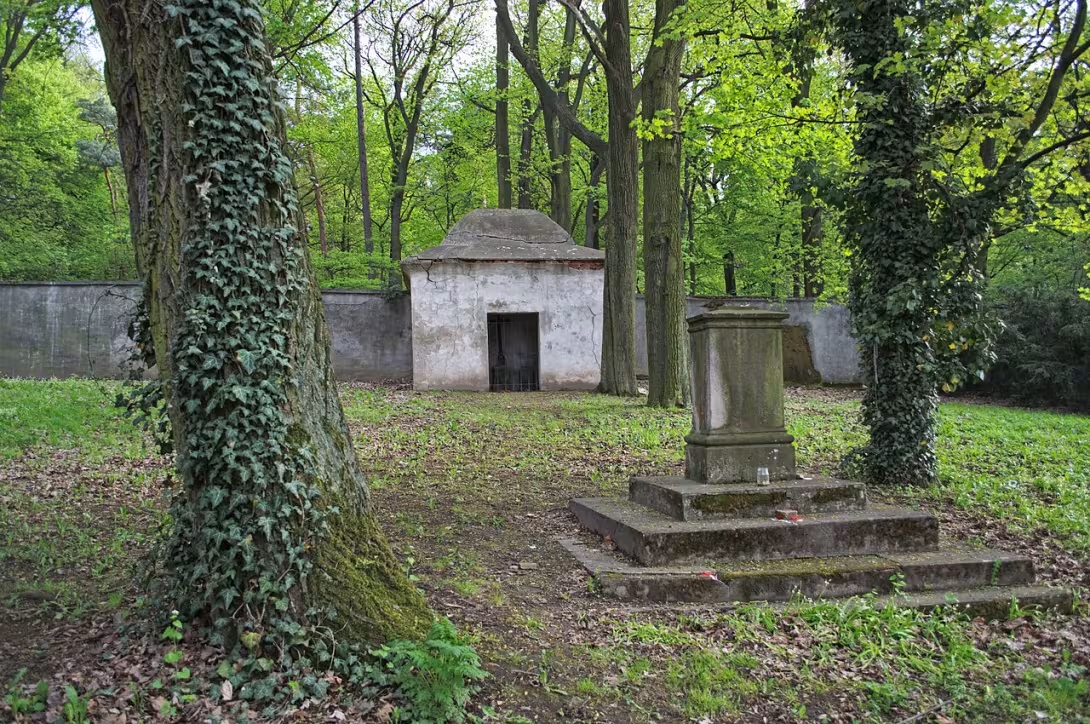
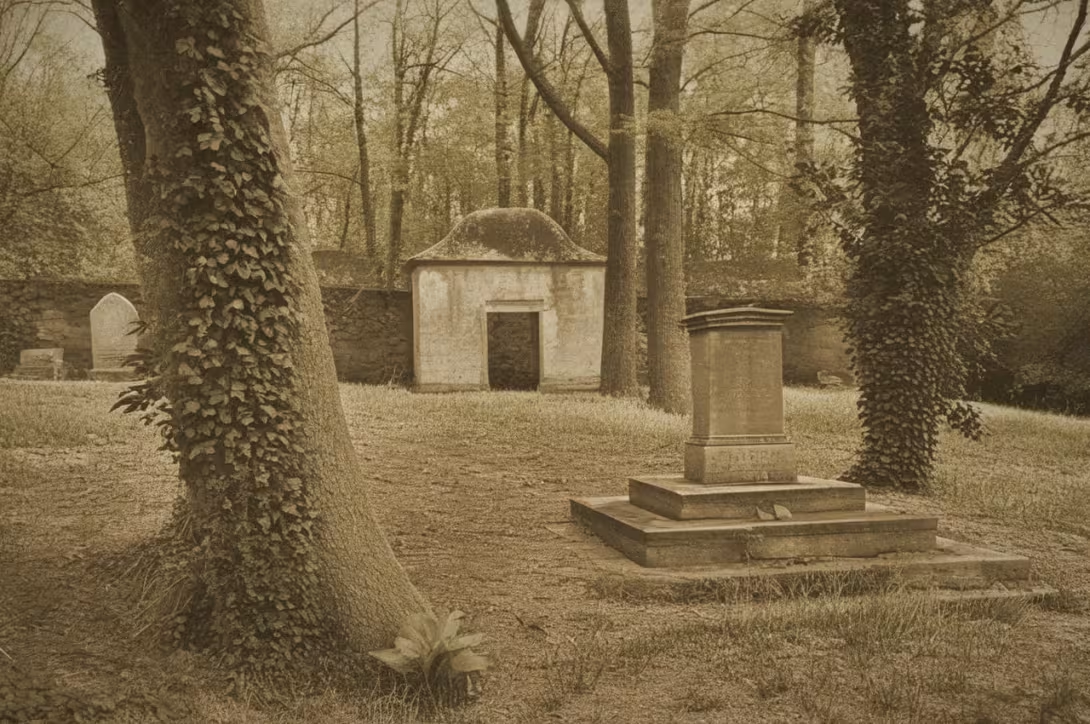
The historical appearance on the left is an AI-generated visualisation and serves as inspiration only.
Historical milestones
- 1842
- Establishment of Libocký hřbitov
- 1902
- Closure of the cemetery due to overcrowding
Architectural development
The cemetery's original design and architecture are unknown, but it is believed to have been a simple burial ground with no notable features.
Historical events
Established in 1842
Closure in 1902
Points of interest
– Established in 1842, Libocký hřbitov served as a final resting place until its closure in 1902.
– The cemetery was originally situated between the Královská obora wall and Libocká street, accessible from two directions: south through a gate in the obora and north through the village.
– Despite its current state of disrepair, Libocký hřbitov remains an important piece of Prague's history and a testament to the city's rich cultural heritage.
Guide
Show guide text
This text was created by artificial intelligence and has not been editorially reviewed. It may contain inaccuracies.
Welcome to Libocký hřbitov. As you stand here at the threshold of this historic site, take a moment to let the sounds of the modern city fade into the background. You are entering a space that has held its breath for over a century, a quiet sanctuary tucked away in the Liboc district of Prague 6. Notice the shift in atmosphere as you cross the boundary; there is a profound stillness here, a sense of weight and memory that distinguishes this ground from the bustling streets surrounding it.
As you begin your walk, let your eyes wander over the surroundings and absorb the peaceful, contemplative mood that defines this place. You are standing in a location that serves as a silent archive of the local community, a place where the history of Liboc is etched into the very landscape.
To truly understand what you are looking at, we must travel back in time to the year 1842. This was the year Libocký hřbitov was established. At that time, the area of Liboc was quite different from the urban landscape we know today. The establishment of this cemetery was a significant event for the local population, providing a dedicated and dignified final resting place for the residents of this growing community. For sixty years, this ground served as the heart of local remembrance, witnessing the cycles of life, death, and mourning that define a society.
As you move further into the site, consider the passage of time that has occurred since those early nineteenth-century days. For six decades, Libocký hřbitov was the primary place where the people of this area came to honor their departed. However, as the decades progressed, the world around Liboc began to change rapidly. The population grew, the city expanded, and the cemetery itself began to reach its capacity. By 1902, the site had become so crowded that it could no longer accommodate the needs of the community. This led to the decision to close the cemetery to new burials, marking the end of an era for this specific piece of Liboc's heritage.
Now, as you observe the layout of the cemetery, pay attention to how the space is organized and how it interacts with its environment. While the names of the original architects remain unknown to us, the way the cemetery is positioned tells a story of intentional design. The site was originally situated in a very specific location, nestled between the Královská obora wall and Libocká street. This placement created a unique boundary, separating the sacred, quiet space of the cemetery from the functional, moving world of the street and the nearby parklands.
As you walk along the paths, notice how the boundaries of the site have shaped the experience of being here. The cemetery was designed to be accessible, providing entry points that allowed the community to visit and pay their respects. One of the primary points of access was located to the south, through a gate that once served as the main transition point between the living and the dead. Even if the original structures have weathered the passage of time, the sense of direction and the way the paths lead you through the grounds reflect that original nineteenth-century planning.
You might find yourself looking for the names of famous figures or grand monuments that tell specific, legendary stories. While many of the individuals resting here may not be household names, their presence is felt in the collective history of the site. The people buried within Libocký hřbitov were the very fabric of Liboc—the families, the workers, and the neighbors who built the foundation of this neighborhood. Though their specific biographies might not be immediately apparent to the casual observer, their lives are woven into the history of Prague 6. Every unmarked space and every weathered stone represents a person who once walked these same streets and contributed to the life of this district.
There is a certain mystery in the way a place can be so vital to a community for so long, only to be closed off once it can no longer hold the weight of its own history. The overcrowding that led to the closure in 1902 is a poignant reminder of the rapid growth and transformation that Prague underwent at the turn of the century. It marks the moment when the old ways of managing the dead had to give way to the requirements of a modernizing, expanding city.
As you continue your exploration, I invite you to look closely at the textures and the subtle details of the environment. Notice the way the light filters through the trees and how the shadows shift across the ground. Even without the presence of grand architectural masterpieces, the beauty of Libocký hřbitov lies in its quiet dignity and its role as a keeper of local memory. It is a place that asks you to slow down, to reflect, and to respect the layers of time that lie beneath your feet.
As you move through the different sections of the cemetery, let yourself feel the connection between the past and the present. The streets of Liboc continue to move forward, but here, the past remains anchored. This cemetery is a bridge between the Liboc of 1842 and the Prague of today.
Thank you for taking this time to walk through Libocký hřbitov. I encourage you to continue your journey through the site at your own pace. Take your time, listen to the silence, and allow the history of this place to speak to you in its own quiet way. Enjoy the rest of your visit to Liboc.
Tips for visitors
Best time to visit Libocký hřbitov is during the spring or autumn when the weather is mild and the surrounding landscape is lush. This allows for a peaceful atmosphere, making it ideal for contemplation and reflection.
Parking is available in the nearby streets, but be mindful of residential areas and avoid obstructing traffic. Alternatively, you can take public transportation to Liboc and walk to the cemetery.
When visiting, bring comfortable shoes and clothing suitable for the weather. It's also a good idea to bring water and snacks, as there are no amenities available on site.
The best spots for photography at Libocký hřbitov are near the entrance and along the central path. The morning or late afternoon sun provides soft, golden light that enhances the historic atmosphere.
If you're looking for something to see nearby, consider visiting the surrounding residential areas, which have undergone significant changes since the cemetery's closure in 1902.
Businesses nearby
Events nearby

Zdroj akcí: otevřená data měst a obcí ČR (Národní katalog otevřených dat) a kalendář akcí Národního památkového ústavu.
Nearby
The surrounding landscape has undergone significant changes, with residential buildings now occupying the area.
Accommodation nearby
Trips and activities nearby
Guided tours, tickets and activities nearby from GetYourGuide
Affiliate link: if you buy from the partner, we may receive a commission. The price for you does not change.
Search tours and activities →Themed route
Libocký Hřbitov and Surrounding Wonders
This thematic tour takes you to the historic Libocký hřbitov (cemetery) in the town of Liboc, surrounded by a unique landscape that has undergone significant changes.
Stop 1: Libocký Hřbitov Type: Cemetery Why visit: This historic cemetery is a must-see, with its beautiful architecture and poignant history. Take a moment to reflect on the lives of those buried here.
Stop 2: Residential Area Type: Neighborhood Why visit: Explore the surrounding residential area, which has transformed over time. Observe how the landscape has changed and what new developments have emerged.
Stop 3: Local Park Type: Green Space Why visit: Take a stroll through this charming local park, which offers a peaceful escape from the hustle and bustle of daily life. Enjoy the scenery and perhaps stop for a picnic or a quiet moment to yourself.
This tour provides a glimpse into Liboc's rich history and its evolving surroundings.
Seasonal recommendations
Spring
As you visit Libocký hřbitov during spring, you'll be greeted by a lush green landscape and blooming flowers. The atmosphere is filled with the sweet scent of blooming trees and the chirping of birds. This is an ideal time to take a leisurely stroll around the cemetery, enjoying the gentle breeze and warm sunshine.
Practical tips: Arrive early in the morning or late in the afternoon to avoid the crowds that gather during peak hours. Wear comfortable shoes and clothing suitable for walking. The best time to visit is from 9 am to 3 pm when the sun is not too harsh.
Summer
During the summer months, Libocký hřbitov transforms into a serene oasis. The warm weather brings out the vibrant colors of the flowers, and the atmosphere is filled with the soothing sounds of nature. As you walk through the cemetery, you'll feel the gentle rustling of leaves and the warmth of the sun on your skin.
Practical tips: Be prepared for larger crowds during peak hours (10 am to 2 pm). Wear light-colored clothing and comfortable shoes suitable for walking in warm weather. The best time to visit is early morning or late afternoon when the sun is not too intense.
Autumn
As autumn arrives, Libocký hřbitov takes on a cozy atmosphere with the leaves changing colors and the air filled with the scent of ripe fruits. The gentle rustling of leaves underfoot creates a soothing ambiance, making it an ideal time for contemplation or relaxation.
Practical tips: Arrive early in the morning or late in the afternoon to avoid the crowds that gather during peak hours. Wear comfortable shoes and clothing suitable for walking in cooler weather. The best time to visit is from 9 am to 3 pm when the sun is not too harsh.
Winter
During the winter months, Libocký hřbitov takes on a serene and peaceful atmosphere, with snow-covered tombstones and bare trees creating a beautiful winter wonderland. The crisp air and soft snowfall create a magical ambiance, making it an ideal time for quiet contemplation or a leisurely stroll.
Practical tips: Be prepared for shorter opening hours (9 am to 2 pm) due to the cold weather. Wear warm clothing and comfortable shoes suitable for walking in snowy conditions. The best time to visit is early morning or late afternoon when the sun is not too harsh.
Visualizations and artistic views


The visualisations are generated by artificial intelligence and serve as inspiration.
Photos from the area
Real photos taken near the monument

Zdroj a licence jsou uvedeny u každého snímku.
Tips from visitors
No tips yet. Be the first!
Log in and add your tip.
Sources and literature
Fotografie: Sefjo / CC BY-SA 3.0 — Wikimedia Commons. The author and licence also appear when you hover over the image.
Faktickým podkladem tohoto textu byl článek na Wikipedii, jehož autory jsou přispěvatelé Wikipedie. Článek je dostupný pod licencí CC BY-SA 4.0.
Location on the map
Příběhy a pověsti
Legendy, pověsti a příběhy spjaté s touto památkou

Fotografie návštěvníků
Zatím žádné fotografie. Buďte první, kdo přidá fotografii z návštěvy!
Přihlaste se a přidejte svou fotografii nebo hodnoťte.
Za ověřenou návštěvu v aplikaci získáte víc bodů — poznáme podle GPS, že jste na místě.
Reviews and comments