






Lužický seminář Building
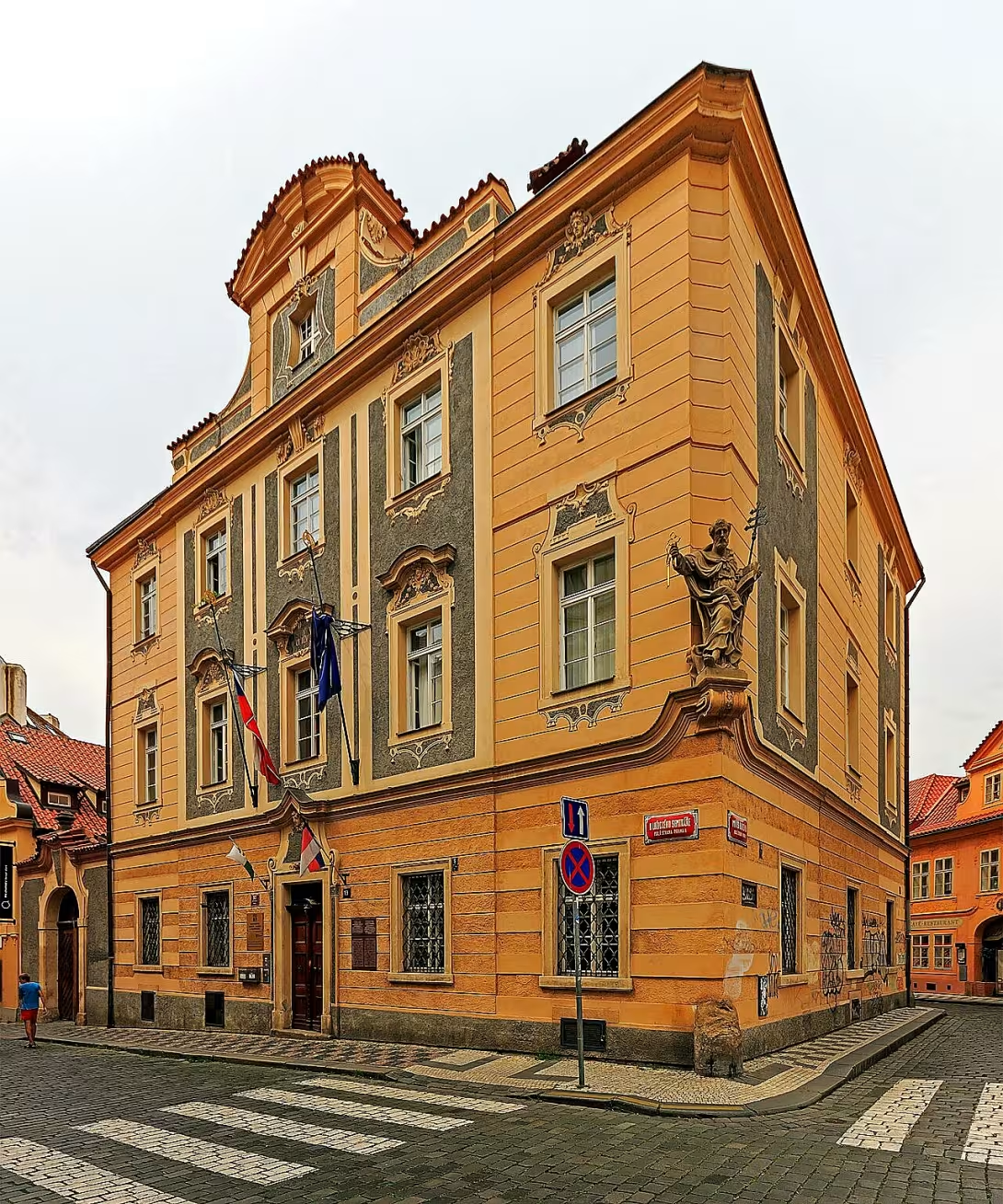
Lužický seminář is a historic Baroque building on Prague's Malá Strana. It was created between 1726 and 1728 according to the plans of architect Kilián Ignác Dientzenhofer. The building served as a priesthood seminar for students from Upper Lusatia and represents an important place associated with the LužickoSerbian national rebirth and culture.
The foundation of the seminar in 1724 was preceded by the long-term support of LužickoSerbian students by the Simon brothers. Since 1692, they have financed scholarship posts in Jesuit College. The original brick house, which has been used since 1704, has ceased to meet capacity, which led to a decision to build a new building. The foundation stone was laid on 15 June 1726 and the construction was completed two years later. At the time of the seminar, the Czech countries were in the period of the high Baroque, when Catholic counter-reformation was strengthened.
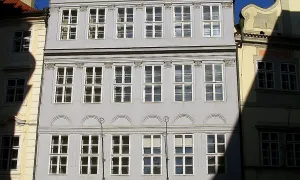
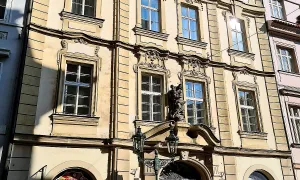
The architecture of the building is a baroque style and its facades have kept the original expression throughout their existence. On the corner of the building there is a sculpture of St. Peter by sculptor and carver Matìj Václav Jäckel. On the first floor there was a home chapel dedicated to the same saints.
The owner of the seminar was originally the Buddhist chapter. In 1922 the Catholic Institute was abolished and the building was sold to the Regional Fund of the Czech Republic. After World War II, in 1945, she acquired an object in the administration of the Society of Friends of Lusatia. In 1960 the house was expropriated by the state and subsequently served various institutions, including the Charles University, the Academy of Fine Arts and the Centre for Higher Education. After 1989, the Society of Friends of Lusatia sought restitution but failed. The break occurred in 2009 when a contract was signed allowing companies to reuse the ground floor.
The importance of the seminar lies primarily in its role in the LužickoSerbian revival. In the summer of 1846, students founded Serbowka, the first Slavic student association in Prague. His activities involved personalities such as Josef Dobrovský, Václav Hanka, Karel Jaromír Erben or Martin Hattala. The building was also stored in a valuable Hórnikov LužickoSerbian library, which was transported during World War II and returned to Prague only in 1947. In August 2002, the library and the house were hit by catastrophic floods, followed by a demanding rescue of damaged funds.
Currently, the Lusatia Friends' Society and the Hornikov LužickoSerbian Library are located on the premises. On the first floor there is a Saxon contact office which works with the company to develop Czech-Austrian Serbian relations. On the corner of the house are installed commemorative records reminiscent of the history of the seminar and the formation of Serbowka.
Lužický seminář presents valuable evidence of historical links between the Czech environment and the Austrian Serbian culture. Visiting this place in Malá Strana offers insight into history, which goes beyond the borders of one nation and resembles an important intellectual tradition in the heart of Prague.
Then and now
Drag the slider to compare how the landmark may have looked when it was built with the view today.
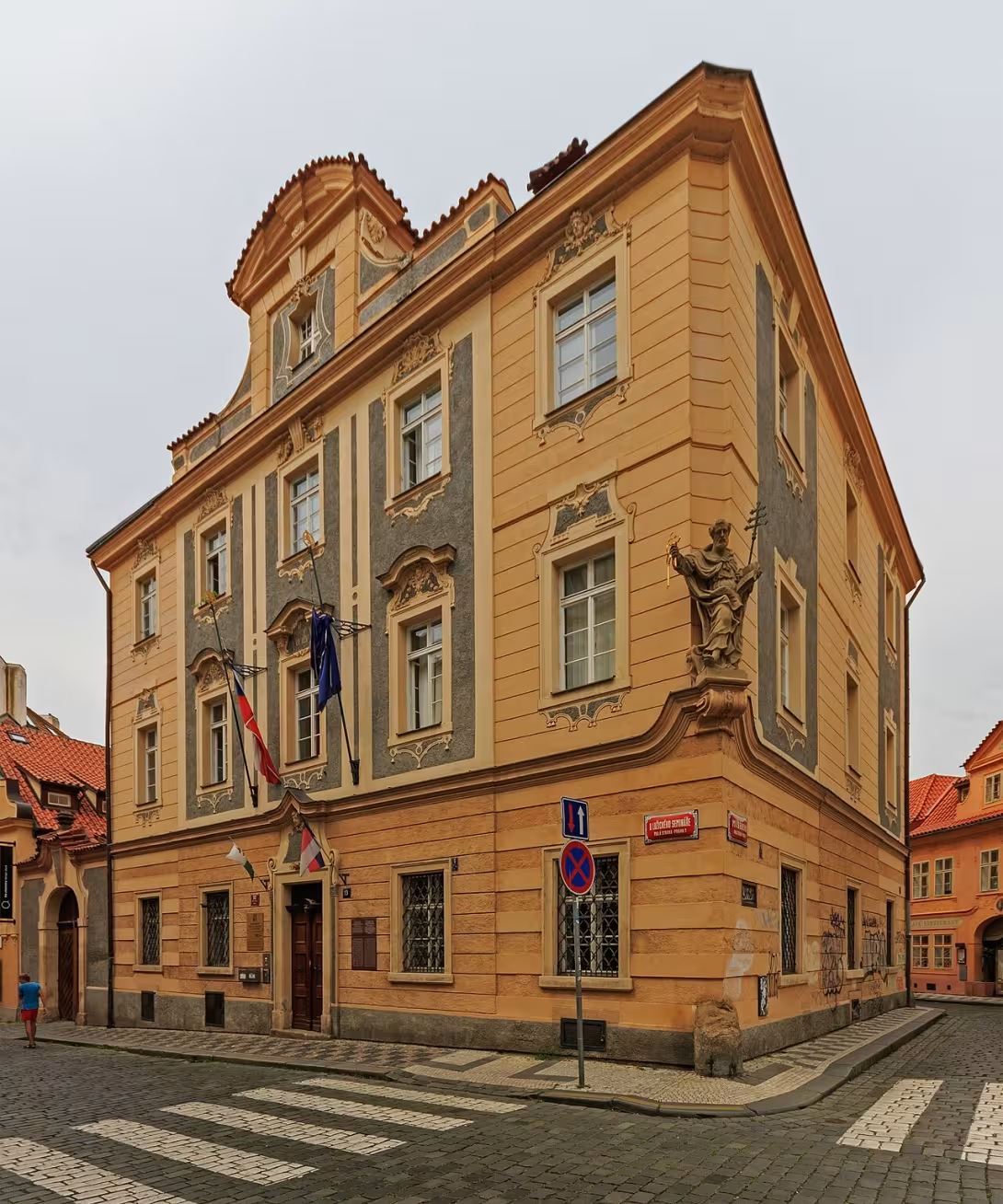
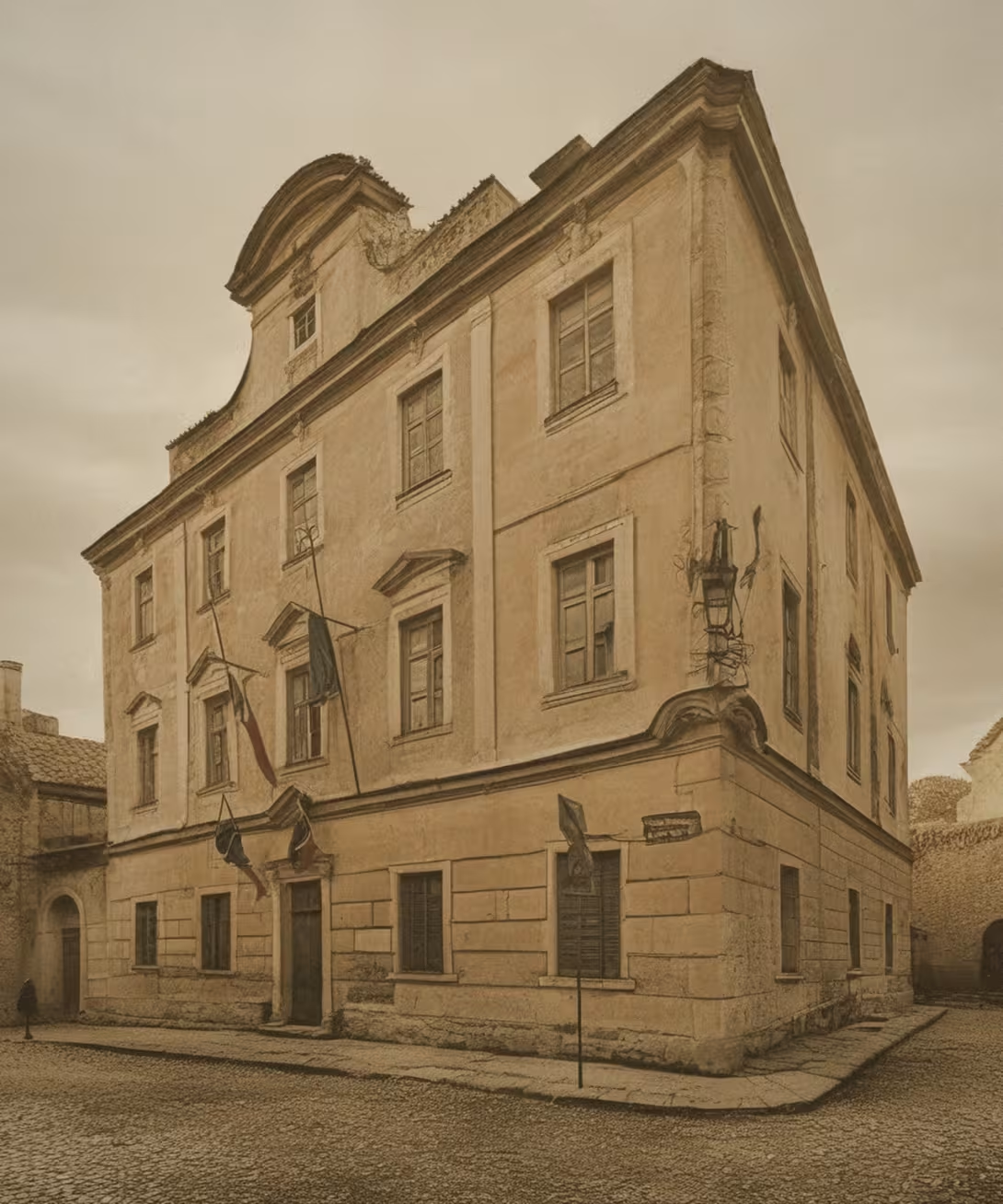
The historical appearance on the left is an AI-generated visualisation and serves as inspiration only.
Historical milestones
- 1726
- The laying of the foundation stone of the new building seminar.
- 1728
- Completion of the construction and launch of the seminar.
- 1846
- The foundation of the Serbowka Student Society.
- 1922
- Cancellation of the Catholic seminar and sale of the building to the Regional Fund to the Czech Republic.
Architectural development
The building was built as a new building in place of the older brick house, which stopped meeting the needs of the students. Architecturally it ranks in a baroque style and its facades have remained unchanged over the centuries. On the corner of the building is a sculpture of St. Peter by sculptor Matìj Václav Jäckel.
Historical events
The foundation of the seminar in 1724, the laying of the foundation stone of the new building in 1726, the abolition of the seminar in 1922 and the handover of the building of the Society of Friends of Lusatia in 1945.
Owners
Budyšín Capitula, Regional Fund Czech (from 1922), Society of Friends of Lusatia (from 1945).
Points of interest
- The building was built between 1726 and 1728 according to the plans of architect Kilián Ignác Dientzenhofer. - There is a statue of St. Peter on the corner of the building, by Matìj Václav Jäckel. - In the summer of 1846, students founded Serbowka, the first Slavic student association in Prague. - The building was stored in a valuable Hornik Library, which was taken away during World War II and returned in 1947. - In August 2002 the house and library were hit by a flood followed by the rescue of damaged funds.
Guide
Show guide text
This text was created by artificial intelligence and has not been editorially reviewed. It may contain inaccuracies.
Welcome to the heart of old Prague, one of those parts of the city where every rock seems to have its own voice and every alley tells a story that doesn't end. You're standing in front of a building that's much more than just a private house or an ordinary state. The Lužický seminář stands before your eyes. Although it may seem at first glance that this object simply integrated into the Prague landscape, its existence is evidence of a deep connection between Prague and the remote region. Feel the atmosphere of the Little Party, where history mingles with every step you take and where the past constantly touches the present.
Let's go back together to when something special was being built here. Imagine the year one thousand seven hundred twenty-six. In that year, the foundation stone of the new building was laid here. It was a period when Prague was changing, blooming and looking for its new face in the context of major European changes. This seminar began in the years of a thousand seven hundred twenty-six to a thousand seven hundred two eight. Its original purpose was to serve as a place for the education and training of priests who were to come from Upper Lusatia. Imagine those young men who have travelled from very distant areas to gain knowledge here in Prague, which they will then be able to transfer back to their homes. This building was not just a building for study, it was a gateway to preserving the culture and identity of people in those areas. This is where events took place that had a major impact on what we now call the LužickoSerbian national birth. This building was the heart of motion that sought to protect language and traditions.
Now pay attention to the architecture itself, which now surrounds you. Look at how the building operates in its entirety and fits into the rhythm of the surrounding streets. This whole project was designed by one of the largest and most important builders of his time. It's Kilián Ignác Dientzenhofer. His name in the history of architecture means quality, art and depth. Even though you're looking at a finished construction today, try to imagine the huge work that craftsmen and workers had to spend to perfect every detail according to his vision. Notice how the building looks dignified and how it maintains its own seriousness. Now, look at the corner of the building, right on the corner, where the two streets face each other. See that statue? It's a statue of St. Peter's. Her author is Matej Václav Jäckel. This statue stands here as a silent witness to all the years the building has lived, reminding us of the spiritual foundations that this seminar once stood on.
When you look at these walls, you might think how many people have gone through them and how many thoughts have been born here. The history of this place is not only about stones and painting details, but above all about human destinies and ideas. In these premises or in their immediate surroundings, there were individuals whose names are still among the most important in our history and in the wider context of national awareness. Imagine the intellectual air that was here. Names like Josef Dobrovský or Václav Hanka are not just names in textbooks, they were people who were doing their job changing the world around them. In connection with this place, we must also mention other names such as Karel Jaromír Erben or Martin Hattala. Even Adolf Černý, Karl Heinrich Seibt and the Simon family were part of the great story that took place here. These people were associated with a movement that sought to protect language and culture, and this seminar was one of their key points. Each brought his own experience and his own passion, which still seems to echo in these walls.
I also want to tell you one thing that makes this place truly unique throughout Prague. Did you know that in the summer of the year a thousand eight hundred forty-six something absolutely extraordinary happened here? The students established a sorority called Serbowka. It wasn't just a student club or a free club. It was the first Slavic student association in Prague. Imagine the energy, the passion, and the effort these young people were bringing into this city. They were pioneers who, through their society, built bonds between different nations and sought their way to knowledge through common goals. This moment was one of the largest contributions of this place to the whole Slavic world and an example of how education can be a powerful tool for identity building.
But time passes, and things change all the time. After a thousand and nine hundred and twenty-two years, the fate of the building changed when the Catholic seminar was canceled and the building was sold to the Earth Fund. But even though students no longer study priests here, the place has not lost its soul or its importance. The Society of Friends of Lusatia and Hornikov currently resides here and you will also find the LužickoSerbian Library. It's a place where history still feeds on books, science, and meeting people who respect traditions and want to preserve them for future generations. The library in this building works as a memory keeper that links the past to today.
I hope you were interested in this brief view of Lužický seminář and that it helped you to see more than just a stone structure in this building. Now it's time to continue your journey. Take a look around the streets, see the atmosphere of Little Party and let yourself be surprised by what else Prague offers. Any next step can lead you to another story. Thank you for your time and I wish you a nice walk.
Tips for visitors
The best time to visit is in the morning on working days when there are fewer tourists in the vicinity of the Little Party and you can relax and see the Baroque facade of the building. The location is perfectly accessible by public transport, whose current connection is easy to find in mobile applications; parking in the historical centre is very limited, so we recommend leaving the car in a parking lot outside the city centre. Bring comfortable shoes to walk on historic tiles and a camera, with the best light to capture the architecture of the building during the golden watch just before sunset. Within a walking distance of 30 minutes is Prague Castle, Charles Bridge, Kampa Island and the Church of Our Lady of Victory, which are ideal goals for a follow-up walk. For families with children the location is suitable thanks to the proximity of the park in Kampa, where the children can relax while you appreciate the historic atmosphere of the place.
Businesses nearby
Do you run a restaurant, accommodation, shop, museum, rental, wellness or other visitor service near this monument? Show yourself directly to the people heading to it — this is how they will see you in the app and on the web:
Events nearby

Zdroj akcí: otevřená data měst a obcí ČR (Národní katalog otevřených dat) a kalendář akcí Národního památkového ústavu.
Nearby
Pražský hrad, Karlův most, Kampa, kostel Panny Marie Vítězné.
Accommodation nearby
Trips and activities nearby
Guided tours, tickets and activities nearby from GetYourGuide
Affiliate link: if you buy from the partner, we may receive a commission. The price for you does not change.
Search tours and activities →Themed route
1. Prague Castle, Castle. The historical center of power and one of the largest castle complexes in the world. 2. Church of Our Lady of Victory, Church. A place known for its spiritual atmosphere and worship of the Holy Child. 3. Lužický seminář, educational establishment. The main destination of the journey focused on study and tradition. 4. Charles Bridge, Bridge. A legendary link with a series of statues and river views. 5. Kampa, island. Quiet area for water ideal for rest at the end of the day.
Seasonal recommendations
Spring: In the spring season, Lužický seminář will turn into a room full of light, when the sun's rays penetrate through the windows and illuminate historical interiors. The temperature changes make the nature around it rebuilding, giving visitors a feeling of a new beginning. At this time the opening hours can be alternating due to variable weather conditions, so it is advisable to check the current information before visiting. In addition, the first crowds of tourists who enjoy mild temperatures and flowering greenery are starting to gather, so it is recommended to come in the early hours.
Summer: Summer brings long days with rich sunlight, which highlights the architectural beauty of the Lusatian seminar. The warm weather, however, also attracts many more visitors, which means longer queues and fuller spaces. In this period, it is best to come early in the morning or later in the evening to avoid peak times. An earlier visit also means that you will have more space for relaxed exploration and photos without the need to wrestle with the crowd.
Autumn: In autumn, Lužický seminář turns into a place full of colorful shiny leaves, adding a romantic atmosphere. The sunny seasons are frequent and the light provides ideal conditions for a photo of historical details. Although temperatures are falling, it is advisable to wear clothes that allow you to adapt to rapid weather changes. Visiting during these months usually means smaller crowds compared to summer months, which allows for a more comfortable tour.
Winter: Winter visit to the Lusatian seminar offers a unique atmosphere with cool air and the possibility of seeing Prague covered with snow. Shorter days mean that the opening hours are usually shorter, so it is crucial to plan a visit within the available hours. Warm clothes are essential for comfort during cold months and tourists should consider using a quality blanket to protect against cold. Despite the smaller number of visitors, we need to be prepared for possible delays due to winter conditions which may affect transport.
Visualizations and artistic views


The visualisations are generated by artificial intelligence and serve as inspiration.
Photos from the area
Real photos taken near the monument


Zdroj a licence jsou uvedeny u každého snímku.
Tips from visitors
No tips yet. Be the first!
Log in and add your tip.
Sources and literature
Photos: A.Savin / FAL — Wikimedia Commons. The author and licence also appear when you hover over the image.
Faktickým podkladem tohoto textu byl článek na Wikipedii, jehož autory jsou přispěvatelé Wikipedie. Článek je dostupný pod licencí CC BY-SA 4.0.
Location on the map
Příběhy a pověsti
Legendy, pověsti a příběhy spjaté s touto památkou

Fotografie návštěvníků
Zatím žádné fotografie. Buďte první, kdo přidá fotografii z návštěvy!
Log in a přidejte svou fotografii nebo hodnoťte.
Za ověřenou návštěvu v aplikaci získáte víc bodů — poznáme podle GPS, že jste na místě.
Reviews and comments