






MacNevenův palác City palace
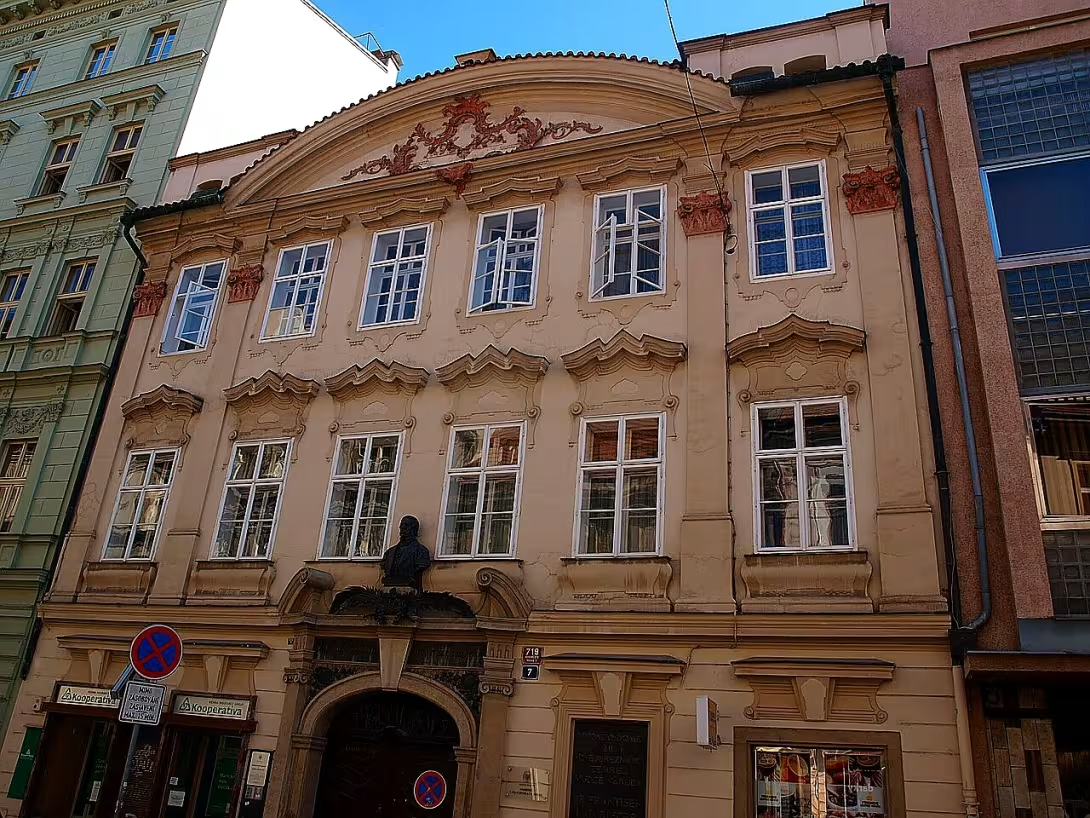
MacNevenův palác, also known as Palacký House, is a historic building in Prague 1 on the intersection of the streets of Vodičkov and Jungmann. This classical palace combines the rich history of Czech personalities with architectural development from Gothic to Renaissance to Classicism. It is protected as a cultural monument and serves today's visitor not only as a testament to the past, but also as a place to preserve monuments of prominent 19th century personalities.
The origin of the palace dates back to the Gothic era, where two houses built after 1370 and belonging to the monastery at the temple of Our Lady of Snow stood on the site. These buildings were connected during the 15th century, which meant the beginning of their long history. In 1613 the palace became the property of the comornique of the Earth plates, John Třeboňský of Kružnov, and then passed into the hands of Judge William Henry Odkolek. The key moment was its reconstruction around 1770 according to the plans of Ignatius Jan Nepomuk Palliardi for Baron Wilhelm MacNeven, which gave him today's classical face. This transformation reflects a broader cultural and political development at a time when classicism became a dominant architectural style in Central Europe.
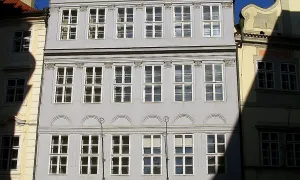
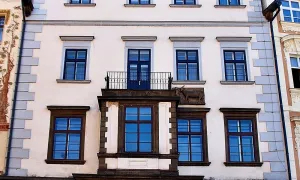
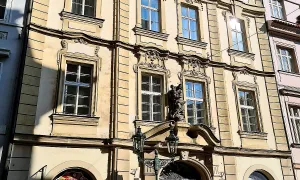
The architecture of MacNeven Palace is characterized by a two-story six-axis street facade with pilasters and composite warheads. Above the crown ledge is a low segment shield decorated with rococo stucco, which gives the building elegance and classicist elegance. The interior of the palace keeps the remains of both Gothic and Renaissance spaces, which are indicative of its long-term development.
The history of ownership of MacNeven Palace is as rich as its architecture. After William Henry Odkolek, Ferdinand Hirsch of Sternfeld, who bought the palace in 1790, went into the hands of a lawyer. His daughter transferred him to Maria Lankisch from Hornic, which led to the palace becoming part of the Mechur family and then Palacky. František Palacký, a significant figure in Czech history, lived in the palace from 1853 to his death in 1876. After his death the palace switched to his daughter Maria and her husband František Ladislav Riegra, who also lived here and died in 1903. The house was inherited by his son Bohuslav Rieger, which shows the importance of the palace for Czech history and culture.
Key events in the history of MacNeven Palace include reconstruction according to Palliardi around 1770, the marriage of František Ladislav Riegra and Maria Méchur in 1853 and the status of the new court three-storey wing in 1908. These events not only shaped the physical appearance of the palace, but also its historical and cultural value.
Today MacNevenův palác is a place where the sights of František Palacký and František Ladislav Riegra are kept. It is one of the long-term exhibitions of the National Museum and offers visitors access to the living and working environment of these important personalities. Bust of František Palacký by Josef Václav Mysbek and memorial plate of František Ladislav Riegra above the portal add another layer of historical significance.
MacNevenův palác is not only an architecturally interesting building but also a key place for understanding Czech culture and history. Its rich history, connecting Gothic roots with classical reconstructions, and its relationship to the important figures of the 19th century makes this palace a necessary visit for everyone interested in the history of the Czech Republic. Its location in the heart of Prague, close to Wenceslas Square and New Town, adds its importance to another layer, making it not only a monument to the past, but also a part of the lively history of the city.
Then and now
Drag the slider to compare how the landmark may have looked when it was built with the view today.
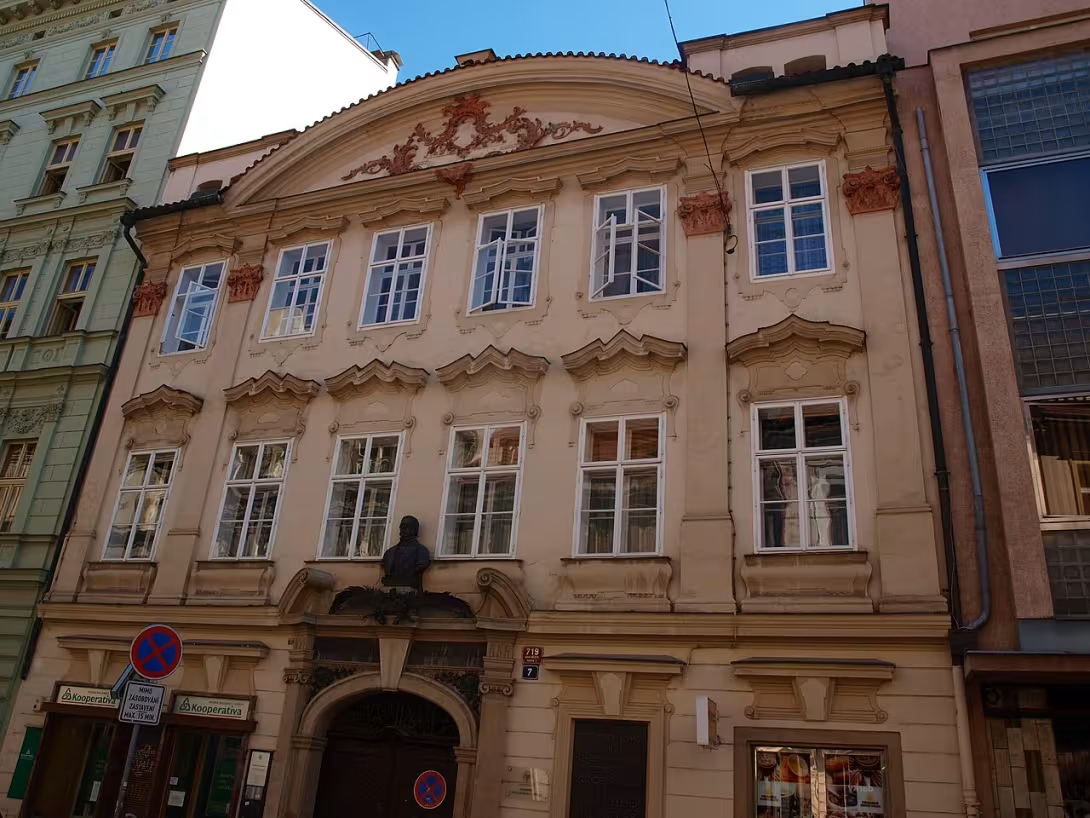
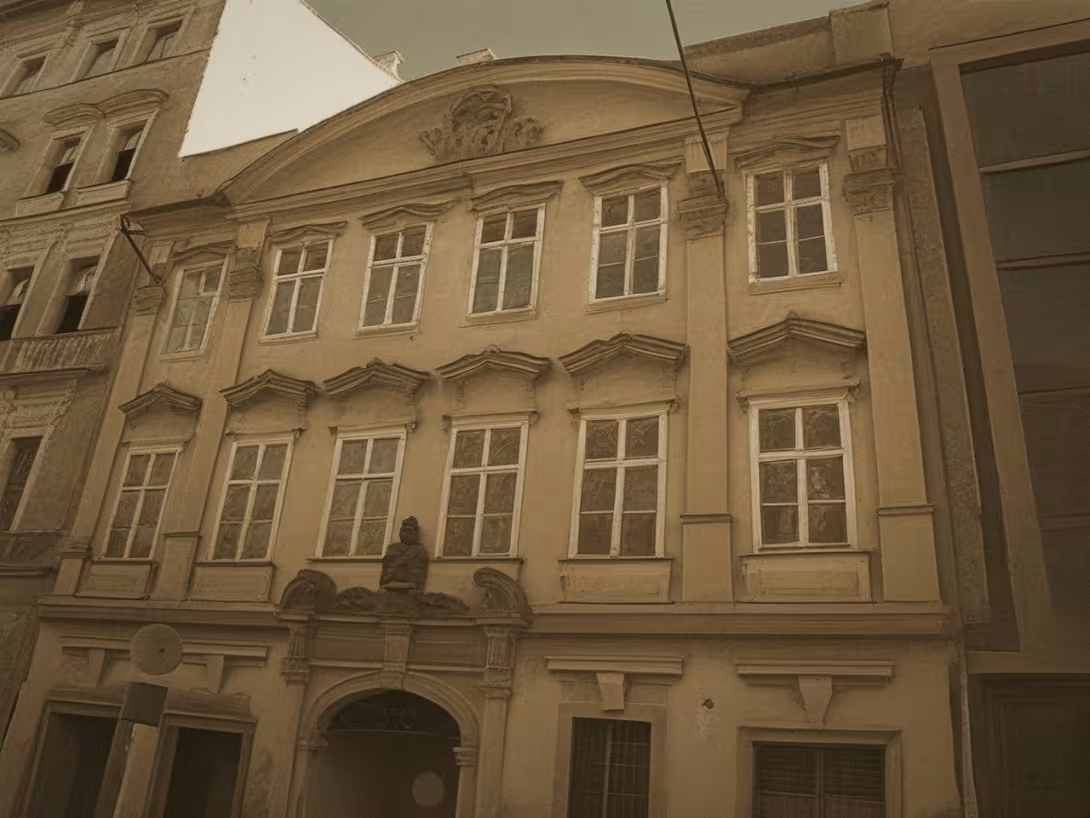
The historical appearance on the left is an AI-generated visualisation and serves as inspiration only.
Historical milestones
- 1885
- Bust of Franz Palacký by Josef Václav Mysbek above the portal.
- 1903
- The death of Frantisek Ladislav Riegra in the palace.
Architectural development
Originally Gothic houses were connected before 1613 and then remodeled. A key transformation was recorded in a classical style palace around 1770 according to Ignatius Jan Nepomuk Palliardi. Another reconstruction took place in the 19th century, including a new court wing from 1908.
Historical events
- 1770
- Rebuilding the palace according to Ignatius Jan Nepomuk Palliardi for Wilhelm MacNeven.
- 1853
- František Ladislav Rieger married Maria, daughter of Theresa Méchur.
- 1908
- Built a new three-story wing according to the project by Matìj Blecha.
Owners
- before 1613
- late 17th century
- 1790
- 19th century
- 1876
- 1903
- after 1903
Points of interest
- The building is also known as the Palacky House. - The palace's origin dates back to the Gothic era, when two houses built after 1370 stood on the site. - Around 1770 the palace was rebuilt according to the plans of Ignatius Jan Nepomuk Palliardi for Baron Wilhelm MacNeven. He lived in the palace from 1853 until his death in 1876. - The building contains bust of Franz Palacký from the work of Josef Václav Mysbek.
Guide
Show guide text
This text was created by artificial intelligence and has not been editorially reviewed. It may contain inaccuracies.
Welcome to the very heart of Prague, a place where the destinies of great personalities intersect and where history speaks from every stone. Stop for a moment, take a breath and look in front of you. You're standing in front of a building called MacNevenův palác, although many of us know it much more often under the name Palacky House. It is a building that connects two very important streets, Vodičková and Jungmannova with its location in Prague. Feel this atmosphere of urban excitement that surrounds you, and remember that at this very point, different layers of time meet. When you look at the facade of this palace today, you see the result of a long development. To understand what this place is, we have to go back very far in our minds until the time of goth. Imagine there wasn't one big palace in this place, but two separate houses. These buildings were built shortly after a thousand three hundred seventy. At that time Prague was a completely different city, full of narrow streets and walls. These two Gothic houses were then connected to one whole before the year of a thousand six hundred thirteen, which was the first step to becoming one large residence. However, the resemblance you see in front of you right now comes from a much later time. Let's move forward in time to the end of the eighteenth century, namely around the year one thousand seven hundred seventy. It was at that time that there was a major reconstruction that gave the building its current character. The author of this project was the recognized creator of Ignác Jan Nepomuk Palliardi. This whole change took place for Baron Wilhelm MacNeven, after which the palace gained its name. Palliardi was the master of his craft and was able to imprint the building with dignity and elegance, which made it a representative seat of nobility in the city centre. Now pay attention to the building itself. Look at its facade and feel the rhythm of the windows and the overall balance of the building. Do not look for excessive ornaments, but rather perceive the sense of stability and power that radiates from the building. The most important detail to focus on is the entry portal. Look up, above the entrance itself. You can see the bust of Francis Palacky. This work of art was created by the famous sculptor Josef Václav Mysbek and was placed here in the year one thousand eight hundred and eighty-five. This bust is not just an ornament, it is a symbol of the gratitude of the city and the nation towards a man who has spent a significant part of his life here. And it is here that brings us to the people who lived and worked in these walls. MacNevenův palác was not only a luxury apartment for the rich, but it became the real centre of Prague's intellectual and political life in the nineteenth century. The most famous of them was František Palacký, the respected father of the Czech national revival. Palacký lived here since a thousand eight hundred fifty-three until the end of his days. Imagine all the discussions that were held in these rooms, all the letters he wrote here, and all the visits he received here. The palace became an unofficial salon of Czech intelligence. But Palacky wasn't the only one. In this house, there were various important families and personalities. The owners and residents were for example Ferdinand Hirsch ze Sternfeldu or Mariá Lankischová z Hornic. Later there were Jan Měchura and Terezie Měchurová. Each brought their own energy into the house and helped shape their history. The Rieger family left a very strong trail. František Ladislav Rieger, an important politician and diplomat, was closely associated with this place. It was here, in these walls, in the year one thousand nine hundred and three, that his earthly life ended. Bohuslav Rieger worked with him. When you realize how many powerful and educated people have come through this door, the palace starts to sound like a true witness to history. You might be wondering why the building has two names. Why is it MacNevenův palác and the Palacky House? That's one of those interesting things that gives the place depth. The name MacNeven refers to the Baron who had the building rebuilt and gave it its physical form. The name of the Palacka House refers, however, to the spirit of this place, to the man who made history here, who is more important to us today than the original owner. It's a fascinating clash between material property and spiritual heritage. The building belonged to the nobles, but in the memory of the people it remained connected to the scholar and patriot. Now try to close your eyes for a moment and imagine what Vodickov Street would look like over a hundred years ago. Do you hear the horse clapping on the paving cubes? Do you see the gentlemen in the Cylinders and the ladies in the long dress entering this palace to attend secret meetings or intellectual debates? This house was like a magnet for all those who wanted to influence the direction of Czech nationality. Every corner of this palace thus hides stories of hope, the fight for the rights of its nation and the deep love of history. Now, if you look at the building again, feel it no longer as a set of stones and mortar, but as a living organism that has survived for centuries. From the Gothic foundations of the 14th century, to the baroque and classicist arrangements of Palliardi, to the time of the highest national revival. It is a journey from the Middle Ages to modern Prague, which we know today. This palace reminds us that even in the center of a noisy city, there are places where time has stopped and where we can feel a connection with our ancestors. It's a place where noble elegance and national pride have come together. I hope that this short trip in time helped you see MacNevenův palác in a new light and that you felt respect for the people who lived here. Now we invite you to look around in peace, maybe take another look at the details of the portal and then continue your walk in beautiful Prague. There are still many hidden stories waiting to be discovered. We wish you a pleasant rest of the day and many new discoveries in our historic city. Goodbye and enjoy your journey.
Tips for visitors
The best time to visit MacNeven Palace is early morning or evening when there are fewer people on the streets and light provides beautiful photos. This period also allows for better inspection of architectural details without obstacles to sunlight.
Parking in the vicinity of MacNeven Palace can be challenging, so we recommend the use of public transport. The location is well accessible by bus and tram; for the current connection check the route search engine. If you're using a passenger car, look for parking possibilities on the surrounding streets.
When visiting you take with you suitable clothes according to weather and shoes for long walking. Traffic signs in historic neighborhoods can be difficult, so it is good to be ready on your feet.
For photography are the best places inside the palace where the views of Vodickov and Jungmann Street are opened. The morning light is ideal for capturing the color and texture of the building. Shooting outside can be difficult because of strong sunlight.
In the vicinity of MacNeven Palace you will find Wenceslas Square, which is an ideal place for walking and sightseeing. You can also visit the National Museum or dive into the atmosphere of the Old Town streets that are within walking distance.
Businesses nearby
Do you run a restaurant, accommodation, shop, museum, rental, wellness or other visitor service near this monument? Show yourself directly to the people heading to it — this is how they will see you in the app and on the web:
Events nearby

Zdroj akcí: otevřená data měst a obcí ČR (Národní katalog otevřených dat) a kalendář akcí Národního památkového ústavu.
Nearby
Václavské náměstí
Nové Město
Accommodation nearby
Trips and activities nearby
Guided tours, tickets and activities nearby from GetYourGuide
Affiliate link: if you buy from the partner, we may receive a commission. The price for you does not change.
Search tours and activities →Themed route
Thematic cruise route: MacNevenův palác and its surroundings
1. MacNevenův palác (Palace) - Why is it worth a visit: This elegant Baroque palace, built in 1726 for the English buyer and banker John MacNeven, is one of the oldest buildings in Wenceslas Square. Today it serves as a seat of several ministries of the Czech Republic. Its historical appearance and architectural details are a fascinating example of baroque art.
2. Wenceslas Square (square) - Why is it worth a visit: This largest and most famous square in Prague is the centre of historical events such as celebrated national liberation days. It is known for its monument to the National Hero and its ceremonial marches. Walk in this place offers a view of the history and culture of the Czech nation.
3. National Theatre (Theatre) - Why is it worth a visit: This important cultural centre, built in 1881, is home to Czech opera and ballet art. His impressionable facade and rich interiors attract theatre lovers from all over the world. It's a place where tradition and modernity meet.
4. Church of St. Wenceslas (Church) - Why is it worth visiting: This church, built in 1929, is one of the youngest monuments in Wenceslas Square. Its modern design and historical references to the Czech patron saint Wenceslas make it interesting for all those interested in architecture and spiritual life.
5. Square of the Republic (Square) - Why is it worth a visit: This square connects Wenceslas Square with Mala Strana and is known for its monument to pensioners. It is a place where history and the present meet, offering a view of important buildings such as the National Museum and City Hall of the City of Prague.
This route offers visitors a comprehensive view of the history, architecture and culture of Prague's New Town Centre.
Seasonal recommendations
Spring: During the spring season MacNevenův palác is influenced by sweet and warm lighting that increases the beauty of historical interiors. Nature wakes up with flowering trees and lawns, adding colour to the visit. For an optimal experience visit the palace in the early spring season when there are usually fewer people. Dress appropriately for warm and mildly cold weather - short gloves and light coat could be useful.
Summer: In summer, MacNevenův palác is radiant with sunlight that emphasizes architectural details. The atmosphere is full of life and energy, there are often more visitors. The best time to visit is early in the morning or late in the afternoon to avoid peak hours and thus unpleasantly high temperatures. Bring short clothes, sunglasses and a sun protection hat.
Autumn: In autumn MacNevenův palác is surrounded by colorful leaves of falling trees, creating a romantic atmosphere. The sunny and colder days are ideal for visiting, because they allow you to enjoy both the interiors of the palace and the natural beauty of the surroundings. Visit him in the early autumn period when fewer people and the temperature is still pleasant. Get dressed in cold weather with top suits and short gloves.
Winter: In winter, MacNevenův palác offers a calm atmosphere, often illuminated by bright lights, highlighting architectural details. Also extraordinary is the presence of snow around, which can change the appearance of the palace into the romantic colors of white and silver. Visit him at an early afternoon or evening when the opening time is shorter. Bring warm clothes, scarf and shoes with anti-tskricka soles for comfort during cold days.
Visualizations and artistic views


The visualisations are generated by artificial intelligence and serve as inspiration.
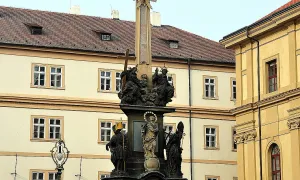
Photos from the area
Real photos taken near the monument


Zdroj a licence jsou uvedeny u každého snímku.
Tips from visitors
No tips yet. Be the first!
Log in and add your tip.
Sources and literature
Photos: VitVit / CC BY-SA 3.0 — Wikimedia Commons. The author and licence also appear when you hover over the image.
Faktickým podkladem tohoto textu byl článek na Wikipedii, jehož autory jsou přispěvatelé Wikipedie. Článek je dostupný pod licencí CC BY-SA 4.0.
Location on the map
Příběhy a pověsti
Legendy, pověsti a příběhy spjaté s touto památkou
Fotografie návštěvníků
Zatím žádné fotografie. Buďte první, kdo přidá fotografii z návštěvy!
Log in a přidejte svou fotografii nebo hodnoťte.
Za ověřenou návštěvu v aplikaci získáte víc bodů — poznáme podle GPS, že jste na místě.
Reviews and comments