






Majorka Homestead
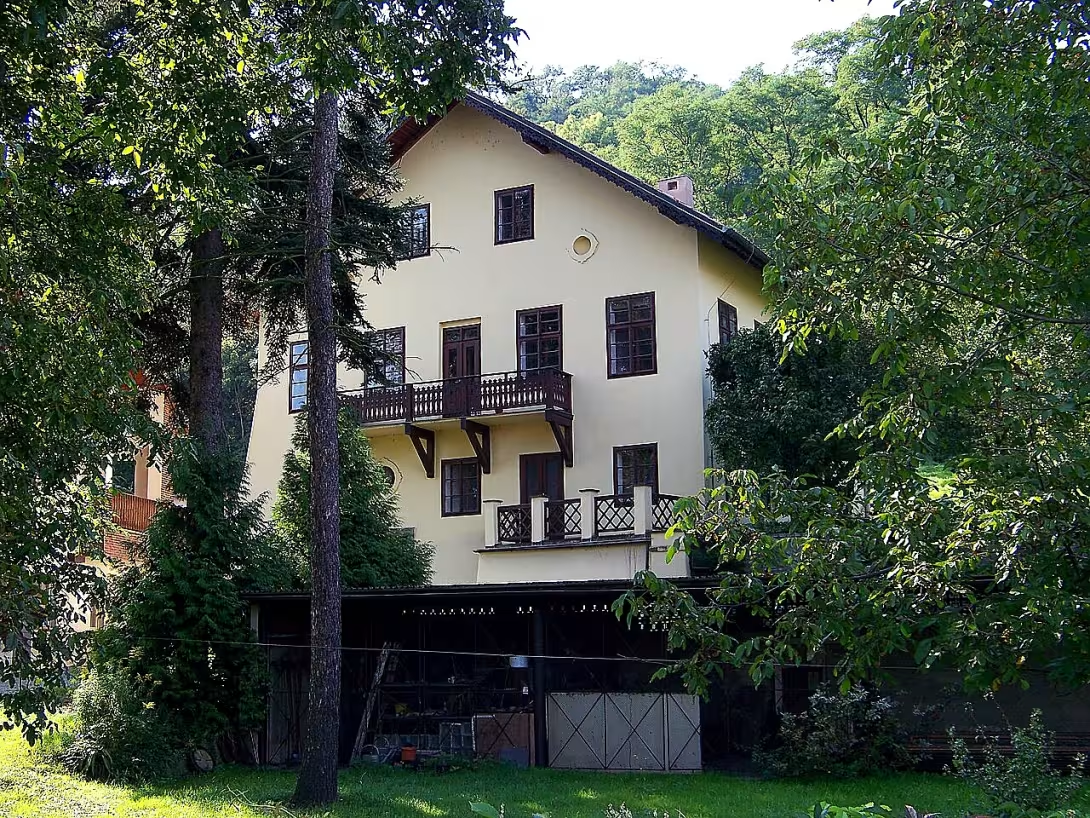
Majorka is a former vineyard estate in Prague's Dejvice, whose history dates back to the 16th century. The Institute for Hydrodynamics of the Academy of Sciences of the Czech Republic is now based in historical buildings. The building has been listed in the list of real cultural monuments since 1958.
The beginnings of the estate date back to 1572, when the small-scale township Hanuš Denk merged five smaller vineyards into a whole of 14 cubic metres. In 1628 the site was purchased by Eliáš Magaur z Greifenau, after which it acquired the original name Magourka. By the influence of the chamber, the name gradually changed to Markourka and from the beginning of the 20th century to the present Major. The historical sources from 1659, when Elias Magaur died, confirm that the vineyard press was located on the premises.
The architectural development of the building reflects changes in its use. The residential building dates back to the late 18th century. The significant intervention was the construction of the late Baroque chapel of the Immaculate Conception of the Virgin Mary in 1716, which was set up by the dean of the metropolitan capital Tobiáš Vojtěch Opitz. For the maintenance of the chapel he founded a fund of 50 gold. Although the chapel was repaired by Saint Francis Dittrich in 1860 and subsequently consecrated, the new owners had it torn down at the end of the 19th century. At the turn of the 19th and 20th centuries, buildings were adapted for industrial purposes. The expansion of the factory after the First World War was designed by architect Ludvík Melzer.
Majorka replaced a number of owners and underwent significant functional changes. After Elias Magaur, the estate became the property of the metropolitan capital, and after 1707 it was extended by additional fields. The 1734 purchase agreement shows that wine was no longer cultivated at that time. The area had six cattle, three hives and liturgical equipment. Since 1791, Makourka has shared fate with the nearby estate of Juliska. Between 1842 and 1851, part of the land was purchased for the construction of the North State Railway. In 1864, entrepreneurs bought the premises to set up a brick. Its owners later became Isidor Schmied and subsequently Antonín Klecanda. In 1916 Jan and František Reiner took over the property together with Jiří and Anna Svager, who adapted the buildings to the shoe factory.
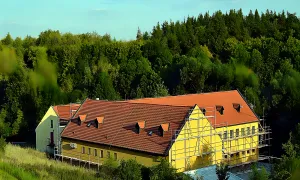
Today, the former brick house serves as a warehouse and production space for car batteries, while the Institute for Hydrodynamics of the Academy of Sciences of the Czech Republic is based in historical residential buildings. The area of Majorka is a valuable proof of the development of Prague suburb, where the agricultural tradition with the industrial era has intertwined over the centuries. Visiting this place offers insight into the changes of the Dívice landscape and reminds of the historical layers that shaped the form of today's Prague.
Then and now
Drag the slider to compare how the landmark may have looked when it was built with the view today.
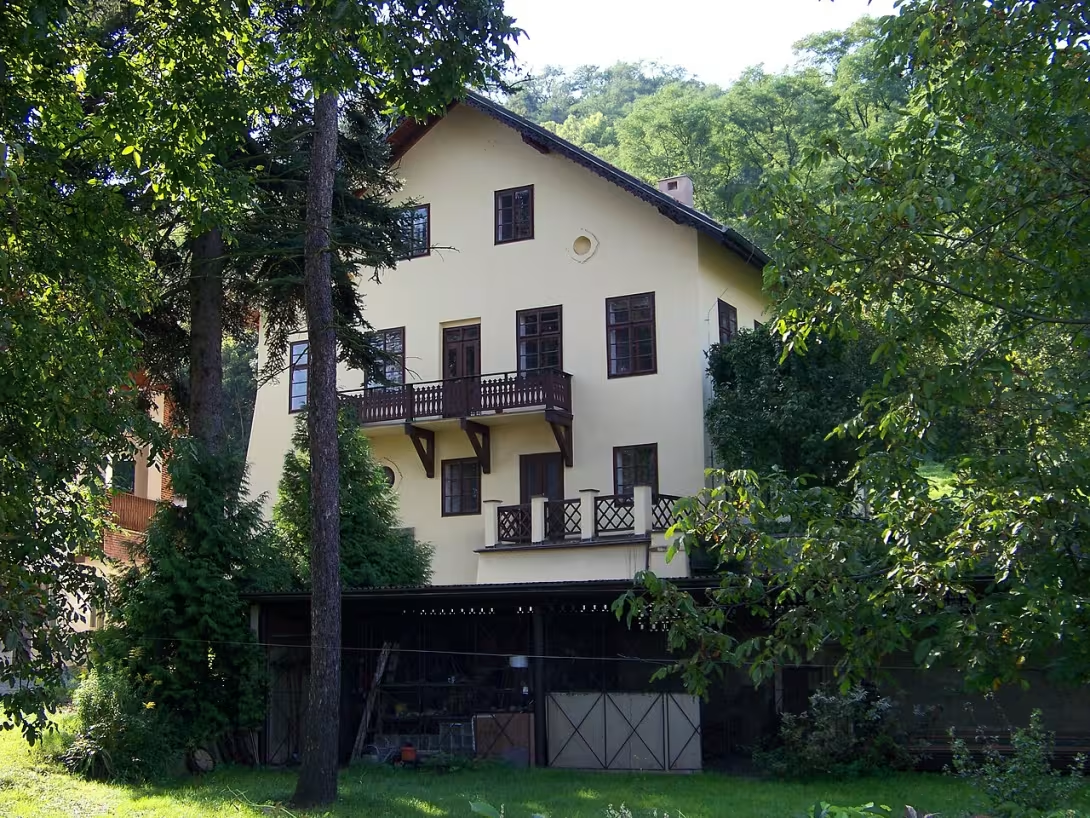
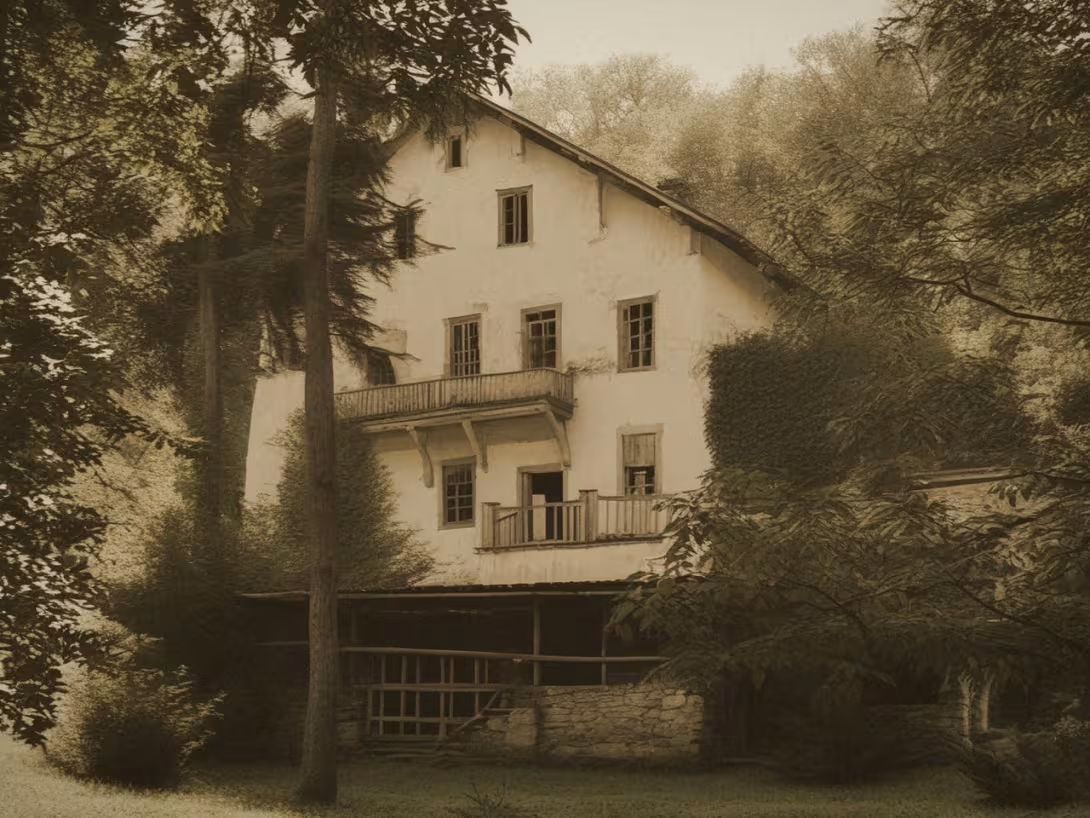
The historical appearance on the left is an AI-generated visualisation and serves as inspiration only.
Historical milestones
- 1572
- Hanuš Denk has connected five separate vineyards to one estate.
- 1716
- Dean Tobiáš Vojtěch Opitz has built the Baroque Chapel of Immaculate Conception of the Virgin Mary.
- 1864
- Opening of operation of the brick after purchase of land for rail.
- 1958
- The entry of real estate into the list of real cultural monuments.
Architectural development
The original vineyard estate was supplemented by a late Baroque chapel in 1716. The residential building dates back to the late 18th century. At the turn of the 19th and 20th centuries, adaptations were made for industrial purposes, including the expansion of the factory after World War I according to the design of Louis Melzer.
Historical events
In 1716 a Baroque chapel was built on the property. In 1842- 1851 part of the land was purchased for the construction of the North State Railway. In 1864 the estate was converted into a brick and later into a shoe factory.
Owners
Hanuš Denk (from 1572), Eliáš Magaur z Greifenau (from 1628), metropolitan capital, Isidor Schmied (from 1869), Antonín Klecanda, Jan and František Reiner and Jiří and Anna Svager (from 1916).
Points of interest
- The estate was formed in 1572 by a combination of five smaller vineyards, which together had an area of fourteen hundred yards. - The original name Magourka changed over time to Markourka and from the beginning of the 20th century to Major. - In 1716 a late Baroque chapel was built on the premises, but by the end of the nineteenth century the new owners had it torn down. - In 1734 wine was no longer cultivated and the owners owned six cattle and three hives. - Buildings have been used in the past as bricks and later as a shoe factory.
Guide
Show guide text
This text was created by artificial intelligence and has not been editorially reviewed. It may contain inaccuracies.
Welcome to Prague's Dejvice. Stop for a moment, take a breath and look around you. You're standing in front of an area called Majorka. At first glance, it may seem like it's just another part of urban development, but if you look more closely at the shapes of buildings and feel the atmosphere of this place, you start to feel the presence of many centuries of history. It is a place where agricultural tradition has encountered an industrial rise and eventually modern science. Let's go back together in time, deep into the sixteenth century, when the surroundings looked completely different than today. Imagine the vast green areas, the quiet roads and, above all, the endless rows of vines. It was here, in the year five hundred seventy-two, that the story of this place as we know it began. There was a man named Hanuš Denk. It wasn't one large estate at the time, but rather a collection of five separate, smaller vineyards. But Hanuš Denk had a vision and joined these five small units into one larger economy. In order to imagine the size of the vineyards that worked together then, we have to use old-fashioned measurements. The whole area had an area of fourteen hundred. Strych was a common unit of area at the time, and even though we no longer use such a word in common terms, in the context of the then economy it was a very decent area that allowed the wine industry to prosper and develop. Now pay attention to the name itself that you are reading on the charts or hearing in the maps today. CZECH NOTE: The word Majorka sounds exotic, almost like the name of a remote island, but the truth is much more grounded and closely connected to the people who lived here. In the seventeenth century, the estate came into the hands of an owner named Eliáš Magaur z Greifenau. It was his name that became the basis for naming the entire campus. The place was originally called Magourka. However, as we know, language is a living organism, and words are changed over time. Magourka became Makourka gradually and with the arrival of the twentieth century the name was finally transformed into today's Major. It is fascinating to see one family name gradually taking the form that reminds us of Mediterranean areas today, although the roots of this place are firmly embedded in Prague's soil. Now look at the architecture of the buildings in front of you. Feel their shapes and the way they are distributed. Although the area has undergone many modifications, there are still traces of different ages. One of the most important elements to think about is the chapel of the Immaculate Conception of the Virgin Mary. It was built in the year seven hundred and sixteen thanks to the initiative of Dean Tobias Vojtěch Opitz. It was a construction in the late Baroque style that brought to the agricultural area a touch of spirituality and elegance. Although much has changed over time in the premises, the existence of such a chapel shows how important faith played in the life of the people at the time and how they tried to nationalize their surroundings. As part of architectural changes in later times, Ludvík Melzer also left its trail, whose work helped shape the form we know today. But when we move on in time, we find that Majorka was not just about wine and prayers. The nineteenth century brought with it an era of industrial revolution and with it a radical change in the function of this place. In a thousand and eight hundred and sixty-four, there was a major twist. In connection with the purchase of land for the new railway, a brick operation started here. Imagine the contrast. Silent vineyards with the scent of grapes were replaced by noise, smoke and heavy labor with clay and fire. Majorka has become a site of production of building material that helped build a growing Prague. But even that wasn't the end of transformations. Later, the premises turned into a shoe factory, which only confirms the incredible ability of this place to adapt to the period needs. From the farmhouse to the brick to the production of shoes. This place is associated with the names of many personalities who left their prints. In addition to the above mentioned Hanuš Denko, Elias Magaur or Tobias Vojtěv Opitz, names such as František Dittrich, Isidor Schmied or Antonín Klecanda appear in history. They were people who lived here, worked, did business, and maybe even dreamed. Each of them added a chapter to the Major, whether it was an economic boom, an industrial boom, or maintaining traditions. Today in Majorca you will find no vineyards, no bricks, no footwear machines. If you look at the current use of buildings, you will see that the Institute for Hydrodynamics of the Academy of Sciences of the Czech Republic is based here. It's a fascinating turn. The place where there was previously work with clay and leather is now the centre of top scientific research where the movement of liquids and gases is studied. Science replaced the craft, but the historical walls remained. It is thanks to the fact that the property was entered in the list of real cultural monuments in the year nine hundred and fifty-eight, Majorka has retained its identity and unique character in the middle of the modern city. The interesting thing that might interest you is the change in the name we talked about. It's kind of a little language mystery that shows us how people's language can transform reality. Who would have said in a thousand and seven hundred fifty that the estate named after Mr Magaur would be perceived as Majorka for two walls? It is a reminder that history is not only about data and facts, but also about how we think about things and what we name them. Now I encourage you to look around in peace. Look through the facade of the buildings, feel their rhythm, and try to imagine how the sounds have changed over 500 years. From the rustling of vine leaves, to the rumbling of brick furnaces, to the silent discussion of scientists in laboratories. Majorka is living proof that nothing is static and that even a small estate in Dejvice can carry the entire history of Czech development. Thank you for accompanying me on this short journey through time. I hope you're interested in the story of the Major and that you're now looking at these buildings with different eyes. Now you can continue your walk Dejvicemi and discover other hidden corners of our city. Have a pleasant day and many other observations. Goodbye.
Tips for visitors
The best time to visit is during the sunny morning, when the light beautifully depicts the historical walls of the estate and surrounding greenery. Avoid weekend rush hour if you are looking for peace of mind over history. The location is available by car and by public transport; Check the current connection in the search engine and search the nearby streets of Dejvice. Bring comfortable shoes for walking in the field and a bottle of water, as there may not always be open refreshments in the immediate vicinity. For photographers it is ideal to capture the contrast of ancient architecture with views of the Vltava River Valley, while the best lighting conditions are shortly after sunrise. In the surroundings we recommend a walk to the village of Juliska, to the river Vltava or a hike to the natural monument Baba, which are ideal goals for families with children who appreciate the movement of nature and exploring local history.
Businesses nearby
Do you run a restaurant, accommodation, shop, museum, rental, wellness or other visitor service near this monument? Show yourself directly to the people heading to it — this is how they will see you in the app and on the web:
Events nearby

Zdroj akcí: otevřená data měst a obcí ČR (Národní katalog otevřených dat) a kalendář akcí Národního památkového ústavu.
Nearby
Usedlost Juliska, řeka Vltava, přírodní památka Baba.
Accommodation nearby
Trips and activities nearby
Guided tours, tickets and activities nearby from GetYourGuide
Affiliate link: if you buy from the partner, we may receive a commission. The price for you does not change.
Search tours and activities →Themed route
1.Majorka Type: Main destination. Why to visit: Here begins your journey.
2. The estate of Juliska Type: Historical residence. Why to visit: You can admire beautiful buildings and calm mood here.
3. natural monument Baba Type: Protected area. Why to visit: This area offers beautiful views of nature.
4. River Vltava Type: Water flow. Why to visit: It is a great place for a final walk by the water.
Seasonal recommendations
Spring brings fresh energy and awakening nature to the area of Dejvic. The trees start to green and the fine spring light beautifully highlights the details of historical buildings. It's a time of quieter atmosphere when everything begins to develop again. For the visit I recommend layered clothing because the morning temperatures may still be cold. The best thing is to come in the morning when the air is the cleanest.
In the summer months there is a very lively atmosphere, but also strong sun and high temperatures. Zelena is in full bloom and looks very rich. Because of the great crowds of tourists, it is best to arrive first thing in the morning to ensure a more peaceful tour. Don't forget the headgear, sun protection and enough water for hydration.
Autumn turns the neighborhood into a colorful world full of gold and brown shades. The low sun creates long shadows on the facades and morning fog gives the memory a mysterious mood. It's good to have a waterproof jacket or umbrella ready. The ideal time for a visit is afternoon hours, when the colour of leaves in the setting light is the most outstanding.
Winter brings quiet and a quiet, melancholy atmosphere. The days are short and the light is cold, which may cause a grim impression, but it also has its magic. It is necessary to take very warm clothes and shoes suitable for cold. Plan a visit in the early hours of the day to make the tour before it becomes dark due to shorter daily times.
Visualizations and artistic views


The visualisations are generated by artificial intelligence and serve as inspiration.
Photos from the area
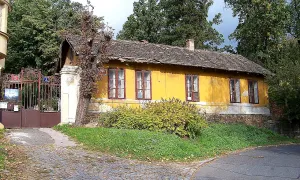
Real photos taken near the monument

Zdroj a licence jsou uvedeny u každého snímku.
Tips from visitors
No tips yet. Be the first!
Log in and add your tip.
Sources and literature
Photos: ŠJů / CC BY 4.0 — Wikimedia Commons. The author and licence also appear when you hover over the image.
Faktickým podkladem tohoto textu byl článek na Wikipedii, jehož autory jsou přispěvatelé Wikipedie. Článek je dostupný pod licencí CC BY-SA 4.0.
Location on the map
More monuments – Dejvice
Show all in the municipality


Příběhy a pověsti
Legendy, pověsti a příběhy spjaté s touto památkou
Fotografie návštěvníků
Zatím žádné fotografie. Buďte první, kdo přidá fotografii z návštěvy!
Log in a přidejte svou fotografii nebo hodnoťte.
Za ověřenou návštěvu v aplikaci získáte víc bodů — poznáme podle GPS, že jste na místě.
Reviews and comments