






Malostranský hřbitov Cemetery
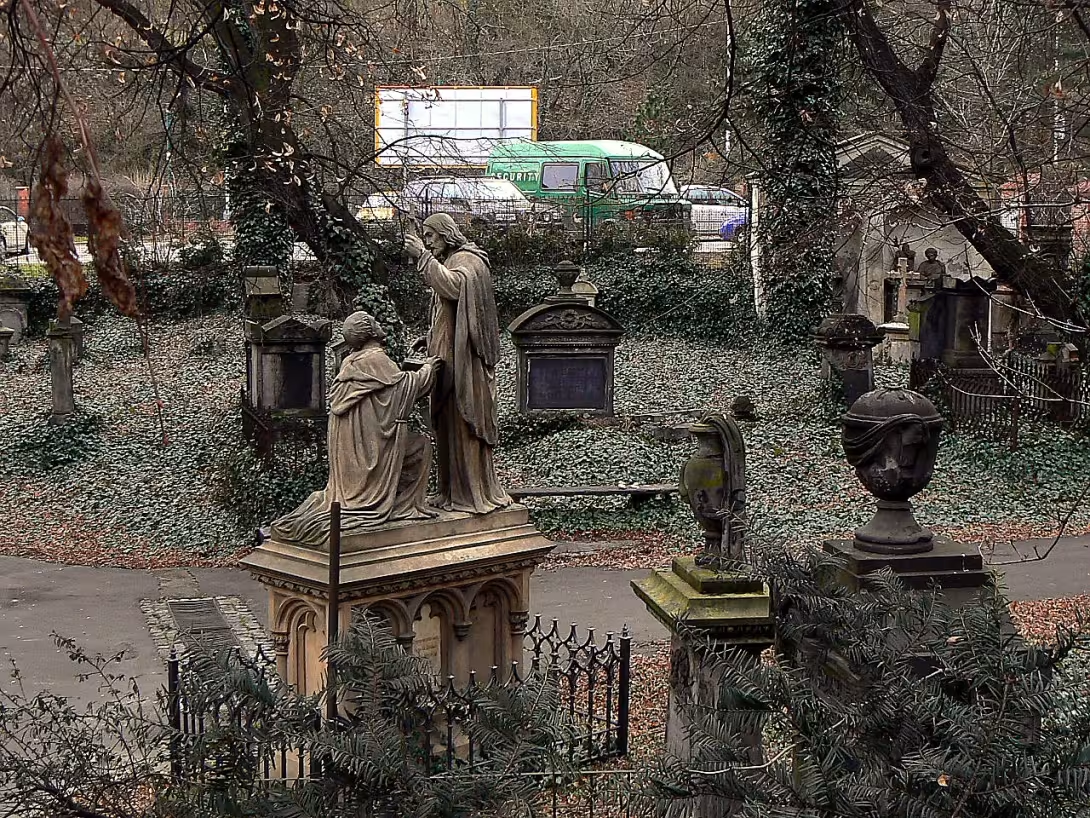
Malostranský hřbitov is a historic cemetery located in Prague near Smíchov, close to the Košíře border. Established during a plague epidemic in 1680, it served as Malá Strana's burial ground from 1787 to 1884 after Joseph II banned intra-city burials. The site features an Empire-style Church of the Holy Trinity and is renowned for its significant tombstones, including those of notable figures like Vincenc Bradáč and Antonín Mánes. Managed by a non-profit organization, it underwent restoration in 2015-2016 to protect valuable monuments.
The origins of Malostranský hřbitov trace back to 1680 when it was established as a plague cemetery during an epidemic. Initially associated with the now-demolished malostranského kostelu sv. Václava, its establishment is credited to figures such as Josef Bohumír Mikan, a physician and professor of that era. The cemetery began with chapels dedicated to St. Roch (1703) and the Holy Trinity (1715), later replaced by an Empire-style Church of the Holy Trinity constructed between 1831-1837.
Architecturally, Malostranský hřbitov is characterized by its Empire-style elements, particularly evident in the Church of the Holy Trinity. The site has undergone several restorations to preserve its historical tombstones and structures, with a significant restoration from 2015 to 2016 aimed at protecting valuable monuments from vandalism.
Throughout its history, Malostranský hřbitov served as the main burial ground for Malá Strana following Joseph II's reform in 1787. This change was part of broader Enlightenment-driven reforms across Europe that emphasized rationality and modernization. The cemetery closed in 1884 due to urban expansion, with its functions transferred to the nearby hřbitov na Malvazinkách.
The site is notable for significant tombstones, including those of Vincenc Bradáč, a composer; Kryštof Dientzenhofer and Kilián Ignác Dientzenhofer, Baroque architects; Jan Ladislav Dusík, a pianist and composer; and Antonín Mánes, an artist. Other notable figures buried here include Gustav Pfleger Moravský, a writer, and Leopold Thun-Hohenstein, the last prince-bishop of Passau who transformed the nearby Cibulka estate into an Empire-style chateau with a park.
Malostranský hřbitov has inspired cultural works such as Jan Neruda's poetry collection "Hřbitovní kvítí." The site also features a restored stele by Václav Prachner, originally from the Cibulka estate. In 2007, this stele was relocated to the cemetery and is now situated near the tomb of Leopold hrabě Thun-Hohenstein.
Today, Malostranský hřbitov remains a site of historical and cultural significance in Prague. Managed by Hřbitovy a pohřební služby hl. m. Prahy, it offers visitors a glimpse into the past with its well-preserved tombstones and architectural elements. The cemetery's restoration efforts have ensured that these monuments remain protected for future generations to appreciate.
Malostranský hřbitov is not only a testament to Prague's rich history but also a place of artistic and cultural reflection. Its significance as a burial ground for notable figures, coupled with its inspiring architecture and artistry, makes it a worthwhile visit for anyone interested in the historical tapestry of the city. Visitors are invited to explore this serene site and immerse themselves in its storied past.
Then and now
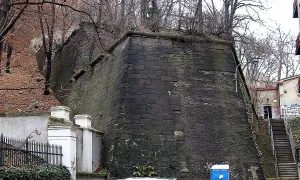
Drag the slider to compare how the landmark may have looked when it was built with the view today.
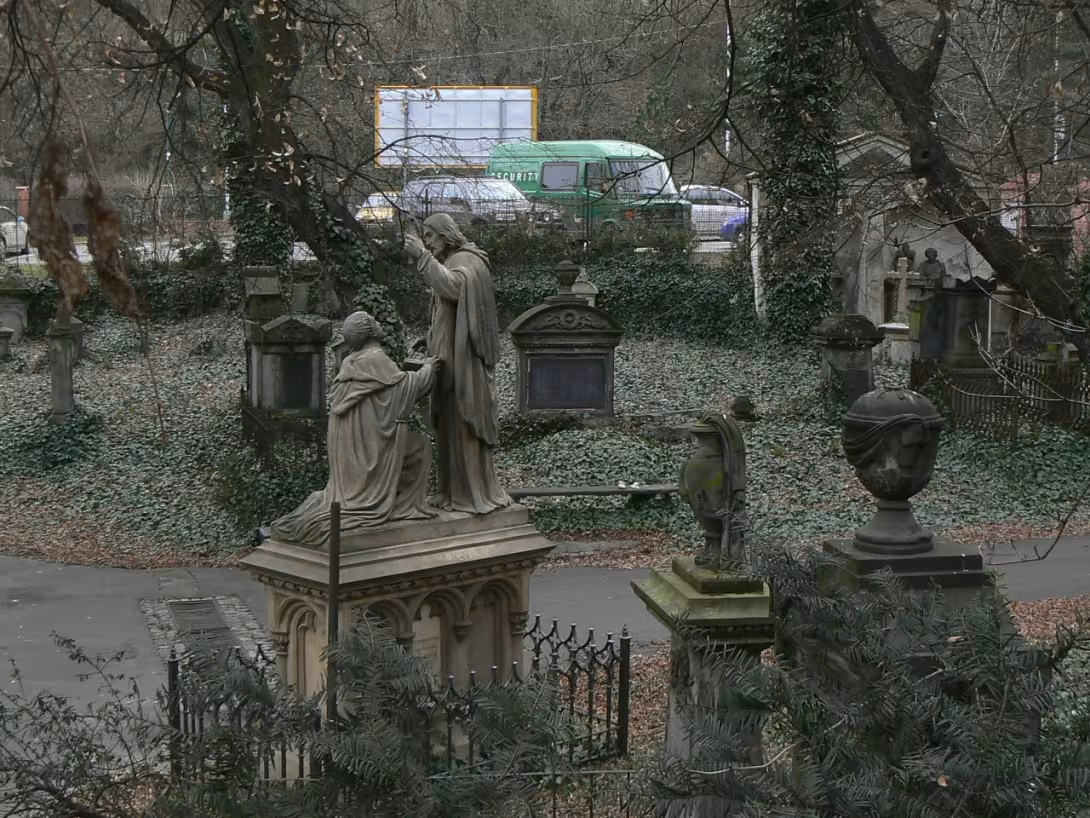
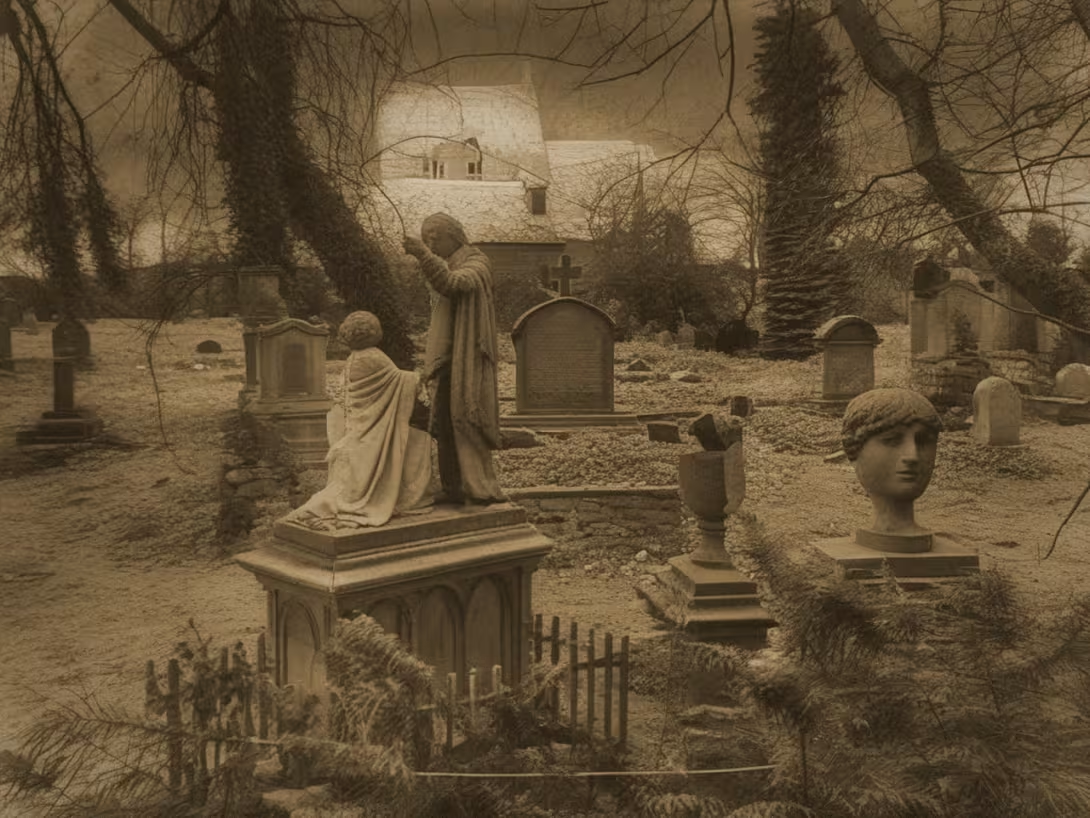
The historical appearance on the left is an AI-generated visualisation and serves as inspiration only.
Historical milestones
- 1680
- Established as a plague cemetery
- 1787
- Became the main burial ground for Malá Strana following Joseph II's reform
- 1831
- Construction of the Empire-style Church of the Holy Trinity began
- 1884
- Closed as a cemetery due to urban expansion
Architectural development
The cemetery began with chapels dedicated to St. Roch and the Holy Trinity, later replaced by an Empire-style Church of the Holy Trinity built between 1831-1837. The site has undergone several restorations, most recently in 2015-2016, to preserve its historical tombstones.
Historical events
Established as a plague cemetery in 1680
Served as the main burial ground for Malá Strana from 1787 until its closure in 1884 due to urban expansion
Points of interest
- The Malostranský hřbitov was initially established as a plague cemetery during an epidemic in 1680, highlighting its origins tied to public health crises rather than traditional burial purposes.
- Josef Bohumír Mikan, credited with the establishment of the cemetery, was not only a physician but also a professor, indicating his significant influence on both medical and academic fields in Prague at that time.
- The site's architectural evolution is marked by the transition from chapels dedicated to St. Roch and the Holy Trinity to an Empire-style Church of the Holy Trinity, reflecting broader European artistic trends during its construction period between 1831-1837.
- In addition to its historical significance as a burial ground, Malostranský hřbitov inspired cultural works such as Jan Neruda's poetry collection "Hřbitovní kvítí," showcasing its influence on Czech literature and arts.
- The relocation of Václav Prachner’s stele from the Cibulka estate to the cemetery in 2007, near Leopold hrabě Thun-Hohenstein’s tomb, illustrates ongoing efforts to preserve and recontextualize historical artifacts within their cultural landscapes.
Guide
This guide is narrated by a synthetic voice generated by artificial intelligence.
Show guide text
This text was created by artificial intelligence and has not been editorially reviewed. It may contain inaccuracies.
Malostranský Cemetery is located in Prague on Smíchov, not far from the border with Košíř. It was founded in 1680 during a plague epidemic and belonged to the church of Saint Václav in Malá Strana, which was demolished in the eighteenth century. In 1703, a chapel of Saint Roch was built there, and in 1715 the chapel of the Holy Trinity. Between 1831 and 1837, an Empire style church of the Holy Trinity was added.
A fundamental change came in 1787. Joseph the Second then banned burials inside the city, and the cemetery became a burial ground for the entire left bank of the Vltava, that is for Hradčany, Malá Strana, and later also for Smíchov. It served until 1884, when it became surrounded by spreading development. The cemetery was closed and its role was taken over by the cemetery at Malvazinky. This place allegedly inspired Jan Neruda to write his collection Cemetery Flowers.
The most famous tombstone is a cast iron figure of kneeling bishop Leopold Leonard from Thun-Hohenstein by Václav Prachner. Later it became a model for Myslbek's tombstone of archbishop Bedřích Schwarzenberg in the cathedral of Saint Vitus. Thun-Hohenstein was the last prince-bishop of Passau and he had the nearby manor Cibulka rebuilt into an Empire style château with a park. From Cibulka, a restored stele For a While by the same author was brought here in 2007. A number of legends are connected with this place, most notably to the tombstone called The Holy Little Girl. It belongs to Anna Degenová, the daughter of a custodian and concierge, and is decorated with an impressive sculpture of a child by Josef Max. The tombstones were also created by his brother Emanuel Max, Josef Malínský, and the workshop of the descendants of Ignác Platzer.
Resting here are Baroque architects Kryštof and Kilián Ignác Dientzenhofer and sculptor Ignác František Platzer. The pianist Jan Ladislav Dusík is buried here along with the married couple Josefína and František Xaver Duško, who hosted Mozart at Bertramka. The monument to composer Václav Jan Křtitel Tomášek bears a large David's lyre and his motto: Only truth is the diadem of art. We also find painter Antonín Mánes, vedutist Vincent Morstadt, and industrialist František Ringhoffer.
In 1951, a new road took over part of the cemetery. Some tombstones, including Erben's, were moved at that time. In 2015 and 2016, the cemetery was closed due to vandals. Valuable tombstones were secured and the entire grounds underwent reconstruction. It reopened to the public in June 2016.
Tips for visitors
The best time to visit Malostranský hřbitov is during the late spring or early fall when the weather is mild, making it pleasant for walking around the cemetery grounds. These seasons offer a balance of comfortable temperatures and fewer crowds compared to summer months, allowing visitors to appreciate the historic gravestones and serene atmosphere without the bustle of peak tourist times.
Transportation to Malostranský hřbitov is convenient by both car and public transit. Public transportation options include buses and trams that service the Smíchov area; however, specific routes should be verified through a current transportation app or website to ensure accurate travel plans.
When visiting Malostranský hřbitov, it's recommended to bring comfortable walking shoes as you'll likely spend time exploring various parts of the cemetery. A camera is also advisable for capturing the historic gravestones and the Empire-style church that stands out in the grounds. The best light for photography is during the early morning or late afternoon when shadows are longer, adding depth to your photos.
Nearby attractions within a 30-minute walk include the Košíře area, known for its green spaces and local shops, offering a nice contrast to the historic cemetery. For families with children, consider visiting the nearby playgrounds in Košíře or exploring Smíchov's vibrant streets which have plenty of cafes and family-friendly activities.
Frequently asked questions
Can the monument be visited?
Cemeteries and graves are usually accessible; please respect the dignity of the place. We have not verified the opening hours of this cemetery. According to the heritage register restoration is under way, so access may be restricted.
Where is the monument?
Location: Praha, Hlavní město Praha. The map on this page shows the exact spot.
Why is the monument protected?
It is listed in the Central List of Cultural Monuments of the Czech Republic as a cultural monument (register no. 1000152382).
Businesses nearby
Do you run a restaurant, accommodation, shop, museum, rental, wellness or other visitor service near this monument? Show yourself directly to the people heading to it — this is how they will see you in the app and on the web:
Events nearby

Zdroj akcí: otevřená data měst a obcí ČR (Národní katalog otevřených dat) a kalendář akcí Národního památkového ústavu.
Nearby
Located in Prague on Smíchov, near Košíře, the cemetery is surrounded by urban development and features an Empire-style church.
Accommodation nearby
Trips and activities nearby
Guided tours, tickets and activities nearby from GetYourGuide
Affiliate link: if you buy from the partner, we may receive a commission. The price for you does not change.
Search tours and activities →Themed route
Malostranský Cemetery
1. Church of the Most Sacred Heart of Jesus (Empire-style church) - worth visiting for its unique architecture and history. It is located right next to the cemetery and offers a beautiful view of the surroundings.
2. Košířská Street - runs around the cemetery and provides a glimpse into the life of Prague's residential district.
3. Smíchov - a local neighborhood with rich history and architecture, situated near the cemetery.
Seasonal recommendations
Jaro Spring at Malostranský Cemetery is the time when nature awakens from its winter slumber and the surroundings of the cemetery are filled with flowers and greenery. The atmosphere is calm and quiet, with soft sunshine and a gentle breeze. The best time to visit the cemetery is in the morning or late afternoon, when there are fewer people and you can better enjoy the peace and magic of the area.
Léto In summer, Malostranský Cemetery is full of life and energy. The cemetery is filled with flowers and greenery, and visitors often meet up with family and friends here. If you want to avoid crowds, we recommend coming earlier before the main summer season begins. Don't forget to bring sunglasses and water so that your stay will be pleasant.
Podzim The autumn period at Malostranský Cemetery is full of colors and magic. The foliage on the trees creates beautiful colorful scenes and the air is filled with the scents of woodsmoke and earth. The atmosphere is calm and quiet, with soft sunshine and a gentle breeze. The best time to visit the cemetery is in the morning or late afternoon, when there are fewer people and you can better enjoy the peace and magic of the area.
Zima Winter at Malostranský Cemetery is a period of peace and quiet. The cemetery is surrounded by snow and there is a calm atmosphere. We recommend visiting the cemetery in the late afternoon or evening, when it's less busy, so you can better enjoy the peace and magic of the area. Don't forget to bring warm clothing so that your stay will be pleasant.
Visualizations and artistic views


The visualisations are generated by artificial intelligence and serve as inspiration.
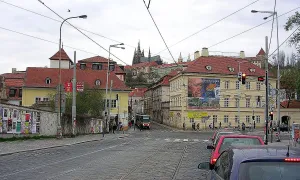
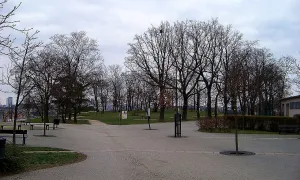
Photos from the area
Real photos taken near the monument

Zdroj a licence jsou uvedeny u každého snímku.
Tips from visitors
No tips yet. Be the first!
Log in and add your tip.
Sources and literature
Photos: Joker Island / Public domain — Wikimedia Commons. The author and licence also appear when you hover over the image.
Faktickým podkladem tohoto textu byl článek na Wikipedii, jehož autory jsou přispěvatelé Wikipedie. Článek je dostupný pod licencí CC BY-SA 4.0.
Location on the map
Příběhy a pověsti
Legendy, pověsti a příběhy spjaté s touto památkou
Fotografie návštěvníků
Zatím žádné fotografie. Buďte první, kdo přidá fotografii z návštěvy!
Log in a přidejte svou fotografii nebo hodnoťte.
Za ověřenou návštěvu v aplikaci získáte víc bodů — poznáme podle GPS, že jste na místě.
Reviews and comments