



Markova vila Villa
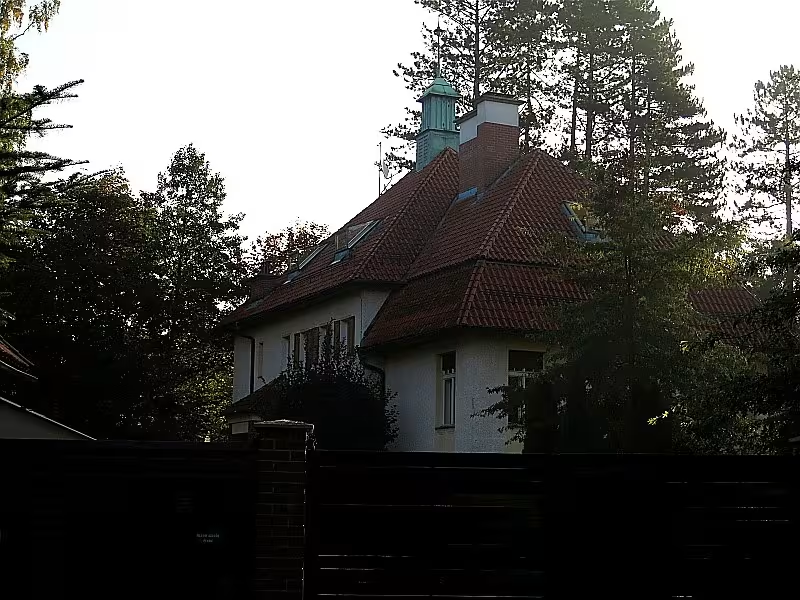
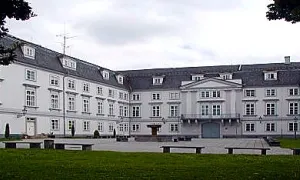
Markova vila in Holoubkov near Rokycan is one of the most important examples of Czech Art Nouveau with a garden connected to the architectural complex. This is a family villa from 1907-1910, designed by Jan Kotěra for Karl Mark, a prominent civil servant and later Minister of Public Works. The villa is distinguished by the fact that the garden is part of a cultural monument and is designed in two concepts - with carefully arranged front and looser, more natural rear vegetation.
The villa was established at a time when the Art Nouveau was being promoted as a modern alternative to historical styles. Karel Marka, then director of the national rail, was one of the representatives of the administrative elite who supported cultural projects. Kotěra originally made plans in 1907, but in 1908 he modified the internal garden. It was designed as a strictly divided space with a round bed in the back, surrounded by a looser vegetation - a concept that was unusual at the time.
Architecturally, the villa is built of bricks and wood, with typical Art Nouveau elements: arches, logbooks and a free garden house. On the ground floor there are representative rooms - a billiard hall with a bay, a dining room and a lounge with a loggia, while the first floor served as a private area of owners with a living room and service rooms. The garden is separated from the surrounding land by its vegetation and follows the meadow and forest, which is part of its design. The garden composition includes a ground-floor brick house for a gardener with a valbed roof and a greenhouse.
After the owners died in the late 1930s, they inherited their niece's villa. During World War II, the building was seized by the Nazis and in May 1945 it was based in Soviet headquarters. After 1950 she served as a medical practice and later the municipal administration. In 1958, a villa with a garden and a greenhouse garden was listed in the list of cultural monuments. The reconstruction in 1999-2001 slightly altered the original appearance, in particular by adding skylights.
The villa is a rare example where the garden forms an integral part of the architectural complex and is part of a cultural monument. During the communist period it served outside the original purpose, which is a unique proof of its use outside the family life of the owners. Today it is open to the public, although mostly commercially used. Yet it retains its historical character and represents a valuable proof of architecture and garden design at the turn of the century.
Markova vila is worth visiting for its architectural value as well as as as a rare example of preserved garden connected to the villa. It reflects the lifestyle of the then elite and the effort to combine art and nature. It is a unique opportunity for Art Nouveau and Garden Design lovers to see how architecture and landscape have become one in all.
Historical milestones
- 1907
- Preparation of the first plans of the villa and garden by architect Jan Koterou
- 1908
- Complete internal layout and second garden design with round bed
- 1958
- Registration of villas, gardens and garden houses in the list of cultural monuments
- 1999-2001
- Reconstruction of the villa with slight changes of original appearance
Architectural development
The villa was built of bricks and wood, with typical Art Nouveau elements such as arches, logbooks and a free-standing garden house. In the 1990s she underwent a reconstruction, which added skylights and slightly altered the original appearance. The garden is divided into a formal front and wilder back with natural connection to the surrounding meadow and forest.
Historical events
- 1907
- The beginning of the building of the villa according to Jan Kotera's first design
- 1908
- Changes in the interior and the second garden design with round bed
- 1945
- The villa served as a seat of Soviet headquarters after World War II
- 1958
- Registered to the list of cultural monuments
Owners
- 1907- 1930s
- 1930s- 1945
- 1945
- 1950- 1958
- since 1999
Points of interest
- Villa is one of the most important examples of Czech Art Nouveau with a garden, which is part of a cultural monument and designed as part of an architectural complex.
- The garden is divided into two parts - carefully arranged front and looser, more natural back part with round bed.
- The villa was built in 1907-1910 for Karl Mark, a prominent civil servant and later Minister of Public Works.
During World War II, she served as a seat of Soviet headquarters after the seizure of the Nazis.
In 1958, a villa with a garden and a greenhouse garden was listed in the list of cultural monuments.
Guide
Show guide text
This text was created by artificial intelligence and has not been editorially reviewed. It may contain inaccuracies.
Welcome to Mark's villa - one of the most beautiful examples of how Czech architecture and nature can unite in harmony. You're standing in front of a building that looks like it's from another world - elegant, but natural, as if someone designed it to imprint itself into the landscape as an integral part. Look at its thin lines, how the walls and windows play with light, and how the whole building seems light, almost dancing. This is the work of the master - architect Jan Kotera, who here in the early 20th century created not only a house but a whole world for one family.
Let's see how this villa came into being. In nine hundred and seven the first plan was drawn up - not only for the building itself, but also for the garden, which was to form one inseparable whole with it. Karel Marka, a prominent official of that time, wished for a place to rest, but also to receive guests. Kotěra offered him something special: a villa that offers representative rooms on the ground floor while private rooms are hidden on the floor. And the garden? This was designed in two forms - the front part, where there was precise, almost geometrical treatment, and the rear part, where nature could develop more loosely, with a circular curve in the middle as the center of the entire composition.
Notice how the villa and garden complement each other. Here, in front of you, you see a facade that is simple but not simple - every detail has a meaning. The windows are not randomly distributed, but so that light falls into the rooms as Karel Marka imagined. And if you look to the right or to the left, you'll see the building slightly curvature to better adjust to the terrain. This is typical of Kotor's Art Nouveau - a style that rejected cumbersome and wanted architecture to be light as if it had been modeled by the wind.
Now pay attention to what lies behind the walls. The villa was built for the Mark family - Karl and Anna. Charles was a man who made his way to the authorities, but he wanted peace and beauty at home. Anna, his wife, was a woman who loved nature and could enjoy it. For them, this house was not only a home, but a haven where they could hide from the rush of the city. And if you look in the garden, imagine Karl here reading the newspaper on the terrace while Anna was collecting flowers or talking to the guests in the trees.
But you know what's most interesting? This villa wasn't just for one generation. After the death of Karl Marka she remained in the family and until nine hundred and fifty-eight she was protected as a cultural monument. Only in the years nine hundred ninety-nine to two thousand one had undergone reconstruction, in which they tried to preserve the original form as much as possible. Today it is a place where the past and the present meet - where you can feel how it was to live in this house a hundred years ago, but at the same time realize that its beauty is still alive.
There is an opportunity to explore something special before you. The villa and the garden are like a book you can read - every step, every look reveals another secret. Take a look at how shadows are played on the facade, how branches of trees in the back of the garden bow to the wind, or how a circular bed in the back seems to be the center of the world. This is all the work of a man who knew how to combine an artistic vision with everyday life.
And so, when you leave, take not only the memory of this beauty, but the feeling that you have found yourself at a different time for a while. Markova vila is not just a building - it is a story about love for architecture, nature and how they can be connected to create something that still captures us today. Thank you for coming to see her. And when you have a moment, come back - every visitor will discover something new.
Tips for visitors
The best time to visit Mark's villa is in spring or autumn. In these times the outdoor environment around the villa is the most beautiful, with flowering trees or coloured leaves. The sunny days with a mild temperature are ideal for walking around the garden and a tour of the villa. In summer it can be hot in the surroundings, while in winter some parts of the garden or villas may be closed to visitors.
The pleasant weather and natural beauty of the surroundings create an unforgettable atmosphere for exploring the historic house and its surroundings.
Transportation by car is the easiest way to get here. If you arrive by public transport, I recommend to find out in advance the current connection to the nearest stop because there are no significant hubs in the vicinity. There are no larger parks in the area, so avoid looking for a long space to unload the vehicle.
The villa is available by car, even for visitors who prefer public transport.
When visiting, wear comfortable shoes and clothes as walking around the garden and surroundings can be longer. The villas from the turn of the century often do not have air conditioning, so in summer wear light layers of clothing. If you are planning to take pictures, take a camera or phone battery as outdoor light is often very pleasant.
Getting ready to visit will improve your stay and allow you to enjoy the historic atmosphere of the villa.
Photography is allowed, but the most beautiful pictures can be taken in sunny weather, when light falls directly on the facade of the villa or garden. The best places for photos are terraces and surrounding villas, where there is a combination of historical architecture and natural environment. The interior of the villa is also interesting, but always follow the rules given by the landlady.
Natural light and architecture of the villa create unique composition for photographers.
These places are ideal for further nature trips or exploring regional history.
The surrounding area of the villa offers other attractions that can be visited during one trip.
For families with children, Markova vila is a great choice because children can explore garden and outdoor areas. I recommend you take with you some games or small worksheets that children can fill during the visit. The villas often also have spacious spaces where children can move freely.
The natural environment and spacious rooms of the villa are ideal for active children.
Frequently asked questions
Can the monument be visited?
This is a residential or farm building, not a museum with opening hours. Please view it from public space and respect the owners' privacy. We have no information about access to the interior.
Where is the monument?
Location: Plzeňský kraj. The map on this page shows the exact spot.
Why is the monument protected?
It is listed in the Central List of Cultural Monuments of the Czech Republic as a cultural monument (register no. 1000123929).
Businesses nearby
Do you run a restaurant, accommodation, shop, museum, rental, wellness or other visitor service near this monument? Show yourself directly to the people heading to it — this is how they will see you in the app and on the web:
Nearby
Vila se nachází ve vsi Holoubkov blízko Rokycan, v přírodně krásné krajině s lesy a loukami. V okolí se nachází přírodní rezervace a historické vesnice, ale žádné další významné památky nejsou v dohledné vzdálenosti.
Accommodation nearby
Trips and activities nearby
Guided tours, tickets and activities nearby from GetYourGuide
Affiliate link: if you buy from the partner, we may receive a commission. The price for you does not change.
Search tours and activities →Themed route
Thematic cruise route with Mark's villa
1.Markova vila Type: Modernist villa from the beginning of the 20th century, seat of architect Josef Gočár. It is worth visiting for a unique combination of functionalism and the natural environment that reflects Gočár's artistic thinking. The interior preserved original details such as glass walls or wooden structures.
2. Natural Reserve Holoubkov Type: Protected area with beech forests and wet meadow. It is an ideal place for walking between old trees and watching local fauna. In summer there is a rich flower, suitable for nature photographers.
3. The village surroundings of Holoubkov Type: History and folk architecture. A walk through the village reveals the original estates with stone houses and stables that preserve the nature of the 19th century countryside. Local people often show where they used to grow grain or raise cattle.
4. Meadows by Mark's villa Type: Free space overlooking the surrounding landscape. Suitable for resting, picnic or bird watching. In the spring months there are conicts and other wild flowers that attract bees.
Recommended order: Villa → booking (1 km) → villages (0,5 km) → meadows (through the villa area). The route is simple, suitable for a day trip with the possibility of stopping.
Seasonal recommendations
Spring In the spring months, the villa of Markov awakens to life when the sun begins to shine between the bright branches of the surrounding trees. The light falls into the interior so that the shadows create fine, moving lines on the walls, which gives space to mysterious lightness. Nature surrounds itself in green and yellow shades, while in the park the singing of birds and the rustling of new leaves is heard. The atmosphere is calm, almost intimate, because the visitors are still few. I recommend visiting her early in the morning, when the light is the softest and the crowds hardly exist. Clothes should be easy, but with the possibility to cover up - spring weather is variable. The ideal time is between April and May, when nature flourishes, but temperatures are not too high yet.
Summer In the main summer season the villa Markova attracts visitors with its cool interior, which is a welcome escape from the sun's heat. The sun shines directly into some rooms, so the shadows are short and sharp, creating sharp contrasts between light and shadow. The surrounding park is full of green, but heat can be present in its shadow. The atmosphere is alive, sometimes busy because it's the busiest season. I recommend coming early in the morning or late in the afternoon to avoid the biggest crowds. Clothes should be light, airy and sun-protected. The best time to visit is July and August, but avoid the worst hours.
Autumn Autumn brings the rich shades of orange, red and brown around the villa of Mark, which are reflected in the light that penetrates the interior. The sun is lower, so light is softer and creates warm, golden shades that give places a special nostalgic touch. Nature is preparing for rest, leaves are rustling and the air is clean and cold. The atmosphere is calm and thoughtful, ideal for walking around the park. I recommend visiting in September or early October when the weather is pleasant and the crowds are not as big as in winter. Clothes should be warm but not too heavy because temperatures can change quickly. The perfect time is the afternoon when the light is the most beautiful.
Winter In winter Villa Markova acts as a cozy shelter, when the cold, bright light of the winter sun enters the rooms and creates sharp, blue shadows. The surrounding trees are bare, but their clean lines give the landscape elegance. Snow, if attacked, covers the park with a white blanket, which creates a calm and almost fabulous atmosphere. In winter the villa is often less visited, but the opening time is shorter. I recommend visiting her in December when the light is the most beautiful, but avoiding the coldest days. Clothes should be warm, laminated and protected from wind. The best time is the afternoon when light becomes softer and visitors are less.
Visualizations and artistic views


The visualisations are generated by artificial intelligence and serve as inspiration.
Photos from the area
Real photos taken near the monument

Zdroj a licence jsou uvedeny u každého snímku.
Tips from visitors
No tips yet. Be the first!
Log in and add your tip.
Sources and literature
Photos: Sovicka169 / CC BY-SA 4.0 — Wikimedia Commons. The author and licence also appear when you hover over the image.
Faktickým podkladem tohoto textu byl článek na Wikipedii, jehož autory jsou přispěvatelé Wikipedie. Článek je dostupný pod licencí CC BY-SA 4.0.
Location on the map
More monuments – Plzeňský kraj
Show all in the region

Příběhy a pověsti
Legendy, pověsti a příběhy spjaté s touto památkou
Fotografie návštěvníků
Zatím žádné fotografie. Buďte první, kdo přidá fotografii z návštěvy!
Log in a přidejte svou fotografii nebo hodnoťte.
Za ověřenou návštěvu v aplikaci získáte víc bodů — poznáme podle GPS, že jste na místě.
Reviews and comments