



Medvědí kašna Fountain
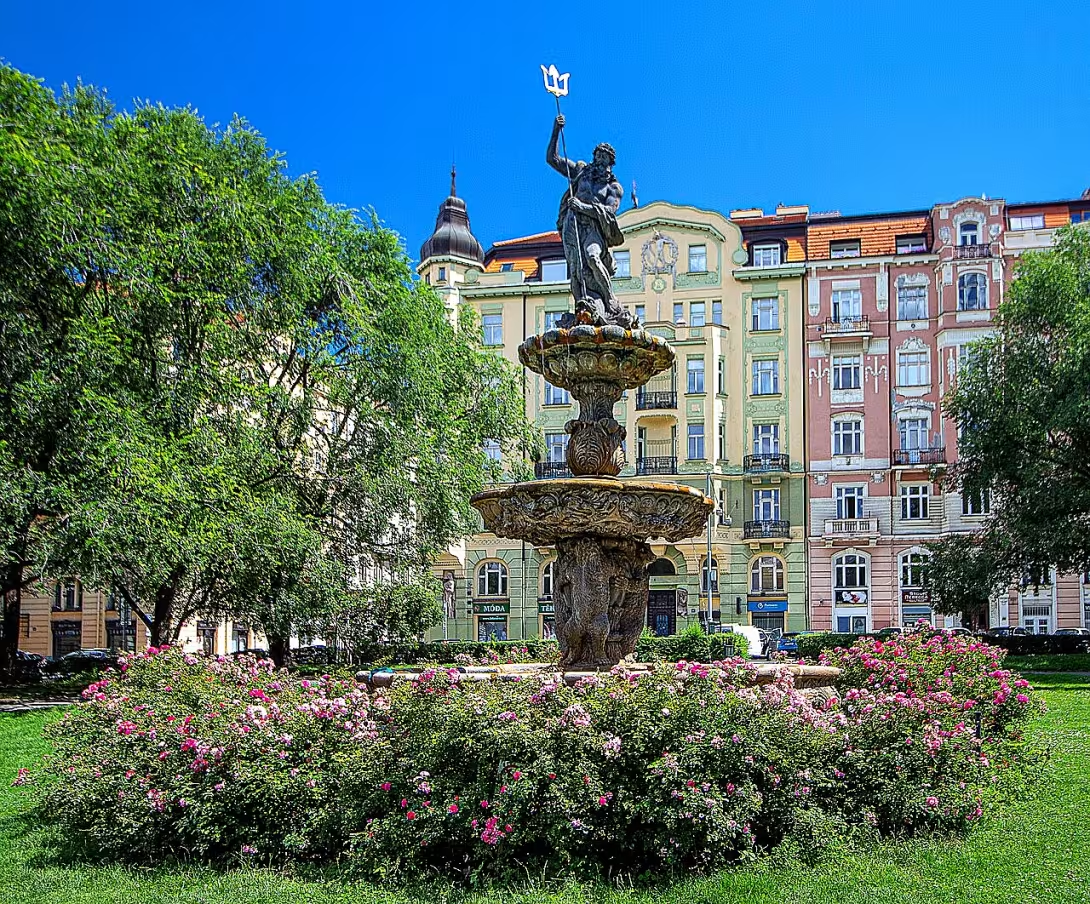
Medvědí kašna, located on Smíchov in Prague, is an early Baroque stone statue considered to be a unique work by Jerome Kohl. This monument is located in the park on October 14 and is protected by cultural interest since 1964. Its history dates back to the second half of the 17th century when it was originally installed in the garden of Slavatov's summer castle.
The creation of the Bear fountain is connected with Count Jan Jiří Jáchym Slavata of Chlum and Košumberk and his wife Catherine, born Montfort. They ordered the fountain for their summer castle, although it is not certain whether the Count saw it, since it was installed in 1689 when Slavata died. Symmetrically divided Slavatov Garden had a fountain located on the crossing roads, as evidenced by historical mapping and plans.
Architecturally Medvědí kašna is a characteristic example of an early Baroque. It's carved out of a mountain sandstone, making it susceptible to enlargement. The fountain has a trijet arrangement of three tanks on the middle pillar with balustered legs and breasts. What's interesting is decorating the characters of the bears that stand on the back paws and hold on to the front, the mascarons and the Neptune statue, which drives on dolphins with the draperia spread. Statue by Jerome Kohl shows Italian influences, especially in Neptune style.
The ownership and administration of the fountain have undergone several changes. After the Slavatov family, she went to the hands of the textile businessman Aaron Beer Przibram, who built the cartoon. After his death, the land was divided and the fountain was dismantled. In 1894 the village donated Smíchov garden with fountain which was subsequently moved to Kinsky Square and after 1945 relocated to its present place.
Medvědí kašna has undergone a number of key events, including reconstruction and repairs. After 1945, it was moved to build the Red Army memorial. It was repaired in 2006, during which Neptune was supplemented by a new trident and built columns with a chain around the fountain.
Today, Medvědí kašna stands as a functional fountain in the park on October 14, making it attractive for tourists and locals. Its history and architectural features reflect the rich cultural heritage of Prague and its surroundings. Visiting this monument offers an opportunity to explore not only the artistic skills of the early Baroque era, but also the historical development of the city of Smíchov.
Medvědí kašna is more than just a statue; He's a witness to transformations and a persistent artistic spirit. Her visit offers a view of the past, where history and art intersect in a unique form to be preserved for future generations.
Historical milestones
- 1689
- Installation of a fountain in the garden of Slavatov summer castle.
- 1894
- Donating the garden to the village Smíchov and moving the fountain to Kinsky Square.
- 1945
- Moving the fountain to the current site for construction of the Red Army memorial.
- 2006
- Fix the fountain and replenish the trident Neptune.
Architectural development
Carved from a mountain sandstone in the style of an early Baroque. The construction consists of three tanks on the middle pillar. In the past, it was dismantled and then reassembled.
Historical events
Installation in the garden of the castle (1689), donation of the garden to the municipality Smíchov (1894), moving to the present place (after 1945).
Owners
Count Jan Jiří Jáchym Slavata z Chlumu a Košumberka and Kateřina z Montfortu (until 1812), Aaron Beer Przibram (after 1812), municipality Smíchov (since 1894).
Points of interest
- Medvědí kašna is an early Baroque stone statue considered a unique work by Jerome Kohl. - The fountain was ordered by Count Jan Jiří Jáchym Slavata z Chlumu a Košumberka and his wife Kateřina, born Montfort, for her summer castle. - Architecturally, Medvědí kašna is carved from a mountain sandstone with a triangular arrangement of tanks and decoration of bear figures, mascarons and Neptune statues. - After 1945, the fountain was moved for construction of the Red Army memorial and in 2006 it was repaired with the addition of a new trident for Neptune. - Today Medvědí kašna stands as a functional fountain in the park on October 14, making it attractive for tourists and locals.
Guide
Show guide text
This text was created by artificial intelligence and has not been editorially reviewed. It may contain inaccuracies.
Welcome. You are standing in front of one of the most important stone treasures you can see in this part of Prague. Before your eyes is Medvědí kašna, a work that carries the incredible power of the old city and the beauty of the long past. Feel this atmosphere, feel the weight of history that is imprinted into every piece of this stone. This statue is not just an ordinary waterwork, it is a witness to many events that shaped the face of Smíchov and the whole of Prague.
Let's go back to the deep past together to understand why this place is so special. Imagine the year sixteen hundred and eighty-nine. At that time, the baroque style, with its movement, emotions and wealth, was only firmly established in our country. That's when this masterpiece came into being. But it was not forbidden by any king, but by a noble family who sought beauty for their private world. The fountain was ordered by Count Jan Jiří Jáchym Slavata z Chlumu a Košumberka and his wife Kateřina, who came from the House of Montfort. For their summer castle, this work was a symbol of nobility and artistic taste. It was created by master Jeroným Kohl, sculptor whose name is now associated with this unique baroque element.
Now pay attention to the construction itself and what you see right in front of you right now. Notice how thoughtful the entire composition is. The fountain is not flat, it has its depth and height. It is built on a central column that carries three different levels of tanks. This triple structure creates a rhythm that leads your vision from the ground to the very top. The whole piece is carved out of a mountain sandstone. Notice his texture, his color, and how this material can capture light. The sandstone is fragile, but in the hands of Master Kohl it became a living organism.
Look at the details that decorate these tanks and columns. Notice the characters of bears that are so typical of this work and that it has acquired its name. It is they, these stone guards, who supply the porridge with its character. Furthermore, your eyes can see mascarons, i.e. these interesting faces and masks that are so typical of baroque art. And if you look up, you'll see a figure that rules the whole thing. It's Neptune, Mr. of the Sea, as we know it from myths. It sits on the backs of dolphins, which creates a sense of movement and dynamics, even if it is a stationary stone.
But this story isn't just about beauty, it's also about movement and survival. This fountain wasn't always here. Her journey through time was very stormy. It was originally part of the garden of Slavatov's summer castle, but fate carried it on. In the year of the thousand eight hundred ninety-four, the garden was donated to the village of Smíchov and the fountain was transferred to Kinsky Square. But the hard times followed. In a thousand and nine hundred forty-five, political and urban landscapes changed. To build the Red Army memorial, the fountain had to be moved again. Imagine the difficulty of taking this heavy, stone whole apart and reassembling to save it for future generations. So the fountain had to change its home several times to eventually find peace here, where it stands now.
It's fascinating to think of the people who connected to this place. In addition to the founders, the Slavata family, there are other important figures in history. We see here the trail of Master Kohl, whose hands breathed the stone's life. In the history of this place, names like Aaron Beer from Przibrama appear, which reminds us of how the structure of society changed over time and how different layers of people touched this space.
You might notice one interesting thing that might surprise you. Even so old and noble work may have its missing parts. In the past, Neptune was not completely complete. So they had to go back to repairs, and in the year two thousand and six the fountain was carefully repaired and its master of the sea was supplemented by its symbolic trident. This detail reminds us that caring for our heritage is a process that never ends. Every repair is a new chapter in the long life of this stone work.
Look at her for a while. Feel the harmony between natural material and human art. Medvědí kašna is more than just a water element; It is a symbol of resilience, ability to adapt to change while maintaining its essence. Even though cities were changing, even though political systems were changing, and even if the surrounding architecture was changing, this fountain is still here.
I hope that this view of the Bear fountain brought you new insight and that you could imagine the times when this sandstone was first carved. Now that you know her story, I suggest you continue your walk around Smíchov. Explore other corners, look at the facades of buildings and look for other traces of history that are hidden in every stone detail of this wonderful city. Thank you for your time and reading this guide. Brig is on his way.
Tips for visitors
Best time to visit The bear fountain is early in the morning or in the evening when there are fewer people and light falls pleasantly on a stone statue. This period allows you to enjoy the peace and beauty of the monument without disturbing influences.
Local connections can be easily found using an online search engine or mobile applications for navigation.
When visiting, bring a protective cover and suitable clothes, especially in warm months. It is also important to bring a camera to capture the beauty of the monument.
Photography of the Bear fountain offers the best possibilities from an angle that allows to see the statue throughout its width. Sunlight is ideal for capturing details of stone decoration.
In the vicinity of the Bear fountain you can visit the Church of St. Wenceslas, the Jirásek Bridge and the National House. These places offer a rich cultural experience and are suitable for families with children.
Frequently asked questions
Can the monument be visited?
This is a structure in a public space that can usually be seen from outside free of charge. We have not verified that this particular one is freely accessible.
Where is the monument?
Location: Smíchov, Hlavní město Praha. The map on this page shows the exact spot.
Why is the monument protected?
It is listed in the Central List of Cultural Monuments of the Czech Republic as a cultural monument (register no. 1000152393).
Businesses nearby
Do you run a restaurant, accommodation, shop, museum, rental, wellness or other visitor service near this monument? Show yourself directly to the people heading to it — this is how they will see you in the app and on the web:
Events nearby

Zdroj akcí: otevřená data měst a obcí ČR (Národní katalog otevřených dat) a kalendář akcí Národního památkového ústavu.
Nearby
Kostel svatého Václava, Jiráskův most, Národní dům a Smíchovská tržnice.
Accommodation nearby
Trips and activities nearby
Guided tours, tickets and activities nearby from GetYourGuide
Affiliate link: if you buy from the partner, we may receive a commission. The price for you does not change.
Search tours and activities →Themed route
Thematic cruise route from the village Smíchov
1. St. Wenceslas Church (Cultural landmark) Start your tour of this Baroque church, which is not only a sacral centre, but also a beautiful architectural monument. Its important history and richly decorated interior makes the visit very interesting.
2.Medvědí kašna (Statue) This statue is the main objective of your route and symbolizes local culture and history. It is an important icon of the village that you must not miss.
3. Jirásek Bridge (Bridge) Go over this elegant railway bridge, whose history dates back to the 19th century. It is a technical work with a rich past and provides a beautiful view of the surrounding landscape.
4. National House (Cultural Centre) Visit this cultural centre, which hosts various events and exhibitions. It is a place for meeting artists and residents and offers many interesting activities.
5. Smíchov Market (Market) Close your tour by visiting this lively market where you can discover local products and specialities. It is an ideal place to shop or just relax in a friendly environment.
This route offers a combination of history, culture and everyday life of the village Smíchov.
Seasonal recommendations
Spring: In spring the Medvědí kašna is decorated with flowering lawns and bushes, which gives the statue natural beauty. Sun rays illuminate the statue in fine colours, creating a soothing atmosphere. Visitors should be prepared for possible rain and mild cooling, so suitable clothing is the key - sun hat and umbrella for heavy rain. The best time to visit is usually in the afternoon when the temperature rises slightly.
Summer: Summer brings long sunny days and high temperatures, making the visit to the Bear fountain an ideal leisure time activity. The sun illuminates the statue from different angles, which adds to its visual impression. Visitors should arrive early in the morning or late in the afternoon to avoid the hottest hours and crowds. Remember the sun protection - sun balls, cream and apron are essential.
Autumn: In autumn, Medvědí kašna becomes a place with melancholy tone due to November colors of bushes and trees. Sunrise creates beautiful contrasts on the statue, which adds a touching atmosphere. The temperatures are gradually decreasing, so that warm clothes and perhaps an umbrella are recommended due to irregular weather. The best times to visit are clear mornings or afternoons when the temperature is comfortable.
Winter: Winter brings cold and maybe snow sheets, which transforms the Bear fountain into a place with a magical atmosphere. Sunrise on the snowy background adds a romantic impression to the statue. Visitors should be well dressed - warm jackets, gloves and shoes are necessary.
Visualizations and artistic views


The visualisations are generated by artificial intelligence and serve as inspiration.
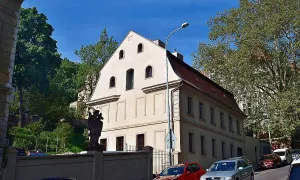
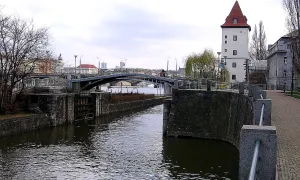
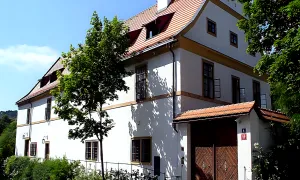
Photos from the area
Real photos taken near the monument

Zdroj a licence jsou uvedeny u každého snímku.
Atmosphere of the place
This atmospheric visualisation of the place and period was generated by artificial intelligence. It is not real footage of the location.
Tips from visitors
No tips yet. Be the first!
Log in and add your tip.
Sources and literature
Photos: VitVit / CC BY-SA 4.0 — Wikimedia Commons. The author and licence also appear when you hover over the image.
Faktickým podkladem tohoto textu byl článek na Wikipedii, jehož autory jsou přispěvatelé Wikipedie. Článek je dostupný pod licencí CC BY-SA 4.0.
Location on the map
Příběhy a pověsti
Legendy, pověsti a příběhy spjaté s touto památkou
Fotografie návštěvníků
Zatím žádné fotografie. Buďte první, kdo přidá fotografii z návštěvy!
Log in a přidejte svou fotografii nebo hodnoťte.
Za ověřenou návštěvu v aplikaci získáte víc bodů — poznáme podle GPS, že jste na místě.
Reviews and comments