






Měšťanský dům u radnice v Kroměříži House
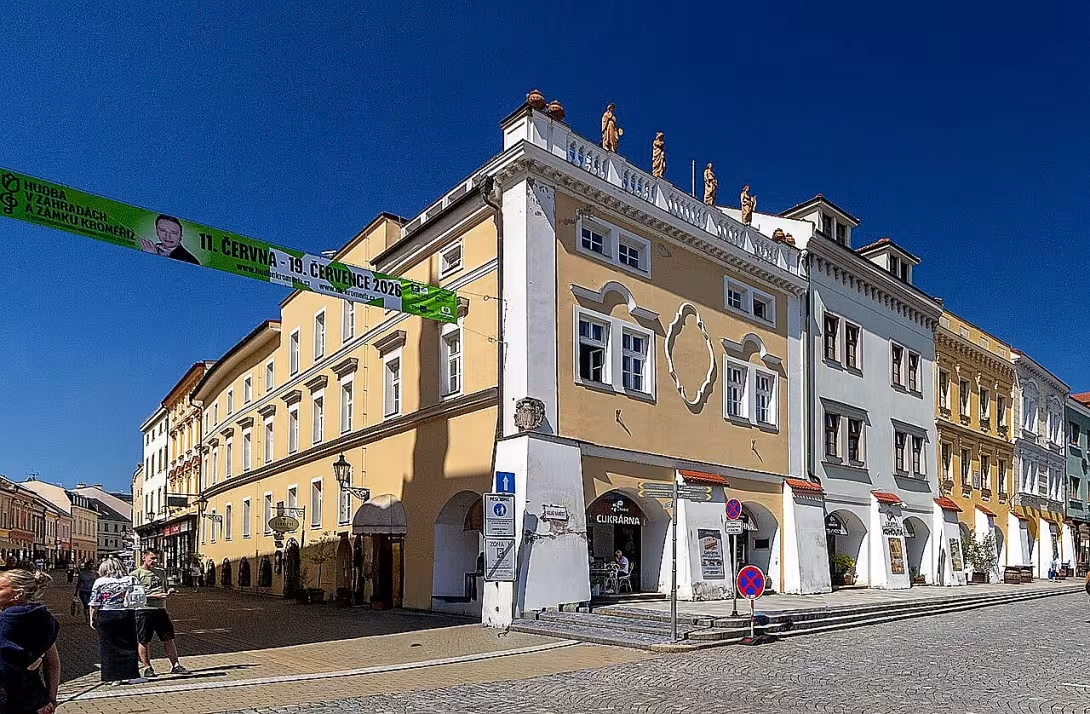
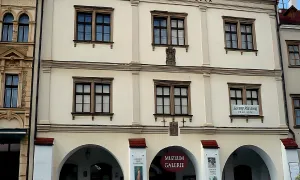
The town hall house with a descriptive number 20 is a historic building on the corner of Kovářská street and the Grand Square in the centre of Kroměříže. This building, protected as a real-estate cultural monument of the Czech Republic, evolved from the early modern age through the Baroque and 19th century to the modern age. It reflects changes in administration and urban life in the city. The house bears traces of an older building form supplemented by baroque and historical elements and is firmly associated with a number of important personalities.
The oldest history and the creation of the building are described by written sources from the early modern era. In this building, sometimes referred to as the Old Bread House, in 1612 the townsman Lukáš Ouštěcký is reminded. The historical context was shaped by numerous ownership changes and building modifications, which gradually enriched the architectural character of the Baroque and historical elements of the nineteenth century.
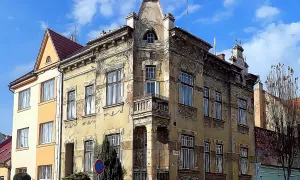
The architectural form combines older foundations with Baroque modifications. The historical elements included the stucco field among the windows on the floor which originally carried the painted scene of the Coronation of the Virgin Mary. The coat of arms of Cardinal František Dietrichstein with a inscription containing his title of Olomouc Bishop and Prince are placed on the corner pillar. A significant element from the nineteenth century is the balustrade above the facade designed by architect Gustav Meretta. On the balustard is a composition of four terracotta allegorical statues of muses. From left to right represent Painting, Architecture, Sculpture and Music. The whole sculpture composition is closed from both sides by a pair of decorative vases with hubcaps.
In the course of centuries, a number of owners and administrators took place in possession of the house. In 1661, it was bought by Bishop's religious scribe Jakub Zubřický. His widow Mariana later took Šimon Ondřej Sinapi. It was an adventurous Bishopric Mint Vardain, or deputy Maccmaster responsible for running the Bishopric Mint, which used the SAS brand. In 1770 he bought a house for 4000 gold Rhine metal merchant Jiří Rösner. His only daughter, Theresa, married to Francis Pipal, took over his inheritance. In 1872, the building was acquired by the last German magistrate of the city, Dr. August Benesch. Since 1893, it was owned by the attorney Dr. Alois Kusák, editor and publisher of the local attack magazine Velehrad. In 1899, the house was sold to the perfectionist and merchant Leopold Stránski. Since 1939, the historiographer of the city František Václav Peřinka has lived there and also died here.
The year 1696 can be mentioned from key events related to the history of the building. At that time, the French-Swedish sculptor Jean Baptiste Dusart made two baroque sculptures related to the memory of Simon Ondřej Sinapi, who now stands in the streets of Na Kopěk and Kobot and remains unpaid by the client. The important milestone was the year 1872, when the magistrate August Benesch left above the facade the said balustrad with four muses. Between 1963 and 1964, the building underwent a general renovation. In 2001 and again in 2021, restoration interventions took place on sculpture decoration of balustrad. The last repair was supported by a grant from the Urban Monument Reservation Regeneration Programme and the Urban Monument Zones.
Today this monument serves its original urban purpose and after modern modifications also to visitors of the city. In 2016, a bar with a terrace was opened on the roof, offering a view of the Great Square with a Baroque fountain and Mariánské pole and nearby Archbishop's castle. The House of Town Hall represents a valuable part of the historical core Kroměříže, which connects ancient architecture with modern use for the public. Visit this remarkable place and discover a combination of Baroque art, the history of local personalities and a remarkable view of the city's dominance.
Historical milestones
- 1612
- The house resembles a township Lukáš Ouštěcký.
- 1696
- The French-Swedish sculptor Jean Baptiste Dusart made two baroque sculptures linked to the monument of Simon Ondřej Sinapi.
- 1872
- The house was bought by the magistrate August Benesch and left above the facade a balustrade with four muses.
- 2016
- On the roof of the building was opened bar with terrace and view of the Grand Square.
Architectural development
The house bears traces of an older building design supplemented with Baroque elements, such as the original painting of the Coronation of the Virgin Mary or the coat of arms of Cardinal František Dietrichstein. In the nineteenth century, balustrad was added above the facade with four terracotta allegorical sculptures of muses and decorative vases. The building underwent general renovation between 1963 and 1964 and modern restoration interventions on sculptures.
Historical events
In 1872, there was a balustard with four muses on the front. General renovation of the house took place between 1963 and 1964. The terrace bar was opened on the roof in 2016.
Owners
Lukáš Ouštěcký (reminded of 1612), Jakub Zubřický (from 1661), Jiří Rösner (from 1770), August Benesch (from 1872), Alois Kusák (from 1893), Leopold Stránský (from 1899).
Points of interest
- The house evolved from the early modern age to the Baroque and 19th century to the modern age and reflects changes in administration and urban life in the city. - In the early New Testament, the object was sometimes referred to as the Old Bunion House, and in 1612 it is reminded of the townsman Lukáš Ouštěcký. - A coat of arms of Cardinal František Dietrichstein is placed above the corner pillar with a inscription containing his title as Olomouc Bishop and Prince. - Above the facade is a balustrada designed by architect Gustav Meretta with four terracotta allegorical statues of muses representing Painting, Architecture, Sculpture and Music. - Since 1939 a historiographer of the city of František Václav Peřinka has lived in the house and also died here.
Guide
Show guide text
This text was created by artificial intelligence and has not been editorially reviewed. It may contain inaccuracies.
Welcome to Kroměříži. You are standing right on the corner of Kovárský Street and the Grand Square in front of a remarkable townhouse that stands right at the town hall. You can see from you a historical building which is protected as a valuable real estate cultural monument of the Czech Republic. Her appearance carries traces of centuries and tells the story of how the city and the life of its inhabitants changed over time. Let us together look into the depths of the past of this place and explore its unique face.
This house has very deep roots dating back to the early modern age. In ancient times, this object was sometimes referred to as an old beanhouse where one could stop and refresh himself. Already in the year sixteen hundred and twelve, the local townsman named Lukáš Ouštěcký is mentioned in written sources. Since then, the building has undergone a long series of property changes and building modifications. Each time it left its mark on the construction site and enriched its architectural character with new elements. Over the centuries, a number of prominent personalities have been replaced, including names such as Jakub Zubřický, Šimon Ondřej Sinapi, sculptor Jean Baptiste Dusart, cardinal František of Ditrichštejna, Jiří Rösner, František Pípal, purkmaster August Benesch, Alois Kusák, Leopold Stránský and also a significant chronicler of František Václav Peřinka. The house evolved from the early modern age through the Baroque and the nineteenth century to the modern age and faithfully reflects the changes in the city administration and life of the then townspeople.
Now pay attention to the construction itself and look up at its facade. Construction development enriched the house with baroque and historical elements. If you look closely at the facade, you will not miss the result of the 19th century modifications. In eighteen hundred seventy-two this house was purchased by the then purkmaster August Benesch and placed above the facade a decorative balustrade that carries four statues of muse. To this day, these characters look to the Great Square. On the roof of the building there is a modern bar with a terrace which offers a wonderful and unforgettable view of the entire Grand Square and its surroundings.
There are many interesting stories behind this house. In the year of 1616 ninety-six, the French-Swedish sculptor Jean Baptiste Dusart, who made two baroque sculptures closely linked to the memory of Simon Ondřej Sinapi, has entered history. The house also has other interesting details, such as the corner pillar, over which there is another remarkable part, whose secrets you can explore on site.
Let's move on to our story. Thank you for spending your time in this special place. I hope you have a walk on Kroměříži likes and that you will continue to discover other beauty and monuments of our historic city. I wish you the rest of the day and goodbye.
Tips for visitors
The best time to visit this historic house is in the morning, when the Great Square has a pleasant daylight and the house in the corner of Kovářská Street can be seen in peace without a large number of people. You can use your own car or public transport for transport, and check the current connection and parking possibilities near the square in the local transport search engine. Bring comfortable shoes for walking on historic tiles, camera and possibly a bottle of drinking. For photography is the best morning or late afternoon light, which beautifully highlights the architectural details of this real cultural monument, especially the view from the Great Square. In the vicinity within 30 minutes walk you can visit the Grand Square with the Baroque fountain and Mariánské pole or nearby Archbishop's castle in Kroměříži. For families with children the area of the square is ideal for a light walk associated with the discovery of historical details of houses.
Businesses nearby
Do you run a restaurant, accommodation, shop, museum, rental, wellness or other visitor service near this monument? Show yourself directly to the people heading to it — this is how they will see you in the app and on the web:
Events nearby
Zdroj akcí: otevřená data měst a obcí ČR (Národní katalog otevřených dat) a kalendář akcí Národního památkového ústavu.
Nearby
Velké náměstí s barokní kašnou a Mariánským sloupem, Arcibiskupský zámek v Kroměříži.
Accommodation nearby
Trips and activities nearby
Guided tours, tickets and activities nearby from GetYourGuide
Affiliate link: if you buy from the partner, we may receive a commission. The price for you does not change.
Search tours and activities →Themed route
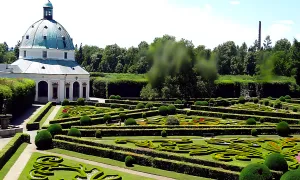
Large square with Baroque fountain and Marian column Type: Space and historical element Why is it worth a visit: This central area is the heart of the city. Here you will find an artistically valuable Baroque fountain and ornamental Mariánska column, which complete the historic atmosphere of the whole place.
Měšťanský dům u radnice v Kroměříži Type: Historical construction Why is worth a visit: The main destination of our trip is located in close proximity to the town hall on the historic square. The house captures its architecture and reminds of the rich history of local townspeople.
Archbishop's Castle in Kroměříži Type: Location and landmark Why is it worth a visit: A magnificent historical building with rich collections and representative premises dominates the whole area. Her visit offers an insight into the life of the nobles and church dignitaries.
Seasonal recommendations
In spring, the town is dominated by fresh green and fine morning light, which will highlight the details of the facade beautifully. The atmosphere is full of expectations and a new beginning. We recommend wearing more layers of clothing because the weather is variable. The best thing is to visit the memory in the morning when the streets are quiet.
The summer season brings sharp sun and rich colors around, which creates a very energetic mood. There are many more visitors in the main season, so come right at the opening to avoid the biggest crowds. Choose light and breathable substances and don't forget enough fluids.
In autumn, the surroundings turn into golden tones and morning fog gives the house a mysterious touch. At this time, light is softer and more pleasant to observe architecture. It's practical to have a waterproof jacket and plan a visit until late afternoon before it starts to get dark.
In winter, the monument is peaceful and cosy, while the inner spaces offer a pleasant shelter from freezing. At advent time, there are special expectations in the city centre. Don't forget the warm shoes and gloves. Pay attention to the shortened opening hours typical of cold months.
Visualizations and artistic views

The visualisations are generated by artificial intelligence and serve as inspiration.
Photos from the area
Real photos taken near the monument


Zdroj a licence jsou uvedeny u každého snímku.
Tips from visitors
No tips yet. Be the first!
Log in and add your tip.
Sources and literature
Photos: VitVit / CC BY-SA 4.0 — Wikimedia Commons. The author and licence also appear when you hover over the image.
Faktickým podkladem tohoto textu byl článek na Wikipedii, jehož autory jsou přispěvatelé Wikipedie. Článek je dostupný pod licencí CC BY-SA 4.0.
Location on the map
Příběhy a pověsti
Legendy, pověsti a příběhy spjaté s touto památkou
Fotografie návštěvníků
Zatím žádné fotografie. Buďte první, kdo přidá fotografii z návštěvy!
Log in a přidejte svou fotografii nebo hodnoťte.
Za ověřenou návštěvu v aplikaci získáte víc bodů — poznáme podle GPS, že jste na místě.
Reviews and comments