






Městská jatka (Ostrava) Slaughterhouse
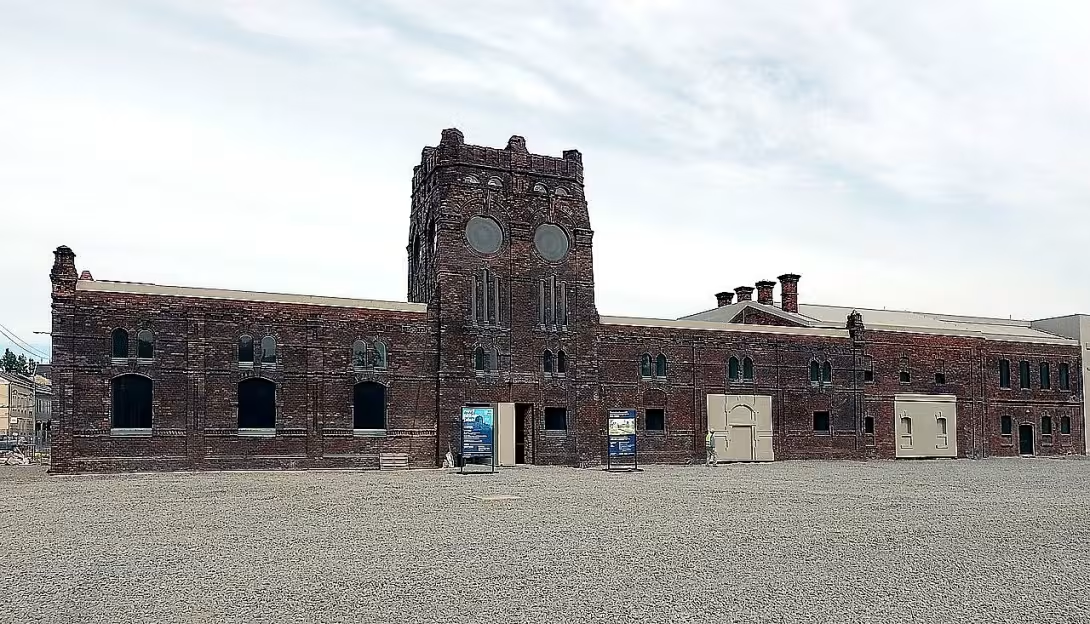
The town abattoir in Moravian Ostrava is a remarkable resort of former slaughterhouses, which was established in the 19th century in connection with intensive industrial development and the influx of labor into Ostrava. The area was built in 1881 and in 1890 it underwent the first modernization, during which a cooling room was built with 21 boxes with already machine cooling, added new stables and an object for beef slaughter. In 1902- 1903 there was a second wave of expansion and modernization, during which a new cooling hall was built with a tower 20 meters high. In 1927-1928 the last modernization of the urban slaughterhouses was carried out, during which a large part of the original buildings were demolished and a modern complex of buildings, including a new cold store, a freezer and a meat market, grew in their place.
The authors are Walter Frese, Oskar Mratschek and Anton Möller. The slaughterhouse area grew in close proximity to residential houses, causing protests by their inhabitants against odor and noise. In 1951 the slaughterhouse was taken from the city, nationalized and incorporated into the national enterprise Ostrava meat industry. Until 1965, it remained in the original place where it operated as a food business. After that, all operations moved to a new masochonduy in the city of Martinov, and the slaughterhouse ceased to serve its purpose.
In 1987, the tower of the former cold store was listed in the list of cultural monuments. In 1992 the slaughterhouse area was taken over by the city district Moravská Ostrava and the ferry, which had no suitable use for the area. In 1993, the slaughterhouse, including the surrounding land, sold two hectares of the multinational company Bauhaus, which promised to repair the cultural heritage within two years, which did not happen. The sales agreement between the district and the company did not contain a commitment to reconstruction of historic slaughterhouse buildings.
In 2006, the roof of the cooling plant collapsed, corrected after public protests and the interest of regional media. In 2010, beef slaughter from 1892 had to be demolished due to poor technical condition. The company has long tried to challenge the complex conservation of the slaughterhouse, but in 2015 it was confirmed by the Ministry of Culture of the Czech Republic.
Since 2020, the conversion of the building for the city gallery PLATO Ostrava has taken place according to the design of the Polish studio KWK Promes Robert Konieczný. The slaughterhouse was put into operation after the approval in May 2022 with an open door function until September of the same year when the first exhibition will be launched.
Historical milestones
- 1881
- Construction of slaughterhouse buildings
- 1890
- First modernisation of slaughterhouses
- 1924-1927
- The latest modernisation of urban slaughterhouses
- 1987
- Registered to the list of cultural monuments
- 1994
- Declared a cultural monument
Architectural development
The first modernization of slaughterhouses began in 1890 (construction in 1890-1891 was carried out by Ostrava builder Clemens Hladisch (internal equipment was supplied by Brand & Lhuillier) again under the direction of builder František Jureček. The whole area has grown, a cooling room with 21 boxes with machine cooling has been built, new stables and an object for beef slaughter (which was demolished in 2010).
Points of interest
- The slaughterhouse area grew in close proximity to residential houses, causing protests by their inhabitants against odor and noise. - In 1987, the tower of the former cold store was listed in the list of cultural monuments. - In 2010, beef slaughter from 1892 had to be demolished due to bad engineering. - Since 2020 the conversion of the building for the city gallery PLATO Ostrava according to the design of the Polish studio KWK Promes Robert Konieczný. - In 2006, the roof of the cooling plant collapsed, repaired after public protests and the interest of regional media.
Guide
Show guide text
This text was created by artificial intelligence and has not been editorially reviewed. It may contain inaccuracies.
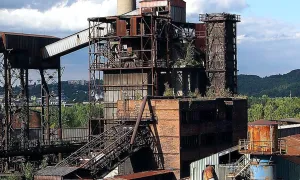
Welcome to Moravian Ostrava. Right now you're standing in front of a place that carries deep traces of the past while preparing for a whole new future. In front of your eyes is the site of a former town slaughterhouse. Feel the atmosphere here, which is very strong and unrepeatable. The first thing you'll notice is the roughness and uncompromising appearance of these buildings. They're not buildings that try to decorate or decorate. Their beauty lies in their trueness and what they reveal. Look at the walls of the buildings you see right in front of you. They're made of a solid, unwashed masonry. This raw material, this material, gives the whole place its unmistakable character. Feel the texture, the color and the weight of these walls that have been standing here for centuries. And of course, your view must immediately travel up to the dominant tower that rises over the entire area and serves as the beacon of this historic space.
Now let's move forward in time and understand why this place is even standing here. This site was not built randomly. In one eighty-one, the construction of these slaughterhouse buildings began because the growing city needed a functional and organised place for food processing. It was a place that was necessary for the life and development of the then society. But history didn't stop in '81. The area must have grown and changed with the city. In the year 89, the buildings underwent their first major adjustment in order to better match the requirements at the time. Later, in the years two thousand twenty-four to two thousand twenty-seven, the last major modernization took place, which led to the appearance that you may perceive in some details today. The whole process of creating a place was led by capable people whose names are linked to this architecture. They were called Walter Frese, Oskar Mratschek and Anton Möller. Although their names may not be common in everyday conversation, their work here is materialized in every stone and every brick that you are currently observing.
Now pay attention to the architecture surrounding you. As I have already mentioned, the key to understanding this place is unwashed masonry. Feel the raw. This architecture is not about camouflage, but about functionality. Every element here has a purpose. Look at the massive shapes and how the buildings intertwine. The tower you see in the past has been a vital part of the entire system. It served as a cold room, which at that time was a technological challenge and a necessity. This tower was the heart of the entire food storage process. Even though it no longer fulfils its original function, it still stands here as a symbol of the progress and technical ability at the time. It's a fascinating view of how industrial construction becomes a cultural symbol.
But the history of this place was not just about building and technical progress. It wasn't just pure history of success. If you look at the surrounding residential houses that are located close to this area, you can easily imagine what it must have been like to live in their consonance. The slaughterhouse area grew so close that it almost touched people's everyday lives in their homes. That caused great tension and protests. The residents of the surrounding houses complained about the constant noise and, above all, the odor that was inevitable for living near the slaughterhouse. It was a clash of two worlds - a world of growing industry and a world of people looking for peace and purity in their homes. This conflict between the needs of the city and the comfort of its people is part of the soul of this place.
There is also something that may surprise you, considering how things change in time. Some parts of this area are very old and durable, while others had to retreat. For example, in the year two thousand and ten, the beef-slaughter building had to be removed, which was built in one-eighty-two. It's sad, but the technical condition was already so bad that further traffic was not possible. On the other hand, the tower of the cold room you see was so valuable that it was already listed in the list of cultural monuments in '87. This shows us how the view of industrial sites changes. What was once a functional object becomes a rare legacy that we must protect.
And this is where we get to the most interesting part of the present. You're standing in front of a place that's going through a huge transformation. Since the year two thousand twenty, there has been a process of changing this space. It's not a slaughterhouse anymore. There's no more butchery here. Instead, this complex is being reborn as a place for art and culture. The conversion of the building is taking place here so that the city gallery PLATO can be found here. Imagine the fascinating transformation - the place where meat was previously processed is now a place where human imagination will be processed, where artists and visitors will meet. It's a fascinating transition from industrial activity to cultural experience.
Now I want to invite you to move on. Explore this space, perceive its shadows, its light and its raw beauty. Let yourself be carried away by the atmosphere of this place, which is no longer what it was, but becomes something completely new. Thank you for spending this moment with us and for trying to understand this piece of the history of Moravian Ostrava. I wish you a pleasant further discovery.
Tips for visitors
The best time to visit is from September to November when the weather is pleasant and not too many tourists.
The town slaughterhouse is available by public transport, there is a bus and tram stop. Check the current connection in the search engine.
It is advisable to take with you comfortable shoes and umbrella because the area is quite large and can be wet.
Photography is best done in the morning or in the evening when the light is soft and pleasant.
In the area you can visit the Museum of Art in Ostrava, which is located about 10 minutes walk from the town slaughterhouse.
Businesses nearby
Do you run a restaurant, accommodation, shop, museum, rental, wellness or other visitor service near this monument? Show yourself directly to the people heading to it — this is how they will see you in the app and on the web:
Events nearby
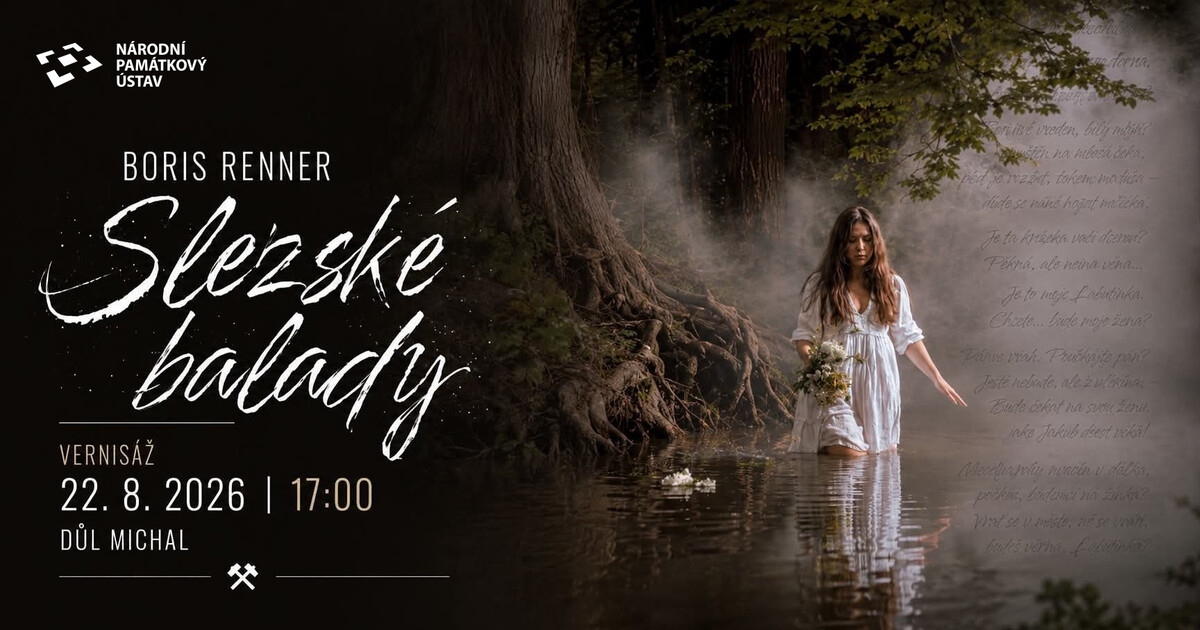
Zdroj akcí: otevřená data měst a obcí ČR (Národní katalog otevřených dat) a kalendář akcí Národního památkového ústavu.
Nearby
🏰 Historic sites (211)
- PLATO 0.0 km Porážková 26 +420702206099 web
- Galerie výtvarného umění v Ostravě 0.5 km +420 596 112 566 web
- Miroslav Tyrš 0.5 km
- Muzeum hraček 0.6 km Vítkovická 3083/1 +420604637590 web
- Stávka na jámě Trojice 0.6 km
- Růžena Schönfeldová 0.6 km
- Zborovský památník 1. a 2. zahraničního odboje 0.6 km
- Adolf Rix 0.7 km
- Bedřiška Rixová 0.7 km
- Železniční muzeum moravskoslezské 0.8 km web
- Památník válečným veteránům 0.8 km
- Karel Kryl 0.8 km
- Mariánský sloup 0.8 km
- sv. Florián 0.8 km
- Masaryk 0.8 km
- Ostravské muzeum 0.9 km web
- Jos. Gregora 0.9 km
- Pamětní deska ostravské synagogy 0.9 km
- Otto Pick 0.9 km
- Greta Picková 0.9 km
🍽️ Restaurants and dining (906)
- PLATO Café 0.0 km Porážková 26 web
- Boomerang 0.1 km
- Cafe de la Ostrava 0.1 km web
- Tik Tak Bar 0.1 km
- Zadní Vrátka 0.1 km
- Desperado 0.1 km
- Escobar club 0.1 km
- E99 Music Club 0.1 km web
- Marhaba kebab 0.1 km
- U modré nudle 0.1 km
- Escobar 0.2 km
- Červená duna 0.2 km web
- 2 TO 2 0.2 km
- Bernie's Irish 0.2 km web
- Drinkeat 0.2 km +420 728 200 920 web
- Inexis Bar & Pizza 0.2 km web
- Septim restaurant 0.2 km Masná 1324/1
- Vrtule 0.2 km
- Netopýr 0.2 km
- Golden Club & bar 0.2 km
🏨 Accommodation (76)
- Hotel Na Kafkové 0.2 km Kafkova 1380/15
- Hotel Brioni 0.3 km web
- Polský dům 0.3 km Poděbradova 1152/53
- Hotel Mercure Ostrava Center 0.6 km
- Hotel Imperial 0.7 km Tyršova 211/4 +420 599 099 099 web
- Hotel Maria 0.7 km
- Kampus Palace 0.7 km +420 777 101 615 web
- Quality Hotel Ostrava City 1.1 km +420 595 195 000 web
- Nikolas 1.3 km +420 596 134 000 web
- Harmony Club hotel Ostrava 1.6 km +420 596 652 111 web
- Ubytovací středisko Výstavní 1.6 km
- city-city 1.7 km web
- Hotel Max Šimek 1.8 km Nádražní 839/186 web
- Hotel Slezská 1.8 km Keltičkova 1297/60 web
- Levné ubytování Ostrava 2.0 km Přemyslovců 285/35a +420 777 708 447 web
- 69 2.0 km Slavníkovců 657/8
- VP1 2.0 km web
- Ubytovna Laguna 2.1 km +420773601735 web
- Ubytovna Stars 2.2 km +420606723928 web
- Veronika 2.6 km
🚲 Rentals and sport (124)
- Bonver aréna 0.2 km
- Bicykly.cz 0.4 km Nádražní 385 +420 773 594 957 web
- Alpsport 0.4 km web
- Husky 0.5 km web
- D-Sport 0.6 km
- Kilpi 0.6 km
- A3 SPORT 0.6 km
- Intersport 0.6 km
- Bang bang 0.6 km +420 734 876 767 web
- D-Sport 0.7 km
- D-Sport Outlet 0.7 km
- Joma 0.8 km Na Hradbách 1161/5 web
- HUDYsport 0.8 km +420596115176 web
- TJ Ostrava 0.8 km web
- Cargo Bike Daddy 0.9 km Sokolská třída 318/39 +420 721 573 679 web
- Trojhalí Karolina - Ústředna 0.9 km
- Sportisimo 1.0 km
- Decathlon 1.1 km Varenská 3309/50 +420595701400 web
- Bazénové centrum 1.2 km web
- Koupaliště 1.2 km
🥾 Hiking and nature (221)
- Zahrada přítomnosti 0.0 km
- Park Ernsta Kornera 0.5 km
- Bezručův sad 0.6 km
- park Československých letců 0.8 km
- orloj 0.8 km
- Rovninské balvany 1.0 km
- Nová Radnice 1.0 km
- Farská zahrada 1.0 km
- park Válečných veteránů 1.1 km
- Vila Grossmann 1.1 km web
- indiánské městečko 1.4 km
- Golíkův sad 1.4 km
- Komenského sady 1.4 km
- Výhled na celou Ostravu 1.6 km
- Všehrdův sad 1.6 km
- sad Boženy Němcové 1.7 km
- Chacharova vyhlídka 1.8 km
- Dolní oblast Vítkovice 1.8 km web
- Tylův sad 1.8 km
- Bolt Tower 1.8 km
Accommodation nearby
Themed route
1. City slaughterhouse - Main building. Explore the inner spaces and historical details of this unique object. 2. City slaughterhouse - Internal courtyard. Discover the open space in the middle of the building, which offers an interesting view of its architecture. 3. City abattoir - The immediate area. Take a walk around the entire building and feel its atmosphere.
Seasonal recommendations
Spring: During the spring season, the town slaughterhouse in Moravian Ostrava turns into a special place to visit when flowering shrubs and trees fill the air with their fragrant aroma. Sun rays illuminate the architecture of slaughterhouses in a new light, which contributes to a unique atmosphere. It is recommended to visit in the morning or in the evening to avoid midday temperatures and possible crowds. It is advisable to wear clothes according to the weather - in case of cold is recommended jacket or coat.
Summer: Summer brings long days and warm air, making city slaughterhouses an ideal place to relax in nature. The sunlight illuminates architecture in a very lively tone and the shrubs are fully developed, which increases the aesthetic impression. In the main summer season it is recommended to come early in the morning or later in the afternoon to avoid large crowds and heat. Don't forget the sun protection and enough water.
Autumn: In autumn, city slaughterhouses offer views coloured with yellow, orange and red tree leaves. The sun illuminates architecture in mild colors, which contributes to a quiet atmosphere. In this period the opening time is shorter due to colder temperatures and is recommended to visit at noon to be used in the sun. It is advisable to wear warm clothes such as a jacket or hat.
Winter: Winter autumn brings cool air and shorter days, which means that the lighting of slaughterhouses at night takes a specific tone. The atmosphere is calm and little visited, which allows you to enjoy the place in peace. Opening hours are limited to days with higher temperatures, so it is advisable to prepare for a cool visit - remember warm clothes and wind protection.
Visualizations and artistic views

The visualisations are generated by artificial intelligence and serve as inspiration.
Photos from the area
Real photos taken near the monument


Zdroj a licence jsou uvedeny u každého snímku.
Tips from visitors
No tips yet. Be the first!
Log in and add your tip.
Sources and literature
Photos: Kamil Czaiński / CC BY-SA 4.0 — Wikimedia Commons. The author and licence also appear when you hover over the image.
Faktickým podkladem tohoto textu byl článek na Wikipedii, jehož autory jsou přispěvatelé Wikipedie. Článek je dostupný pod licencí CC BY-SA 4.0.
Location on the map
More monuments – Moravská Ostrava
Show all in the municipality


Příběhy a pověsti
Legendy, pověsti a příběhy spjaté s touto památkou
Fotografie návštěvníků
Zatím žádné fotografie. Buďte první, kdo přidá fotografii z návštěvy!
Log in a přidejte svou fotografii nebo hodnoťte.
Za ověřenou návštěvu v aplikaci získáte víc bodů — poznáme podle GPS, že jste na místě.
Reviews and comments