






Památník Rudé armády Monument
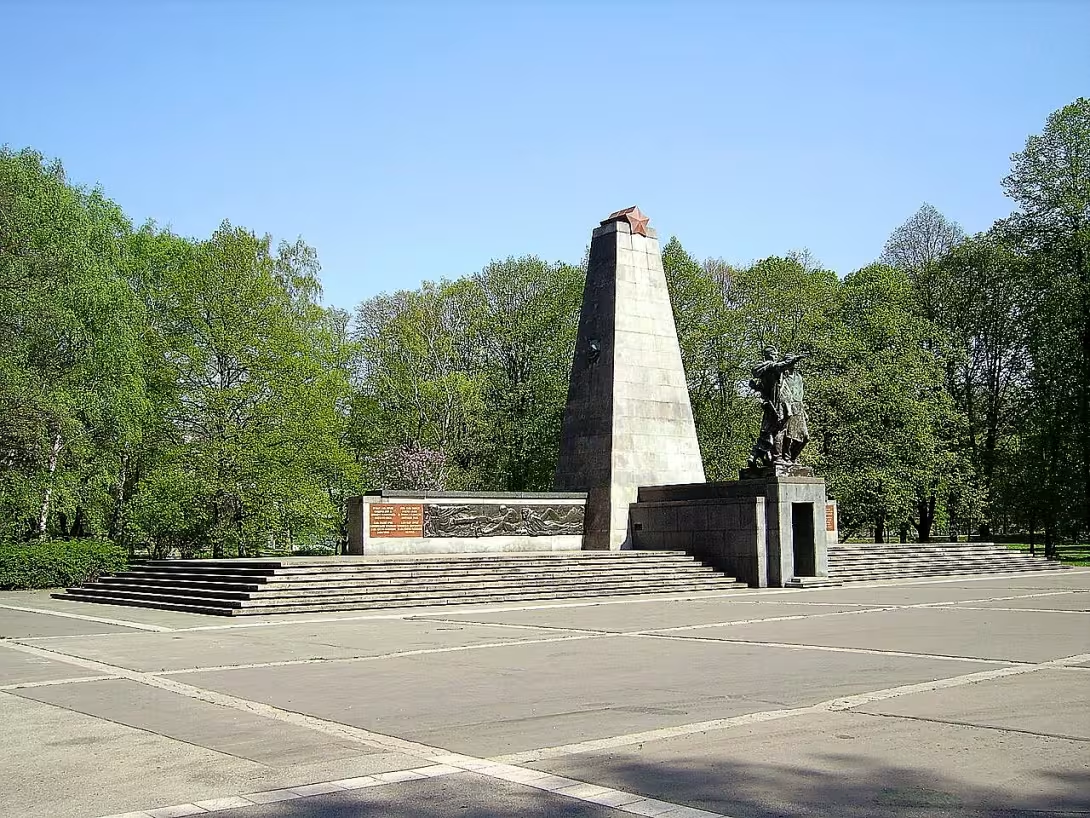
The Red Army Monument in Moravská Ostrava is a significant historical landmark commemorating Czechoslovakia's liberation during World War II. Located in Komenského sady park, it stands as a testament to the crucial role played by the Red Army in freeing the country from Nazi occupation.
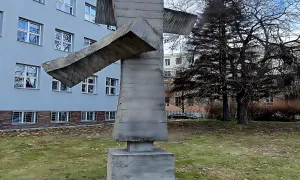
Unveiled in 1946 to mark the first anniversary of liberation, the monument was designed by Josef Jírovec and features artistic elements by Karel Vávra and Konrád Babraj. It is a striking example of post-war architecture. The central pylon rises 13 meters high, topped with a bronze statue of a Czech worker and a Russian soldier. Two 10-meter-long arms flank the pylon, adorned with granite slabs and inscriptions.
The monument's interior features a mausoleum containing urns holding the remains of Red Army soldiers, Czechoslovakian soldiers, and Ostrava citizens who lost their lives during liberation efforts. Nearby lie eleven separate graves of Red Army soldiers and one dedicated to Captain Stěpan Vajda, commander of the 4th Tank Regiment.
Despite its historical significance, the monument has faced vandalism on several occasions. In 2010, an unknown perpetrator painted the statue yellow, while in 2019, it was defaced with red oil paint and anti-Soviet slogans from 1956. Restoration efforts cost approximately 82 million Czech korunas.
Today, the Red Army Monument remains a poignant reminder of World War II sacrifices. Visitors can explore its architecture, artistic elements, and historical context, making it an essential stop for anyone interested in understanding the region's complex history.
Then and now
Drag the slider to compare how the landmark may have looked when it was built with the view today.
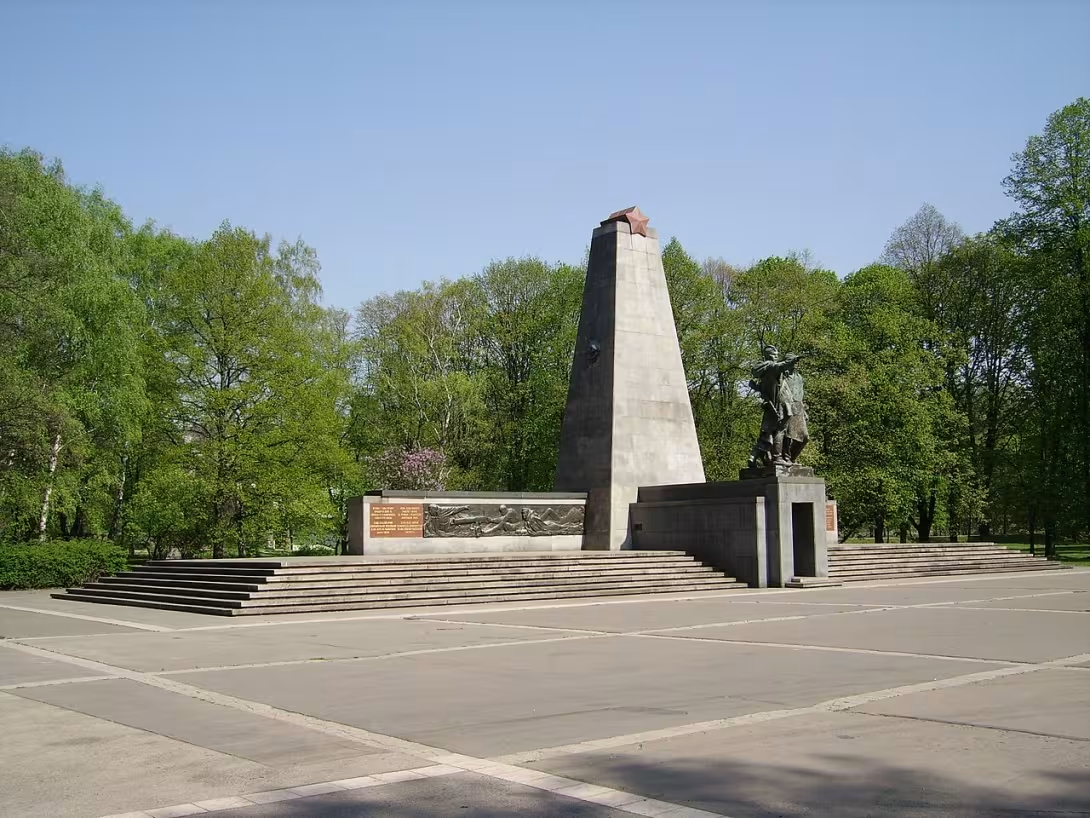
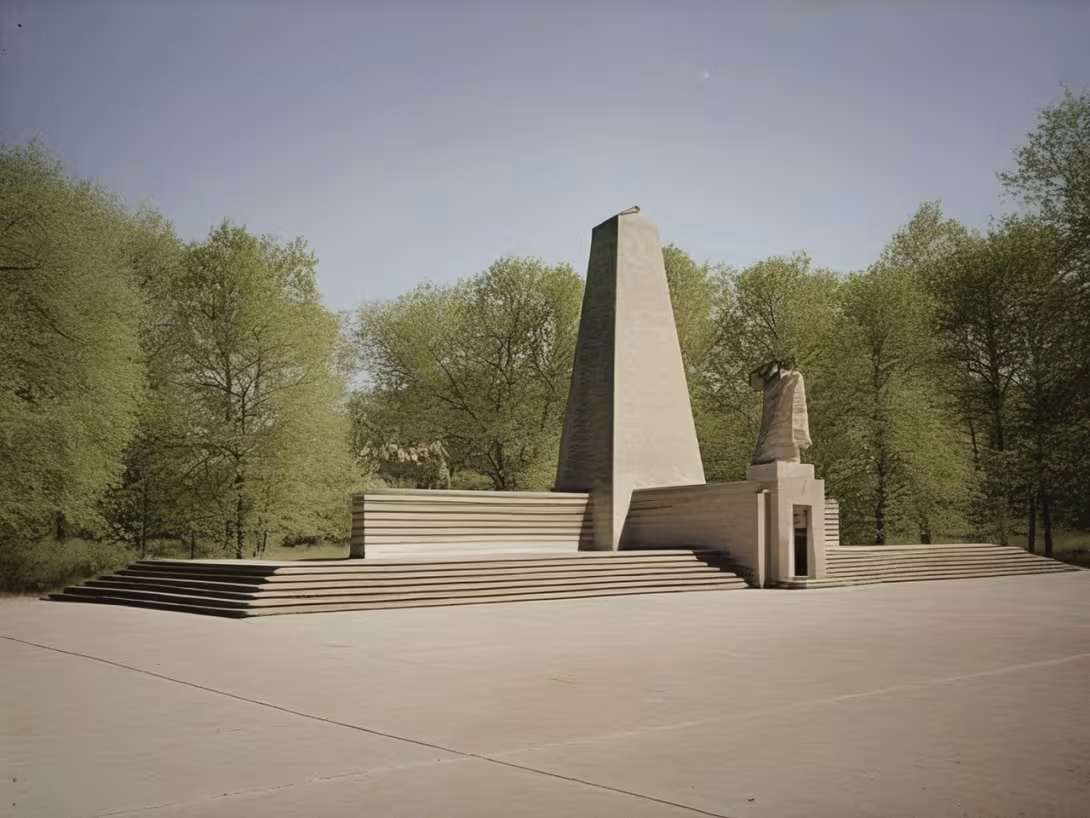
The historical appearance on the left is an AI-generated visualisation and serves as inspiration only.
Historical milestones
- 1946
- Unveiling of the Red Army Monument to mark the first anniversary of liberation
- 2010
- Vandalism: statue painted yellow
- 2019
- Further vandalism: defaced with red oil paint and anti-Soviet slogans from 1956
Architectural development
The monument features a 13-meter-high pylon with a five-pointed star, flanked by two 10-meter-long arms adorned with granite slabs and inscriptions. The pylon is topped with a bronze statue of a Czech worker and a Russian soldier.
Historical events
1946: The monument was unveiled to commemorate the first anniversary of the liberation of Czechoslovakia
1947: A central sculpture was added
Points of interest
– The Red Army Monument in Moravská Ostrava was not only a tribute to the Soviet soldiers who fought alongside Czechoslovakian forces but also served as a symbol of the country's gratitude for their liberation.
– Despite its significance, the monument has faced vandalism on several occasions, with an unknown perpetrator painting the statue yellow in 2010 and defacing it with red oil paint and anti-Soviet slogans from 1956 just nine years ago.
– The mausoleum inside the monument contains urns holding the remains of not only Red Army soldiers but also Czechoslovakian soldiers and Ostrava citizens who lost their lives during liberation efforts, making it a poignant reminder of the human cost of war.
Guide
This guide is narrated by a synthetic voice generated by artificial intelligence.
Show guide text
This text was created by artificial intelligence and has not been editorially reviewed. It may contain inaccuracies.
Welcome to the Red Army Monument in Moravská Ostrava! As you stand before this historic landmark, take a moment to absorb its grandeur and significance. The monument stands as a testament to the liberation of Czechoslovakia during World War II.
As you gaze upon the monument's architecture, notice the intricate details that tell the story of the Red Army's crucial role in this pivotal event. The monument was unveiled in 1946, just one year after the war ended, and it has since become a symbol of gratitude for the Soviet soldiers who fought alongside Czechoslovakian forces.
Let your eyes wander up to the statue itself, which stands tall and proud. Designed by architect Josef Jírovec, this imposing figure is a powerful reminder of the sacrifices made during those tumultuous times. As you take in the monument's grandeur, remember that it wasn't just a tribute to the Soviet soldiers – it was also a symbol of Czechoslovakia's liberation.
Now, let your gaze fall upon the names etched into the monument's base. You'll see the names of General Andrej Ivanovič Jeremeko and Kpt. Stěpan Vajda, two individuals who played significant roles in this chapter of history.
As you ponder the significance of this landmark, take a moment to appreciate its lesser-known facts. Did you know that the monument was not only a tribute to the Soviet soldiers but also served as a symbol of Czechoslovakia's gratitude for their liberation? Or that it has been the target of vandalism twice in recent years – once in 2010 when it was painted yellow, and again in 2019 when it was defaced with red oil paint and anti-Soviet slogans from 1956?
As you continue to explore this historic landmark, remember that it's not just a statue – it's a window into the past. Take your time to absorb its significance, and let the stories of those who fought for freedom resonate within you.
As you prepare to leave, take one last look at the monument's grandeur. Remember that this is more than just a piece of history – it's a testament to the human spirit's capacity for resilience and perseverance. And as you depart, carry with you the lessons learned from this chapter of Czechoslovakian history.
Thank you for joining me on this journey through time. I hope you've gained a deeper appreciation for the Red Army Monument in Moravská Ostrava. Until next time, farewell!
Tips for visitors
The best time to visit the Red Army Monument is during spring or autumn when the weather is mild and sunny, making it ideal for photography. The monument's surroundings are also well-maintained during these seasons, ensuring a pleasant atmosphere for visitors. When visiting the monument, be sure to bring comfortable walking shoes as well as a camera to capture its grandeur. Don't forget to wear sunscreen and a hat to protect yourself from the sun. For photography enthusiasts, the best spots are around the monument's base and along the surrounding paths. The morning or late afternoon sunlight provides the most flattering lighting for capturing stunning images. In addition to the Red Army Monument, visitors can explore nearby Komenského sady park, which offers scenic walking trails and a peaceful atmosphere. For families with children, there are also playgrounds and picnic areas within the park. Tips for families: bring strollers or baby carriers if needed, as the monument's surroundings have some hills and uneven terrain.
Frequently asked questions
Can the monument be visited?
This is a structure in a public space that can usually be seen from outside free of charge. We have not verified that this particular one is freely accessible.
Where is the monument?
Location: Moravská Ostrava, Moravskoslezský kraj. The map on this page shows the exact spot.
Why is the monument protected?
It is listed in the Central List of Cultural Monuments of the Czech Republic as a national cultural monument (register no. 157).
Businesses nearby
Do you run a restaurant, accommodation, shop, museum, rental, wellness or other visitor service near this monument? Show yourself directly to the people heading to it — this is how they will see you in the app and on the web:
Events nearby
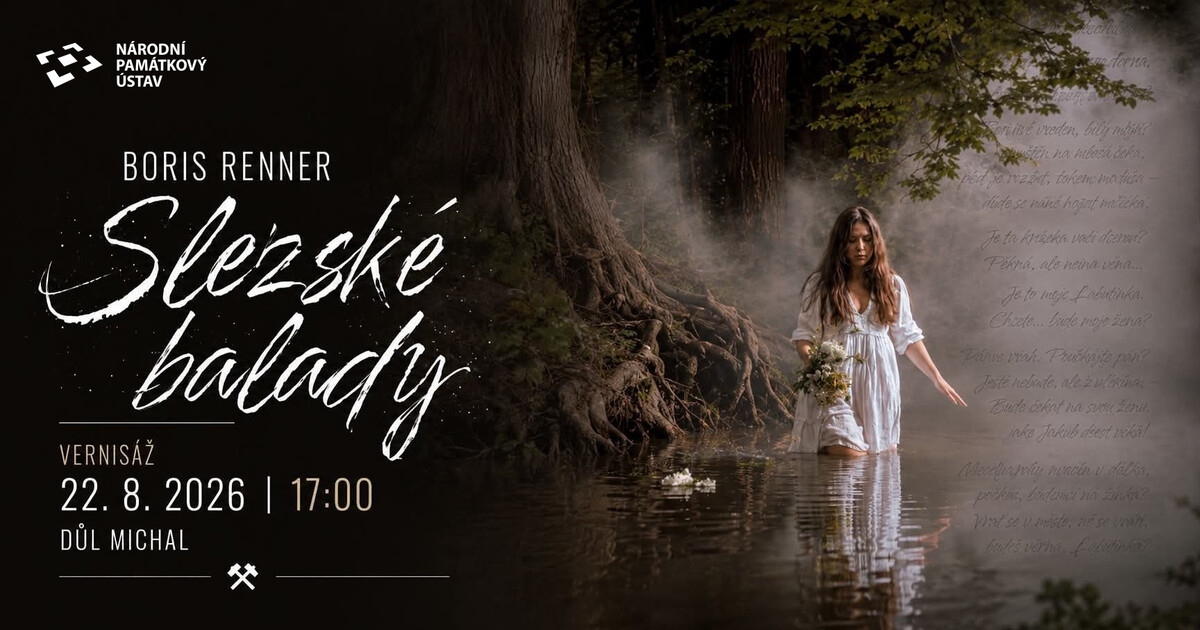
Zdroj akcí: otevřená data měst a obcí ČR (Národní katalog otevřených dat) a kalendář akcí Národního památkového ústavu.
Nearby
The monument is situated in Komenského sady park in Moravská Ostrava.
Accommodation nearby
Themed route
Tematická výletní trasa
Stop 1: Komenského sady (park) This beautiful park is the perfect starting point for our thematic tour. Take a stroll through the lush greenery and enjoy the peaceful atmosphere.
Stop 2: Moravská Ostrava City Hall (Obecní dům) Located just a short walk from Komenského sady, this stunning city hall is a must-see. Admire its unique architecture and take in the vibrant atmosphere of the surrounding square.
Stop 3: Památník Rudé armády (monument) Finally, arrive at our main destination – the Monument to the Red Army. Learn about the significance of this landmark and pay your respects to those who fought for freedom.
Total distance: approximately 1 km
This thematic tour takes you on a journey through the heart of Moravská Ostrava, showcasing its natural beauty, cultural heritage, and historical significance.
Seasonal recommendations
Here is the seasonal recommendation for visiting the Memorial of the Red Army (monument) in Moravská Ostrava, Moravskoslezský kraj:
Spring As the snow melts and nature awakens, the memorial takes on a serene beauty. The surrounding park is filled with blooming flowers and trees, creating a peaceful atmosphere. Practical tips: Visit early in the morning or late in the afternoon to avoid crowds. Wear comfortable shoes for walking around the park. The best time to visit is during the weekdays, as weekends tend to be busier.
Summer The summer heat brings a lively atmosphere to the memorial. The surrounding park is bustling with families and friends enjoying picnics and outdoor activities. The monument itself takes on a warm glow in the sunlight. Practical tips: Plan your visit early in the morning or late in the evening to avoid the peak sun hours. Wear sunscreen, sunglasses, and comfortable clothing for walking around the park.
Autumn As the leaves change colors, the memorial takes on a picturesque quality. The crisp autumn air adds to the monument's solemnity. Practical tips: Visit during the weekdays to avoid crowds. Wear layers, as the temperature can drop significantly in the evening. The best time to visit is just before sunset, when the light is soft and golden.
Winter The winter season brings a serene silence to the memorial. The snow-covered park takes on a peaceful beauty, and the monument stands out against the white backdrop. Practical tips: Visit during the weekdays to avoid crowds. Wear warm clothing, including gloves and hats, as it can be quite chilly. The best time to visit is during the morning or early afternoon, when the sun is not too harsh.
Visualizations and artistic views


The visualisations are generated by artificial intelligence and serve as inspiration.
Photos from the area
Real photos taken near the monument


Zdroj a licence jsou uvedeny u každého snímku.
Tips from visitors
No tips yet. Be the first!
Log in and add your tip.
Sources and literature
Photos: Tedmek / Public domain — Wikimedia Commons. The author and licence also appear when you hover over the image.
Faktickým podkladem tohoto textu byl článek na Wikipedii, jehož autory jsou přispěvatelé Wikipedie. Článek je dostupný pod licencí CC BY-SA 4.0.
Location on the map


Fotografie návštěvníků
Zatím žádné fotografie. Buďte první, kdo přidá fotografii z návštěvy!
Log in a přidejte svou fotografii nebo hodnoťte.
Za ověřenou návštěvu v aplikaci získáte víc bodů — poznáme podle GPS, že jste na místě.
Reviews and comments