






městské opevnění v Ostravě Fortifications
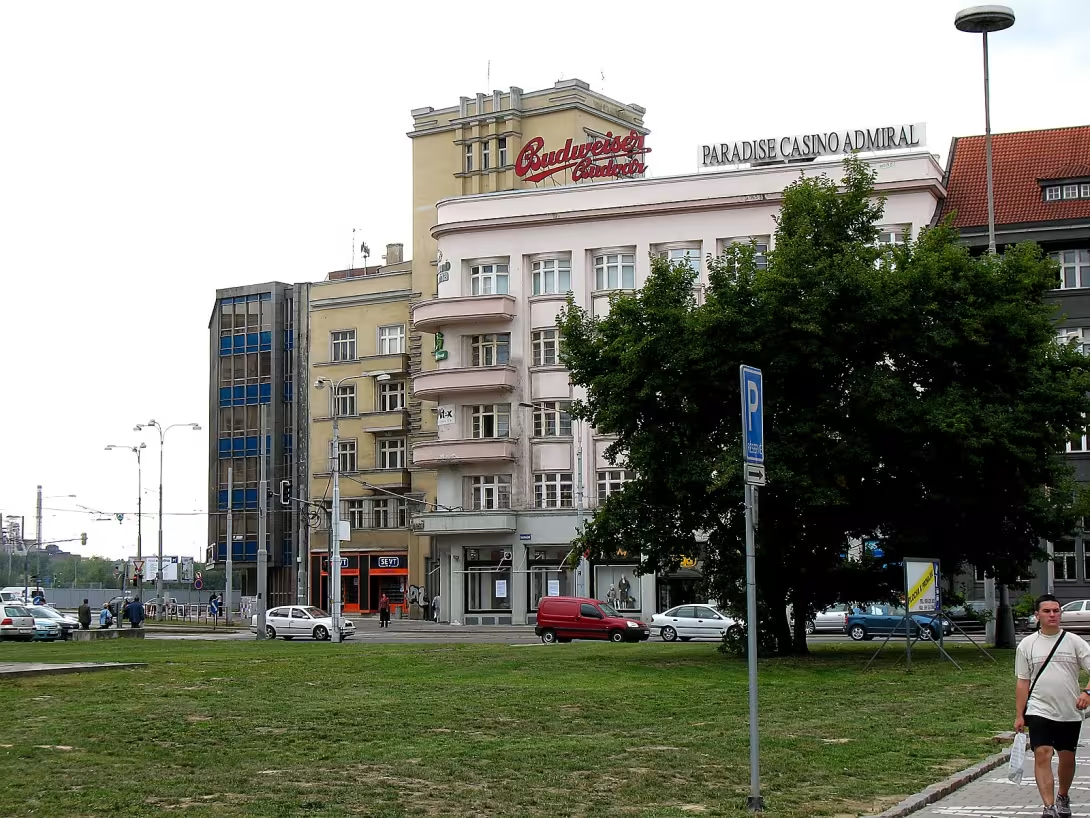
The Ostrava city fortifications, dating back to the second half of the 14th century, encircle what is now the historical center of Moravská Ostrava. Constructed from sandstone and lime mortar, these walls stood approximately four meters high with a base width of around two meters. The fortifications included three gates: Kostelní, Horní (also known as Hrabovská or Vítkovská), and Přívozská. These structures played crucial roles in the city's defense and trade regulation, reflecting its medieval significance.
Construction began around 1362 following Charles IV, Holy Roman Emperor's grant of an annual fair. Known for his contributions to architecture and education, Charles IV's era saw significant urban development across Europe, with many cities fortifying their defenses due to growing trade and potential conflicts. By 1375, the construction was likely completed, marking a pivotal moment in Ostrava's medieval history.
Architecturally, the walls were built using sandstone and lime mortar, materials typical of the era that provided strength and durability. The fortifications included three gates: Kostelní, Horní (also known as Hrabovská or Vítkovská), and Přívozská. These gates served defensive purposes and regulated trade, with tolls collected at Hrabovská and Přívozská gates around 1810.
The fortifications have witnessed significant historical events. During demolition work on Kostelní Gate, Swedish and Prussian cannonballs were discovered, indicating battles fought over the city. Early depictions from the late 17th to early 18th century show Kostelní Gate and parts of the fortifications with battlements and arrow slits, highlighting their strategic importance.
Today, remnants of these walls are preserved in areas like the former parsonage garden and near St. Wenceslas Church. The foundations can be seen under the prosklená podlaha (glass floor) at the TV Noe building. These surviving elements offer a tangible connection to Ostrava's medieval past.
Visiting the remnants of the Ostrava city fortifications provides a unique glimpse into the historical and architectural heritage of Moravská Ostrava. The preserved sections, particularly near St. Wenceslas Church, invite exploration and reflection on the city's storied past. This site is not only a testament to medieval urban planning but also a reminder of the strategic importance that once defined this region.
Then and now
Drag the slider to compare how the landmark may have looked when it was built with the view today.
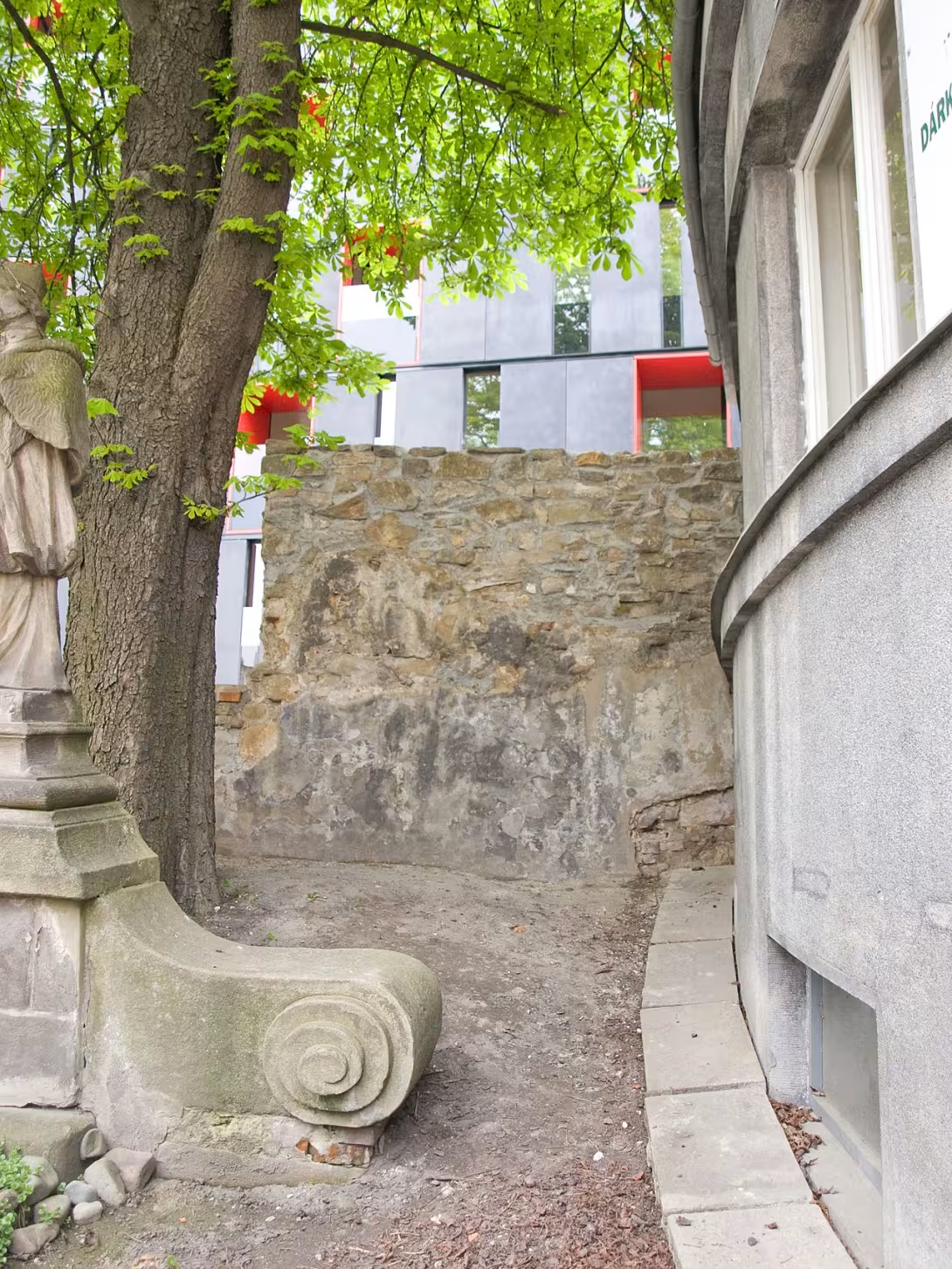
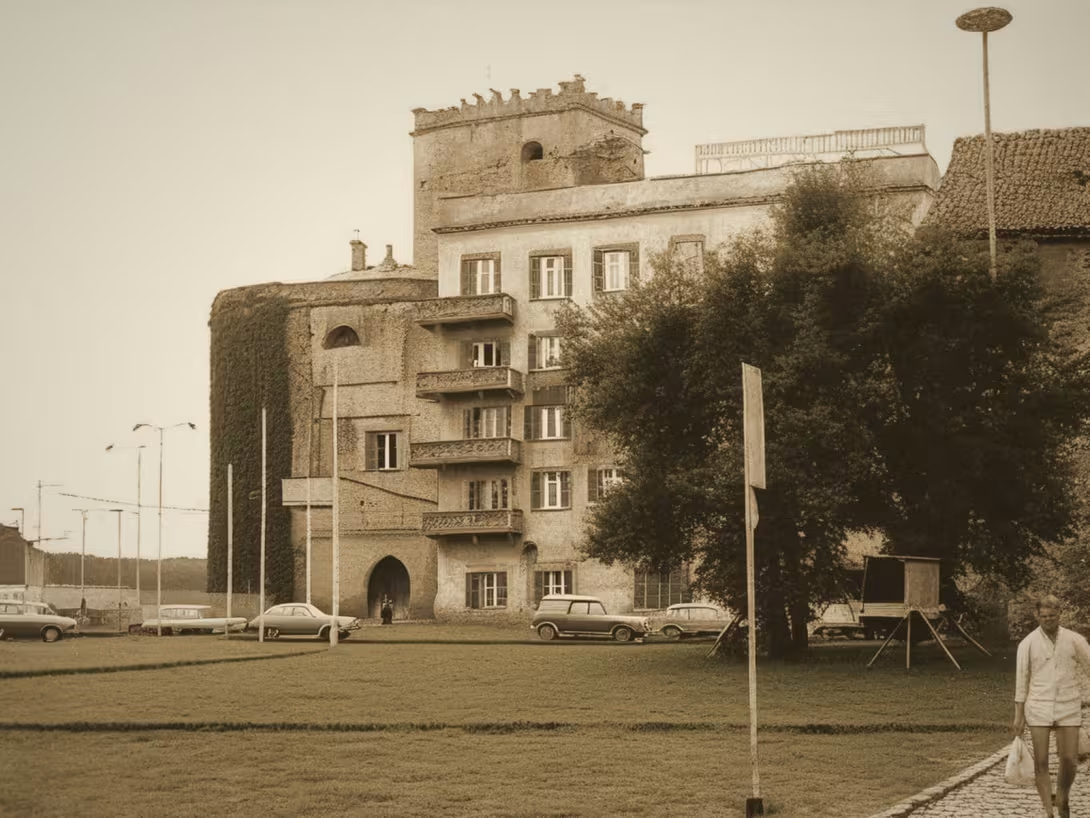
The historical appearance on the left is an AI-generated visualisation and serves as inspiration only.
Historical milestones
- 1362
- The construction of the fortifications began following the grant of an annual fair by Charles IV.
- 1375
- The construction of the fortifications was likely completed.
- 1810
- Tolls were collected at Hrabovská and Přívozská gates.
- 1899
- The moat associated with the fortifications was filled in.
Architectural development
The Ostrava city walls were built using sandstone and lime mortar. The construction began in connection with the establishment of an annual fair by Charles IV around 1362 and was likely completed by 1375. Over time, parts of the fortifications have been preserved, particularly in areas like the former parsonage garden and near St. Wenceslas Church.
Historical events
The construction of the fortifications began around 1362 following the grant of an annual fair by Charles IV.
By 1375, the construction was likely completed.
In 1810, tolls were collected at Hrabovská and Přívozská gates.
In 1899, the moat associated with the fortifications was filled in.
Points of interest
- The Ostrava fortifications were constructed shortly after Charles IV granted the city an annual fair in 1362, highlighting how economic incentives spurred urban development and defensive enhancements during his reign.
- During demolition work on Kostelní Gate, Swedish and Prussian cannonballs were unearthed, revealing that the fortifications had been central to conflicts involving multiple European powers over the centuries.
- By around 1810, tolls were collected at both Hrabovská and Přívozská gates, indicating these structures' continued importance in regulating trade long after their initial construction for defense purposes.
- Early depictions from the late 17th to early 18th century show Kostelní Gate with battlements and arrow slits, illustrating how architectural features were adapted over time to meet evolving military needs.
- Today, remnants of these walls can be seen under the prosklená podlaha (glass floor) at the TV Noe building, offering a modern way for visitors to connect with Ostrava's medieval history through preserved architecture.
Guide
This guide is narrated by a synthetic voice generated by artificial intelligence.
Show guide text
This text was created by artificial intelligence and has not been editorially reviewed. It may contain inaccuracies.
Welcome! You are standing before the historical monument of Ostrava's city fortifications, which towers before you as a living witness to history. Look up and notice the sandstone and lime mortar walls that have been preserved in good condition for over five centuries.
Let's step back into the past and discover how these fortifications began to take shape. Specifically, in 1362, Emperor Charles IV granted Ostrava the right to hold an annual fair, which led to rapid urban development and a need to strengthen its defensive capabilities. Thus, the construction of the city fortifications began, likely completed by 1375.
Now pay attention to the architecture. Notice that the fortifications were about four meters high and two meters wide. They were built from sandstone and lime mortar, which is evident from the visible walls. Examine the façade and notice how the fortifications adapted to the terrain. This is proof that their builders were experienced and well-acquainted with local conditions.
Let's now return to the historical figures who made their mark on this site. One of them is Emperor Charles IV, who granted Ostrava the right to hold an annual fair, thus provoking the construction of the city fortifications. His name is associated with many significant events in Czech history, but his influence on Ostrava is unique.
An interesting fact is that during the demolition of Kostelní Gate, ammunition from Swedish and Prussian cannons was found. This is evidence that Ostrava was once a target of attacks and that its fortifications played a key role in its defense.
Whether you are here for the first time or have already stopped by, we hope you will find something to your liking. The fortifications in Ostrava are a living witness to history, and their architecture is proof of the skill and creativity of their builders. Come take a look and delve into the past.
Tips for visitors
The best time to visit the Ostrava city fortifications is during late spring or early autumn when the weather is mild, making it comfortable for walking around the ruins. These seasons also offer beautiful natural lighting for photography and fewer crowds compared to summer months. The historical center of Moravská Ostrava provides a picturesque backdrop that enhances the experience.
Public transport options include buses and trams that connect various parts of Moravská Ostrava, making it accessible without needing a car.
When planning your visit, consider bringing comfortable walking shoes as exploring the ruins involves some uneven terrain. A camera is recommended for capturing the unique architecture and scenic views, especially during golden hour when the light is soft and warm. Additionally, carrying water and sunscreen can enhance comfort during sunny days.
For photography enthusiasts, the best spots to capture the fortifications are from elevated viewpoints that offer a panoramic view of the ruins against the cityscape. Early morning or late afternoon provides optimal natural lighting for dramatic photos. Families with children might enjoy exploring nearby parks within 30 minutes' walking distance where kids can play while adults appreciate the historical context.
Nearby attractions include cultural and recreational spots such as local museums, art galleries, and green spaces that are ideal for a family outing. These places offer educational opportunities and leisure activities suitable for all ages, allowing families to combine history with fun.
Frequently asked questions
Can the monument be visited?
This is a structure in a public space that can usually be seen from outside free of charge. We have not verified that this particular one is freely accessible.
Where is the monument?
Location: Moravská Ostrava, Moravskoslezský kraj. The map on this page shows the exact spot.
Why is the monument protected?
It is listed in the Central List of Cultural Monuments of the Czech Republic as a cultural monument (register no. 1552635908).
Businesses nearby
Do you run a restaurant, accommodation, shop, museum, rental, wellness or other visitor service near this monument? Show yourself directly to the people heading to it — this is how they will see you in the app and on the web:
Events nearby
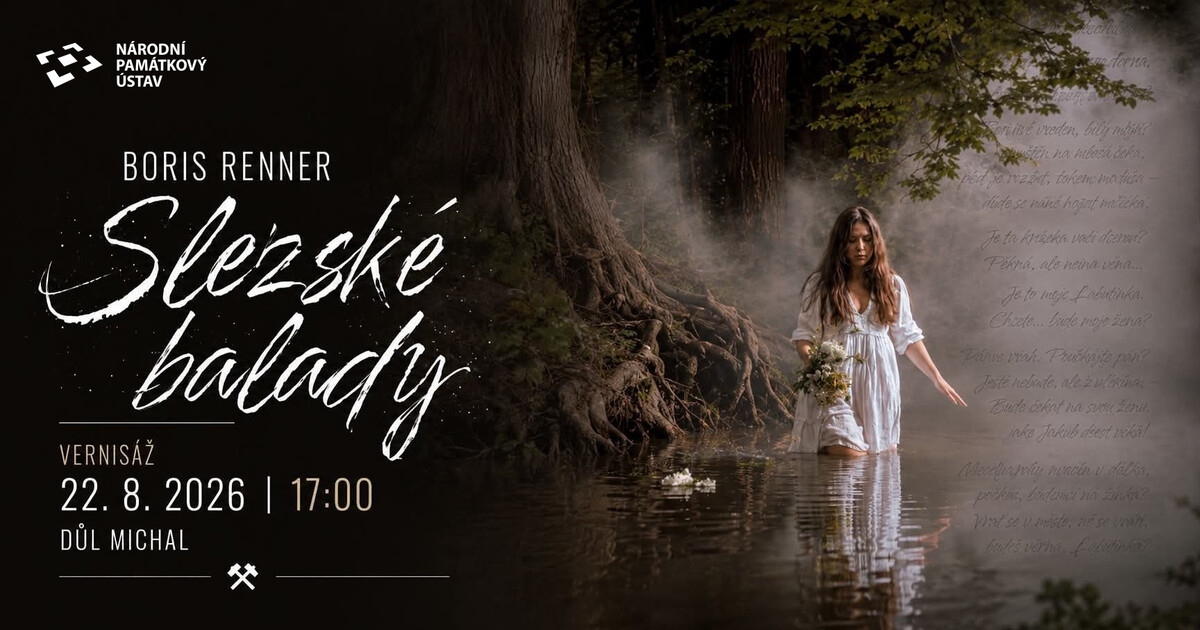
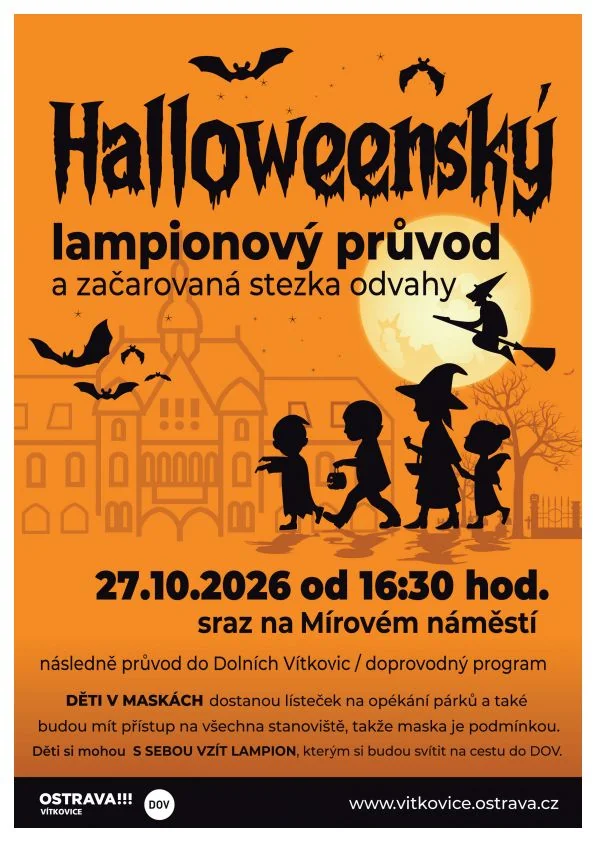
Zdroj akcí: otevřená data měst a obcí ČR (Národní katalog otevřených dat) a kalendář akcí Národního památkového ústavu.
Accommodation nearby
Themed route
Trasa: Moravská Ostrava a její opevnění
1. Moravská Ostrava (hlavní cíl) - městské opevnění Vstup do areálu městského opevnění v Ostravě je zdarma. Poblíž vstupu se nachází informační tabule s historiou opevnění. Vstup do věže je za poplatek.
2. Slezská Ostrava (3 km, 10 minut pěšky) Město Slezská Ostrava leží na východním okraji Moravské Ostravy. Nachází se zde kostel sv. Václava, který stojí za návštěvu pro svou jedinečnou architekturu a bohatou historii.
3. Hlubina (4 km, 15 minut autem) Hlubina je bývalý důl, který je nyní využíván jako muzeum důlního průmyslu. Nachází se zde expozice, která představuje historii těžby uhlí a důlního průmyslu v regionu.
4. Ostravice (6 km, 15 minut autem) Ostravice je řeka, která protéká městem Moravskou Ostravou. Kolem řeky se nachází park, kde se můžete projít a zrelaxovat.
Seasonal recommendations
Jaro
Spring is the ideal season to visit the historic fortification in Ostrava. The atmosphere is full of life and energy as nature awakens from its winter slumber. Forests and parks around the ramparts are covered with flowers, and trees begin to turn green. The lighting is soft and warm, allowing every detailed architectural curve and stone to be seen.
We recommend visiting the fortification in spring early in the morning to avoid crowds of tourists. The best time to visit is from April to May when the weather is sunny and warm. Don't forget warm clothing, as it can still be chilly even during the spring season.
Visualizations and artistic views


The visualisations are generated by artificial intelligence and serve as inspiration.
Photos from the area
Real photos taken near the monument


Zdroj a licence jsou uvedeny u každého snímku.
Tips from visitors
No tips yet. Be the first!
Log in and add your tip.
Sources and literature
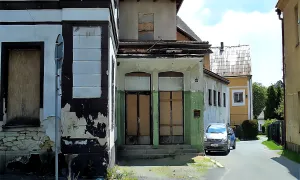
Photos: Honza Groh (Jagro) / CC BY-SA 3.0 — Wikimedia Commons. The author and licence also appear when you hover over the image.
Faktickým podkladem tohoto textu byl článek na Wikipedii, jehož autory jsou přispěvatelé Wikipedie. Článek je dostupný pod licencí CC BY-SA 4.0.
Location on the map


Příběhy a pověsti
Legendy, pověsti a příběhy spjaté s touto památkou
Fotografie návštěvníků
Zatím žádné fotografie. Buďte první, kdo přidá fotografii z návštěvy!
Log in a přidejte svou fotografii nebo hodnoťte.
Za ověřenou návštěvu v aplikaci získáte víc bodů — poznáme podle GPS, že jste na místě.
Reviews and comments