






Městský dům - muzeum Museum building
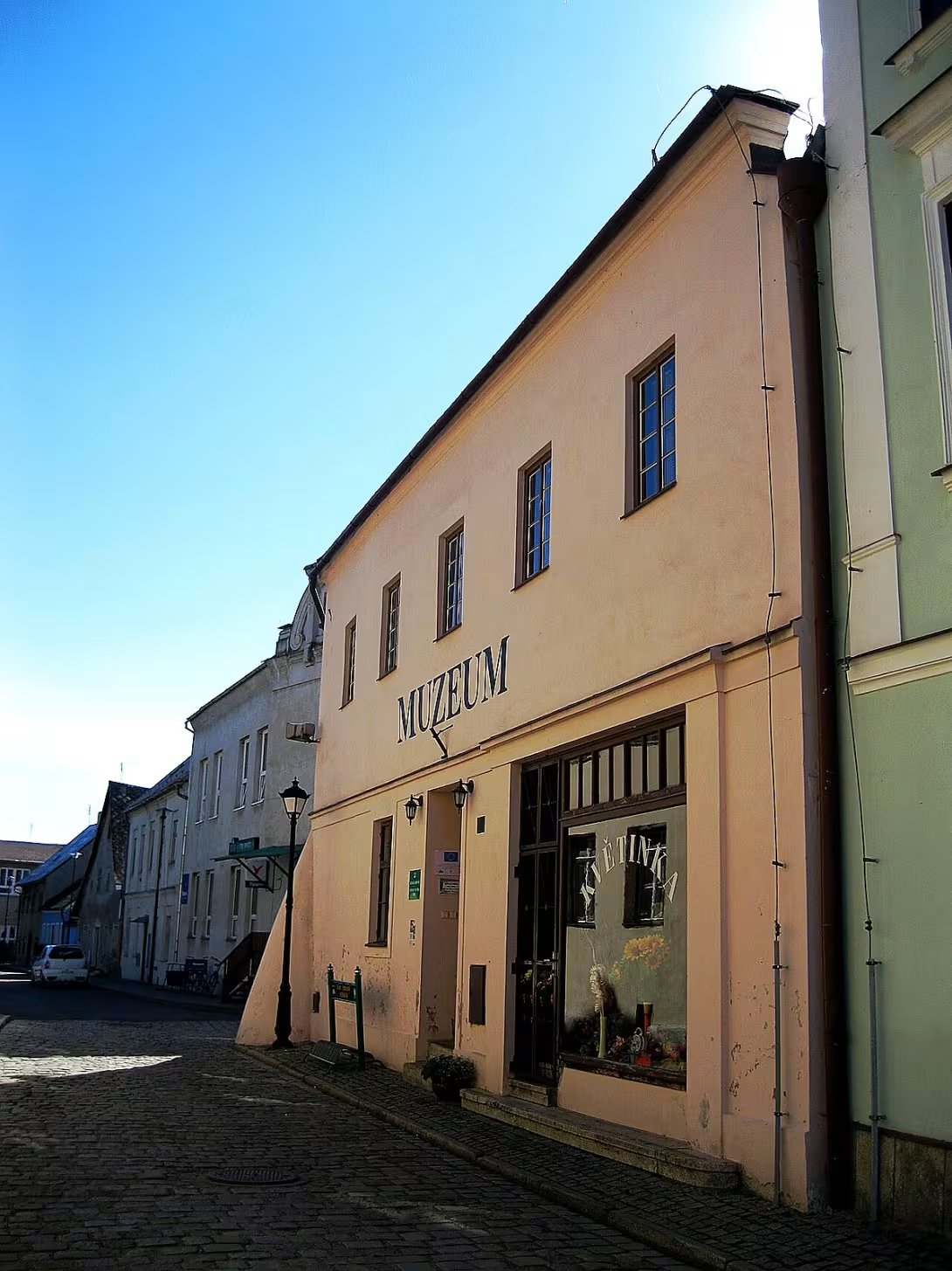
Town House No. 12 in Sokolská street in Vidnava (district Jeseník) is a demanding one-storey building which serves as a museum with an exposition of the settlement of Vidnavska. This cultural monument of the Czech Republic is part of the town monument zone. It represents an important object whose history ranges from the medieval core of the city to the current use as a cultural and social space.
The building grew on the medieval core of the city. Its development took place in several stages: the original Renaissance house was modified into a Baroque style and rebuilt in the middle of the 19th century into the present form. The form of the construction was influenced by events such as the 30-year war or fires in 1574 and 1713, which led to reconstruction into the style of the Dolnosley Baroque.
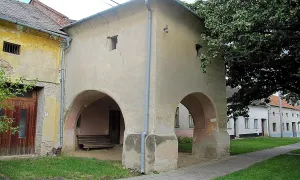
Architecturally, it is a demanding one-storey brick building with five axes, covered with a valb roof and a preserved mazhaus. The facade is equipped with smooth plaster, divided by a cordon ledge and ended with a main ledge. In the ground floor axis there is a rectangular entrance with a four-stage stone staircase and empirical door filler. On the left, there is one right-angled window, on the right, a right-angled window. The inner spaces of the ground floor are characterised by arches: the entrance corridor has a valened arch with lunettes, the entrance to the yard consists of a rolling segment arch, the right part has two arches covered with arches and the left part has a segment arch. The upstairs rooms have flat ceilings. The side facade of the object is four-axis.
The fate of the building affected several major events. In 1979, the ongoing reconstruction was interrupted by a fire. The building was subsequently statically secured in 1994 and in 1999 it underwent construction work, within which the House of Partnership was established. On 20 April 2002, the Vidnavska settlement museum was opened, the exhibition of which was originally located in Vidnav Castle.
Currently the building after general repair serves for various purposes. There is a museum, city library, social hall, club rooms and florist. The museum exhibition focuses on history, geomorphology and zoology, contains a unique example of black medieval cuisine and represents important personalities from Vidnava and its surroundings.
The building is an important point of the urban monument zone and offers insight into the history of the region. It is an ideal place for knowing local history and unique exhibitions.
Historical milestones
- 1979
- Discontinuation of reconstruction due to fire
- 1994
- Static building security
- 1999
- Construction work for the House of Partnership
- 2002
- Opening of the Vidnavska settlement museum
Architectural development
The original Renaissance house was modified into a baroque style and in the middle of the 19th century it was rebuilt to its present form. The building is covered by a wall roof and has cross and segment vaults on the ground floor. The passage to the yard is formed by a rolling segment vault.
Historical events
In 1979, the reconstruction of the house was interrupted due to a fire. In 1994 the object was statically secured. The Vidnavska settlement museum was opened in the house on 20 April 2002.
Points of interest
- The building grew on the medieval core of the city and its development included reconstructions from Renaissance style to Baroque style. - The fires in 1574 and 1713 led to the conversion of the building into the style of the Dolnosley Baroque. - Architecturally, it is a demanding single-storey object with preserved mazhaus and valb roof. - In 1979, the building was interrupted by fire. - Museum exhibition contains a unique example of black medieval cuisine.
Guide
Show guide text
This text was created by artificial intelligence and has not been editorially reviewed. It may contain inaccuracies.
Welcome to Vidnava. You're standing in front of one of the most important building units in this town, in front of the Town House, bearing the number of the description 12. Feel the atmosphere of peace and history that radiates from these walls. In front of you is a demanding, single-storey brick building, which is much more than just a simple house. He is a living witness for centuries who has endured fires, reconstructions and times of great change. Feel the weight of history that touches your eyes while you stop at the heart of this historic space.
Looking at this object, it must be realised that its foundations do not only go back to the recent past, but are firmly anchored in the heart of the old city itself. This building grew directly on the medieval core of Vidnava, which means that every brick and every stone in its walls bears the legacy of the oldest years of this place. The history of this house is not linear, it's more of a layering of different épolies that complement each other. Originally there was probably a Renaissance-style construction that formed the character of the city at the time. But the fateful events that have hit Vidnava in the past have fundamentally changed the face of this place.
Pay attention now to the history that was written by fire. In fifteen hundred seventy-four years and then in seven hundred thirteen years, the city was struck by devastating fires. These tragic events, although they were a test for the people back then, led to fascinating developments. Instead of simply repairing the building in its original form, it was rebuilt in the style of the Dolnosley Baroque. It is thanks to these acquisitions that the construction has acquired its current, balanced character, which you see today. It is a fascinating process of how destruction creates new beauty and how architecture adapts to the needs and tastes of every new time.
Now take a closer look at the architecture of the object itself. Although at first sight it may seem like a quiet and undemanding one-storey construction, its construction is actually very demanding. Notice how the building is integrated into the urban environment. One of the most important and rare elements you can see here is the preserved mazhauz. This distinctive architectural element, typical of certain areas, forms the inner core and determines the way in which space in the house is organized. It's like the heartbeat of an entire building connecting different parts of the house.
Also look at the roof of the building. You see that valb roof that gives the whole of it its traditional and stable appearance. The whole building shows features of baroque modifications that are mixed with later changes. This blend of styles is not a mistake, but it is proof of continuity. The building is not an established museum of architecture, but an organism that evolved along with the city. Its walled construction is robust and permanent, which is also evident from the fact that the building managed to resist all the storms of history.
But the history of this house does not end in the eighteenth century. Even in the modern era, the construction had to face severe trials. In the year one thousand nine hundred seventy-nine, a tragic event occurred when the fire interrupted the ongoing reconstruction. That was the moment when the fate of the Town House seemed to change irreversibly. But the era of recovery and care followed. In the year one thousand nine hundred ninety-four the necessary static securing work was carried out to save the very existence of the building. Later, in the year one thousand nine hundred ninety-nine, the construction went through another construction adjustment, when it became the House of Partnership, which shows its growing social importance.
Today, you are standing in front of a building that has once again found its meaning and its mission. Since the year two thousand and two, when the Vidnavska settlement museum was opened, this building serves as a cultural and social centre. It's not just a museum, it's also a library and a place to meet people. It's a place where history meets the present. As part of the urban monument zone and as a registered cultural monument of the Czech Republic, this house bears a great responsibility for preserving the memory of the people who lived here, worked and built this city.
You may now be told who was the exact architect of these reconstructions or what particular personalities lived in these walls. Although historical records of the names of the creators or specific residents remain unknown in this case, the very existence of the house tells us a story much greater than the names of individuals. It tells a story about the community, the resilience of the human spirit to the element of fire and the pursuit of beauty and tradition. This anonymity, in a sense, gives the place a mystery. We're not dealing with one name, we're dealing with an entire era, an entire layer of history that's formed here.
The interesting thing that can make you think deeper is the constant transformation. Imagine what this place looked like in the Middle Ages, what it looked like in Renaissance days and what it looked like in the Baroque era. Every generation of Vidnavs put a piece of themselves, their aesthetics and their needs in this house. So the building isn't just a bunch of walls, it's a mirror of time. It's fascinating that even after all the fires and reconstructions, it still stands here and teaches us how something permanent and valuable can be born from debris.
Now I want to invite you to further explore. The city house is not just an object to observe from the outside, its real treasure is found inside. I recommend you enter the interior of the museum, where you can get to know more about the settlement of the whole Vidnavska and touch the history you just perceived from the outside. Look at the library, feel the calm of these spaces and let yourself be carried away by the stories that are kept here.
Thank you for stopping by and paying attention to this place. We hope this view of the Town House has helped you better understand the soul of Vidnava. We wish you a pleasant rest of the tour and many other experiences while exploring the beauty of this city. Go ahead, history is waiting for you.
Tips for visitors
For the best experience we recommend a visit during the day when you can fully appreciate the architecture of a single-storey brick building and its unique mazhaus. The building stands on the medieval heart of the city, which gives the place a special historical atmosphere.
The monument is available by car and public transport; check the current connection and parking possibilities in the Vidnava centre in the internet search engine.
Don't forget to bring your photographic machine. The best light to capture the facade and interior details is in the morning or late afternoon. Focus mainly on the details of the wall structure and historical elements.
During our stay in the area we recommend to visit the church of St. Francis of Assisi, a new town hall, a gymnasium and take a walk through the entire town monument zone Vidnava.
For families with children, a visit is a great opportunity to familiarize themselves with the history of housing in urban houses and to understand what the medieval core of the city looked like in practice.
Businesses nearby
Do you run a restaurant, accommodation, shop, museum, rental, wellness or other visitor service near this monument? Show yourself directly to the people heading to it — this is how they will see you in the app and on the web:
Nearby
Church of St. Francis of Assisi, new Town Hall, Grammar School and City Monument Zone Vidnava.
Accommodation nearby
Themed route
1. City Monument Zone Vidnava: Historical Territory. This area offers visitors a unique view of the architecture and atmosphere of the historical core. 2. Church of St. Francis of Assisi: sacral monument. The building represents an important religious and aesthetic point within the area. 3. New Town Hall: Public Building. This building is an important architectural element in the urban development. 4. Gymnasium: educational institutions. It represents an important part of the local environment. 5. Městský dům - muzeum: museum. The main destination of the trip, which offers a tour of historical exhibitions.
Seasonal recommendations
In spring, the museum is surrounded by awakening nature and fresh air. The city of Vidnava in the new green robe makes the natural light in the premises pleasant. We recommend wearing more layers of clothing because the weather is variable. The best time to visit is working days when the premises are quieter.
The summer season brings an intense sun and a hot atmosphere that makes the interior of the house a pleasant cold shelter. The surrounding area of the monument is in full bloom and the streets are dominated by live activity. Due to the high season and larger groups of visitors, it is advisable to come in the morning. Choose light, breathable materials to feel comfortable in the heat.
Autumn is characterized by golden leaves and melancholy mood, which matches the historical character of the building. The lighting is softer in this period and creates a cozy feeling in the interior. It is practical to wear moisture resistant shoes and visit in the afternoon, when autumn sun falls beautifully on the facade.
In winter, there is a quiet and quiet environment in the museum that contrasts with the freezing air outside. Short days and a specific winter light make the memory mysterious, especially in advent time. Don't forget to wear very warm clothes and we recommend to check in advance the shortened opening times that are common during this period.
Visualizations and artistic views

The visualisations are generated by artificial intelligence and serve as inspiration.
Photos from the area
Real photos taken near the monument


Zdroj a licence jsou uvedeny u každého snímku.
Tips from visitors
No tips yet. Be the first!
Log in and add your tip.
Sources and literature
Fotografie: Lehotsky / CC BY-SA 3.0 — Wikimedia Commons. The author and licence also appear when you hover over the image.
Faktickým podkladem tohoto textu byl článek na Wikipedii, jehož autory jsou přispěvatelé Wikipedie. Článek je dostupný pod licencí CC BY-SA 4.0.
Location on the map
Příběhy a pověsti
Legendy, pověsti a příběhy spjaté s touto památkou
Fotografie návštěvníků
Zatím žádné fotografie. Buďte první, kdo přidá fotografii z návštěvy!
Přihlaste se a přidejte svou fotografii nebo hodnoťte.
Za ověřenou návštěvu v aplikaci získáte víc bodů — poznáme podle GPS, že jste na místě.
Reviews and comments