



Metujská Street
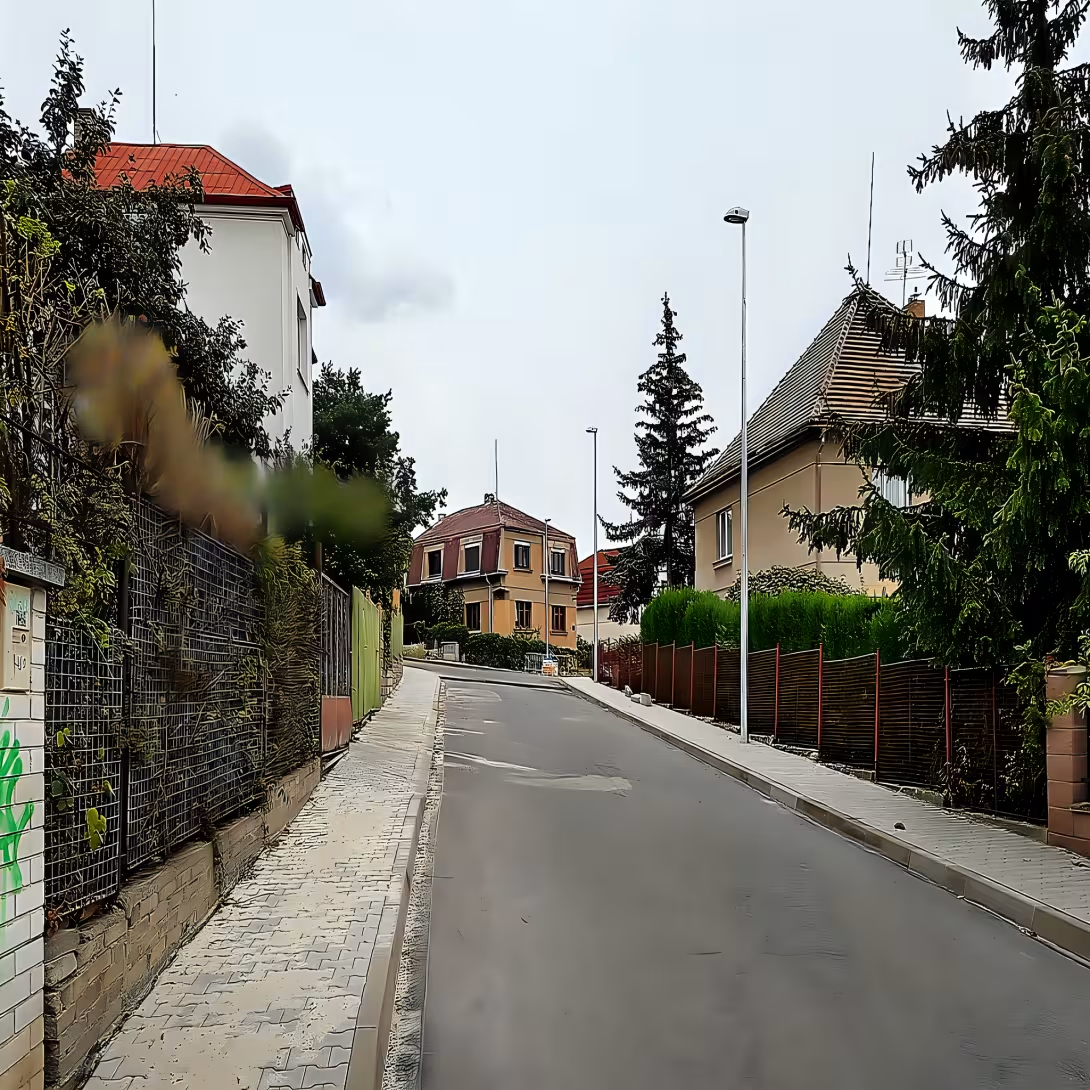
Metujská is a street in Prague 14, extending across the border between the local parts of Kyje and Zlubětín. Starts on Talinskaya Street and leads slightly to the north where it has its blind end; further it is possible to continue to the street Slívacská only on foot. The largest part of the street is located in the cadastral area of Kyj, only the west side of the short part of the north of Húrská street belongs to Zlubětín. The streets of Húrská and Hejtmanská, the mouth of Vranovská, intersect it gradually after their length, and also the glassware, Želovská and Černická intersect it. There is a ban on the entry of motor vehicles between the streets of Želivská and Černická. The street leads to the so-called Kyiv on the slope of Lehovka, with a height range of approximately 255 to 220 metres above sea level.
The street has a recent history. Until 1968, when Kyje was connected to Prague, she was called Consumé, probably according to the word "consum." In the year of connection it was renamed Metujská according to the River Metuje, which flows in northeastern Bohemia as a left-hand tributary of Laba near Jaroměř. This option ranks among the whole group of streets in the east of Zhlubětín and neighboring Kyj, which bear a name referring to the water - rivers and ponds. This includes Rohovská, Oborská, Krylovecká or Kardašovská.
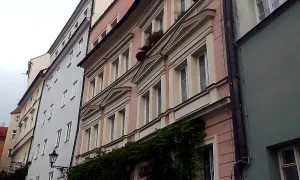
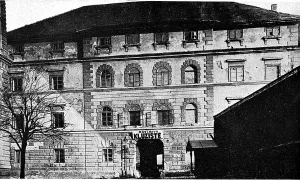
The building of the street consists primarily of one-storey family houses and villas with gardens, typical of this residential location. The exception is the deep section, where there is a larger apartment building at the address Slévacská 752 / 36. It was rebuilt in the early 21st century; originally it was a house of services with self-service, restaurants, health center, cultural rooms and communal services, built primarily for residents of the nearby Líhovec estate. This house is characterized by an unusual location - it is partly above the road of the street Slévacská. The Metu 907 is based on the property management Praha 14, a joint stock company established in 1997 by the city to manage its residential and non-residential property. The street is also known for the existence of an object called the House of Halfway.
Historical milestones
- 1968
- Connection of Kyja to Prague and renaming of Consumé Street to Metujská
- around 1980
- Construction of the Líhovec settlement and related service house
- 1997
- Establishment of a joint stock company Property Management Praha 14
- around 2000
- Reconstruction of the apartment house at Slévacská address 752 / 36
Architectural development
The building consists mainly of family houses. At the beginning of the 21st century, the original house of services with self-service and restaurants was rebuilt into a larger apartment house in the deep section.
Historical events
1968: Connection of Kyja to Prague and subsequent renaming of the street from Consumé to Metujská.
Points of interest
- By 1968, the street was called Consumé, probably by trade. After that, it was renamed the Metai River. - The streets belong to a group of streets that bear names referring to rivers and ponds. - The apartment house at the address Slevačská 752 / 36 is partially above the road. Originally there were restaurants and health centres. - The street is known for the existence of an object called House Halfway.
Guide
This guide is narrated by a synthetic voice generated by artificial intelligence.
Show guide text
This text was created by artificial intelligence and has not been editorially reviewed. It may contain inaccuracies.
Metujská is a street in Kyje and Hloubětín in Prague 14. It begins on Tálinská and runs gently in an S-curve toward the north. At the end it is a dead end, further to Slévačská you can only go on foot. Along the way it is intersected from the north by the streets Hůrská and Hejtmanská, then Vranovská flows into it and further on it is crossed by Sklenská, Желivská and Černičná. Between Želivská and Černičná there is a ban on entry for motor vehicles.
The street descends along a slope from Lehovec toward Kyjský pond, roughly from 255 to 220 meters above sea level. The larger part lies in the cadastral territory of Kyje. Only the western side of a short section north of Hůrská belongs to Hloubětín. According to a map from the Prague geoportal, however, the street already ends at Hůrská, in which case it would not extend into Hloubětín at all.
Until 1968, when Kyje was annexed to Prague, the street was called Konsumní, probably after the local consumer cooperative, that is, a shop. After that it received its name from the Metuje River, a left-bank tributary of the Elbe near Jaroměř in northeastern Bohemia. It thus belongs to a large group of streets in eastern Hloubětín and in neighboring Kyje, whose names recall rivers and ponds. The same origin applies to streets such as Rochovská, Oborská, Krylovecká and Kardašovská.
The buildings are mainly single-story family houses and villas with gardens. An exception is the Hloubětín section with a larger apartment building, which has an address on Slévačská street. In the early 21st century it was created by converting a former service building. It served mainly the residents of the Lehovec housing estate and housed a self-service shop, a restaurant, a health center, a cultural room and municipal services. The building partially stands unusually directly above the roadway of Slévačská street.
In house number 907 is the seat of the joint-stock company Správa majetku Praha 14. The municipal district founded it in 1997 to manage its apartments and non-residential spaces. At the same address is also Dům na půli cesty.
Tips for visitors
The best time to visit is the late spring or autumn, when the landscape on the slope of the Lyssover is the most beautiful. For photography I recommend the time shortly before sunset, which best brings out the architecture of villas and family houses.
Take a walk with comfortable shoes because the terrain is hilly. For families with children it is ideal to observe different types of gardens and villas within a short walk together.
In the area within 30 minutes we recommend visiting the Líhovec settlement or taking a walk through the city parts of Kyje and Šlubětín, which form the natural end of the journey.
Frequently asked questions
Can the monument be visited?
This is a structure in a public space that can usually be seen from outside free of charge. We have not verified that this particular one is freely accessible.
Where is the monument?
Location: Praha, Hlavní město Praha. The map on this page shows the exact spot.
For kids
Imagine going back to when Praha was still young and Kyja and Dumbledore were a small village. Metujská was not the street we know today. It was a narrow road connecting two villages.
Who lived here? A man could meet a farmer who sold fresh fruit and vegetables or a merchant who broke wood for building houses. The villagers met in the market where the goods and services were exchanged.
Businesses nearby
Do you run a restaurant, accommodation, shop, museum, rental, wellness or other visitor service near this monument? Show yourself directly to the people heading to it — this is how they will see you in the app and on the web:
Events nearby

Zdroj akcí: otevřená data měst a obcí ČR (Národní katalog otevřených dat) a kalendář akcí Národního památkového ústavu.
Nearby
Ulice se nachází na svahu Lehovce v blízkosti sídliště Lehovec a v okolí městských částí Kyje a Hloubětín.
Accommodation nearby
Trips and activities nearby
Guided tours, tickets and activities nearby from GetYourGuide
Affiliate link: if you buy from the partner, we may receive a commission. The price for you does not change.
Search tours and activities →Themed route
Thematic cruise route: Metujská and surroundings
1.Metujská - Type: Historical landmark - Why is worth visiting: This monument is a unique example of an ancient cemetery that offers a view of the history and tradition of the area. It is a place where you can enjoy quiet moments while learning about the past of this part of Prague.
2. Leftover Manor - Type: Urban settlement - Why it is worth a visit: Líhovec is famous for its architecture and history. Visit this place to explore the modern environment near the older monuments and see how the residential districts in Prague changed.
3. Streets on the slope of the Lehovka - Type: City street - Why is it worth a visit: Walk on this street offers views of the urban landscape and allows you to enjoy a quiet moment in a pleasant environment. It is an ideal place for short walks or relaxation.
4. Kye - Type: City section - Why is it worth a visit: Kyje is famous for its history and cultural heritage. Visit this place to see local architecture and learn more about the history of this part of Prague.
5. Depth - Type: City section - Why is it worth a visit: Deputin offers views of the urban environment and is famous for its history. Visit this place to see local architecture and learn more about the past of this part of Prague.
This route will guide you through historical and modern parts of the area, offering diverse views of the urban landscape and its heritage.
Seasonal recommendations
Spring in Metuji brings the awakening of nature and soft, scattered light, which highlights architectural details of historical buildings. The parks are gradually opened around the monuments, where willow and cherry trees bloom, creating a romantic and calm atmosphere. This period is ideal for visitors thanks to mild temperatures that allow comfortable walks without problems with heat or freeze. We recommend wearing layered clothes because spring weather can be variable and there can be sudden rain. The best time to visit is the morning hours when the surrounding area is less disturbed and the light is the most advantageous for the photo shoot. Avoid weekends when the first families with children and tourist groups are starting to pile up looking for escape from the city.
Summer offers the longest days and bright, sharp light that fully reveals the colors of facades and surrounding greenery. The atmosphere is lively and full of energy, as cultural events and music performances often take place in the surroundings. The main summer season brings higher attendance, which is why it is crucial to come as soon as possible in the morning, ideally before 9:00, to avoid the biggest crowds and noise. Clothes should be light and breathable, suitable for higher temperatures, and sun protection is essential, i.e. a hat and sunglasses. If you are planning a longer stay outside, take with you enough drinking mode and look for shady places near the monument where you can take a break.
Autumn brings a dramatic change of colors, when the surrounding trees turn leaves into golden and red shades, creating a wonderful contrast to historical architecture. Light is lower and warmer, which gives the whole environment an intimate and nostalgic touch. The temperatures are dropping, so it is necessary to put on a warm sweater, jacket and possibly a scarf to make your walk uncomfortable. Autumn days are shorter, therefore it is advisable to visit the memory in the afternoon, when the light is the most pronounced and the temperature still tolerable. The crowds are significantly smaller in this period than in the summer, which allows for calmer admiration of details and better access to individual parts of the complex without waiting.
Winter brings a quiet, often snowy atmosphere that wraps historical monuments into a quiet and special character. The white surface of the earth and trees highlights the contours of the buildings and creates photographically attractive scenes. Short days and low temperatures require robust winter clothes, including warm shoes, gloves and hats to keep the visit comfortable. The best time to visit is late morning, when the sun is still above the horizon and the opening times of most cultural institutions are shortened in winter, so it is good to check the current operating times in advance. Winter season is ideal for those who prefer privacy and want to explore the memory without disturbing effects of mass tourism, while evening lighting of buildings can give the place a magical character.
Visualizations and artistic views


The visualisations are generated by artificial intelligence and serve as inspiration.
Photos from the area
Real photos taken near the monument


Zdroj a licence jsou uvedeny u každého snímku.
Atmosphere of the place
This atmospheric visualisation of the place and period was generated by artificial intelligence. It is not real footage of the location.
Tips from visitors
No tips yet. Be the first!
Log in and add your tip.
Sources and literature
Photos: Pavel Hrdlička (Czech Wikipedia user Packa) / CC BY-SA 4.0, rozlišení zvýšeno umělou inteligencí — Wikimedia Commons. The author and licence also appear when you hover over the image.
Faktickým podkladem tohoto textu byl článek na Wikipedii, jehož autory jsou přispěvatelé Wikipedie. Článek je dostupný pod licencí CC BY-SA 4.0.
Location on the map
Příběhy a pověsti
Legendy, pověsti a příběhy spjaté s touto památkou

Fotografie návštěvníků
Zatím žádné fotografie. Buďte první, kdo přidá fotografii z návštěvy!
Log in a přidejte svou fotografii nebo hodnoťte.
Za ověřenou návštěvu v aplikaci získáte víc bodů — poznáme podle GPS, že jste na místě.
Reviews and comments