



Míčovna House
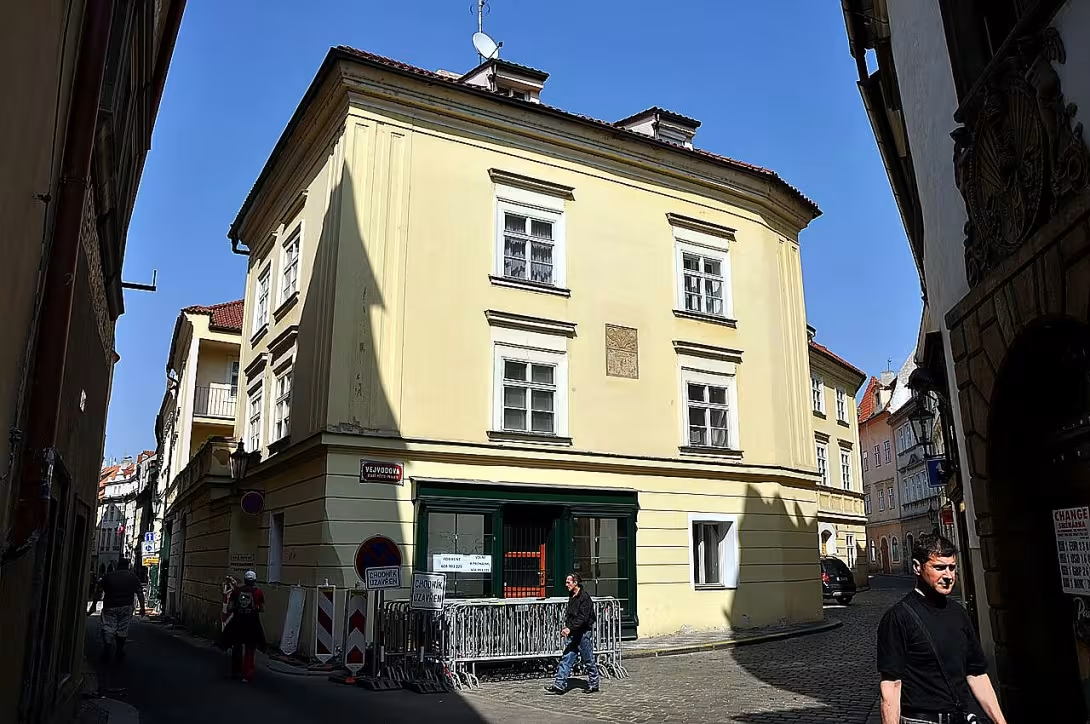
The Old Town Míčovna, also known as the Bálové House or U Štorky, is a unique cultural monument in the heart of Prague's Old Town. It is located on the corner of the streets of Vejvoda and Jilská, which makes it an easy destination for visitors interested in the history of Prague. This house is remarkable not only by its long history dating back to the beginning of the 13th century, but also by its rich architectural transformation, which has made it a unique example of romantic and later baroque and classical elements.
The original construction of Máčovna dates back to the beginning of the 13th century when it was built in Romanesque style. The ground floor of today's house is originally Romanesque and parts of this masonry are also in the upper floors, suggesting its historical roots. During the Middle Ages another house was connected to the house on Jilska Street, thus expanding its original structure.
The first mention of ownership of the Ball House dates back to 1428 when Beneš z Vhonic bought it. Subsequently, in 1487, his descendant Beneš Beneda sold it to the bookprinter Matìj Rejsek. This transfer of ownership points to the importance of the house within the local community and its position among the prominent personalities of that time.
In the 16th century the house was modified twice, reflecting changes in aesthetic preferences and needs of the population. In 1675 Míčovna became the center of ball games when Václav Ringolin bought it and had it rebuilt into baroque style. This transformation was so pronounced that on the facade headed to Vejvoda Street there is a relief with rockets and balls that shows the importance of ball games during this period.
In 1769-1774 there was another significant change when the house was raised by a floor. This late Baroque reconstruction contributed to his present appearance. In 1868 there was a classical reconstruction of the facades, which gave Máèovín its present form.
Today the Old Town Míčovna is protected as a cultural monument and represents not only architectural value, but also a testimony about the history of ball games in Prague. Its rich history and transformations from a Romanesque house to a baroque ball house make Ball House a fascinating place to visit.
The visit to Old Town Máčovna offers a unique view of the past of Prague, where various historical periods and architectural styles intersect. It is a reminder not only of the importance of ball games in the cultural life of the city, but also of the changes that houses like this have been subject to over the centuries. For historically interested and tourists, Míčovna offers not only beautiful vision, but also an opportunity for a deeper understanding of Prague's heritage.
Then and now
Drag the slider to compare how the landmark may have looked when it was built with the view today.
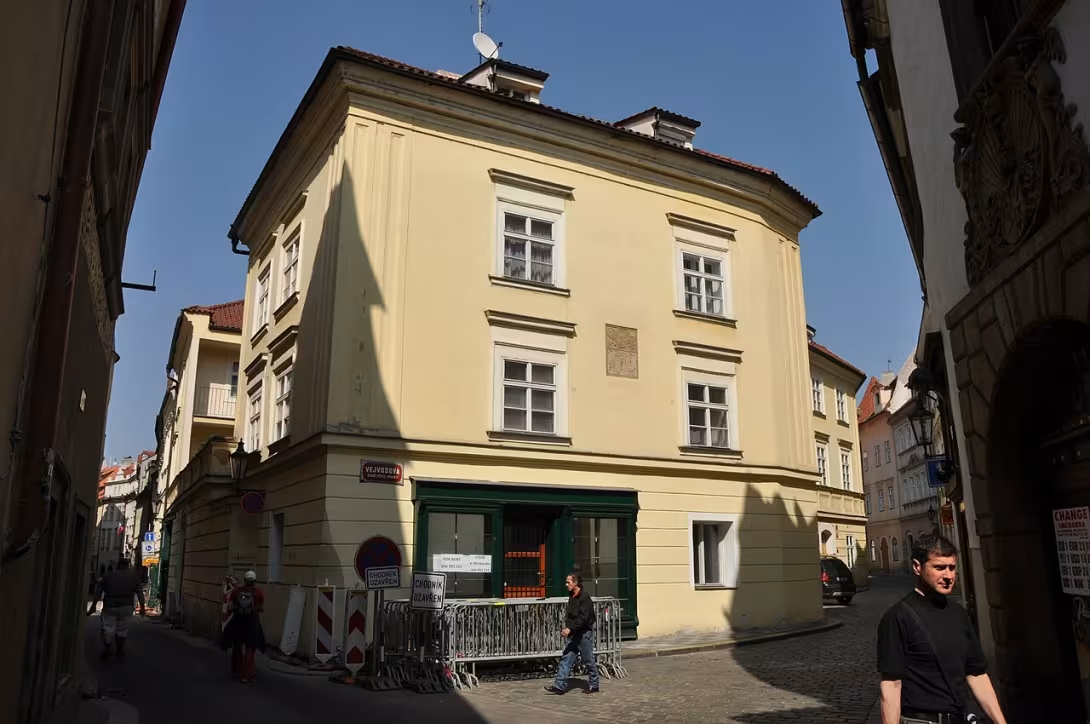

The historical appearance on the left is an AI-generated visualisation and serves as inspiration only.
Historical milestones
- 1428
- Buying the House of Beneš from Vhonic
- 1487
- Sale of the house to Matìj Rejsek
- 1675
- Baroque rebuilding to ball house
- 1868
- The emergence of today's classical facades
Architectural development
The original Romanesque wall dates back to the beginning of the 13th century. In the 17th century, the Baroque rebuilding took place in the ballroom and in the period 1769-1774 the building was increased by a floor. The present facades are late classicist from 1868.
Historical events
In 1428 he bought the house Beneš z Vhonic, in 1487 Beneš Beneda sold it to Matìj Rejsek and in 1675 Václav Ringolin had the house rebuilt into a ballpoint.
Owners
Abbot of the Opatovice monastery, Beneš z Vhonic (1428), Beneš Beneda, Matěj Rejsek (1487), Václav Ringolin (1675).
Points of interest
- The Old Town Míčovna is also known as the Bálové House or U Štorky. - It is located on the corner of the streets of Vejvov and Jilska in Prague's Old Town. - The original building dates back to the beginning of the 13th century, with Romanesque elements even in higher floors. - In 1675 it became the center of ball games and was rebuilt into Baroque style. - Protected as a cultural monument, it represents the architectural value and history of ball games in Prague.
Guide
Show guide text
This text was created by artificial intelligence and has not been editorially reviewed. It may contain inaccuracies.
Welcome to Old Town Ball House, one of the oldest and most famous monuments in the heart of Prague's Old Town. You're standing in front of a historic house that tells stories of the past century. Note the elegant architecture of the classical facades which boast on the corner of the streets of Vejvoda and Jilsky. This house is full of history, and it will interest you with its rich past.
Let's dive into its beginnings. The original building dates back to the beginning of the 13th century when its foundations were laid in Romanesque style. In 1428 the house became the property of Beneš of Vhonic, the first known owner. Subsequently, in 1487, he went into the hands of Matìj Rejska, who is famous for his architectural achievements. This building has undergone many changes, but its history became even more interesting in 1675 when it was converted into a ball game and became the center of the ball games. There was another change in 1868 when the facades were modified in the style of classicism.
Look up and notice the details of the facade that tells the story of his transformations. Although particular architects are not known, their work stands as a testament to the rich history of this place. It is a combination of Romanesque elements and baroque modifications that make it a unique monument.
Many interesting personalities are connected to this room. Beneš Beneda, known as Beneš z Vhonic, was one of the key workers in this territory. Matěj Rejsek and Václav Ringolin are other personalities whose stories intersect with the history of this place.
The interesting thing is that Old Town Míčovna also has names such as Bálové House or U Štorky. This name is based on ball games that took place here and became a popular form of entertainment in the past.
Now that you've seen this historical monument, we'll invite you to explore the Old Town again. There are many other beautiful and interesting places waiting to be discovered. With God and I wish this guide helped you better understand the rich history of the Old Town Ball House.
Thank you for your visit and we hope you will return to explore this beautiful city.
Tips for visitors
The best time to visit the Old Town Ball House is an early spring or late autumn day, when fewer people and sunlight are especially refreshing historical architecture. This time of year is ideal for understanding the atmosphere of the Old Town.
You can search the current connection online.
When visiting to take shoes comfortable with you because Old Town Míčovna is a historic object and walking on stone streets can be challenging. Complete your trip with protective sunglasses and rain luggage if necessary.
For shooting Old Town Ball is the best times in the morning or in the evening when light is softer. The most beautiful views of the building are offered by Vejvodova and Jilská, where the sun is reflected in its historic facade.
In the vicinity of the Old Town Máčovna you can visit other attractions such as the Old Town Hall or Charles University. These places are ideal for expanding your knowledge of Prague's history and culture.
Frequently asked questions
Can the monument be visited?
This is a residential or farm building, not a museum with opening hours. Please view it from public space and respect the owners' privacy. We have no information about access to the interior.
Where is the monument?
Location: Praha 1, Hlavní město Praha. The map on this page shows the exact spot.
Why is the monument protected?
It is listed in the Central List of Cultural Monuments of the Czech Republic as a cultural monument (register no. 1000150505).
Businesses nearby
Do you run a restaurant, accommodation, shop, museum, rental, wellness or other visitor service near this monument? Show yourself directly to the people heading to it — this is how they will see you in the app and on the web:
Events nearby

Zdroj akcí: otevřená data měst a obcí ČR (Národní katalog otevřených dat) a kalendář akcí Národního památkového ústavu.
Nearby
Staré Město v Praze, ulice Vejvodova a Jilská.
Accommodation nearby
Trips and activities nearby
Guided tours, tickets and activities nearby from GetYourGuide
Affiliate link: if you buy from the partner, we may receive a commission. The price for you does not change.
Search tours and activities →Themed route
1. Old Town in Prague, district: Start your trip in this historic area. It's a place full of ancient details. 2nd street of Vejvodov, street: Walk down this aisle. It offers a beautiful view of the surrounding buildings. 3. Jilska, street: This road will lead you to the main point. You'll pass through narrow space. 4. Míčovna, landmark: The main destination of your route. This building is the main point of the trip.
Seasonal recommendations
Spring: Light is soft and soft in this period, which beautifully highlights the details of historical architecture. The trees are beginning to bloom in the area, which gives the place a fresh and encouraging touch. It is advisable to take light layers of clothing because the morning temperatures may still be cold. Visit the place rather in the morning, when there is still relative calm and tourists is less than in later months.
Summer: The sun shines the strongest and the inner space can be very bright and bright thanks to intense heat. In the main summer season there are the most people in the centre of Prague, which is why I recommend that you come right after opening to avoid the biggest crowds. Dress lightly and comfortably, but don't forget to protect yourself from heat. It is ideal to visit the memory early in the morning or late in the afternoon when the air is more pleasant.
Autumn: The atmosphere is quiet and a little melancholic, which is perfectly complemented with golden light falling on historical facades. Leaves on trees change colors and create beautiful sets for walks around. The weather becomes variable and often rainy, so it is reasonable to carry a coat or scarf. It's an ideal time for those who are looking for a quieter experience without a great rush.
Winter: Days are short and natural light is weak, which creates a cozy and mysterious mood in the interior. Advent time can be busier in the area, but generally there are fewer visitors in this period than in summer. Because of the cold, it is recommended to wear warm and laminated clothing.
Visualizations and artistic views


The visualisations are generated by artificial intelligence and serve as inspiration.
Photos from the area
Real photos taken near the monument

Zdroj a licence jsou uvedeny u každého snímku.
Tips from visitors
No tips yet. Be the first!
Log in and add your tip.
Sources and literature
Photos: Ben Skála / CC BY-SA 3.0 — Wikimedia Commons. The author and licence also appear when you hover over the image.
Faktickým podkladem tohoto textu byl článek na Wikipedii, jehož autory jsou přispěvatelé Wikipedie. Článek je dostupný pod licencí CC BY-SA 4.0.
Location on the map
More monuments – Praha 1
Show all in the municipality

Příběhy a pověsti
Legendy, pověsti a příběhy spjaté s touto památkou
Fotografie návštěvníků
Zatím žádné fotografie. Buďte první, kdo přidá fotografii z návštěvy!
Log in a přidejte svou fotografii nebo hodnoťte.
Za ověřenou návštěvu v aplikaci získáte víc bodů — poznáme podle GPS, že jste na místě.
Reviews and comments