






Moravské divadlo Olomouc Theatre building
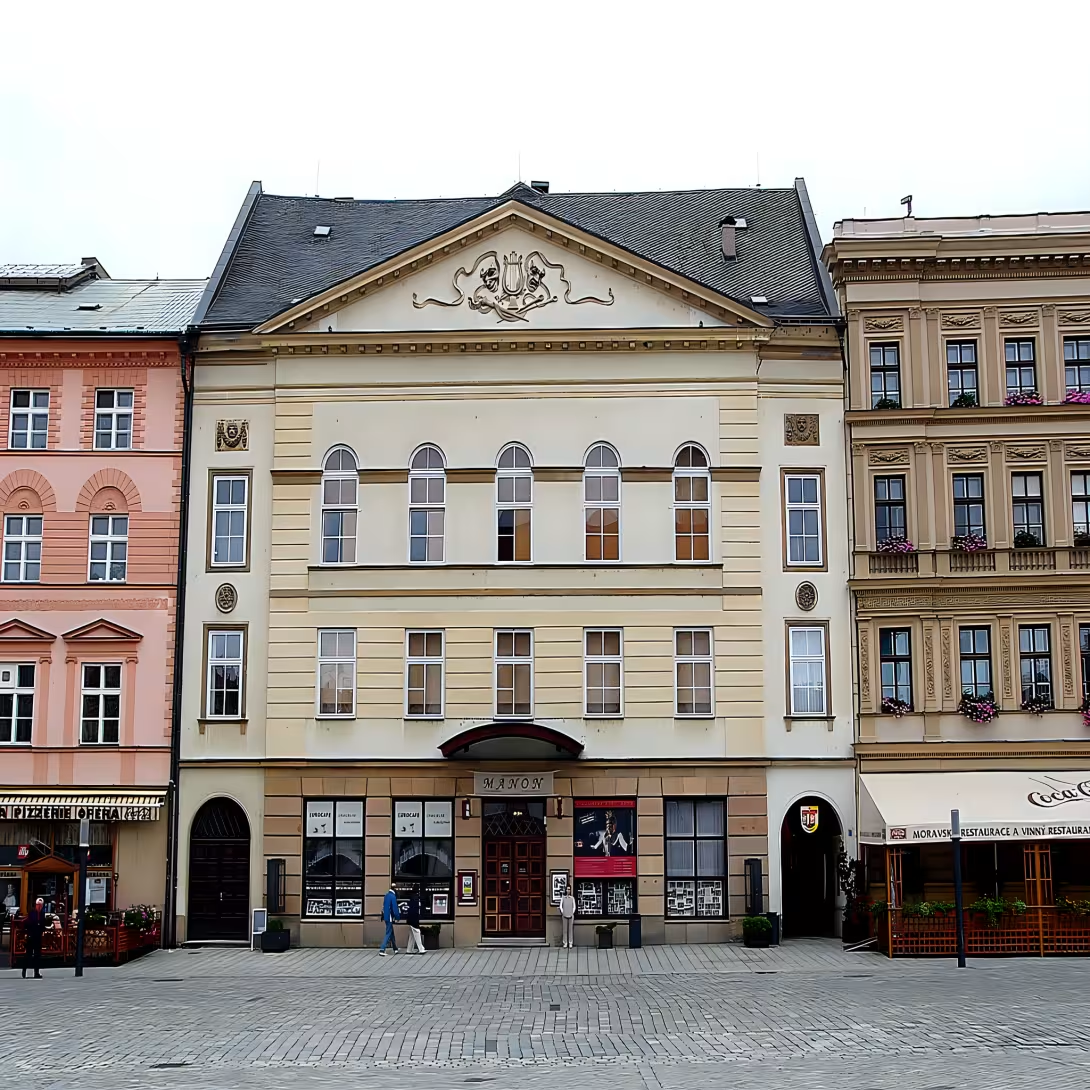
Moravské divadlo Olomouc is one of the oldest theater buildings in the Czech Republic, located at Horním náměstí in Olomouc. Designed by Viennese court architect Josef Kornhäusel and opened on October 3, 1830, it has been a significant cultural landmark since its inception. Initially serving a German-speaking audience due to local demographics, it became an important venue for Czech performances starting in 1920. The theater's history includes several renovations, notably between 1924-1929 and during World War II under Karl Fischer’s direction.
The origins of Moravské divadlo Olomouc date back to the early 19th century when it was built on a site previously occupied by municipal buildings. Designed in an Empire style with a neoclassical façade, the theater reflects the architectural trends and cultural influences of its time. Josef Kornhäusel's design is significant as one of the earliest examples of such architecture in Olomouc. Over the years, the theater has undergone substantial changes to meet evolving artistic needs and aesthetic preferences.
Architecturally, Moravské divadlo features a neoclassical façade that was simplified during renovations led by Karl Fischer between 1940 and 1941. These modifications removed much of the original figurative and decorative elements from its design at the turn of the 19th to the 20th century. The building's façade originally included busts of notable German cultural figures such as Schiller, Goethe, Mozart, and Wagner, symbolizing its initial role as a German institution.
Throughout its history, Moravské divadlo has experienced various administrative changes reflecting broader socio-political shifts in the region. Initially serving as a German theater due to Olomouc's demographic composition during the Austrian Empire era, it became an important venue for Czech performances after 1920 with the premiere of the opera 'Libuše'. This transition marked its evolution into a significant cultural institution within the Czech Republic.
Several key events and curiosities highlight the theater’s historical significance. The façade originally featured busts of German cultural figures, underscoring its initial identity as a German institution. A notable curiosity is the removal of a Moravian eagle sculpture during late 20th-century renovations, which was relocated to the lapidarium of the Vlastivědné muzeum Olomouc.
Today, Moravské divadlo continues to be an active cultural venue with three artistic ensembles: drama, opera, and ballet. It remains a testament to its historical legacy while adapting to contemporary artistic expressions. The theater's rich history and architectural evolution make it a must-visit destination for those interested in the cultural heritage of Olomouc.
Visitors can explore this historic site not only as a place of performance but also as an architectural landmark that has witnessed significant cultural transformations over nearly two centuries. Its enduring presence offers insight into the artistic and historical narratives that have shaped the region, inviting audiences to appreciate its legacy and ongoing contributions to Czech culture.
Then and now
Drag the slider to compare how the landmark may have looked when it was built with the view today.
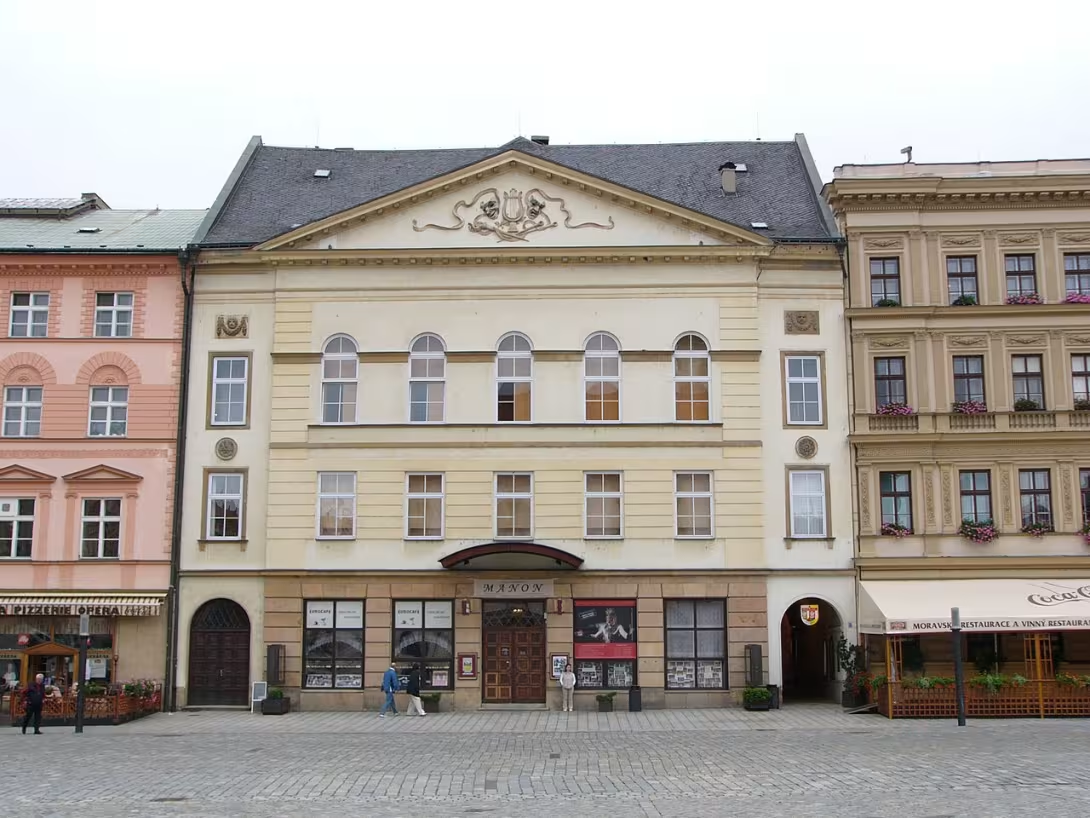

The historical appearance on the left is an AI-generated visualisation and serves as inspiration only.
Historical milestones
- 1830
- Otevření Moravského divadla Olomouc.
- 1920
- Zahájení českých vystoupení.
- 1924
- Počátek prvních významných rekonstrukcí.
- 1940
- Zjednodušení neoklasicistního fasády pod Karl Fischerem.
Architectural development
Moravské divadlo was designed in an Empire style with a neoclassical façade. The building underwent major renovations in the early 20th century, including a significant redesign by Karl Fischer between 1940 and 1941, which simplified its façade. These changes removed much of the figurative and decorative elements from the turn of the 19th to the 20th century.
Historical events
The theater was opened on October 3, 1830, by Josef Kornhäusel.
In 1920, it became a Czech institution with the premiere of the opera 'Libuše'.
Significant renovations occurred between 1924-1929 and during 1940-1941.
Points of interest
- The Moravské divadlo Olomouc was initially built on a site that previously housed municipal buildings, reflecting the urban development and architectural priorities of early 19th-century Olomouc.
- During renovations led by Karl Fischer between 1940 and 1941, much of the original figurative and decorative elements of the theater’s neoclassical façade were removed, simplifying its design to align with contemporary aesthetic preferences of that period.
- The removal of a Moravian eagle sculpture during late 20th-century renovations is a curious detail; this piece was relocated to the lapidarium of the Vlastivědné muzeum Olomouc, highlighting how historical artifacts can be preserved even as buildings undergo modernization.
- Originally featuring busts of German cultural figures like Schiller, Goethe, Mozart, and Wagner on its façade, the theater symbolized its role as a German institution, reflecting the linguistic and cultural demographics of Olomouc during the Austrian Empire era.
- The transition from serving primarily a German-speaking audience to becoming an important venue for Czech performances after 1920 was marked by significant events such as the premiere of the opera 'Libuše', illustrating the theater’s adaptation to broader socio-political changes in the region.
Guide
This guide is narrated by a synthetic voice generated by artificial intelligence.
Show guide text
This text was created by artificial intelligence and has not been editorially reviewed. It may contain inaccuracies.
Moravian Theatre in Olomouc has been a permanent Czech theatrical venue since 1920. Its building on Horní náměstí was built between 1828 and 1830 in the Empire style with a Classical façade, on the site of former townspeople's buildings. With a capacity of approximately 400 spectators, it ranks among the oldest theatre buildings in the Czech Republic. Since 1958 it has been a cultural monument.
Theatre has a long tradition in Olomouc. The first mention dates from 1479, when theatrical celebrations were held during the peace agreement between Vladislav Jagellonský and Mathias Corvinus. With the founding of the university in 1573, a school theatre was established with biblical and Jesuit themes. Visiting German and Italian companies brought pantomime, children's ballet, opera and puppet theatre. Later, so-called Hanác operas established themselves. The first of them was titled Pargamotheca.
The current building was designed by Viennese court architect Josef Kornhäusel and opened on October 3rd, 1830. In a city with a German majority, it was a purely German institution. After 1884, portraits of Schiller, Goethe, Mozart and Wagner appeared on the façade. Czech performances were rare. The first documented one is the play "Czech and German" by Jan Nepomuk Štěpánek from 1838. Czech theatre began more regularly from 1848 onwards, but in 1884 the city council banned Czech performances. The theatre opened as Czech on September 1st, 1920 with the opera Libuše. As early as 1831, a social hall called Reduta was established in the building, today the concert hall of the Moravian Philharmonic.
Between 1924 and 1929, an extensive extension of the rear wing with operational facilities was added. The reconstruction of 1940 to 1941 according to designs by Karel Fischer was essential. The façade then lost all figurative and decorative ornamentation from the turn of the 19th and 20th centuries. The simple façade is topped with a triangular gable featuring a sculpture by sculptor Vojtěch Hořínek, which depicts symbols of the theatre. Above the windows are terracotta friezes. The stone Moravian eagle above the entrance was removed in the nineteen-nineties and transferred to the lapidarium of the Vlastivědné Museum in Olomouc.
The theatre has three artistic companies: drama, opera with operetta, and ballet. Names such as Gustav Mahler, Beno Blachut, Nataša Gollová or Zora Rozsypalová are connected with its history. From January 2025, the theatre forms one organization together with the Moravian Philharmonic.
Tips for visitors
The best time to visit Moravské divadlo Olomouc is during the spring or fall when the weather is pleasant, and there are fewer crowds compared to summer. This period also coincides with various cultural events hosted at the theater, offering a vibrant atmosphere for visitors. Additionally, visiting in these seasons allows you to enjoy the surrounding historical architecture without the discomfort of extreme temperatures.
The area is well-served by buses and trams, making it convenient for visitors who prefer not to drive. Always check the latest transport options online before your visit to ensure a smooth journey.
When visiting Moravské divadlo Olomouc, bring comfortable walking shoes as you'll likely explore more of the area's historical sites on foot. A camera is also recommended to capture the stunning architecture and vibrant cultural scenes. Don't forget to check the weather forecast, so you can dress appropriately for your visit.
Photography enthusiasts will find several spots around Moravské divadlo ideal for capturing its architectural beauty. Early morning or late afternoon light provides a soft glow that enhances the building's features. The theater’s façade is best photographed from Horním náměstí, where you can also capture the surrounding historical buildings in your shots.
Within 30 minutes of Moravské divadlo, visitors can explore other cultural landmarks such as the concert hall of the Moravian Philharmonic. The area's rich history and architecture make it a fascinating destination for those interested in cultural heritage. These nearby sites offer additional context to the theater’s significance within Olomouc.
For families with children, visiting Moravské divadlo can be an educational experience. Many performances are suitable for young audiences, providing entertainment while introducing them to classical arts. The surrounding area also offers family-friendly cafes and parks where you can relax after your visit.
Frequently asked questions
Can the monument be visited?
Some buildings of this kind are open for guided tours, others serve another purpose or are privately owned. We have not verified whether and when this monument is open – please ask the operator.
What are the opening hours and admission?
We have not verified the opening hours or admission. Current information is published by the operator.
Where is the monument?
Location: Olomouc, Olomoucký kraj. The map on this page shows the exact spot.
Why is the monument protected?
It is listed in the Central List of Cultural Monuments of the Czech Republic as a cultural monument (register no. 1000123465).
Businesses nearby
Do you run a restaurant, accommodation, shop, museum, rental, wellness or other visitor service near this monument? Show yourself directly to the people heading to it — this is how they will see you in the app and on the web:
Events nearby
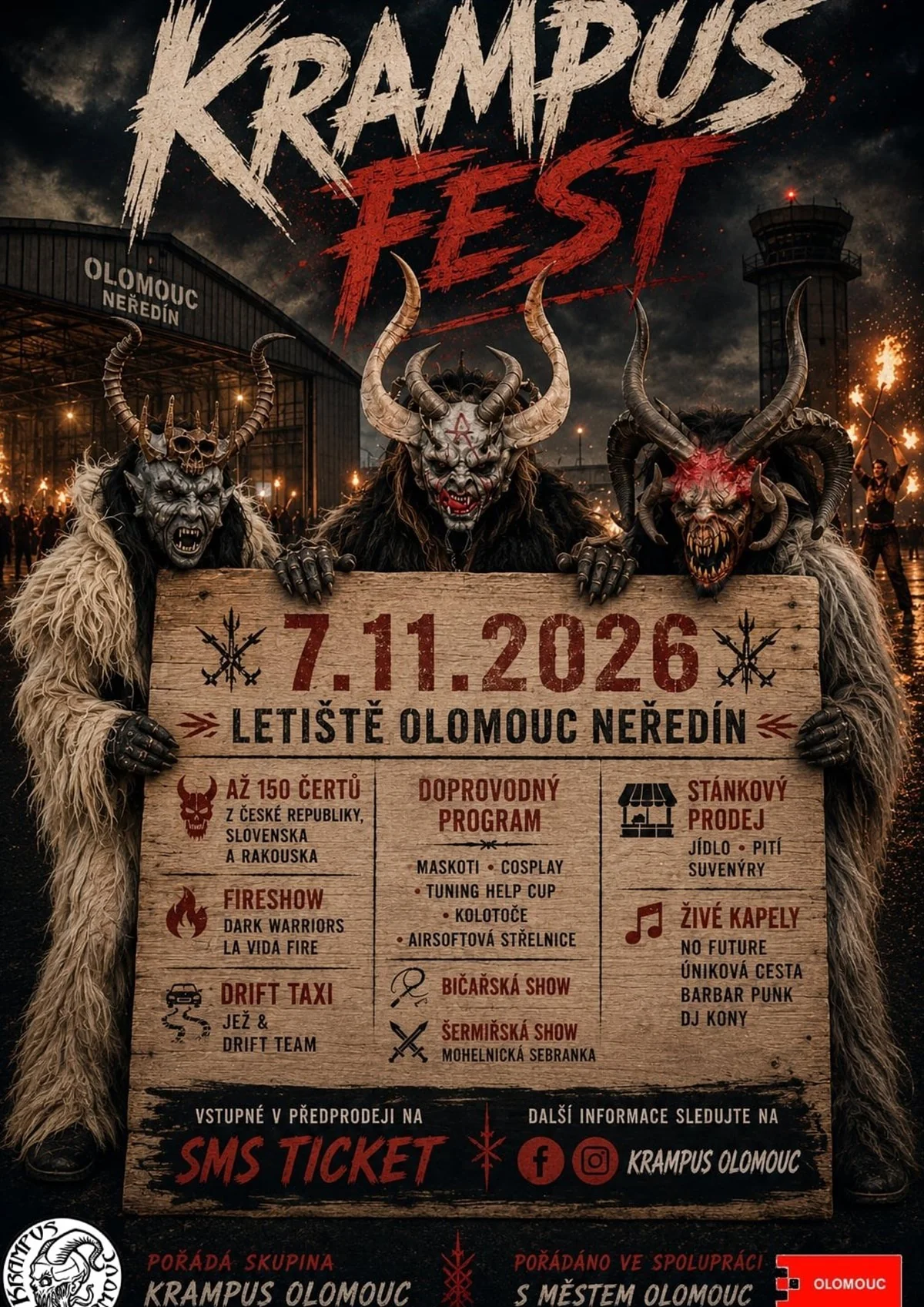
Zdroj akcí: otevřená data měst a obcí ČR (Národní katalog otevřených dat) a kalendář akcí Národního památkového ústavu.
Nearby
Moravské divadlo is situated on Horním náměstí, surrounded by historical buildings including a concert hall of the Moravian Philharmonic. The area features other cultural and architectural landmarks within a short distance.
Accommodation nearby
Trips and activities nearby
Guided tours, tickets and activities nearby from GetYourGuide
Affiliate link: if you buy from the partner, we may receive a commission. The price for you does not change.
Search tours and activities →Themed route
1. Moravské divadlo Olomouc (hlavní cíl)
- Typ: divadlo
- Proč stojí za návštěvu: Je to významné kulturní a historické místo v Olomouci, které nabízí širokou škálu divadelních představení a koncertů.
2. Moravská filharmonie Olomouc (poblíž)
- Typ: koncertní sál
- Proč stojí za návštěvu: Je známý pro své dokonalé akustické vlastnosti a nabízí širokou škálu koncertů klasické hudby.
3. Horní náměstí (poblíž)
- Typ: náměstí
- Proč stojí za návštěvu: Je historické a kulturní centrum Olomouce, nabízí pohled na okolní historické budovy a je ideálním místem pro relaxaci a procházku.
4. Kostel Nanebevzetí Panny Marie (poblíž)
- Typ: kostel
- Proč stojí za návštěvu: Je krásnou architektonickou dominantou města a nabízí nádherný pohled na okolí.
Seasonal recommendations
Jaro
In the spring season, the historic Moravské divadlo Olomouc is surrounded by greenery and flowers, creating a pleasant atmosphere. The lighting is soft and warm, providing a cozy environment for strolling around the area. Practical tips: it's better to visit the theater in the afternoon or early evening during spring when there are fewer people, and don't forget your sunglasses.
Summer
In the main summer season, Moravské divadlo Olomouc is full of life and energy. The lighting is bright and sunny, with nature in full bloom. Practical tips: visit the theater early in the morning or early afternoon to avoid crowds of tourists, and don't forget your sunscreen and a drink.
Autumn
In the autumn season, Moravské divadlo Olomouc is surrounded by the colors of fall nature. The lighting is soft and warm, creating a cozy environment for strolling around the area. Practical tips: it's better to visit the theater in the afternoon or early evening during autumn when there are fewer people, and don't forget your sunglasses.
Winter
In the winter season, Moravské divadlo Olomouc is quiet and peaceful. The lighting is soft and warm, providing a cozy environment for strolling around the area.
Visualizations and artistic views


The visualisations are generated by artificial intelligence and serve as inspiration.
Photos from the area
Real photos taken near the monument


Zdroj a licence jsou uvedeny u každého snímku.
Atmosphere of the place
This atmospheric visualisation of the place and period was generated by artificial intelligence. It is not real footage of the location.
Tips from visitors
No tips yet. Be the first!
Log in and add your tip.
Sources and literature
Photos: Michal Maňas / Public domain, rozlišení zvýšeno umělou inteligencí — Wikimedia Commons. The author and licence also appear when you hover over the image.
Faktickým podkladem tohoto textu byl článek na Wikipedii, jehož autory jsou přispěvatelé Wikipedie. Článek je dostupný pod licencí CC BY-SA 4.0.
Location on the map
Příběhy a pověsti
Legendy, pověsti a příběhy spjaté s touto památkou
Fotografie návštěvníků
Zatím žádné fotografie. Buďte první, kdo přidá fotografii z návštěvy!
Log in a přidejte svou fotografii nebo hodnoťte.
Za ověřenou návštěvu v aplikaci získáte víc bodů — poznáme podle GPS, že jste na místě.
Reviews and comments