






Müllerův dům House
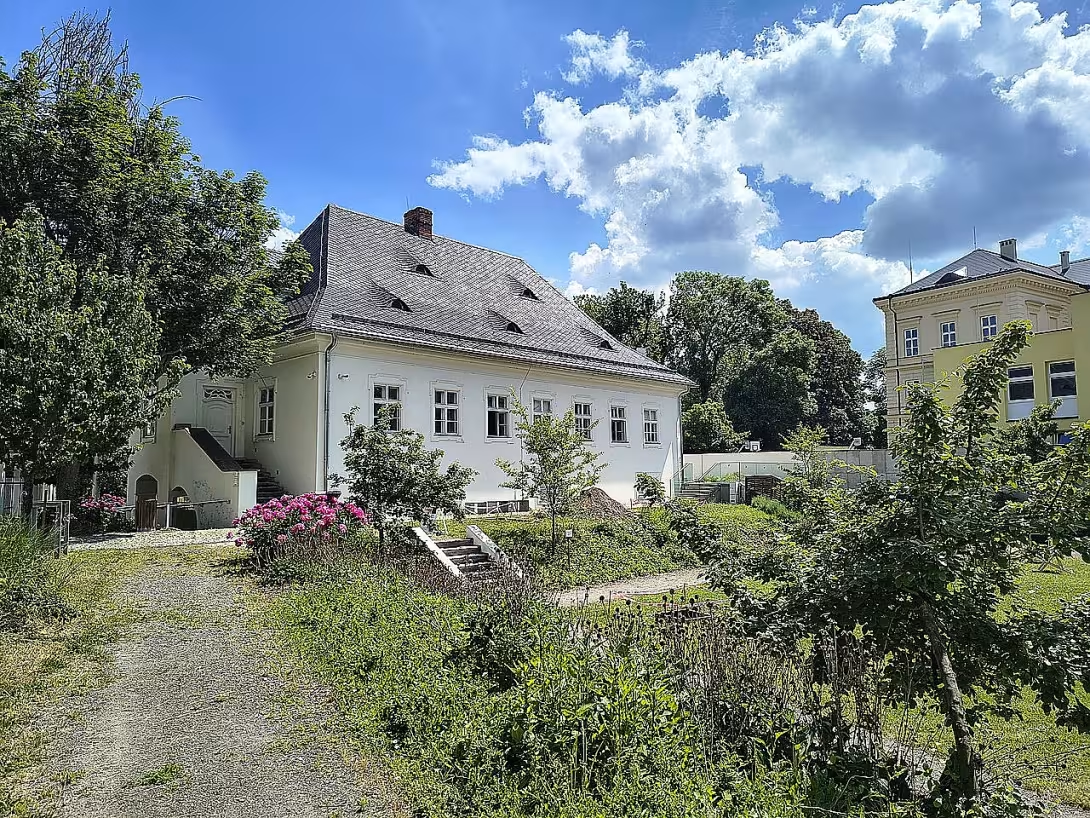
Müllerův dům, located on Komenské street in Opava, is a historical monument representing the only remnants of the original castle in this area. This building, protected as a cultural monument of the Czech Republic, has a rich history dating back to the 16th century when it served as a castle mill. Over the years it has undergone several transformations - from the castle kitchen to the granary to the Baroque residence of the castle manager in 1726. Today it serves as a public garden offering exposure to plant species typical of the region and hosting cultural events.
The original function of the Müller house consisted of its position as a castle mill, powered by water from the castle ditch. This building was located in a strategic location between the main and the park walls of the fortifications. The first transformation took place in the 16th century when the mill was converted into a castle kitchen. Subsequently, in the first half of the 17th century, the object turned into a granary. In 1726, a Baroque reconstruction took place, which meant his last and most important change - he became the residence of the castle administrator.
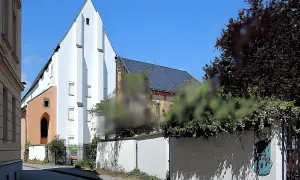
Architecturally, Müllerův dům is a single-storey building with a wall roof, a skylight and an external staircase. His facade is decorated with stucco champagne around the windows, which adds moving Baroque elements to the overall picture of the building. This architectural structure shows the historical development and adaptation of the building to the needs of its time periods.
The name Müllerův dům comes from the lawyer Müller, one of the owners of the house who also lived here. After demolition of the castle, the object became the only preserved element of the original site. During the first republic it served as a place for expositions focused on the Czechoslovak Legion, which underlines its importance in the cultural and historical context.
In 2014, a reconstruction project of the house and adjacent park was developed. This project led to the transformation of the building into a public garden in 2015, which now serves as an exhibition of plant species typical of the region of Opava. After the completion of the reconstruction in 2017, the underground exhibition of the Silesian Regional Museum and the cafe was opened, which makes the house increasingly integrated into the cultural life of Opava.
Today Müllerův dům is open to the public and offers not only beautiful green spaces, but also the opportunity to become familiar with the history and culture of the region. The garden serves as a place of cultural events, including lectures, making it an attractive place for visitors from around the world.
Müllerův dům is not only a monument to architecture and history, but also a living centre of cultural activity in Opava. Its rich past and current features as a public space attract visitors who seek knowledge of the region and relaxation in a beautiful green environment. When walking through its premises we can not only enjoy natural beauty, but also touch the history and culture of Opava. Müllerův dům is therefore an important monument worth visiting and exploring.
Then and now
Drag the slider to compare how the landmark may have looked when it was built with the view today.
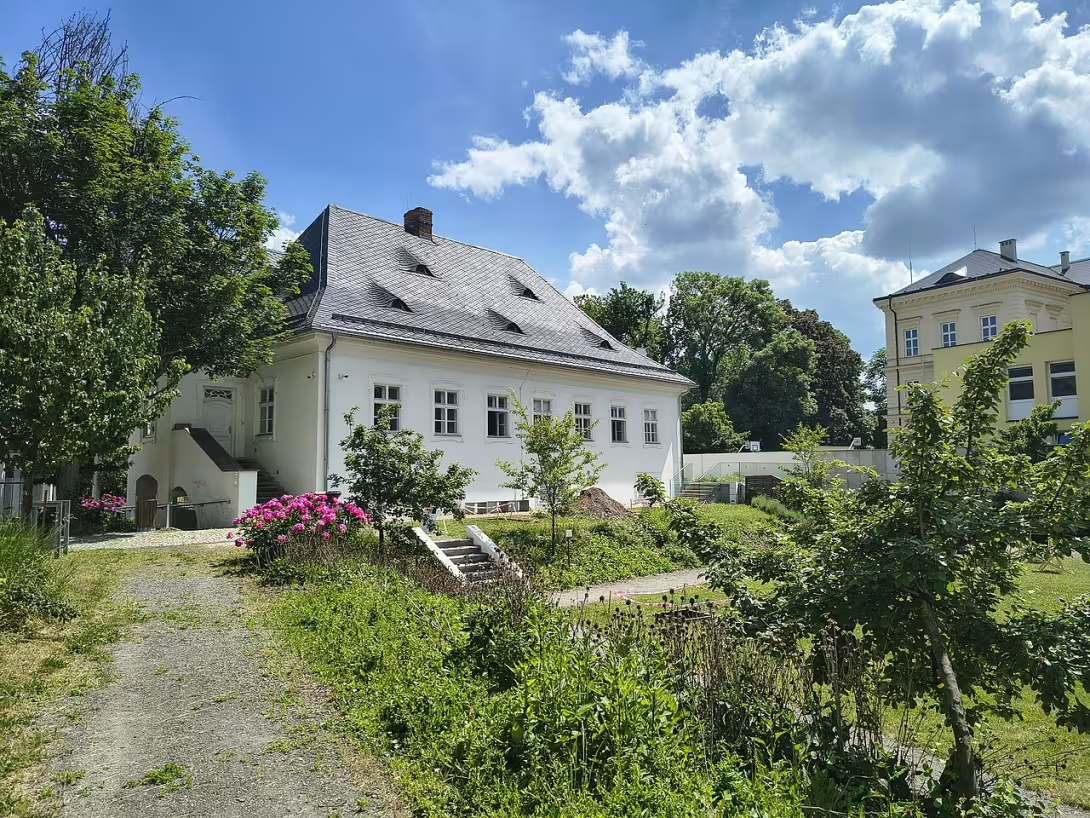
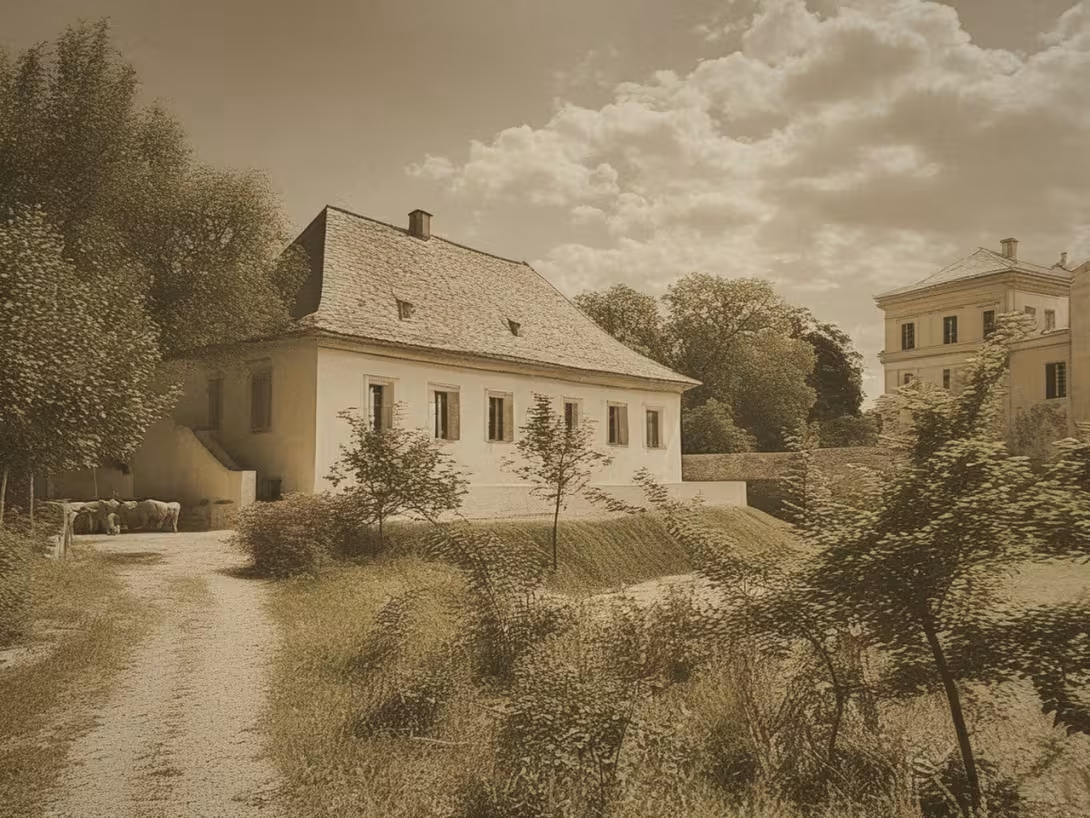
The historical appearance on the left is an AI-generated visualisation and serves as inspiration only.
Historical milestones
- 1726
- Baroque reconstruction of the building to the residence of the castle administrator
- 2015
- Transforming an object into a public garden
- 2017
- The creation of an underground exhibition and coffee shop
Architectural development
Originally there was a castle mill in the place where the moat ended. Over the centuries he went through reconstructions from the kitchen and granary to the Baroque residence. The building has a valb roof with skylights and decorated facade.
Historical events
In the 16th century, the building was converted into a castle kitchen. In the first half of the 17th century, she served as a granary. In 1726 a Baroque rebuilding took place on the residence.
Owners
Attorney Müller
Points of interest
- Müllerův dům is the only remains of the original castle in Opava. - This building has a rich history dating back to the 16th century when it served as a castle mill. - In 1726 the Baroque reconstruction was carried out, which meant the last change - it became the residence of the castle administrator. - The name Müllerův dům comes from the lawyer Müller, one of the owners of the house. - After reconstruction in 2017, an underground exhibition of the Silesian Museum and the cafe was opened.
Guide
Show guide text
This text was created by artificial intelligence and has not been editorially reviewed. It may contain inaccuracies.
Welcome to Opava. You're standing right in front of a place that carries an enormous number of stories and layers of time. The Müllerův dům stands before your eyes. You may find it a simple, historical building at first sight, but believe me, its existence is much deeper and more significant than it may seem. Feel the atmosphere, feel the calm that returns to this place after centuries of constant work, changes and changes. Look at her face, her walls, which have seen so many human lives and so many historical moments. Every part that you are now observing is a silent proof of the constant movement of time and the relentless changes that every century brings.
Let's go back to the past together to understand what you're seeing. Imagine the 16th century. At that time, this house did not exist here as you know it today. Instead, there was a castle mill. Imagine the constant noise of running water, the rhythm of hard work and the constant movement of people coming here to get grain. It was a place full of life, energy and constant events. This mill was an important part of the castle economy and served the whole area. But time passes and needs change. The function of this object began to change gradually. The mill became a kitchen, and later there was a granary. Each change was important, each adding another layer to the history of this place. The job where grain was crushed became a place to prepare food and then a place to store supplies. Each phase has left an invisible imprint in the architecture and soul of this place.
Now pay attention to what you're seeing right now when you're looking at the building itself. This building gained its present appearance in the 1970s. That was a year of great and fundamental change. There was a Baroque reconstruction that completely changed the character of this place. The Baroque brought new order, new dignity and new style to this building. It wasn't just a simple, functional granary or kitchen anymore. The building has turned into a residence for someone very important to the castle administrator. Imagine the person who lived here, who worked here every day and who was in charge of the entire castle economy. This reconstruction was the last major change in the history of this building that lasted until today. Do you perceive the change brought about by this baroque reconstruction? It is she who gives the building its present character.
So why is it called Müllerův dům? The name you know is firmly linked to this place and its history. Even though people's names are often lost in the fog of time, that name remains a strong bond to the past. Müllerův dům is not just a simple name, it is a reference to the people who lived here, who worked here and who shaped this place with their actions and with their presence. This name is inextricably linked to this building today and it helps us to maintain contact with the people who were once here.
Now I want to tell you something that should really interest you and maybe even surprise you a little. When you look at this building, you don't see just one historical house. You see something much more precious and fragile. Müllerův dům is the only preserved element of the original castle in Opava. The whole magnificent castle that once dominated the whole neighborhood, which was a symbol of power and wealth, had long since died. It left only shadows in memory and books, but this house is a living, tangible witness to the ancient era. It's the only piece of that big, lost history we have left to imagine how it used to be. It's like the last stone of a big, long-fallen mosaic that still stands and tells us its story about what no longer exists.
Today, however, the role of this place is completely different from that of the Baroque or the castle mill. The castle manager no longer lives here and there is no hard work done here. Since the year two thousand and fifteenth there is a public garden. It's a place that belongs to you. It is a place where you can relax, where you can feel the surroundings and enjoy a moment of peace in the heart of the city. And if you want to learn more and go deeper into history, in the year two thousand and seventeenth there was another great and important transformation. There has been an underground exposition that can take you on a journey deep into the past, and also a cafe where you can sit still and be consumed by the atmosphere of this place. You can stop there, have a coffee and just watch the time flow and the people around you.
We now cordially invite you to further explore. Let yourself be consumed by this place. Walk around, see every part of this object, look in the garden or divert into those underground spaces that offer you a view of another dimension of time. Let this history just touch you. Thank you for spending this moment with us and for finding time to take an interest in the history of our city. We wish you a beautiful and inspiring continuation of the tour.
Tips for visitors
The best time to visit Müller's house is autumn or spring season when the weather is quieter and the light is ideal for photography. This historical object offers beautiful experiences even in mild temperature.
Parking can be found in nearby parking lots, or transport by public transport. For accurate information about availability and connections, we recommend using online search engines.
When visiting, remember your hat or goggles, because part of the building can be illuminated directly by sunlight. The photos are especially successful from Komenský Street.
In the surroundings you can visit the Silesian Museum, which offers interesting exhibitions and information about the history of the region. It's an ideal place for families with children to learn new things.
Müllerův dům is an appropriate choice for parents with children as it offers an overview of the history of the city and region. Children can enjoy walking the streets of Opava and discover their historical elements.
Businesses nearby
Do you run a restaurant, accommodation, shop, museum, rental, wellness or other visitor service near this monument? Show yourself directly to the people heading to it — this is how they will see you in the app and on the web:
Events nearby
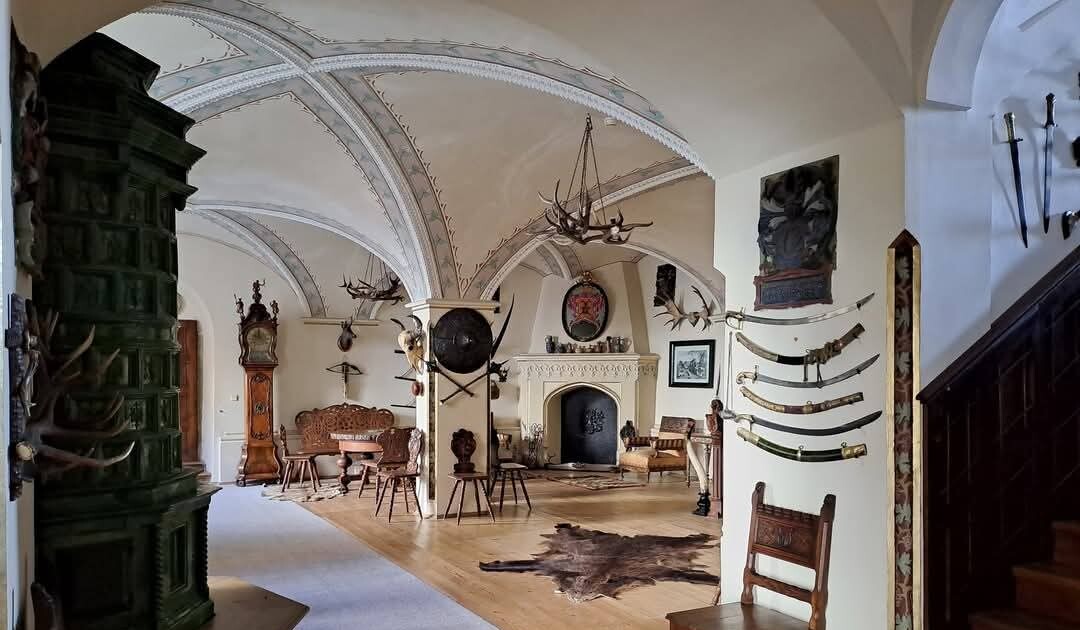
Zdroj akcí: otevřená data měst a obcí ČR (Národní katalog otevřených dat) a kalendář akcí Národního památkového ústavu.
Nearby
Slezské zemské muzeum, Komenského ulice.
Accommodation nearby
Themed route
Thematic cruise route: Müllerův dům and surroundings
1.Müllerův dům - Type: Historical home - Why is it worth a visit: This classical house is an important monument to 19th century architecture, which reminds of the rich history of the village Opava-Město. Visit elegant interiors and see historical details.
2. Silesian Earth Museum - Type: Museum - Why is it worth a visit: This museum offers a rich exhibition about the history and culture of Silesia. It is an ideal place for understanding the historical context of the region in which Müllerův dům is located.
3. Komenské street - Type: Historical aisle - Why is it worth a visit: This aisle is part of the historical core of Opava, where you can walk past ancient buildings and feel the atmosphere of the past. It's a beautiful way to immerse yourself in the history of the village.
4. Tanks Müller House - Type: Historical courtyard - Why is it worth a visit: The tank offers a quiet space for rest and reflection after a tour of the house. It is also an ideal place to enjoy the outdoor environment in a historical context.
5. Tower Müller House - Type: Historical tower - Why is it worth a visit: If it is accessible, the tower offers a view of the surrounding area of Opava-City. It is a unique way to explore panoramic views and understand the architectural structure of the house.
This route offers a view of the history and culture of Opava-Cities through a visit to the Müller house and its surroundings.
Seasonal recommendations
Spring: In the spring season, Müllerův dům in Opava is transformed into a haven full of new life and color, when blooming gardens around celebrate the arrival of warm days. The sun illuminates the ancient roof and facade in a fine light that emphasizes their historical beauty. It is advisable to come early in the morning to enjoy the peace before the arrival of the first visitors. We recommend wearing clothes with the possibility of layering, because temperatures can be medium and the morning is often cold.
Summer: During the summer period Müllerův dům receives an atmosphere full of life. The sunny glow radiates radiantly on his facade, creating ideal conditions for photography and walking around the historical monument. This season it is best to come earlier in the afternoon to avoid flooded crowds of tourists in the main summer season. It is advisable to wear light clothes and a protective headgear against the strong sun.
Autumn: Autumn brings Müller's memory to a calmer but not less charming picture. When leaves fall and colour the surrounding green landscape in a vibrant palette of shades, medieval housing architecture takes on new beauty in the light of changing clouds. This time of year is ideal for a peaceful visit without too many crowds. It is recommended to wear clothes suitable for colder weather and perhaps an umbrella, because autumn days can be variable.
Winter: In winter, Müllerův dům is turned into an atmosphere of peace and mystery. The sun illuminates the roofs at the end of the day when long shadows stretch the streets of Opava. The opening hours of the sights are usually shorter, so it is good to come early in the morning or in the afternoon to enjoy the peace and warmth of the historic rooms. It is important to wear warm clothes and maybe even shoes suitable for snow condition because winter brings cool air and sometimes the first frost.
Visualizations and artistic views


The visualisations are generated by artificial intelligence and serve as inspiration.
Photos from the area
Real photos taken near the monument

Zdroj a licence jsou uvedeny u každého snímku.
Tips from visitors
No tips yet. Be the first!
Log in and add your tip.
Sources and literature
Photos: Aqalexor / CC BY-SA 4.0 — Wikimedia Commons. The author and licence also appear when you hover over the image.
Faktickým podkladem tohoto textu byl článek na Wikipedii, jehož autory jsou přispěvatelé Wikipedie. Článek je dostupný pod licencí CC BY-SA 4.0.
Location on the map

Příběhy a pověsti
Legendy, pověsti a příběhy spjaté s touto památkou

Fotografie návštěvníků
Zatím žádné fotografie. Buďte první, kdo přidá fotografii z návštěvy!
Log in a přidejte svou fotografii nebo hodnoťte.
Za ověřenou návštěvu v aplikaci získáte víc bodů — poznáme podle GPS, že jste na místě.
Reviews and comments