



Neumanneum House
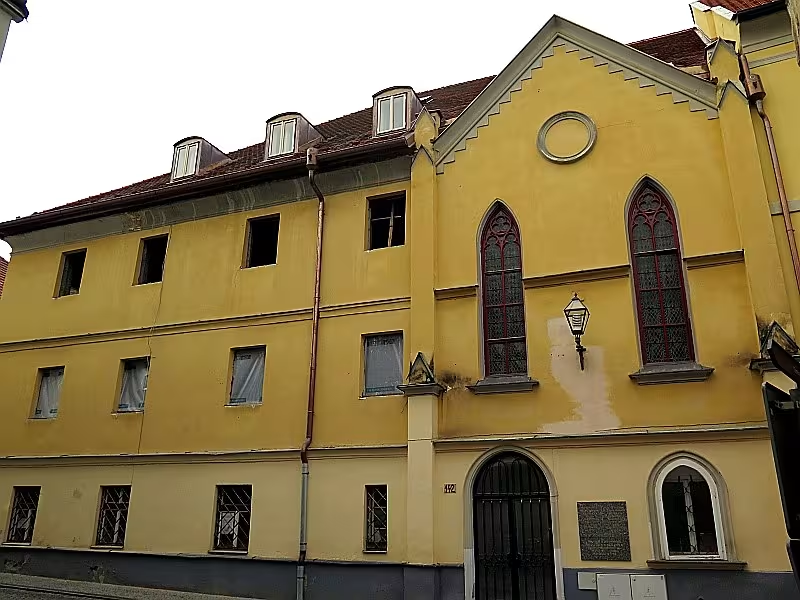
Neumanneum is a complex of buildings in Neumann Street in Prachatice, created by rebuilding the Renaissance townhouse. This monument is important in its history of monastery and educational institution; There are different galleries here today.
Originally there was a Renaissance townhouse No. 142 in Upper Street, which was adjacent to medieval city walls. It belonged to the Neumann family in the 19th century. At the time of European history, Johana Neumannová transformed it into a monastery. Since 1860 there was a girls' practice and an orphanage in the building, which reflected the development of charities and girls' education.
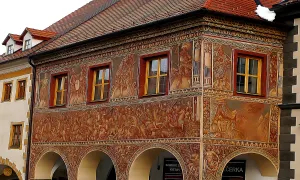
The architecture of the complex is based on the original Renaissance building, which was substantially rebuilt in the second half of the 19th century. There is a neo-Gothic chapel and two other connected houses. One of them was house 144 with a face decorated with sgraffiti. In 1937, the neo-gothic facade was rebuilt. The whole building and part of the complex are protected as a cultural monument.
After being rebuilt into a monastery, it was owned by the sisters of pine trees. In 1945 the population of German nationality was concentrated here before the move. The sisters had to leave the house under pressure from the Communist regime in 1975. The building was subsequently housed by a retirement home and a so-called Selská scar was created in the chapel. In 1992 the sisters returned to the building, the chapel was ceremoniously consecrated and a major reconstruction followed.
Neumanneum belongs to the sisters again today. In its premises there are three galleries: the Gallery of St. John Nepomuk Neumann, the Gallery of Mother Vojtěda and the Gallery of Reconciliation and the search for new paths. The complex represents an important point on the map of the cultural heritage of Prachatic.
The history of this place links Renaissance architecture with a charitable mission and challenging destiny during the 20th century. Thanks to the galleries, the visit offers insight into the spiritual and social development of the region.
Historical milestones
- 1860
- There was a girls' practice and an orphanage in the building.
- 1937
- Rebuilding the neo-gothic facade.
- 1945
- The concentration of the people of the German nationality before the move.
- 1992
- The ceremonial consecration of the chapel and the handover of the object to the sisters of the pine trees.
Architectural development
Originally a Renaissance townhouse near the city walls was converted into a monastery with a neo-Gothic chapel in the second half of the 19th century. The complex was extended by two other houses, one of which had a facade decorated with sgraffiti. The Novogotic facade was subsequently rebuilt in 1937.
Historical events
1860 (establishment of the girls' practice and orphanage), 1945 (concentration of the inhabitants of german nationality before the removal), 1992 (ceremonial consecration of the chapel and handing over to the sisters of the pine trees)
Owners
The Neumann family (19th century), the sisters of pine trees (until 1975 and since 1992)
Points of interest
The complex was created by rebuilding the Renaissance townhouse. - In the 19th century Johana Neumannová transformed it into a monastery. - Since 1860 there has been a girls' practice and an orphanage. - Part of the complex is a neo-Gothic chapel and two other connected houses. - There are three galleries in his premises today.
Guide
Show guide text
This text was created by artificial intelligence and has not been editorially reviewed. It may contain inaccuracies.
Welcome to Prachatice, the unique building complex known as Neumanneum. You are standing in front of a historical monument that lures its rich past and architectural nuances. If you look at the facade, you'll see the harmony of building forms that remind you of the Renaissance style with a hint of neo-Gothic. Look up and observe the elegant lines that form the unique atmosphere of this place.
Let's dive into Neumanneum history. This complex was created from a Renaissance townhouse whose reconstruction in the 19th century brought new life and purpose. Johana Neumannová was the key personality that turned this house into a monastery. In 1860 there began to be a girls' practice and an orphanage, indicating its profound influence and efforts to support society. This step was not only an architectural transformation, but also a social contribution to the community.
Now pay attention to the details you may notice. The Neogotic Chapel is one of the key elements of this complex; its architecture and atmosphere attract anyone who gets here. Two other connected houses supply a complex of harmony and coherence. Although particular architects are not known, their work remains a visible testament to the past.
Among the key stories associated with Neumanneum is the reconstruction of the neo-gothic facade in 1937. This moment points to constant evolution and adaptation of the complex, which was important for its persistence as cultural monuments. After World War II, the concentration of the people of the German nationality took place here in 1945, which is an important historical part of the site.
The interesting thing about this place is its adaptability and endurance. What began as a townhouse turned into a monastery, an orphanage and now serves as a space for three galleries. This transformation shows the ability of the monument to adapt to time changes and become an important cultural center.
By inviting you to further explore, I encourage you to see the galleries and enjoy the works of art. Neumanneum is a place full of history and beauty waiting for its discoverers. Thank you for your visit and I hope this guide inspired you to explore this fascinating place further.
Tips for visitors
Neumanneum in Prachatice is best visited during the summer period when the days are long and sunny, which allows full exploration of the monastery complex. The sun shines on architectural elements of buildings, which is ideal for photography.
When visiting, remember the appropriate suit, because some parts of the building may be cold. Photographers take your camera and experiment with different points of view, especially in the case of sunlight.
In the vicinity of the monastery there are medieval city walls which are an ideal complement to visit Neumanneum. Explore these historical structures for a better understanding of the past of Prachatic.
For families with children the monastery is an interesting place where they can enjoy not only architecture but also imagine life in the 19th century. Children can enjoy walking around the gardens and exploring historical details.
Frequently asked questions
Can the monument be visited?
This is a residential or farm building, not a museum with opening hours. Please view it from public space and respect the owners' privacy. We have no information about access to the interior.
Where is the monument?
Location: Prachatice I, Jihočeský kraj. The map on this page shows the exact spot.
Why is the monument protected?
It is listed in the Central List of Cultural Monuments of the Czech Republic as a cultural monument (register no. 1000149244).
Businesses nearby
Do you run a restaurant, accommodation, shop, museum, rental, wellness or other visitor service near this monument? Show yourself directly to the people heading to it — this is how they will see you in the app and on the web:
Nearby
Středověké městské hradby v Prachaticích.
Accommodation nearby
Themed route
1. Medieval city walls in Prachatice, historical fortifications, represent ancient parts of the city district. 2. Neumanneum (monastery), religious area, is the main destination of a trip with rich history. 3. Neumanneum (monastery), courtyard, this place in the monastery area offers a quiet environment.
Seasonal recommendations
In spring the monastery wakes up along with nature in the surroundings. The sun shines gently and the colors of the new leaves around the walls are very pleasant for the eyes. It is the perfect time for a quiet observation of the details of architecture in the fresh air. I recommend you take several layers of clothing because the wounds are still cold and the afternoon can be warm. People aren't like they were in the high summer season, so you'll enjoy more privacy.
During the summer months, there is most life in Prachatice. The sun shines the strongest and the days are very long, which allows a tour even until late afternoon. The atmosphere is alive and hot. Because of the large number of visitors, it is best to come first thing in the morning to avoid the largest groups of people. Don't forget light summer clothes and enough water to drink.
Autumn brings golden shades and morning fog to the vicinity of the monastery, which give the place a mysterious mood. Light is soft and very photogenic in this period. It's time for peace and quiet lovers. Dress well and don't forget to wear stronger shoes because the road can be slippery due to moisture. The best thing to do is to visit a monument around noon when the most light is.
In winter, the monument is very quiet and peaceful. If snow falls, the white color contrasts beautifully with the stone walls. Days are short and light is weak, which creates a cosy but cold atmosphere. It is necessary to prepare for the frost and wear very warm clothes. Before travelling, check opening times that are shorter in this period than in other times of the year.
Visualizations and artistic views


The visualisations are generated by artificial intelligence and serve as inspiration.
Photos from the area
Real photos taken near the monument


Zdroj a licence jsou uvedeny u každého snímku.
Tips from visitors
No tips yet. Be the first!
Log in and add your tip.
Sources and literature
Photos: Sovicka169 / CC BY-SA 4.0 — Wikimedia Commons. The author and licence also appear when you hover over the image.
Faktickým podkladem tohoto textu byl článek na Wikipedii, jehož autory jsou přispěvatelé Wikipedie. Článek je dostupný pod licencí CC BY-SA 4.0.
Location on the map
More monuments – Prachatice I
Show all in the municipality

Příběhy a pověsti
Legendy, pověsti a příběhy spjaté s touto památkou
Fotografie návštěvníků
Zatím žádné fotografie. Buďte první, kdo přidá fotografii z návštěvy!
Log in a přidejte svou fotografii nebo hodnoťte.
Za ověřenou návštěvu v aplikaci získáte víc bodů — poznáme podle GPS, že jste na místě.
Reviews and comments