






Nová budova Národního muzea Museum building
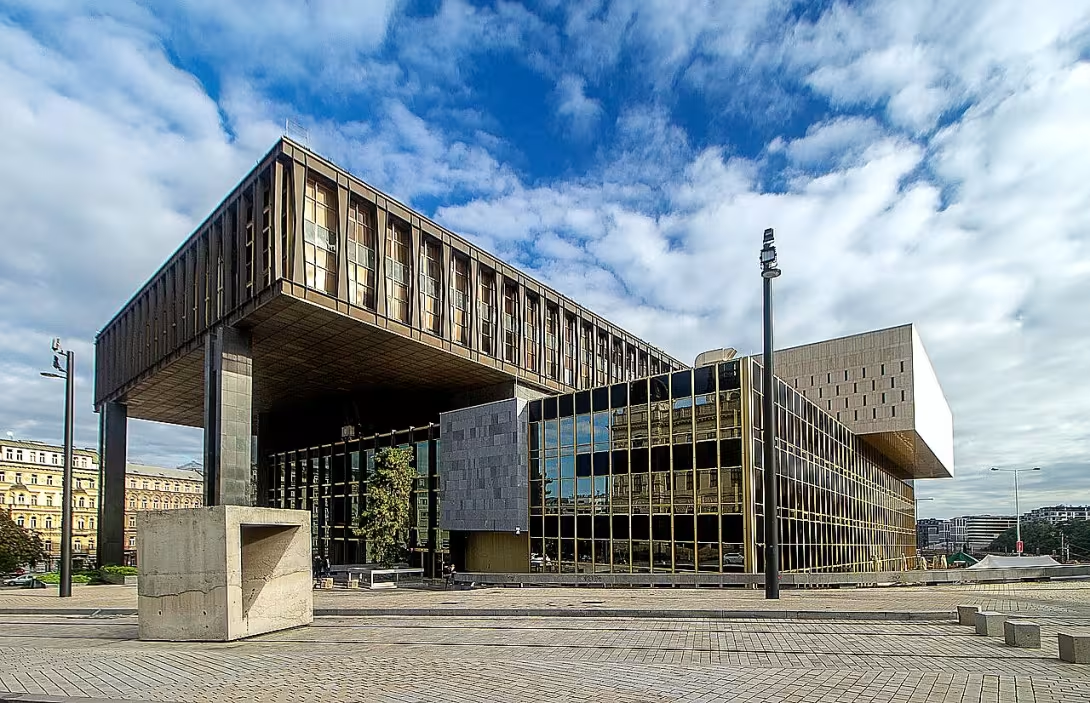
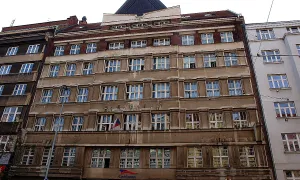
Nová budova Národního muzea in Prague is a unique architectural work that was built over the original money exchange. This structure served as the seat of the Federal Assembly between 1969 and 1992. Located in the area of Vinohrad between the historical building of the Museum and the State Opera, it represents an important cultural object registered in the register of monuments.
Original building The money exchanges were built in 1936-1937 according to the design of architect Jaroslav Rössler. After 1948, Parliament's seat from Rudolfino moved into this area. The extension of the building to the needs of the Federal Assembly was carried out on the basis of a competition from 1965-1966. The winning design of the architects Karl Prager, Jiří Kaderábek and Jiří Albrecht was implemented in the years 1968-1973.
The architectural solution is based on the original superstructure located above the older building. The Vierendeel beam was used during the construction and the largest hanging glass wall in Czechoslovakia was created. In front of the building stands the bronze sculpture of New Age by Vincent Makovsky, who won the Grand Prix at Expo 58 in Brussels. The statue represents the symbol of the sun and contains the superlife size of a man with plans for future buildings and women with fruits and flowers. In the direction of the magistrate is Palach's pylon, with a sculpture of the Flame by Miloslav Hlupač.
After the disappearance of Czechoslovakia and the abolition of the Federal Assembly, the building was used by Radio Free Europe / Radio Svoboda between 1995 and 2009. In 2000, the Ministry of Culture declared it a cultural monument. In 2004, the Architect magazine included the building among the ten most important Czech buildings for the last 50 years. In 2006, the government decided to award the building to the National Museum and after the departure of Radio Free Europe / Radio Svoboda, a ceremonial transmission took place on 1 June 2009.
In 2011, Mayor Bohuslav Svoboda considered demolishing the superstructure in order to reveal the original stock exchange, which did not happen. The building has been guarded by the military and the police for security reasons in the past and has been surrounded by concrete barriers. In 2019, the building was connected to the historical building of the museum by underground tunnel, thus avoiding the implementation of a glass tube that could damage the historical appearance of the surrounding area.
Today Nová budova Národního muzea serves for organizing exhibitions and in 2021 the permanent exhibition 20th century history was opened. The building is an important witness to the political and architectural changes of the past century and it is advisable to visit it to understand the transformation of the Czech space from the exchange to the parliament to the modern museum.
Then and now
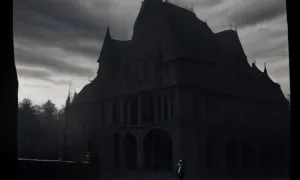
Drag the slider to compare how the landmark may have looked when it was built with the view today.
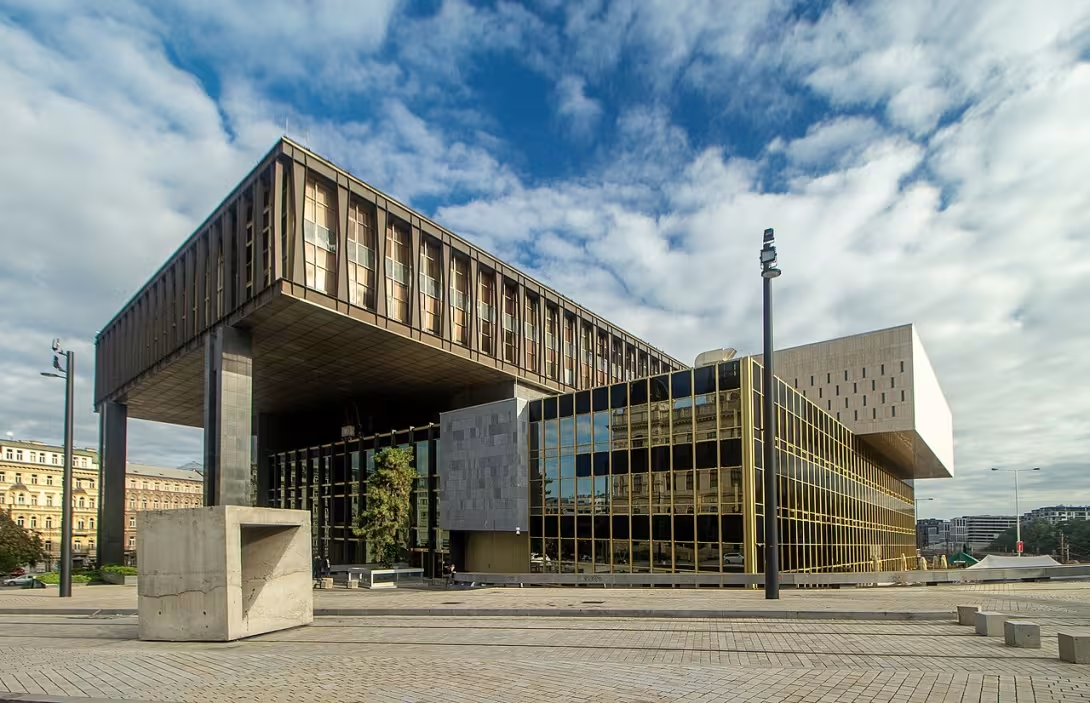
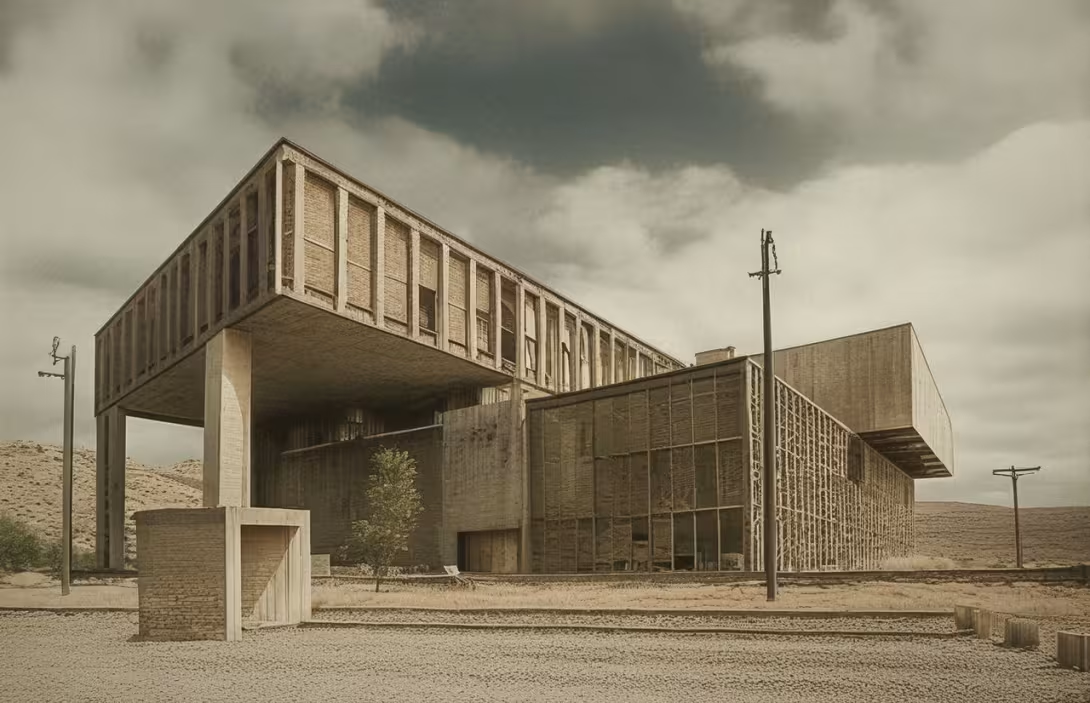
The historical appearance on the left is an AI-generated visualisation and serves as inspiration only.
Historical milestones
- 1936
- Construction of the Cash Exchange
- 1968
- Opening of the building extension for Parliament
- 2000
- Declaration of the building for a cultural monument
- 2021
- Opening of permanent exhibition 20th century history
Architectural development
The original building of the Money Exchange from 1936- 1937 was expanded in 1968- 1973 with an extension. The Vierendeel beam and the largest hanging glass wall in Czechoslovakia at the time were used. In 2019 the building was connected to the historical building of the museum by underground tunnel.
Historical events
1969: Opening of the meeting of the Federal Assembly; 2000: Declaration for cultural heritage; 2009: Transmission of the building to the National Museum.
Owners
State, since 2009 National Museum
Points of interest
- Nová budova Národního muzea was built over the original money exchange. She served as the seat of the Federal Assembly between 1969 and 1992. - The architectural solution is based on the original superstructure with Vierendeel's beam, which was then the largest hanging glass wall in Czechoslovakia. - The architect magazine has been included among the ten most important Czech buildings for the last 50 years. - Today it is used for the organization of exhibitions and here was opened the permanent exhibition History of the 20th century.
Guide
Show guide text
This text was created by artificial intelligence and has not been editorially reviewed. It may contain inaccuracies.
Welcome to a place full of history and architectural miracles! You are standing in front of the New National Museum building in Prague, more specifically in the Vinohrady district. This impressive structure extends in front of you with a smooth front and a complex architectural design that emits history and modernity. It's a place where you can see both the elegant line and the rich past.
Let's dive into the beginning of this fascinating building. In 1936 the construction of the original building was started, which served as a Cash Exchange. Architects Jaroslav Rössler and Karel Prager participated in this first step, which laid the foundations for future enlargement. There was further significant development in 1968 - the implementation of the extension of the building was to serve as the seat of the Federal Assembly. This was the key moment when the object became the center of political events between 1969 and 1992.
Now pay attention to the architecture of this place. What are you paying attention to? Note the original superstructure, which is characterized by the use of Vierendeel beams. This detail is not only technically advanced, but also aesthetically attractive because the largest hanging glass wall in Czechoslovakia was built here. This architectural element can be considered as one of the main visible features of the building that distinguishes it.
Among the key personalities associated with this monument is Bohuslav Svoboda. His presence in this building refers to its importance as places of political decisions and historical events.
The interesting thing about this place is that the whole complex was built through the original Money Exchange. This unique approach to the superstructure shows the innovative thinking of architects Jiří Kaderábek and Jiří Albrecht, who participated in enlargement in the years 1968-1973. This history of superstructure is a truly fascinating story about how architecture can combine the past and the future.
In 2009, the building was declared a cultural monument of the Czech Republic, which confirms its importance not only as a historical object but also as a heritage of the nation. In 2021, a permanent exhibition of 20th century history was opened, offering valuable insight into complex past events.
Let's take a closer look now and explore all the secrets this object holds. Every corner of this building can tell its story about the past and today it is a place where history lives in every detail.
Allow me to invite you for further examination. Prepare for a journey full of discoveries that will develop your knowledge of this fascinating monument. When we return to the present, we will see how history and modernity share this space in harmony. Thank you for your interest and visit the New Building of the National Museum!
Tips for visitors
For the best experience we recommend a visit during working days in the morning when there are fewer visitors in the interior and you can enjoy the architecture in peace. You can reach the place by car and public transport; Check current connections and parking options in transport applications.
Bring comfortable shoes suitable for longer walking in large areas. If you want to focus on photography, the best places for pictures offer interesting angles in the interior, where natural light through the windows plays an important role.
Within a short walk around you can visit State Opera or see the Historical Building of the National Museum. These objects are very close to the new building.
It is advisable for families with children to prepare in advance some interesting information about the history of the building, which in the past served as a Money Exchange and the seat of the Federal Assembly in order to make the tour for the smallest attractive.
Businesses nearby
Events nearby
Zdroj akcí: otevřená data měst a obcí ČR (Národní katalog otevřených dat) a kalendář akcí Národního památkového ústavu.
Nearby
State Opera, Historical building of the National Museum, North South Magistrate
Accommodation nearby
Trips and activities nearby
Guided tours, tickets and activities nearby from GetYourGuide
Affiliate link: if you buy from the partner, we may receive a commission. The price for you does not change.
Search tours and activities →Themed route
1. State Opera (Theatre) - An impressive building that serves as a centre of musical art. 2. Nová budova Národního muzea (museum) - Modern space with interactive exhibitions. 3. Historical building of the National Museum (museum) - Monumental monument with valuable scientific collections. 4. North-South Magistrate (transport artery) - Main urban route for observing the bustle of the city.
Seasonal recommendations
Spring: In spring, the surroundings of the museum awaken to life, and nearby green areas offer fine colored tones of blooming flowers. Light is soft in this period and very suitable for shooting monumental architecture. We recommend wearing layered clothes because morning cold can be surprising. It is best to visit the exhibition soon after opening to avoid groups of school trips.
Summer: Summer months bring intense sunlight and lively urban atmosphere to Prague's Vinohrad. Due to the main summer season, it is more human in the interior, so it is advisable to arrive first thing in the morning before the crowds of visitors begin to wander. Dress light and airy, but enjoy pleasant cold inside in air-conditioned rooms. The ideal time for a tour is in the morning, when the building is the most peaceful.
Autumn: Autumn season is characterized by golden leaves and foggy morning hours that give the building a nostalgic touch. The atmosphere is calmer and more permeable for contemplation. Comfortable shoes and a laminated coat are most suitable for walking around the museum. We recommend planning a visit in the afternoon when the sun creates beautiful shadows and colors on the facade.
Winter: In winter, the atmosphere of the indoor space is contrasting with the cold and the shrub outside, creating a sense of comfort in discovering history. Days are short, therefore it is necessary to monitor the current opening times that can be modified during this period. Dress very warm and consider visiting around noon to use the most daylight on your way to memory.
Visualizations and artistic views


The visualisations are generated by artificial intelligence and serve as inspiration.
Photos from the area
Real photos taken near the monument


Zdroj a licence jsou uvedeny u každého snímku.
Tips from visitors
No tips yet. Be the first!
Log in and add your tip.
Sources and literature
Fotografie: VitVit / CC BY-SA 4.0 — Wikimedia Commons. The author and licence also appear when you hover over the image.
Faktickým podkladem tohoto textu byl článek na Wikipedii, jehož autory jsou přispěvatelé Wikipedie. Článek je dostupný pod licencí CC BY-SA 4.0.
Location on the map
More monuments – Vinohrady
Show all in the municipality
Příběhy a pověsti
Legendy, pověsti a příběhy spjaté s touto památkou
Fotografie návštěvníků
Zatím žádné fotografie. Buďte první, kdo přidá fotografii z návštěvy!
Přihlaste se a přidejte svou fotografii nebo hodnoťte.
Za ověřenou návštěvu v aplikaci získáte víc bodů — poznáme podle GPS, že jste na místě.
Reviews and comments