

Nová Lhota Castle
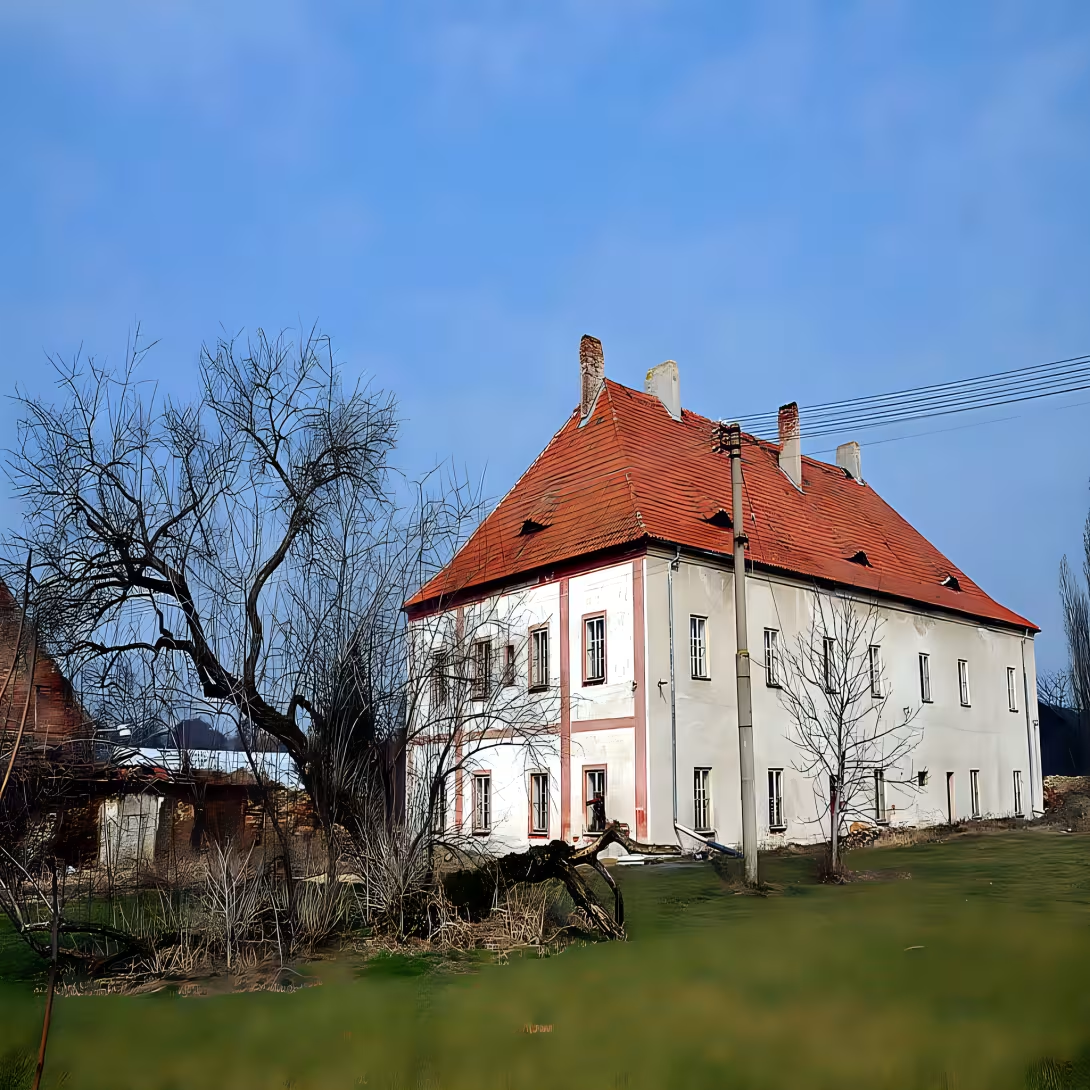
The castle Nová Lhota is a Renaissance and Baroque monument located in the same-name village near the Kluks in the Kutná Hora district in the Central Bohemian region. The building was created at the site of the original fortress from the end of the 16th century. It is currently part of the premises of the Economic Court, which is protected as a cultural monument.
The creation of the building is closely linked to the history of nearby aristocratic goods. By the end of the sixteenth century Nová Lhota was one of the various estates. In the fifteenth century she belonged to Pabenice and from 1565 to Pámonín, where she joined Jan mladší Salava z Lípy. After 1590, the village became the centre of its own estates of Mikuláš Salava from Lipa, after the sons of John the younger had divided their inheritance. He was the one who set up the Renaissance fort, which served as a superintendent's mansion. The first written mention of the building dates back to 1624, when Nicholas referred it to his daughter Catherine Anne.
The building development of the monument reflects changes in its use. The original Renaissance fort was decorated with sgraffiti, which later died. Around 1700, the building was rebuilt into a Baroque castle. A rectangular one-storey building with a valb roof was created, whose white facade was supplemented with red belts. The castle chapel was built in the interiors and some rooms were decorated with wall paintings. From architectural details, the entrance portal on the main facade and the ground floor corridor was preserved to this day, encapsulated by the vaults with lunettes.
Property ownership has changed several times over the centuries. After the Salavi family from Lipa with the farm in close proximity to the unclear time got Vilém Balbín z Orličné and then Alžběta Haugvicová z Orličné. Her son, Jindřich Haugvic z Biskupic, sold the castle in 1665 to Kutnohorsky's speedster Antonín Bergman. At the end of the seventeenth century, the building was moved to the hands of the seventh monastery, which established a summer residence. After the abrogation of the monastery in 1783 the building was taken over by a religious fund and converted it into a granary and housing for workers. In 1819 Schwarzenberg bought the castle, which operated it until 1925. As part of the land reform, the building became part of the residual estate and was treated as a private residence. In the second half of the twentieth century it then served the needs of the local national committee.
The key detail is preserved, even damaged and repainted wall paintings from before the mid-eighteenth century. These paintings illustrate the villages in the possession of the Sedlek monastery, including Nová Lhota herself. The castle forms the core of the complex into which it enters through a torso pillar gate. Part of the protected complex is also the north barn, east shouchar and the fenced wall. On the west side there are former stables, some of which have been converted into residential areas. A part of the wall, which originally separated a small Baroque garden from the rest of the court, survived between the castle and the hoarder.
The monument in Nová Lhota represents an authentic example of the transformation of a noble fortress into a monastery castle and then into an economic building. Its value lies in maintaining the basic Baroque disposition and unique paintings. The visit to the complex offers insight into the history of the rural residence and its functional transformation over the centuries.
Then and now
Drag the slider to compare how the landmark may have looked when it was built with the view today.
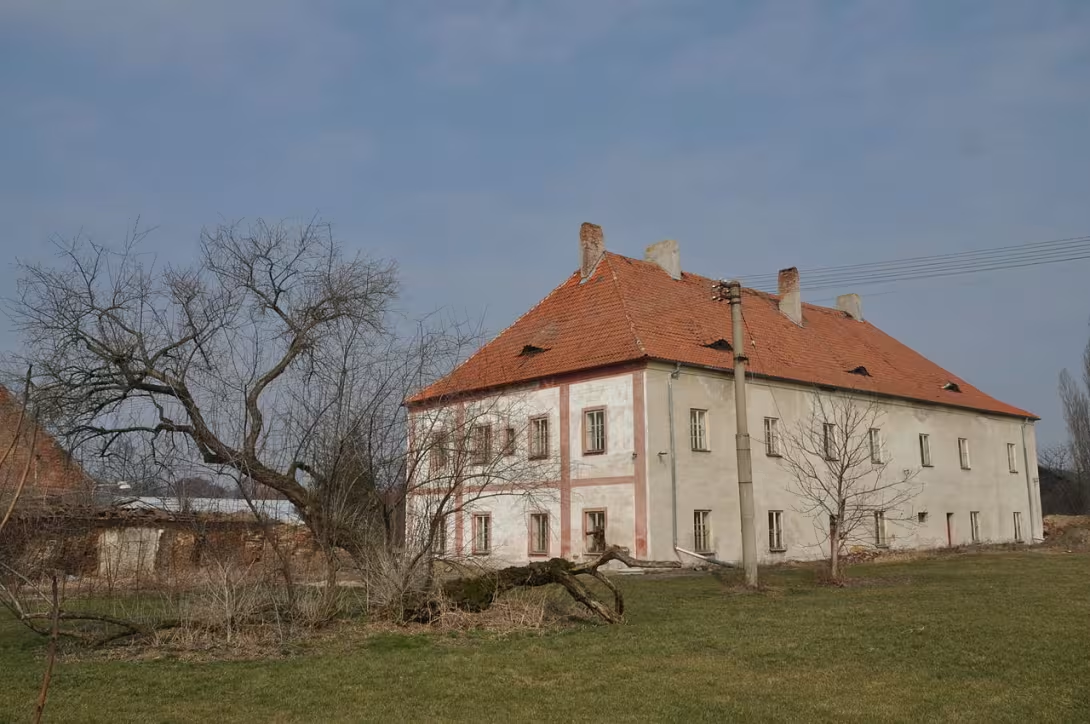
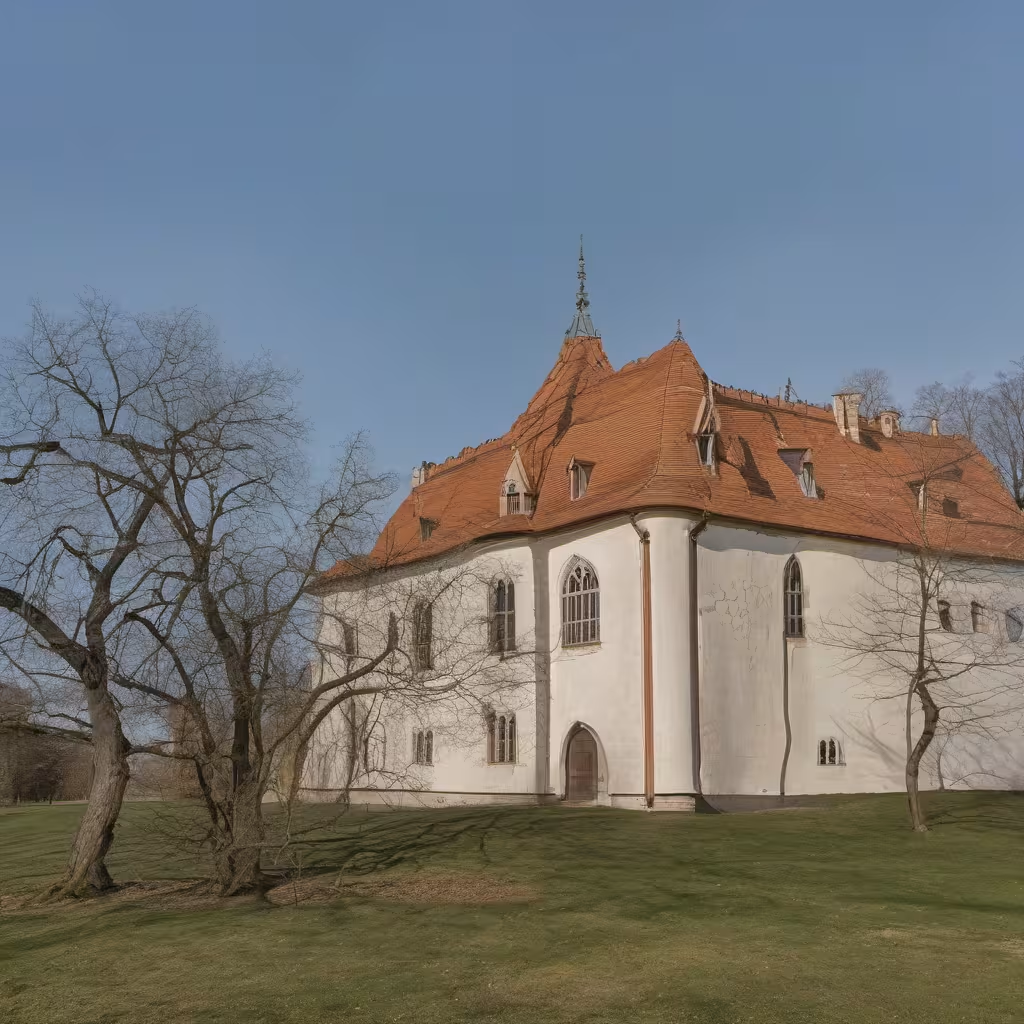
The historical appearance on the left is an AI-generated visualisation and serves as inspiration only.
Historical milestones
- 1590
- Nová Lhota belonged to Nicholas Salav from Lipa, who founded the Renaissance fortress here.
- 1665
- Jindřich Haugvic z Biskupic sold the castle to Kutnohorsky's speedster Antonín Bergman.
- 1700
- The Sedlek monastery had the old fortress rebuilt into a Baroque castle.
- 1783
- Cancellation of the monastery and subsequent reconstruction of the castle building into a granary.
Architectural development
The original Renaissance fortress decorated with sgraffiti was rebuilt around 1700 into a rectangular one-storey Baroque castle with a valbed roof. The chapel was set up in the interiors and the premises were decorated with wall paintings. At a later time, the building was modified for granary and housing for workers.
Historical events
1624: Mikuláš Salava z Lípy bequeathed the fort to Catherine Anne's daughter. 1783: Cancellation of the farm monastery and change of use of the building for economic purposes. 1925: Change of ownership under land reform.
Owners
Mikuláš Salava z Lípy (end of the 16th century), Kateřina Anna (from 1624), Vilém Balbín z Orličné, Alžběta Haugvicová z Orličné, Jindřich Haugvic z Biskupic, Antonín Bergman (1665), seventh monastery (end of the 17th century), religious fund (from 1783), Schwarzenberg (1819-1925)
Points of interest
- The castle was built at the site of the original Renaissance fortress from the end of the sixteenth century, founded here by Mikuláš Salava z Lípy. - The original fortress was decorated with sgraffiti, which later disappeared, and around 1700 the building was rebuilt into a Baroque castle. - The castle chapel was built in the interiors and unique wall paintings depicting the village in the property of the seventh monastery were preserved. - The building used to serve as a storehouse, summer mansion, granary and apartments for workers. - Until now, the entrance portal has been preserved on the main facade and a floor corridor with a vaulted vault.
Guide
This guide is narrated by a synthetic voice generated by artificial intelligence.
Show guide text
This text was created by artificial intelligence and has not been editorially reviewed. It may contain inaccuracies.
Welcome to New Lhota. Stop for a moment and just feel the space around you. You are standing in front of a building that is a silent witness to several centuries of Czech history. What you see before you is not just an ordinary building, but a place where the fates of nobles, monks, and ordinary farms have intertwined. Note how the castle is naturally planted in the premises of the farm yard. This position tells us a lot about how this place worked over time. It is not an isolated palace surrounded by vast parks, but a centre that was closely linked to the work on the ground and the life of the village.
Let us now return together in time to understand how this journey began. Imagine the end of the 16th century, namely 1590. At that time there was not a Baroque castle, but a Renaissance fortress. It was founded by Mikuláš Salava z Lípy, who at this place saw the ideal center for his noble farm. The fortress was at that time a symbol of power, security and management of the surrounding lands. It was a solid building designed to protect its inhabitants while demonstrating the status of the Salavi family. At that time Nová Lhota was the real centre of administration and economy, where the fate of the surrounding fields and people was decided.
If you look at the current form of the building, you may not see elements of the Renaissance in it, but history teaches us that under layers of later modifications, the original fortress is still hidden. It is fascinating to think that at the time of its creation this building was decorated with sgraffiti. Sgraffiti was a typical ornament of that time, creating beautiful geometrical patterns on the walls and image scenes that gave the building nobility. Today we don't see these ornaments, time and reconstruction have erased them, but in your mind you can try to imagine them as a fine lace spread across the facade.
But time passes and with it comes changes in property and style. In 1665, one of the key stores took place here. Jindřich Haugvic z Biskupic sold the castle to Kutnohorsky's speedster Antonín Bergman. This change in owner suggested a shift from the old nobility to the new people who gained their position through administration and trade. However, the greatest architectural change came only at the turn of the seventeenth and eighteenth centuries.
Now pay attention to the overall impact of the building. Around 1700, the complex had a major change. The Sedlek monastery, which at that time had great power and wealth, had the old Renaissance fortress converted into a Baroque castle. But it was not a castle for permanent living in luxury, but it served as a place for summer members of the monastery. Imagine the monastic communities that came here from the noisy and busy peasant center to find peace, space for reflection and relaxation from daily duties in the silence of Central Bohemia. The Baroque style brought to New Lhota a a new lightness and elegance, which was intended to express the glory of God and the monastic order.
Now, when you go around the building, feel its simplicity, yet it is full of dignity. Even though we don't know the names of the particular architects who designed this project, they wanted to create a harmonious space. In the interior, where we do not necessarily have to enter today, there was a castle chapel, which was the heart of the spiritual life of summer guests. Curious visitors often recall unique elements of the inner space, such as staircases, which, in the Baroque time, served not only to move between floors, but were also an element of representation.
This place has names that sound like historical chronicles. Jan mladší Salava z Lípy, Mikuláš Salava z Lípy, or Vilém Balbín z Orličné and Alžběta Haugvicová z Orličné. Each of them left a trail in New Lhota, whether in the form of stone, the decision to rebuild or simply by their presence. They are characters that formed a social class of their time and their lives were closely linked to this piece of land.
But sometimes history has ironic twists. The year comes in 1783 and with it a big change. At that time, the monastery was abolished. This meant the end of the summer rest and Baroque elegance for New Lhota. The building lost its original purpose and had to adapt to new, much more practical needs. The castle was converted into a granary.
Think about this contrast. The place where prayers used to be in the chapel and where summer siestas rested in the shade of the Baroque walls became a storage place for grain. Luxury has given way to use. The granary was a necessary part of the economic court, a place where crops were kept that fed people around. This transformation removed part of its aristocratic glare, but at the same time gave it a new identity and ensured its survival. Thanks to the fact that the building served practical purposes, it has survived until today and we can admire it now.
Now you might wonder if there were any secrets going on in these walls. Whenever a building changes from a fortress to a castle and then into a granary, there are hidden layers. Where we see a simple wall today, there may have been a luxury portal or secret passage. Where it is quiet today, there may have been a noise of the farm court or a silent whisper of monks in the chapel. It is this class of history that makes New Lhota so interesting. It's not just one building, it's three different buildings in one that overlap in time.
Look around you again. Feel the atmosphere of this place where the history of nobility, church and agriculture meets. Nová Lhota may not be the largest lock in the region, but its power lies in this truth and simplicity. It's a place that reminds us that nothing is permanent and that even the most noble building can become a useful tool for everyday survival.
Now I'm leaving you to explore the space at your own pace. Go through the premises, notice the details in the stone and try to imagine how the sound of this place changed over the centuries. From the sound of armour in the Renaissance fortress, to the silent prayers of baroque monks, to the rustling of grain in the granary.
Thank you for accompanying me on this short journey through time. I wish you the rest of the day and many other discoveries in the beautiful Central Bohemia region. Goodbye.
Tips for visitors
The best time to visit are spring and autumn months, when nature around the ruins of the castle in Nová Lhota is bright and temperatures are pleasant for walks. You can reach the premises of the farm yard by car or public transport; Check the exact path in the maps. We recommend that you take with you fixed shoes suitable for the field because it is a ruin. For the best photos we recommend to come in the morning or late afternoon light, which will highlight the details of the old walls and the atmosphere of the former Renaissance fortress. In the nearby area, within half an hour of travel, you can visit the village Kluky or the city Kutná Hora. Families with children can enjoy discovering the remains of a noble farm as a small adventure trip to history.
Frequently asked questions
Can the monument be visited?
This is a ruin. Such sites are often freely accessible, but some can only be visited with a guide or are closed for safety reasons. We have not verified the current situation – take care and respect any restrictions.
Where is the monument?
Location: Nová Lhota, Středočeský kraj. The map on this page shows the exact spot.
Why is the monument protected?
It is listed in the Central List of Cultural Monuments of the Czech Republic as a cultural monument (register no. 18327/2-1116).
For kids
Imagine going back to a time when the Czech kingdom was full of life and war intentions. Nová Lhota, a Gothic castle ruin, was then a young and strong castle that protected the kingdom's borders from enemies.
How did it look here? Who lived here? What happened here? The castle was built on a rock cliff above the river Chrudim. There were people who took care of the castle and its surroundings. They were farmers, shepherds and warriors who protected the borders of the kingdom. What happened here? The castle has been besieged and conquered several times! That was a really hard time.
Businesses nearby
Do you run a restaurant, accommodation, shop, museum, rental, wellness or other visitor service near this monument? Show yourself directly to the people heading to it — this is how they will see you in the app and on the web:
Nearby
🏰 Historic sites (100)
- Zámek Hraběšín 4.6 km
- Pomník obětem 1. světové války 5.2 km
- Cimburk 6.0 km
- Hradiště Cimburk 6.0 km web
- obětem 1. a 2. světové války 6.0 km
- Mlýn Cimburk 6.0 km
- Muzeum Malešov 6.3 km +420602262269
- Tvrz Malešov 6.3 km web
- Hrad Sion 6.6 km
- Matouš Ulický 6.7 km
- padlým z pěšího pluku č. 21 6.8 km
- Jaroslav Vrchlický 6.8 km
- Morový sloup 6.8 km
- Jan Žižka z Trocnova 6.9 km
- sv. Karel Veliký 6.9 km
- sv. Anna 6.9 km
- sv. Juda Tadeáš 6.9 km
- sv. František Borgia 7.0 km
- sv. Florián 7.0 km
- sv. Alois Gonzaga 7.0 km
🍽️ Restaurants and dining (133)
- Občerstvení u nádraží 5.5 km +420603851293
- Zrnko v hrnku 6.0 km +420725720072 web
- Kiosek u Saláků 6.1 km
- Restaurace Velas 6.2 km +420 602 282 860 web
- Hospoda Na hřišti 6.3 km Na Bělišti 1664
- Krčma na konci světa 6.3 km
- Přátelský pivovar Malešov 6.3 km web
- Restaurace Na Čeplově 6.4 km
- V Pivovaru 6.4 km
- Pivovarská restaurace v Čáslavi 6.4 km web
- Staré časy 6.8 km
- Kozlovna Bílá Růže 6.8 km +420 327 313 412 web
- Na Kuchyňce 6.8 km
- Asijské bistro 6.8 km +420775145678
- Pod radnicí 6.8 km
- Pizzerie Vyžlovka 6.8 km web
- Bílý kůň 6.8 km
- Kebab House 6.8 km nám. Jana Žižky z Trocnova 107/30 +420777511203 web
- Cukrárna Bonet 6.8 km
- Bejkn bistro 6.8 km Klimenta Čermáka 108/5 +420 773 773 703 web
🏨 Accommodation (32)
- Paběnický mlýn 5.2 km web
- Autokemp Malešov 5.7 km web
- Ubytování u Fraňků 6.3 km +420723 327 329 web
- Penzion Nela 6.8 km Klimenta Čermáka 134/8 +420773058098 web
- Elvíra 6.9 km Kremnická 91/15
- Vista Apartments 6.9 km Kremnická 43/13 +420 601 355 466 web
- U Babky Bylinkářky 6.9 km +420 702 279 992 web
- Restaurant a Penzion Barbora 7.0 km +420 327 316 327 web
- U Varhanáře 7.0 km web
- Zlatá Stoupa 7.1 km
- Elim 7.1 km
- Hotel U Kata 7.1 km web
- Penzion Havlíček 7.1 km web
- Hotel U Vlašského Dvora 7.2 km
- Česká Koruna 7.2 km
- Hotel Mědínek 7.3 km
- Hotel Opat 7.3 km
- Hotel Anna 7.3 km
- Pension Bed & Breakfast 7.4 km
- Penzion Dana Karásková 7.7 km
🚲 Rentals and sport (22)
- Sokolovna 5.7 km
- Letní koupaliště Vodranty 5.7 km
- Městké lázně Čáslav 6.1 km web
- Ice Pool 6.6 km
- Kutnohorská plovárna 6.7 km web
- Sportovní hala Klimeška 6.7 km web
- TJ Sparta Kutná Hora, oddíl tenisu 6.9 km
- Tenisový klub 6.9 km
- Sokol Kutná Hora 7.0 km
- Bikefrodl.cz 7.3 km +420327315049 web
- Sport šampion 7.3 km Václavské náměstí 162/5 +420327513846
- Sportisimo 7.4 km
- Hala BIOS 7.5 km
- TJ Sparta Kutná Hora 7.6 km
- Sportisimo 7.7 km
- SKP Olympia 7.7 km
- Petr Kamenář 7.9 km +420 724 032 945
- SKImania 7.9 km
- Sparta Kutná Hora a.s. 8.0 km
- TJ Sokol Malín 9.2 km
🥾 Hiking and nature (57)
- Lhotecké stráně 1.0 km
- Dolní les 2.8 km
- hradiště Denemark 5.8 km
- Geologická expozice Čížkova skála 6.1 km web
- Písečný vrch 6.5 km
- Na černé rudě 6.9 km
- Městské sady 6.9 km
- Vorlíčkovy sady 6.9 km
- View of the church 6.9 km
- Altán v Breüerových sadech 7.0 km
- Breüerovy sady 7.0 km
- Sady Dr. Bedřicha Pacáka 7.1 km
- Park GASK 7.1 km
- Kašna ve Vlašském dvoře 7.1 km
- Kašna na Havlíčkově náměstí 7.1 km
- důl Osel 7.1 km
- Superb wall painting 7.1 km
- Hororové sklepení 7.2 km +420737566569 web
- Park u Kostela Nanebevzetí Panny Marie 7.2 km
- Kamenná kašna 7.3 km
Accommodation nearby
Trips and activities nearby
Guided tours, tickets and activities nearby from GetYourGuide
Affiliate link: if you buy from the partner, we may receive a commission. The price for you does not change.
Search tours and activities →Themed route
Here is the design of the thematic route:
1. Kutná Hora (city) - Starting point. The city is famous for its rich history and unique buildings. 2. Boys (village) - Stop nearby. The place offers a peaceful atmosphere of the countryside. 3. Nová Lhota (lock) - The main destination of the trip. The visitor can admire the architecture and area of this mansion.
Seasonal recommendations
In spring, the area of the ruins awakens into life and the young green slowly covers the old walls. The light is soft and pleasant in this period, which helps to perceive the details of the remains of the building. We recommend shoes with fixed soles because the path to the monument can be amused after melting snow. The best place to visit is in the morning when the air is the cleanest.
Summer brings radiant sun and significant shadow contrasts in empty spaces of the building. Nature is in full bloom and the surrounding landscape looks very rich. Due to the high temperatures, it is advisable to choose light, breathable clothes and take plenty of water with you. The ideal time to visit is early morning or shortly before sunset to avoid the greatest heat.
The surroundings of the castle are painted in gold and brown tones, which underlines the melancholy atmosphere of the ruins. Fogs that often hover over the landscape add mystery to the place. It is advisable to dress in layers and wear a waterproof jacket in case of sudden rain. We recommend to leave in a short day so that there is enough daylight for safe movement in the field.
Zimą is a monument to the very cold and desolate, when frost and snow highlight its demise. The atmosphere is quiet and calm, stripped of the summer rush. Hot and waterproof clothing, including high-quality shoes, is essential to prevent drenching in winter mud or snow. The best plan is to plan a path to a clear freezing day when the landscape around is most cleaned.
Visualizations and artistic views


The visualisations are generated by artificial intelligence and serve as inspiration.
Tips from visitors
No tips yet. Be the first!
Log in and add your tip.
Sources and literature
Photos: Ben Skála, Benfoto / CC BY-SA 3.0, rozlišení zvýšeno umělou inteligencí — Wikimedia Commons. The author and licence also appear when you hover over the image.
Faktickým podkladem tohoto textu byl článek na Wikipedii, jehož autory jsou přispěvatelé Wikipedie. Článek je dostupný pod licencí CC BY-SA 4.0.
Location on the map






Příběhy a pověsti
Legendy, pověsti a příběhy spjaté s touto památkou
Fotografie návštěvníků
Přidat fotografiiZatím žádné fotografie. Buďte první, kdo přidá fotografii z návštěvy!
Máte k místu vzpomínku nebo zajímavý příběh?
Log in a přidejte svou fotografii nebo hodnoťte.
Za ověřenou návštěvu v aplikaci získáte víc bodů — poznáme podle GPS, že jste na místě.
Reviews and comments