






Novomlýnská vodárenská věž Water tower
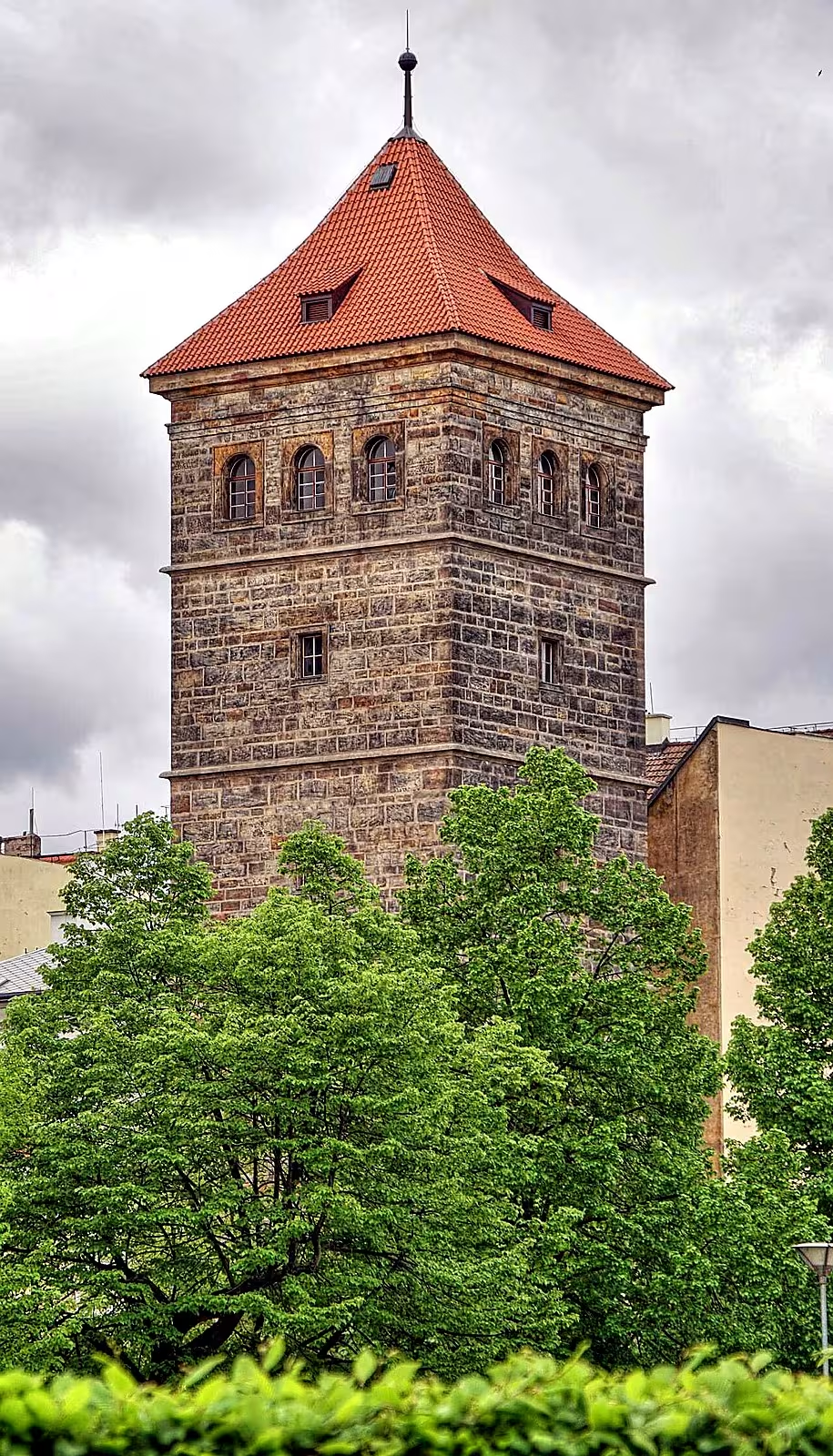
Novomlýnská vodárenská věž, a Baroque building in Prague 1, was created at the turn of the 16th and 17th centuries to supply water to the lower part of New Town. Remarkable is its height of 42 metres, a unique castle on top and the fact that it is the only preserved Prague water tower accessible to the public.
In the early Middle Ages, Prague drew water from both private and public wells, but it often degraded waste from the pit. The water was distributed by open rigs or water systems made of wood, stone, clay or lead. However, these networks served only for court, aristocratic and church objects. With the introduction of the New City of Prague in 1348, the first water tower pumping water from Vltava to the public caskets was built. Four municipal waterworks were gradually established: Old Town, Peparlkovská, Šítkovská and Novomlnská.
The first mention of the Novomlín Water Plant dates back to 1484 when it was wooden. In the following century, it underwent several modifications until the city council decided to build a stone building. At the turn of the 16th and 17th centuries a magnificent stone tower was created, which was the most important of all Prague waterworks in terms of cost and height.
The tower has a square plan consisting of two concentrated prisms, between which leads a staircase. The core of the building is made of quarry stone and the tiles are sandstone blocks. The portal is probably made of slivenecan marble. There are long windows on five floors, while the sixth floor at a height of 30 metres consists of lusthaus - a representative room with 12 windows. This element, inspired by the period fashion of the summer castles on the roofs of noble mansions, represents a world rarity at the water towers.
On February 6, 1655, the tower destroyed the flood and ice stucco, causing it to tear and collapse. It was restored between 1658 and 1660 by builder Jan Decapauli, who used the original portal and masonry from the ruins during the reconstruction.
The technical mechanism of the tower formed a mill with two wheels; the one over the crankshaft was powered by piston pumps. One of them sucked water into the mill reservoir, the other pushed it into the tank on the fourth floor at 33 meters. From this tank with a volume of less than a cubic metre, the water was brought into 65 public cashmere New Town, several breweries and private resources. In the winter months, the pipes were heated by open fire, and later the stoves on the ground floor, where the remains of the furnace are now visible. On this floor, there was also a remnant of the stol, which was drained from the tower.
Originally, the tower stood right on the bank of Vltava in the vicinity of the New Mill Group. However, during Prague's sanitation at the beginning of the 20th century, the bank in the Petra district was extended towards the river trough, the shoulders buried and the mills, along with the historic building was demolished. These modifications caused the tower to be 150 metres away from the river. It stopped serving its purpose in 1877 when a modern petrol station with four dual-acting pumps was built next to it, which drew water until 1919.
The municipality of New Town of Prague was the owner, but since 2020 the tower has been in the administration of Prague City Tourism. It was reopened to the public in 2017 after the general reconstruction. In the interior there is a multimedia exhibition of Prague on fire, dedicated to water industry and traditions of Prague firemen. The tour ends in a former lusthaus, which today serves as a sightseeing hall with panoramic views of Prague.
Novomlýnská vodárenská věž is a unique technical and architectural monument with a rare element of the castle. Its visit offers insight into the history of Prague's water system and panoramic views of the city.
Then and now
Drag the slider to compare how the landmark may have looked when it was built with the view today.
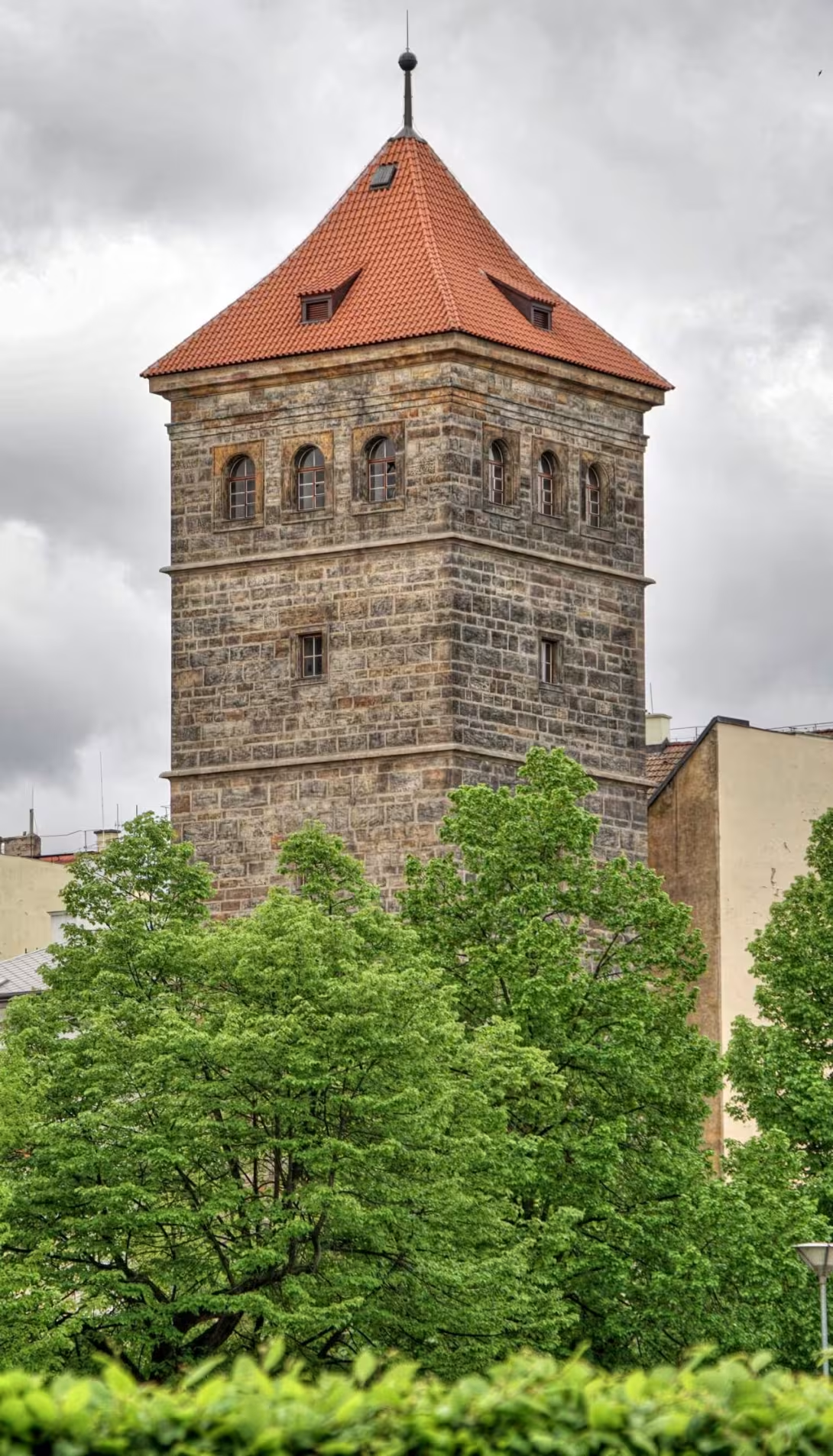
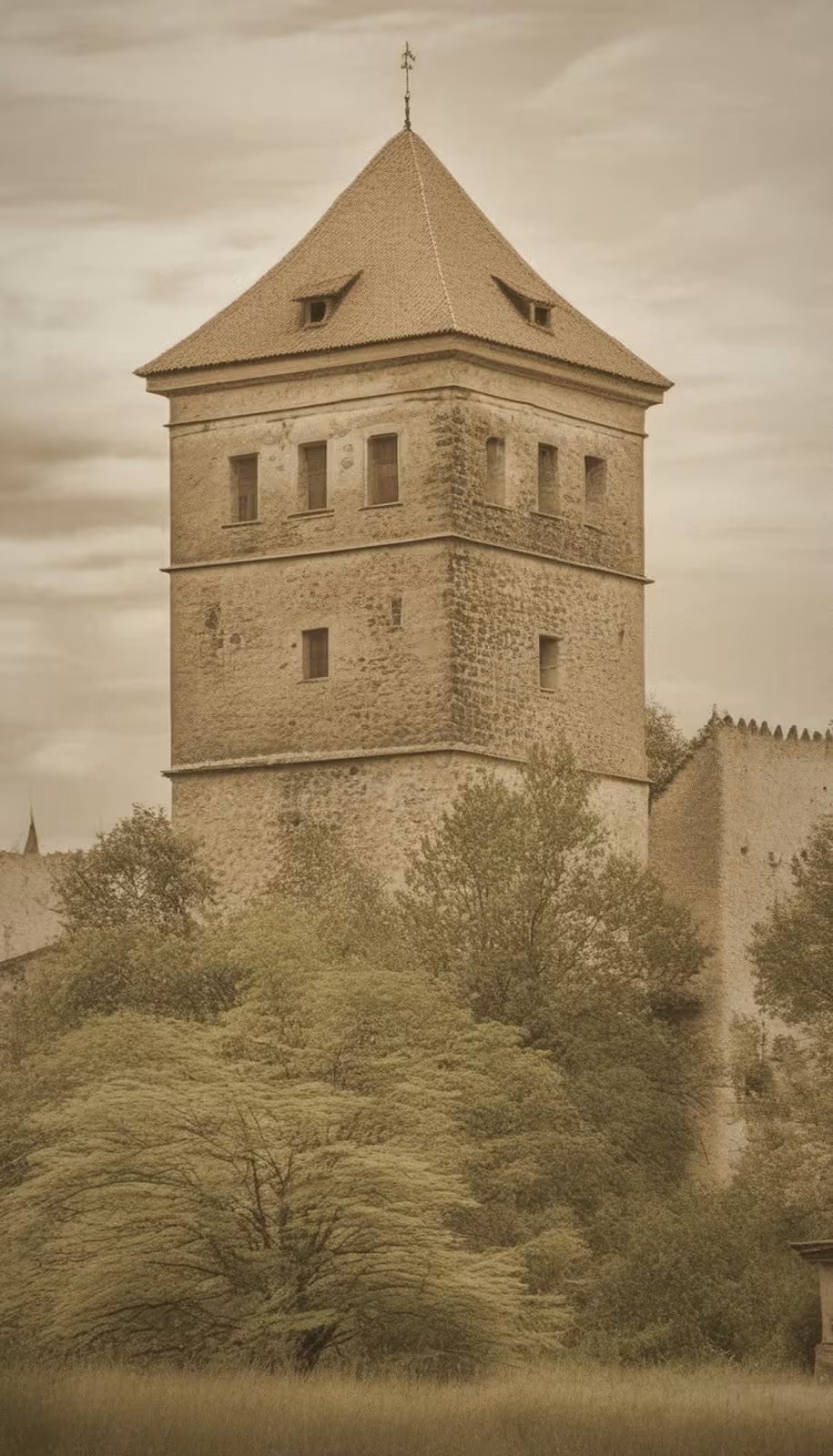
The historical appearance on the left is an AI-generated visualisation and serves as inspiration only.
Historical milestones
- 1484
- The first mention of the New Mill Water Plant in wooden form.
- 1655
- On February 6, the tower was torn and collapsed by the flood and ice stucco.
- 1660
- Completion of tower renewal by builder Jan Decapauli.
- 2017
- The opening of the multimedia exhibition in Prague burns.
Architectural development
The building has a square floor plan consisting of two concentrated prisms with internal staircase. The core is made of quarry stone with sandstone blocks and a likely portal from Slivenec marble. The top of the tower is decorated with a unique lusthaus with twelve windows.
Historical events
1655: Destruction of the tower due to flood and ice stucco; 2017: Open to the public after general reconstruction.
Owners
prague City
Points of interest
- The tower is 42 meters tall and has a unique year-old on top. It is the only preserved Prague water tower accessible to the public. - The sixth floor consists of a representative room with 12 windows, which represents world rarity at the water towers. - In 1655, the tower destroyed the flood and icy stucco. Between 1658 and 1660 it was restored by builder Jan Decapauli. - The water from the storage tank was brought into 65 public casks, breweries and private sources. - To adjust the bank in the early 20th century, the tower was 150 metres away from the river.
Guide
Show guide text
This text was created by artificial intelligence and has not been editorially reviewed. It may contain inaccuracies.
Welcome, distinguished visitors. Stop for a moment, take a breath and look ahead. You are now facing one of the most fascinating and at the same time the least well-known pearls of Prague architecture. In front of you is Novomlýnská vodárenská věž, which dominates the atmosphere of the entire Petra district. It is a building that carries centuries of Prague history, fighting nature and human ambition. Feel its potency and imagine how important it was at a time when water was not only available by turning the tap, but was a rare and carefully guarded source of life for the whole city.
To understand why this tower is even standing here, we have to go back deep into the past in our thoughts, until the fifth century of the fifteenth year. The first mention of the Novomlín Water Plant dates back to 1484. At that time, however, the tower did not look as you see it today. Originally, it was a wooden structure that, while fulfilling its purpose, was not created for eternity. Its main task was to supply the lower New Town with Prague water. Water was the key to hygiene, craft and survival at the time, and therefore the construction of an efficient distribution system was a priority of the city.
But, as the turn of the 16th and seventeenth centuries approached, the city's needs grew, and so did the builders' ambitions. The wooden structure was no longer sufficient, so it was replaced by a stone tower. This new building was not just a practical improvement. It became the highest and most expensive of all Prague waterworks. Imagine the boom and investment the city has put into this project. The tower was supposed to be a symbol of stability and prosperity, a stone guardian of liquid gold that flowed into the houses of the people of New Town.
Now please look up. Follow the tower line to its peak. The whole building is 42 meters. Notice how it rises above the surrounding collateral. At the very top you can see a unique element called this year's fight. It's basically a small summer house, raised above a city that served to relax and observe the surroundings. It is an extraordinary contrast - in the lower floors of the tower there was a hard technical process of pumping and distributing water while at the top, in the summer house, one could seek peace and admire the panorama of Prague.
But the history of this place is not only a story about growth and beauty, but also about dramatic breakdowns. If you look at the solid walls that surround you now, you might think this tower has always stood still. But the truth is much more dramatic. In the seventeenth century, namely the second February of 1655, the city hit a devastating flood. The water combined with the ice stucco, the huge pieces of ice that flowed through the river and hit the ground, developed the power of the tower to tear and collapse. Imagine the noise, the dust, and the chaos that must have lived through the surrounding streets at that time when this highest Prague waterworks collapsed to the ground.
But the city was unwilling to accept this loss. Soon after the disaster, work on reconstruction began. From 1658 to 1660, the tower was rebuilt under the guidance of a builder named Jan Decapauli. It was his hands and his planning that returned the tower to its shape and ensured that he could serve the people of Prague again. Jan Decapauli has put its experience into the building and thanks to it we can admire this building today in its present form. It is a testament to human endurance and the ability to rebuild what nature destroyed, but what was necessary for society.
Now, I want to draw your attention to one detail, which is a real world rarity, and which you will probably not see anywhere else. Once you enter and climb the sixth floor, you find yourself in a representative room. This room is surrounded by 12 windows. For the water tower, such a design is quite unusual. Most of the similar structures were purely functional, with minimal holes to ensure water stability and protection. Here, however, we will find an area that acts as a nobleman's salon rather than as part of a water supply system. Twelve windows release light into the space and offer a view which must have been absolutely fascinating at the time of its creation. It is an element of luxury in the heart of the technical building, which makes the Novomrnská Tower unique not only in Prague but also in the whole world.
Today, when you look at this tower, you will realise that it is the only preserved Prague water tower that is currently open to the public. All other similar buildings either disappeared in a flood of time or remained closed in the eyes of the curious. You have the extraordinary opportunity to enter the space that once beat the heart of the Prague tap.
At present, the tower is no longer used for water distribution, but it has become a home for culture and education. In 2017, a multimedia exhibition called Prague was opened. This exhibition will guide you through tragic and inspiring moments of Prague history, when the city fought fire and other disasters. It is very symbolic that this exhibition is based right here in a building that has experienced the destructive force of nature in the past in the form of floods and ice. The tower continues to perform its role as a guardian of memory, only no longer guarding water, but stories about the people who built this city, loved and saved in crises.
So imagine this building as a bridge between different ages. From the wooden beams of the fifth century, to the stone expansion of the Renaissance and Baroque, to the disaster of 1655, to the modern technology of today's times. Novomlýnská vodárenská věž is a silent witness to how Prague changed, how it grew and how it learned to overcome obstacles.
Now that you know her story, her past wounds and her unique beauty, we invite you to examine her closely. Come in, feel the cold stone walls and climb up to those 12 windows on the sixth floor. Take a look from the years to the roofs of Prague and try to feel the same peace that people were looking for hundreds of years ago. Let the atmosphere of Peter's Quarter consume you and let this tower tell you its other secrets.
Thank you for spending these moments with us at the New Mill Water Tower. We wish you a pleasant exploration trip and remember to note every detail of this unique building. See you in the next corner of our beautiful city.
Tips for visitors
Best time to visit The New Mill Water Tower is from spring to autumn when the weather is pleasant and fewer people gather on outdoor activities. This time of year offers ideal conditions for exploring the historical tower and surrounding park without unpleasant temperatures.
It is appropriate to use public transport for access to the Novomrnská water tower as it is located in the centre of Prague. Parking can be limited and difficult to find. We recommend that you verify the current connection by bus or tram, which will allow you comfortable access to the monument.
When visiting, take with you suitable shoes for walking on asphalt and lawn. It is also good to wear a protective umbrella and warm clothes in winter, as the climate can be cold. Don't forget to bring water or another beverage.
For shooting the New Mill Water Tower is the best time of the afternoon when the sun illuminates the structure of the tower in a special way. The best places for photos are located in the parking lots near the Štefanik Bridge or walking along the Vltava, where you can capture the tower in a rare context with the surrounding landscape.
There are several interesting places in the vicinity of Novomrnská water tower that deserve attention. In addition to the monument itself, it is possible to visit the church of St. Kliment or pass through the Štefanik Bridge and look at the panoramic view of Prague from its arch. It is advisable for families with children to visit parks nearby where children can play or enjoy beautiful nature.
Businesses nearby
Events nearby

Zdroj akcí: otevřená data měst a obcí ČR (Národní katalog otevřených dat) a kalendář akcí Národního památkového ústavu.
Nearby
St. Kliment's Church, Stephanik Bridge, Vltava.
Accommodation nearby
Trips and activities nearby
Guided tours, tickets and activities nearby from GetYourGuide
Affiliate link: if you buy from the partner, we may receive a commission. The price for you does not change.
Search tours and activities →Themed route
1. Church of St. Kliment Type: Sacral monument Why to visit: A historical object that represents an important religious point in this part of the city.
2. Štephanik Bridge Type: Bridge construction Why to visit: Offers an interesting view of the surrounding water surface.
3. Vltava Type: River Why to visit: Walk along the shore allows you to observe the flow of water.
4.Novomlýnská vodárenská věž Type: Technical monument Why to visit: The main destination of the trip, which serves as an important symbol of water economy history.
Seasonal recommendations
Spring brings to the surroundings The New Mill Water Tower awakens in nature, where the surrounding green slowly turns into a fresh shade. Light is usually soft and scattered during this period, which creates a calm atmosphere ideal for shooting without sharp shadows. In practice, spring is a great choice for those who want to avoid summer crowds, but they can look forward to longer days. We recommend layered clothes because spring weather is usually variable and it can be cold in the morning while the afternoon sunny. The most suitable visit is on Tuesday or Wednesday morning, when the monument is the quietest and you can enjoy the view of the city without disturbing elements.
Summer is the most busy time for this memory, when the sun lights up the facade of the tower and highlights its architectural details. The atmosphere is full of energy and tourism, which can be disturbing for some, but attractive for lovers of social life. Due to the expected crowds, especially on weekends and in the main summer season, it is essential to come as early as possible in the morning, ideally right after opening to enjoy space and pictures without strangers in the background. Clothes should be light and breathable, but don't forget enough drinking and sun protection, because in the summer heat the surroundings can warm up quickly.
Autumn offers a unique atmosphere where the leaves turn into warm shades and light takes on a golden tone that perfectly matches the stone structure of the tower. The nature around the monument is less green, but the autumn landscape has its specific charm, which the lovers of peace and melancholy appreciate. It is a period when crowds gradually become thinner after the summer season, allowing for a more intimate experience of the tour. We recommend a warm jacket and comfortable shoes because autumn rains can be unexpected and the cold is already in the afternoon. Visiting on Tuesday or Wednesday morning will ensure maximum privacy and quiet environment.
Winter brings to the surrounding tower a specific, often snow-like character that emphasizes the height and monumentality of the building. Shorter days and cold temperatures create an intimate and quiet atmosphere, ideal for thoughtful walks and observation of the city from a height. In advent time and around Christmas, the surroundings may be a little more busy due to Christmas lighting and markets in the centre, but the monument itself remains relatively calm. It is necessary to carry warm clothes, hat, gloves and shoes with a good heel to prevent damage on slippery sidewalks. The opening hours are often shortened in the winter months, so it is advisable to inform and plan a visit to the prehistoric hours when the light is the most suitable for photography and temperature.
Visualizations and artistic views


The visualisations are generated by artificial intelligence and serve as inspiration.
Photos from the area
Real photos taken near the monument


Zdroj a licence jsou uvedeny u každého snímku.
Tips from visitors
No tips yet. Be the first!
Log in and add your tip.
Sources and literature
Fotografie: MedaBleda, Prague City Tourism / CC BY-SA 4.0 — Wikimedia Commons. The author and licence also appear when you hover over the image.
Faktickým podkladem tohoto textu byl článek na Wikipedii, jehož autory jsou přispěvatelé Wikipedie. Článek je dostupný pod licencí CC BY-SA 4.0.
Location on the map

Příběhy a pověsti
Legendy, pověsti a příběhy spjaté s touto památkou

Fotografie návštěvníků
Zatím žádné fotografie. Buďte první, kdo přidá fotografii z návštěvy!
Přihlaste se a přidejte svou fotografii nebo hodnoťte.
Za ověřenou návštěvu v aplikaci získáte víc bodů — poznáme podle GPS, že jste na místě.
Reviews and comments