






oděvní továrna Jana Nehery Factory
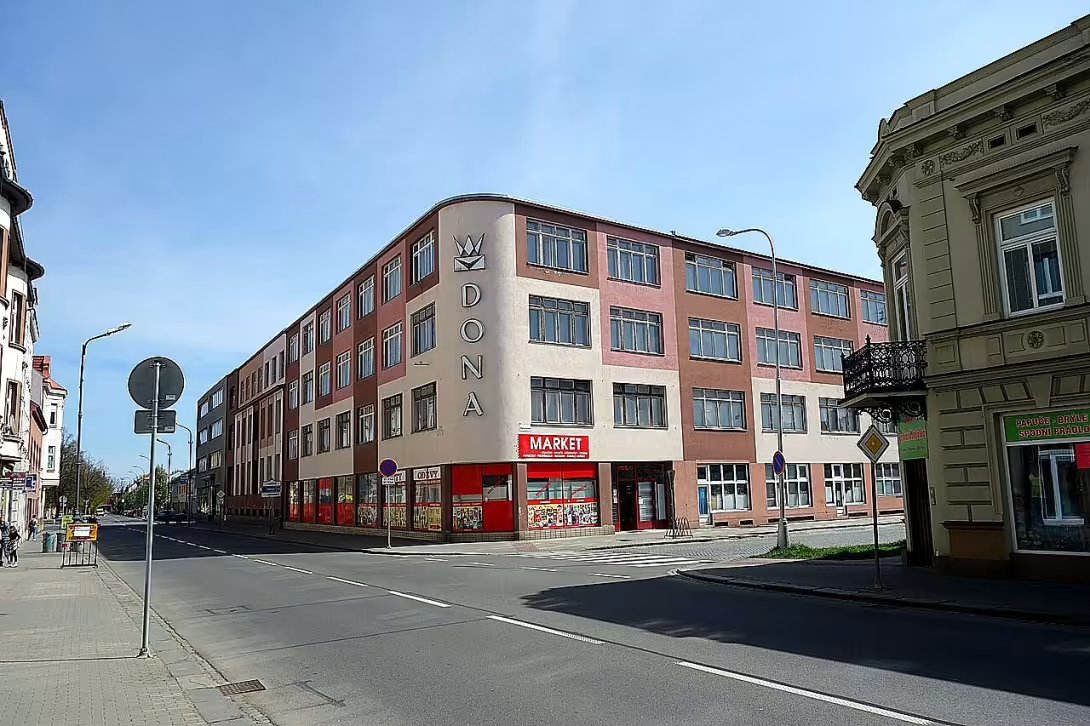
Jan Nehera's clothing factory, also known as Dona, is a functionalist building in Prostějov. The building, whose history dates back to 1910, represents an important proof of the industrial expansion of the city during the interwar period and is closely related to the development of Czechoslovak clothing.
The original factory building was created in 1910 as a facility for the production of shoes by Wolf and Franže. At that time, the Czech countries were at the end of the Austrian-Hungarian era, when industrialization culminated in the cities. After the collapse of the shoe company in 1933, the textile entrepreneur Jan Nehera bought the complex in 1934 and started its extensive reconstruction into a clothing plant.
The architectural form of the complex is the result of several stages of modifications that imprinted its modern functionalist character. In 1934 a department store was added to the original building according to the design of architect Rudolf Valoušek, which was further extended in 1938. An important element of the whole complex is the functionalist wing, which was created in 1939 according to the design of architect Antonín Naval.
The property's history begins with Wolf and Franže, which ran the premises until 1934. It was subsequently taken over by Jan Nehera, in whose era the factory underwent major changes. In a later period, the site was adapted for the needs of the sending house Don.
The construction became a subject of monument protection, but efforts to declare it a cultural monument in 2011 and 2016 were not successful and proposals were rejected. Despite these administrative steps, the building remains an important part of Prostějov industrial architecture.
Today the object serves as a reminder of the era when Prostějov belonged to the centres of the clothing industry in Czechoslovakia. The visit to the complex offers the possibility of viewing functionalist elements that defined the form of interwar construction. The construction is a valuable testament to the economic history of the region and deserves the attention of any person interested in the architecture of the 20th century.
Then and now
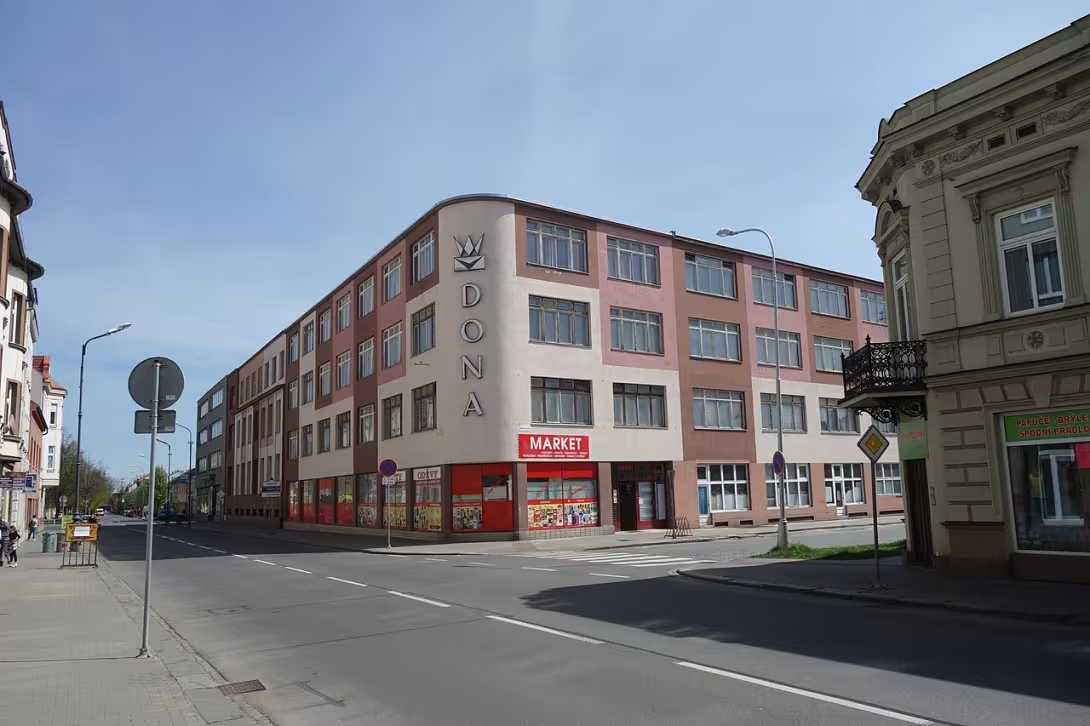
Drag the slider to compare how the landmark may have looked when it was built with the view today.
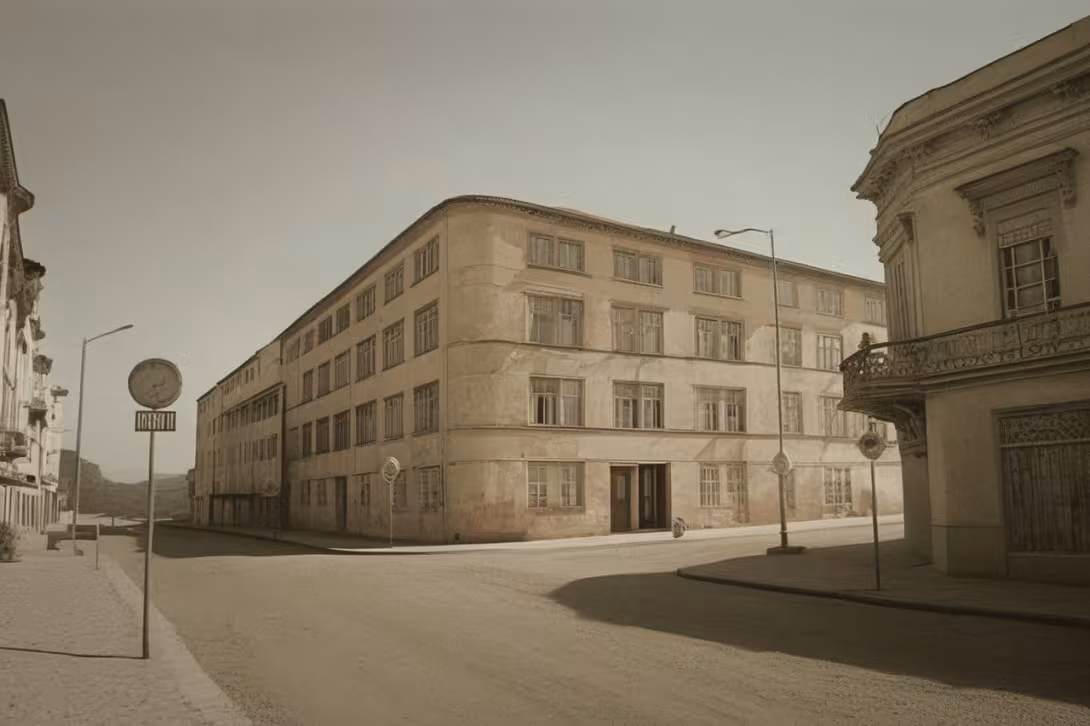
The historical appearance on the left is an AI-generated visualisation and serves as inspiration only.
Historical milestones
- 1910
- Construction of the original Wolf & Franže factory.
- 1934
- The purchase of the Jan Neherou complex and the start of the reconstruction.
- 1939
- The addition of the functionalist wing according to architect Antonín Naval.
Architectural development
The base is a factory building from 1910, to which in 1934 a department store was built according to the Rudolf Valoušek project. He was further extended in 1938. In 1939 a functionalist wing was added according to architect Antonín Naval.
Historical events
In 1933 the original shoe company Wolf & Franže failed. In 1934 Jan Nehera bought the premises and started the reconstruction into a clothing factory. In 2011 and 2016, a failed meeting was held on the declaration of the site as a cultural monument.
Owners
Wolf & Franže (1910-1934), Jan Nehera (since 1934), later the sending house of Don.
Points of interest
- The original factory building was created in 1910 as a facility for the production of shoes by Wolf and Franže. - In 1934 the textile entrepreneur Jan Nehera bought the complex and started its reconstruction into a clothing plant. - The department store was built in 1934 according to the design of architect Rudolf Valoušek and was expanded in 1938. - The functionalist wing of the complex was created in 1939 according to the design of architect Antonín Naval. - Efforts to declare the construction as a cultural monument in 2011 and 2016 were not successful and proposals were rejected.
Guide
Show guide text
This text was created by artificial intelligence and has not been editorially reviewed. It may contain inaccuracies.
Welcome to Prostějov. You are standing right in front of one of the most important industrial symbols of this city, in front of a building that is not just a set of walls and windows, but a living witness to a huge transformation that took place in the industrial heart of this region. In front of your eyes is a complex that represents for many the very essence of modern Prostějova. Feel the atmosphere of a place where the history of traditional craft meets with a visionary view of the future. Now, when you look at this vast object, you may perceive its unusual, coherent form, but know that what you see is the result of a long and fascinating evolution.
Let's go back in time together and understand how this place came to be. Imagine 1910. Prostějov was going through another era. This building did not start as a clothing race as we know it today. Originally there was a place for the production of footwear. It was owned by Wolf and Franz. At that time it was a completely different type of operation, a different rhythm of work and a different need for space. The building was then designed for other purposes and its appearance was probably much more conservative. At the time, this whole complex was perceived primarily as a practical background for the production of shoes, but fate had a much larger role to play for this place.
The turning point was 1934. That's the date you need to remember, because that's when the face of this place changed forever. A man entered the premises whose name became synonymous with success and quality in the textile industry - Jan Nehera. This businessman wasn't just the owner, he was a visionary. When he bought the site, he wasn't just going to use it, he wanted to transform it. He decided to build a modern clothing plant instead of producing shoes, which will represent a new era of production. These decisions triggered a chain of reconstructions that made the original object a monumental whole.
Now pay attention to the architecture you are currently observing. What you see before you is a masterpiece of functionalism. If you look at the facade and the overall structure of the building, you will notice certain purity and logic. In fact, functionalism does not seek beauty in unnecessary ornaments, but in how well the building performs its function. Everything here has its direction and purpose. Notice how different parts of the building connect. It is not just one piece of construction, but a complex puzzle of various stages, which thanks to the common architectural language have perfectly integrated.
In 1934, just when Jan Nehera took over the premises, one of the key parts - the department store - was completed. This project was developed by architect Rudolf Valoušek. It was this piece that added its modern, urban character to the building. And the process didn't stop. In the following years, namely around 1938 and 1939, additional wings were added to the whole. Another important architect, Antonín Navrátil, has already entered the game. Thanks to his work and the former work of Rudolf Valoušek, the complex has acquired a modern, functionalist form that calls you today. Now, when you look at the lines and the way the building operates in space, feel the effort for modern, clean and efficient space that was so revolutionary for the time being.
And right here, we need to stop by the character that is crucial to this place. Jan Nehera. He himself was the engine of all this movement. He wasn't just a textile businessman, he was a man who understood people's needs and the rhythm of the modern world. His vision turned the Prostějov compound into a clothing empire. When you look at these walls today, imagine the energy, the dynamics that took place here in the mid-20th century. Nehera wasn't just a factory builder, he was building the entire industrial identity of this town. His name was so strong that even later, when the campus became known as Dona, there remained a trace of his work and his visionary work in every corner of this place present.
If you're looking for something out of the ordinary in this place, think about how much you've managed to connect the old one to the new one. It is a fascinating mystery of architecture, as the original building from 1910, built for the production of footwear, was so perfectly transformed into a modern textile plant. We often encounter that new parts act abroad as bodies of a foreign organism. But it's different here. From 1910 to 1934 to 1939, the gratification created a unique whole, where every other layer does not seem to be an intrusion, but rather a logical continuation of the story. It's like watching a living organism grow stronger and more balanced every decade.
Now that you know the story of this place, its creator and the architects who breathed in its present appearance, I urge you to continue your walk. Let the atmosphere of this place drift. Look at the surrounding areas, see how this building relates to the surrounding street and how much it affects the whole view of this city. Every detail you see here is part of a larger story about human ambition, industrial progress and the beauty of functional design. Thank you for stopping by and paying attention to this important witness to history. We wish you a beautiful next part of your trip to Prostějov.
Tips for visitors
A tour of functionalist architecture is recommended to plan for the morning hours, when sunlight best depicts clean lines and geometric shapes of the facade. You will avoid the afternoon shadows that could disrupt the overall impression of this industrial monument.
The property is located in Prostějov, where you can comfortably reach by car and public transport. Parking is possible in adjacent streets, with precise standing options and current transport connections I recommend to verify in map materials or locators.
To visit, wear comfortable shoes to move around the factory and the camera. The building offers great opportunities for lovers of industrial aesthetics, especially when capturing details of windows and structural elements that stand out in bright daylight.
After a tour of the Jan Nehera factory, you can visit the historical centre Prostějova, where you will be particularly interested in the local town hall. The city is famous for its architecture, which is why I recommend that we devote time to other functionalist structures in the area.
For families with children, the location is suitable as part of a city walk. Due to the industrial nature of the monument, I recommend to the children to approximate the history of the clothing industry, which was crucial for Prostějov, and to link it to the city centre visit.
Businesses nearby
Do you run a restaurant, accommodation, shop, museum, rental, wellness or other visitor service near this monument? Show yourself directly to the people heading to it — this is how they will see you in the app and on the web:
Nearby
Prostějov disponuje řadou dalších funkcionalistických staveb a historickým centrem s radnicí.
Accommodation nearby
Trips and activities nearby
Guided tours, tickets and activities nearby from GetYourGuide
Affiliate link: if you buy from the partner, we may receive a commission. The price for you does not change.
Search tours and activities →Themed route
1. Historical Center with Town Hall - Type: City Core. Why: It offers a tour of the dominant town hall and the historic atmosphere of the city. 2. Functional buildings - Type: Architectural monuments. Why: They represent unique examples of modern style within Prostějova. 3. Jan Nehera clothing factory - Type: Industrial complex. Why: The main destination of the trip, which shows the importance of the textile industry in the region.
Seasonal recommendations
Spring to Prostějova brings soft, smooth light, which highlights the details of industrial architecture beautifully. In the vicinity of the complex, the greenery begins to bloom, which gives historic buildings a fresh and revived look. This period is ideal for visiting because you avoid the biggest crowds, but the weather is already pleasant. We recommend taking layered clothes because the morning cold can still be felt.
Summer months offer long days and intense sunlight that illuminates the facades of buildings in full beauty. There are more people in the city in the main summer season, so it is best to arrive first thing in the morning to enjoy the tour in peace and avoid the greatest heat. Don't forget light summer clothes and plenty of liquids, because concrete surfaces around historical objects can emit heat at noon.
Autumn season is great for the tour thanks to golden light and nostalgic atmosphere, which is great for the historical heritage of the textile industry. The leafy trees in the surrounding area create a colored frame for industrial buildings. Because of the weather and the wind, we recommend a waterproof jacket. It's a time of peace where there are fewer visitors on the premises than in the summer months.
In winter, the factory is active in quiet and quiet, often in freezing morning haze or under snow. The day is short, therefore it is best to plan a visit around noon when there is the most light. Due to low temperatures, be sure to dress thoroughly in warmer layers and consider the shorter opening time some parts of the building may have during this period.
Visualizations and artistic views


The visualisations are generated by artificial intelligence and serve as inspiration.
Photos from the area
Real photos taken near the monument

Zdroj a licence jsou uvedeny u každého snímku.
Tips from visitors
No tips yet. Be the first!
Log in and add your tip.
Sources and literature
Photos: Mahaj / CC BY-SA 4.0 — Wikimedia Commons. The author and licence also appear when you hover over the image.
Faktickým podkladem tohoto textu byl článek na Wikipedii, jehož autory jsou přispěvatelé Wikipedie. Článek je dostupný pod licencí CC BY-SA 4.0.
Location on the map

Příběhy a pověsti
Legendy, pověsti a příběhy spjaté s touto památkou

Fotografie návštěvníků
Zatím žádné fotografie. Buďte první, kdo přidá fotografii z návštěvy!
Přihlaste se a přidejte svou fotografii nebo hodnoťte.
Za ověřenou návštěvu v aplikaci získáte víc bodů — poznáme podle GPS, že jste na místě.
Reviews and comments