






Ostrava střed Railway station
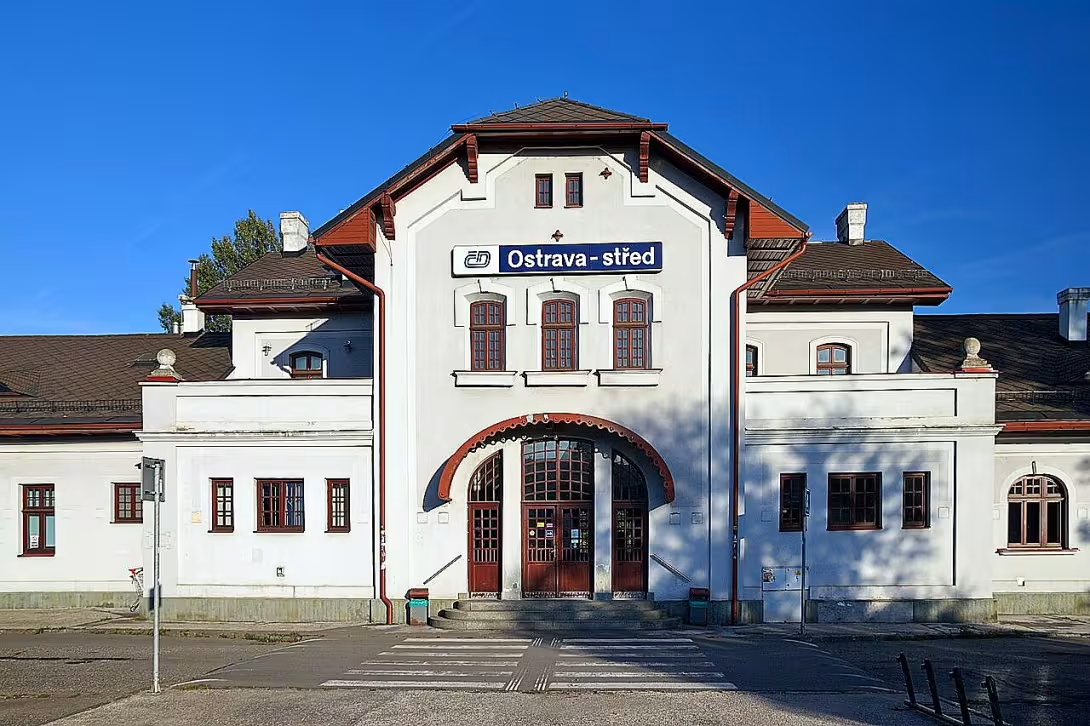
Ostrava střed, a historical station located in the village of Moravská Ostrava, is not only an important railway station, but also a cultural monument complex. It is located near the city centre and serves as a key transport hub with turns to Vítkovické ironworks and Bánská Ráhy. Its history dates back to the second half of the nineteenth century, when construction started as part of the development of railway transport in the area. In 2003, the whole complex of the station building and the building tower was declared a cultural monument, highlighting its historical and architectural value.
The origin of Ostrava centre is closely linked to the intensive industrialization of the region at the time of Austria-Hungary. In 1869, the guard councilman, alongside Mayor Alois Anderka, submitted a proposal for the construction of the railway station to the Ministry of Transport in Vienna. The city offered the land for free for this purpose, which allowed construction to start in 1871 at the same time as the opening of the Ostrava - Valašské Meziríčí line. The original name Ostrau-Witkowitz reflected its location between Moravian Ostrava and Vítkovické železárny.
The architecture of the station building has undergone several stages of development. It was originally built as a single-storey brick structure with three-axis risalite on both longitudinal sides. With an increase in passenger traffic, the need for enlargement was created, leading to the gradual addition of walled wings for working rooms and offices. In 1892 the first phase of enlargement was carried out, followed by further modifications in 1903, which included extension of wings and enlargement of the vestibule. The architect Franz Bobrowsky created a project of the final design of the building in 1910, which preserved the central storey structure with side wings. The original Art Nouveau elements were insensitive in the eighteenth years of the last century during repairs that took place in 1987.
In 2003 there was a sign of reconstruction under the authoritative management of Ing. Arch. Jaroslav Kotk and Ing. Pavel Krátý, which brought neutral monochrome colour of interiors with wooden tiles and new tiles. Today, the building is the site of the Moravian-Silesian Railway Museum, which attracts people interested in the history of railways.
The current passenger traffic operation at the Ostrava střed station is integrated into the ODIS system and covers various lines on and off the top of the working days. The station offers a range of services for passengers, including the national cash register, waiting room and wheelchair accessible toilets.
Ostrava střed is not only an important transport hub, but also a witness to the historical development of the region. Its architectural value and cultural importance make it an interesting destination for visitors who want to know the rich history of Ostrava and its industrial heritage. Visiting this place offers an opportunity to explore not only the railway infrastructure but also the cultural monuments of the region.
Historical milestones
- 1871
- Construction of the building.
- 1892
- Adding raked wings for offices and waiting rooms.
- 1910
- Creation of the building's final design project.
- 2003
- Declaration of the object for cultural monument.
Architectural development
The original storey walled building was gradually extended by raked wings and enlarged vestibule. In 1910 architect Franz Bobrowsky created a project of final design with central building and side wings. After an insensitive repair in 1987, a modern reconstruction in neutral style took place in 2003.
Historical events
- 1869
- Design for the construction of the railway station submitted to the Ministry of Transport in Vienna.
- 1871
- Start construction of the railway station building together with start of operation of the line.
- 2003
- Declaration of the building and building towers for cultural monument.
Points of interest
- Ostrava střed is a historic station located in the village Moravská Ostrava and serves as a cultural monument complex. - The whole complex of the station building and the building tower was declared a cultural monument in 2003, highlighting its historical and architectural value. - The origin of Ostrava centre is closely linked to the intensive industrialization of the region at the time of Austria-Hungary, when the construction started in 1871. - The architecture of the station building went through several stages of development and its final design was designed by architect Franz Bobrowsky in 1910. - The reconstruction was carried out in 2003 under the authorial management of Ing. Arch. Jaroslav Kotk and Ing. Pavel Krátý, which brought neutral monochrome colour of interiors.
Guide
Show guide text
This text was created by artificial intelligence and has not been editorially reviewed. It may contain inaccuracies.
Welcome to Ostrava Centre, a key place in the history and architecture of Moravian Ostrava. You are standing in front of a monumental front that greets you with its impressive appearance and historical significance. In front of you is a railway station with a rich past whose towers and facades tell stories of ancient times.
Ostrava střed was built in the second half of the nineteenth century as part of the development of railway transport. The launch of the construction in 1871 laid the foundations for the future development of this place, which became not only an important transport hub but also a cultural centre. In 1892, the barbed wings for offices and waiting rooms were added, which enabled the expansion of services and increased the comfort of passengers. The project of the final design of the building was created in 1910 and thus established the architectural direction of this historical building.
Look up at the tower and the facade. These elements are the work of architects Franz Bobrowski, Jaroslav Kotk and Pavel Kratke. Note the elegant lines and details that reflect the historical context and artistic skills of that time. This complex is an excellent example of the architecture of its era.
Among the key figures associated with Ostrava Centre were Alois Anderka, whose efforts were invaluable for the development and maintenance of this place. His contribution to the railway industry and the local community left a permanent mark on the history of this station.
The interesting thing is that the entire station complex was declared a cultural monument in 2003. This status highlights not only its architectural value, but also its historical importance for the region and the whole national heritage.
Let's move on to the other parts of this fascinating place. Now pay attention to the Railway Museum, which is part of Ostrava's centre and offers a rich collection of items from the past railways.
I hope you have already immersed yourself in the history and beauty of this place. By inviting you to further explore I salute you with the hope of further discoveries and stories that this monument has to offer. Thank you for your visit to Ostrava Center.
Tips for visitors
Best time to visit The Ostrava center is in the spring or autumn season when the weather is pleasant and mild. This time of year offers ideal conditions for walking around historic buildings without extreme heat or cold.
Parking in the vicinity of Ostrava centre is possible on several parking lots located near the railway station. You can also use public transport for arrival, such as buses and trams, which provide comfortable access to the city centre.
It is advisable to bring sun protection, water and long-walking shoes when visiting. If you are planning a photo shoot, we recommend bringing a mirror or a mobile camera.
For photographers, ideal places to capture Ostrava are the center in the morning light, when the sun illuminates historic buildings. Photograph from the west side so you can grab the best colors and shadows.
In the vicinity of Ostrava, the centre is located Vítkovická hardware plants, which are an ideal destination for visiting. The historical centre of Ostrava offers many interesting buildings and monuments that can be explored during walking or cycling.
Businesses nearby
Do you run a restaurant, accommodation, shop, museum, rental, wellness or other visitor service near this monument? Show yourself directly to the people heading to it — this is how they will see you in the app and on the web:
Events nearby
Zdroj akcí: otevřená data měst a obcí ČR (Národní katalog otevřených dat) a kalendář akcí Národního památkového ústavu.
Nearby
V blízkosti se nachází Vítkovické železárny a historické centrum Ostravy.
Accommodation nearby
Themed route
1. Moravská Ostrava, the village, serves as the starting point of your journey. 2. Vítkovické železárny, industrial complex, represent an important part of technical history. 3. the historical centre of Ostrava, the urban area, offers a view of the older architecture. 4. Ostrava střed, the urban area, is the main destination of your route.
Visualizations and artistic views

The visualisations are generated by artificial intelligence and serve as inspiration.
Photos from the area
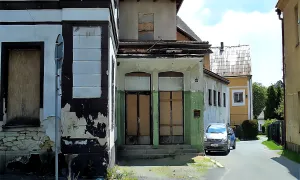
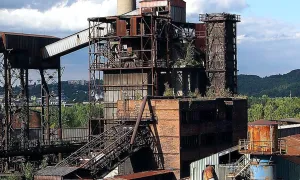
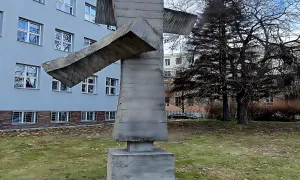
Real photos taken near the monument

Zdroj a licence jsou uvedeny u každého snímku.
Tips from visitors
No tips yet. Be the first!
Log in and add your tip.
Sources and literature
Photos: Hons084 / CC BY-SA 4.0 — Wikimedia Commons. The author and licence also appear when you hover over the image.
Faktickým podkladem tohoto textu byl článek na Wikipedii, jehož autory jsou přispěvatelé Wikipedie. Článek je dostupný pod licencí CC BY-SA 4.0.
Location on the map


Příběhy a pověsti
Legendy, pověsti a příběhy spjaté s touto památkou
Fotografie návštěvníků
Zatím žádné fotografie. Buďte první, kdo přidá fotografii z návštěvy!
Log in a přidejte svou fotografii nebo hodnoťte.
Za ověřenou návštěvu v aplikaci získáte víc bodů — poznáme podle GPS, že jste na místě.
Reviews and comments