



Ottlilienfeldský dům House
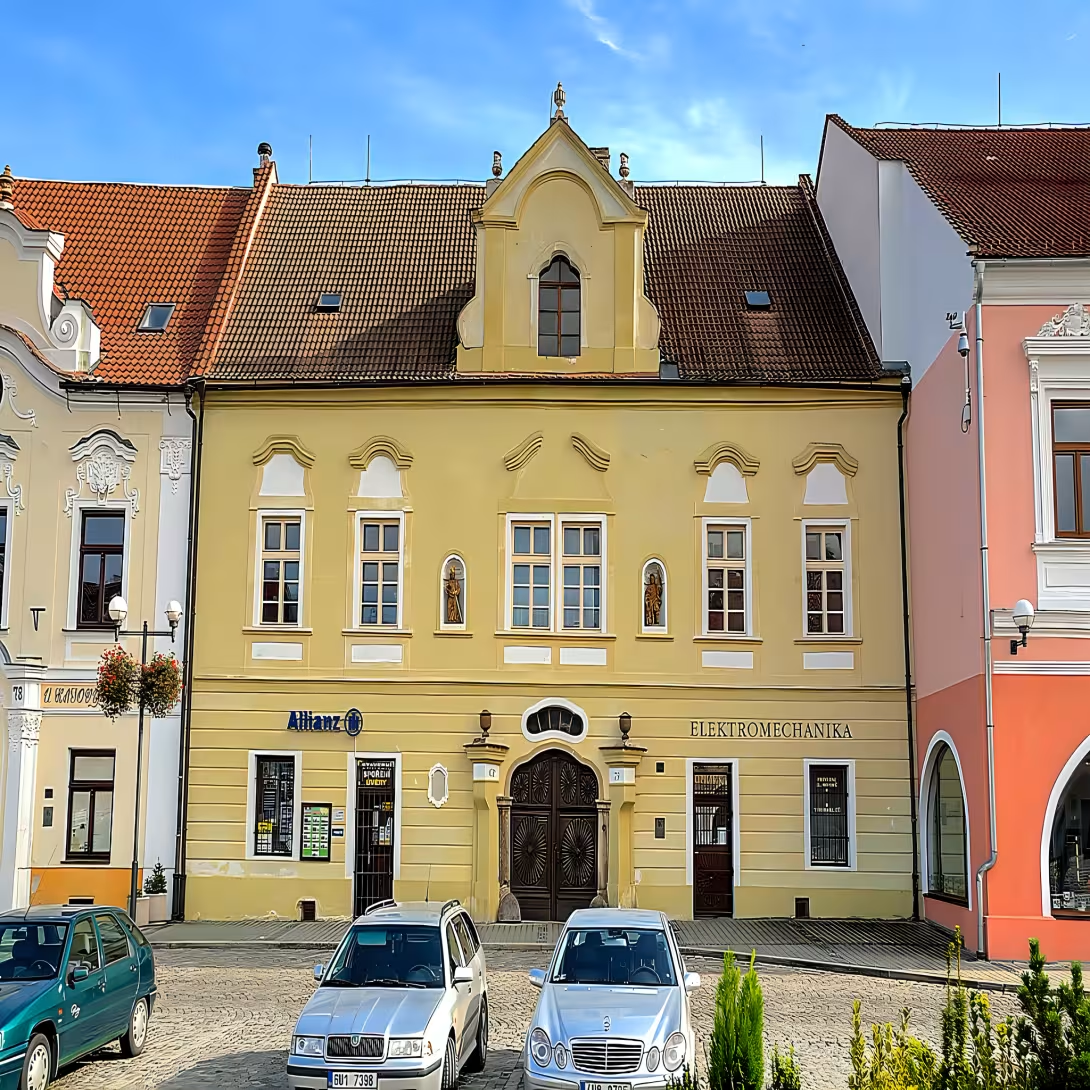
Ottlilienfeldský dům is the historic townhouse No. 79 on the main square in Kadani. The building dates back to the turn of the 13th and 14th century. It is especially important with its connection to the visit of emperor Josef II and a long history as the residence of important families and the regional captain.
The building was created during the flowering of Central European cities and the development of craftsmen. Kadaň was an important business and administrative centre of the region during this period. Shortly after the construction of the house, he acquired the status of a lawyer's house.
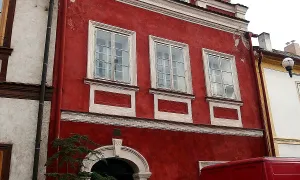
Today, the facade is decorated with a commemorative plate commemorating an imperial visit and two statues of saints, Barbara and Florian. These patrons protect against sudden death and fire, reflecting the dramatic history of construction. The building has been subject to fires several times over the centuries, namely in 1631, 1635 and 1746.
The ownership of the house has changed over time several important personalities. Since 1539 it was owned by the townsman Hieronymus Clement, who bought it from Regina, the widow to Wolf from Tvěkom. From 1567 to 1580 he was a short break in the property of Cyriak Kirwitz, the ancestor of Jesuit missionary Václav Pantaleon Kirwitz. After the fires in the first half of the 17th century, Zuzana Bähr, the wife of Mayor Salomon Bähr of Jirkov, was the owner. In 1742 the house was taken over by the tax collector of Žatecký kraj Franz Maximilian Kölsche from Kölschsheim.
Since 1762, the house was owned by Ignaz of Ottlilienfeld. His father, Jakob Ignaz Otto of Ottlilienfeld, was promoted to noble status in 1732. It is after this family that the building has acquired its current name. Ignaz z Ottlilienfeldu, a long-standing county captain, died here in 1792. By 1945, the building was owned by the Herold family.
The key event was the visit of emperor Josef II, who stayed here from 30 September to 1 October 1779. The Emperor was accompanied by the Field Armory Master Count Karel Pellegrini, General Maximilian Ulysses Browne and four staff officers. He was staying at the house that served as the seat of the county captain at the time. In addition to the facade, this event is commemorated by a cast iron statue on the Student Square. Another interesting thing is that at the turn of the 19th and 20th centuries, Anna Letz's private music school worked in the building.
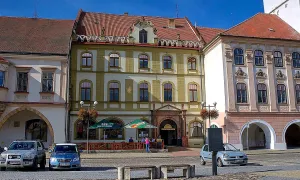
Ottlilienfeldský dům has been protected as a cultural monument of the Czech Republic since 1958. It is located near the Dean's Church of the Ascension of the Holy Cross and the Student Square.
The monument is a valuable document of the urban development of Kadana and a testimony about the life of local nobles and officials. Her visit allows you to see closely traces of history written into the facade of one of the most important houses in the main square.
Historical milestones
- 1539
- The townsfolk Hieronymus Clement took possession.
- 1779
- Emperor Josef II. stayed in the house
- 1958
- The house was declared a cultural monument of the Czech Republic.
Architectural development
The house was destroyed several times during history by fires, namely between 1631, 1635 and 1746. The facade of the house is today decorated with a commemorative plate and statues of Saint Barbara and Saint Florian.
Historical events
Night of emperor Joseph II in 1779- 1780, death of regional captain Ignaz from Ottlilienfeld in 1792.
Owners
Hieronymus Clement (from 1539), Cyriak Kirwitz (1567-1570 and further to 1580), Zuzana Bähr (about 1641), Franz Maximilian Kölsche from Kölschsheim (1742), Ignaz z Ottlilienfeldu (from 1762), Herold family (until 1945)
Points of interest
- The building dates back to the turn of the 13th and 14th century and soon after the construction it acquired the status of a legal house. - The facade is decorated with statues of Saint Barbara and Florian and a commemorative plate commemorating the visit of emperor Joseph II. - The house burned down several times over the centuries, namely between 1631, 1635 and 1746. - Emperor Josef II. stayed here from September 30 to October 1, 1779, when the building served as the seat of the county captain. - At the turn of the 19th and 20th centuries, Anna Letz's private music school worked in the building.
Guide
Show guide text
This text was created by artificial intelligence and has not been editorially reviewed. It may contain inaccuracies.
Welcome to the heart of Kadana. Right now you're standing in front of one of the most important houses in the main square, which is Ottlilienfeldský dům with number seventy-nine. If you look at it, you'll see a building that tells the story of many centuries of urban life in its form. It's a place where the everyday history of ordinary people collides with the fate of powerful rulers and high officials. Stop for a moment, take a breath and let yourself be transferred to a time when this square looked completely different, but this house was already standing here watching everything that was happening around it.
Now let's look deeper into the past. This house is not just an ordinary building, but a real witness to the birth and transformation of this city. It originated at the turn of the 30th and 14th centuries. Imagine what an incredible time it was. Shortly after its construction, this house acquired a very special status, because it became a house of a lawyer. This means that there was a person who was responsible for the administration of law and order in the urban environment. So it was a building with a certain weight and authority from the beginning. During the next century, there were important townspeople and the house also served as the seat of the Zátek county captain, which only confirms that there were always people with great power and influence.
Now pay attention to the appearance of the building itself. Look closely at her facade. Although the house has undergone many changes during its long existence, it still carries traces of its history. Notice the details that decorate the facade. Your eyes should now find statues of Saint Barbara and Florian. These figures are not just for decoration, but in the past, they should have brought protection to the house and its inhabitants. Next to them, you'll see a memorial record. This board is very important because it commemorates one of the most important events that took place in this house.
When we talk about the personalities we associate with this place, we cannot ignore the visit of emperor Joseph the other. Imagine the year is seven hundred and seventy-nine. It was in this house that this famous monarch slept. Imagine the commotion, preparation, and tension that must have prevailed in the house and throughout the city when the Emperor himself stayed in it. It was a time of enlightenment, a time of change and reform, and the fact that Joseph the second chose this very house for his rest, gives the building a special sheif. In addition to the emperor, Ignaz z Ottlilienfeldu is connected to the house, after which the house probably got its name. In the year of the thousand and five hundred thirty-nine then the townsman Hieronymus Clement took over, which shows how ownership of the house changed over time from the hands of the nobles to the hands of rich townspeople.
Now I want to impress you with something that you can't see at first sight, but that makes up a dramatic part of the history of this building. The history of this house was not only about famous visits and high offices, but also about fighting adverse elements. Notice how hard the house is today, but in the past, it had to overcome major disasters. The building burned down several times. The house suffered the greatest wounds in a thousand six hundred thirty-one, a thousand six hundred thirty-five and again in a thousand seven hundred forty-six. Imagine the flames that could have destroyed the whole neighborhood in those days, and the sense of despair that the owners must have felt when they saw their home in ruins. Yet every time the house has been raised again from the ashes, it has been repaired and restored, indicating its value and importance for the city of Kadaň.
It is this ability to survive fires and change regimes that has made the building a real jewel. It is therefore perfectly natural that since the year one thousand nine hundred fifty eight Ottlilienfeldský dům is protected as a cultural monument of the Czech Republic. It is a recognition that this house is more than bricks and mortar, a monument to human endurance and the history of the entire region.
Now, if you look at the house as a whole again, consider it not only as a historical building, but as a book in which the fate of Qadana is written. From the medieval lawyer to the imperial night to the people who rebuilt the house after every fire. All these layers of time are connected in one facade.
Thank you for stopping by this wonderful place. I hope the stories of the Emperor Joseph and the courage of the people who restored the house have intrigued you. Now you can quietly continue to explore the beautiful Kadana and discover other hidden corners of this historic city. I wish you a pleasant walk and many new experiences. Goodbye.
Tips for visitors
The best time to visit is morning or late afternoon time when the sun hits the facade of the house at an angle, which will highlight the details of the historical wall from the turn of the 13th and 14th centuries. Since it's a residential building, focus on the external observation of architecture.
We recommend comfortable shoes suitable for walking through the historical centre.
For the best photos we recommend you search for an angle that captures the house together with the surrounding building of the square. Ideal light for facade images depends on the position of the building during the day.
In the immediate vicinity, within short walks, visit the Dean's Church of the Elevation of the Holy Cross or Student Square. These places complement the overall impression of the historical core of the city.
Families with children can use a visit to play in search of old characters on homes. Walking around the house and surrounding squares is safe and suitable for children thanks to the pedestrian zone.
Frequently asked questions
Can the monument be visited?
This is a residential or farm building, not a museum with opening hours. Please view it from public space and respect the owners' privacy. We have no information about access to the interior.
Where is the monument?
Location: Kadaň. The map on this page shows the exact spot.
Why is the monument protected?
It is listed in the Central List of Cultural Monuments of the Czech Republic as a cultural monument (register no. 1000159269).
Businesses nearby
Do you run a restaurant, accommodation, shop, museum, rental, wellness or other visitor service near this monument? Show yourself directly to the people heading to it — this is how they will see you in the app and on the web:
Nearby
Dům se nachází na hlavním náměstí v Kadani v blízkosti děkanského kostela Povýšení svatého Kříže a Studentského náměstí.
Accommodation nearby
Themed route
Here is a proposal for a short walk downtown:
1. Student Square - open space. Ideal place to start the journey and first in the atmosphere of the city. 2. Ottlilienfeldský dům - historical building. The main objective of the visit, which will capture its architecture and history. 3. The Dean's Church of the Ascension of the Holy Cross - Temple. Significant nearby construction that complements the spiritual and aesthetic dimension of the route.
Seasonal recommendations
In spring, the surroundings of the building are awakened into colours and fresh leaves of trees create a fine frame to look at the facade. For a walk it is best to choose the morning when the light is soft and clean. It is recommended that footwear suitable for wet grass and light jacket against the wind.
In the summer months, the area dominates the intense sun and rich green, which gives the building a contrast background. The best time to visit is early morning or late evening to avoid heat. It is advisable to wear light, breathable clothes and a hat on your head.
Autumn brings gold and brown tones to the landscape that match the historical appearance of the house. The atmosphere is quieter and melancholic, while the low sun highlights the details of architecture. It's practical to bring waterproof shoes and a warmer sweater.
In winter, the construction works more closely, especially if snow and freezing air cover it. The lighting is gray and the days are short, creating a quiet and desolate environment. For outdoor inspection it is necessary to wear thick winter clothes, gloves and tight shoes with anti-slip soles.
Visualizations and artistic views

The visualisations are generated by artificial intelligence and serve as inspiration.
Photos from the area
Real photos taken near the monument


Zdroj a licence jsou uvedeny u každého snímku.
Tips from visitors
No tips yet. Be the first!
Log in and add your tip.
Sources and literature
Photos: Lukáš Kalista / CC BY-SA 4.0, rozlišení zvýšeno umělou inteligencí — Wikimedia Commons. The author and licence also appear when you hover over the image.
Faktickým podkladem tohoto textu byl článek na Wikipedii, jehož autory jsou přispěvatelé Wikipedie. Článek je dostupný pod licencí CC BY-SA 4.0.
Location on the map
More monuments – Kadaň
Show all in the municipality
Příběhy a pověsti
Legendy, pověsti a příběhy spjaté s touto památkou
Fotografie návštěvníků
Zatím žádné fotografie. Buďte první, kdo přidá fotografii z návštěvy!
Log in a přidejte svou fotografii nebo hodnoťte.
Za ověřenou návštěvu v aplikaci získáte víc bodů — poznáme podle GPS, že jste na místě.
Reviews and comments