



Palác Československé obchodní banky Palace
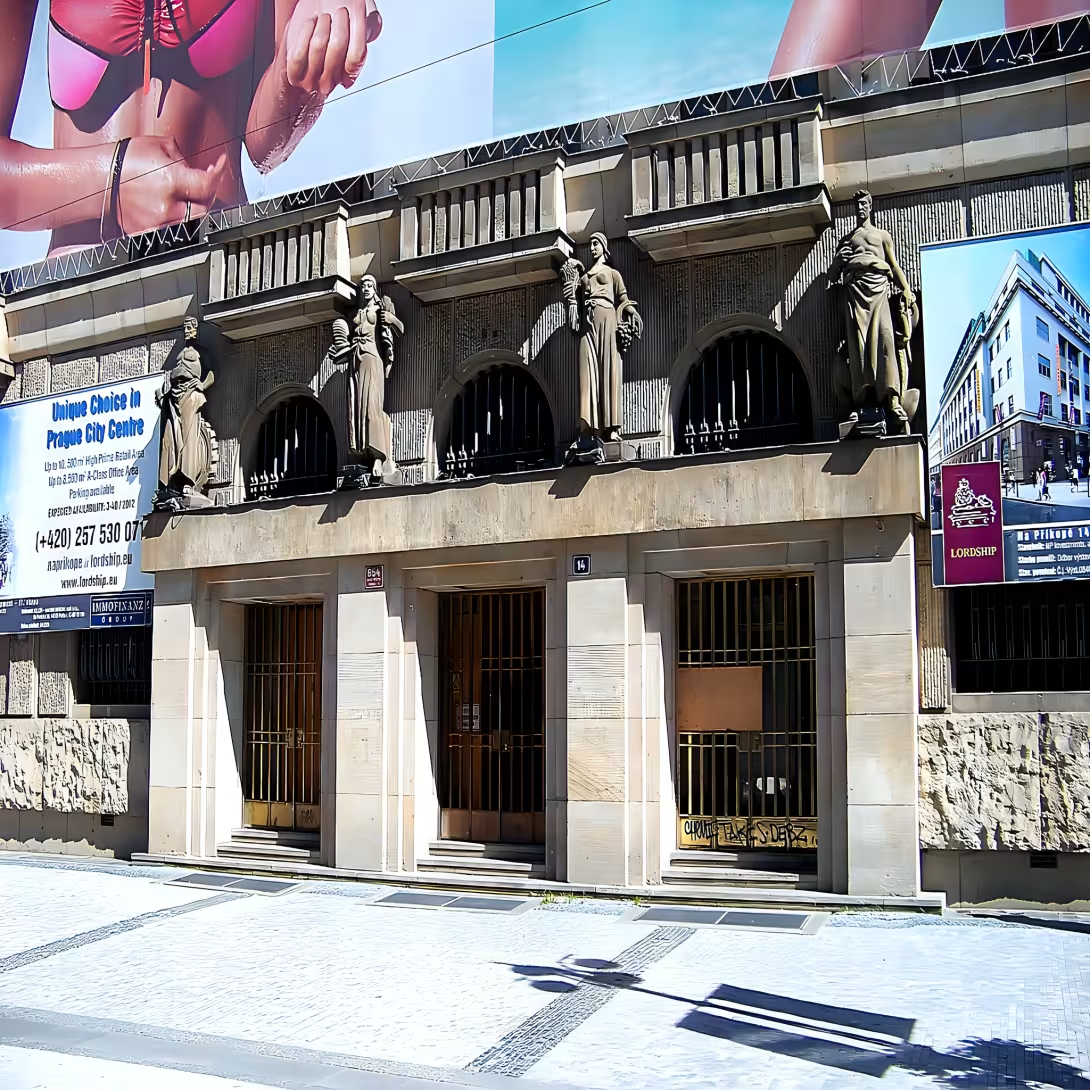
Palác Československé obchodní banky stands as an important architectural landmark in Prague's historic center, located at the intersection of Na příkopě and Panská streets. Built between 1927 and 1933 by architect Bedřich Bendelmayer for the Czechoslovak Commercial Bank (ČSOB), this building is notable for its Art Nouveau style with functionalist influences. It replaced an earlier structure known as U tří líp, reflecting the cultural flourishing and economic optimism of interwar Czechoslovakia.
The palace was constructed during a period marked by architectural innovation in Europe, particularly between World War I and II. This era saw significant political changes and cultural developments across the continent. In Prague, Palác Československé obchodní banky emerged as part of this vibrant interwar landscape, embodying both aesthetic elegance and functional design.
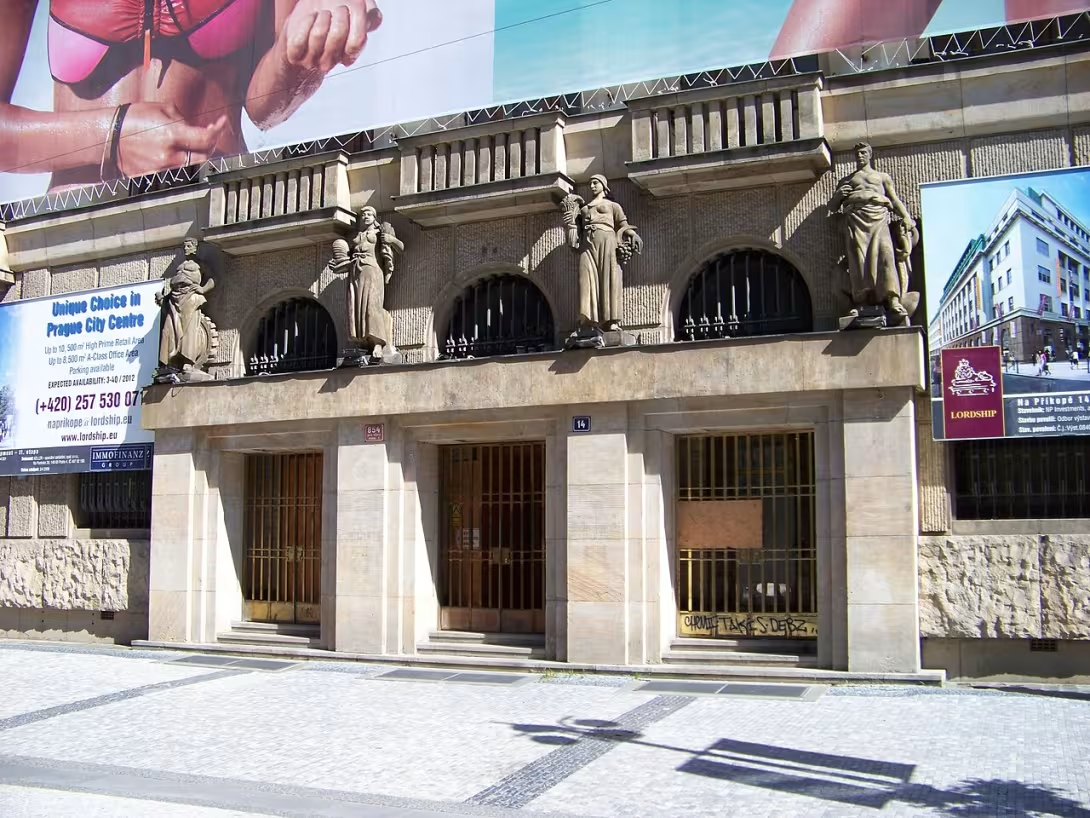
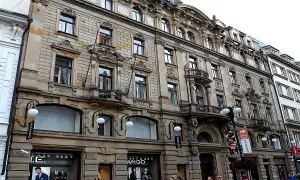
Architecturally, the palace features a prominent main façade facing Na příkopě. This façade is adorned with golden grilles and sculptures by Jaroslav Krepčík, enhancing its Art Nouveau charm. The building's exterior includes semi-circular windows capped at uniform heights, all encased in intricate grilles. Below these windows are large sandstone blocks with vertical grooves, contributing to the building's robust appearance. The higher sections of the façade contrast with its lower parts by being painted white. A copper roof completes this elegant structure.
Initially serving as the headquarters for ČSOB, the palace underwent significant changes after 2000. It was reimagined into a shopping center and office space, with its interior completely reconstructed while preserving the original façade. This transformation highlights the building's adaptability to modern commercial needs without losing its historical essence.
Palác Československé obchodní banky is also home to two commemorative plaques that add layers of historical significance. One plaque, located on the left side when viewed from Na příkopě, honors the victims of the May 1945 anti-Nazi uprising in Prague, where five men lost their lives at this location. On the right side stands a bust by Bohumil Neužil, added in 1932 to commemorate Božena Němcová, who resided nearby from 1820 to 1862.
Today, Palác Československé obchodní banky remains an integral part of Prague's urban fabric. Its blend of historical architecture and modern functionality makes it a compelling site for visitors interested in both the city's past and its contemporary evolution. The palace not only serves as a testament to Czechoslovakia's interwar architectural achievements but also invites exploration within Prague's rich historical context.
Visiting Palác Československé obchodní banky offers a unique opportunity to witness the seamless integration of history and modernity in one of Europe's most storied cities. Its preserved façade, coupled with its vibrant current use, makes it a must-see destination for anyone exploring Prague's historic center.
Then and now
Drag the slider to compare how the landmark may have looked when it was built with the view today.
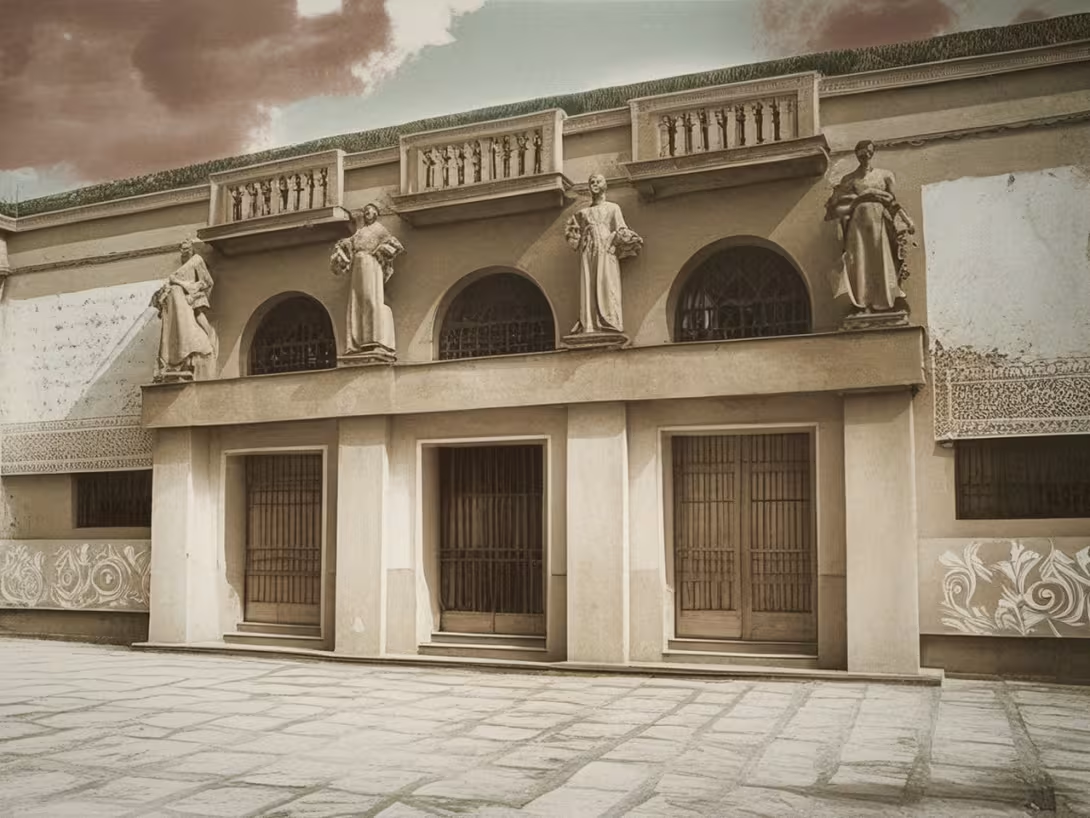
The historical appearance on the left is an AI-generated visualisation and serves as inspiration only.
Historical milestones
- 1932
- A bust by Bohumil Neužil was added to the façade in honor of Božena Němcová, who lived nearby from 1820 to 1862.
Architectural development
The palace was constructed between 1927 and 1933 by architect Bedřich Bendelmayer. While its façade has been preserved, the interior underwent significant reconstruction to accommodate modern commercial use. The building's exterior features a blend of Art Nouveau elements with functionalist influences.
Historical events
Construction completed in 1933 as part of the expansion of ČSOB facilities.
In 1945, during the anti-Nazi uprising in Prague, five men were killed at this location.
Owners
Originally built for the Czechoslovak Commercial Bank (ČSOB), it was later repurposed into a shopping center and office space after 2000.
Points of interest
- The Palác Československé obchodní banky replaced the former building known as U tří líp, which adds a layer of historical continuity to its location in Prague's bustling center.
- Architect Bedřich Bendelmayer integrated Art Nouveau elements with functionalist influences during a period when Europe was experiencing significant architectural innovation between World War I and II.
- The palace features sculptures by Jaroslav Krepčík, whose work on the façade adds to its artistic allure and reflects the cultural vibrancy of interwar Czechoslovakia.
- A commemorative plaque on the building honors the victims of the May 1945 anti-Nazi uprising in Prague, marking a poignant moment in the city's history where five men lost their lives nearby.
- The bust of Božena Němcová by Bohumil Neužil was added to the palace's façade in 1932, commemorating her residence near the site from 1820 to 1862 and highlighting her significance as a Czech national icon.
Guide
This guide is narrated by a synthetic voice generated by artificial intelligence.
Show guide text
This text was created by artificial intelligence and has not been editorially reviewed. It may contain inaccuracies.
At the corner of Na příkopě and Panská streets in Prague's New Town stands the palace of the Czechoslovak Trade Bank. It was built between nineteen twenty-seven and nineteen thirty-three according to the plan of architect Bedřích Bendelmayer and served as the headquarters of the bank for which it was constructed. Its main facade faces Na příkopě street and extends lengthwise into the depth of the block along Panská street.
On this site there once stood a house called U tří lip. Connected to it is one of the most famous figures in Czech literature. The writer Božena Němcová lived in the original building. A commemorative plaque on the right side of the front facade reminds us of her, complemented by a bust by sculptor Bohumil Neužil from nineteen thirty-two.
The facade facing Na příkopě street features three entrances enclosed by a golden grille. Above them stand four sculptures by Jaroslav Krepčík on a lintel. Between the entrances are semicircular windows that end at the same height as the windows around the doors. All windows are barred. The entire lower part of the facade is clad with large sandstone blocks with vertical grooves, including in Panská street. The upper floors are plastered and pale, and the roof is copper.
On the left side of the facade is a second commemorative plaque. It is dedicated to the victims of the May uprising against the Nazis in nineteen forty-five. According to available records, five men fell there at that time.
After the year two thousand, there were plans to convert the palace into a hotel. Ultimately, it became a shopping centre with offices. During the reconstruction, only the facade facing the street was preserved, while the entire interior is new.
Tips for visitors
The best time to visit Palác Československé obchodní banky is during the late spring or early fall, when the weather is pleasant for walking and exploring Prague's historic center without the crowds of peak tourist season. The soft natural light enhances the architectural details of the palace, making it ideal for photography enthusiasts.
Trams and buses are readily available and provide convenient access to the area around Na příkopě and Panská streets.
When visiting, bring comfortable walking shoes as you'll likely explore on foot. A camera or smartphone is recommended to capture the intricate details of the interwar architecture. Additionally, carrying an umbrella or raincoat can be wise due to unpredictable weather changes, especially during transitional seasons.
For photography, the best spots include the front facade and any accessible interior spaces that showcase the architectural design by Bedřich Bendelmayer. Early morning light is particularly flattering for capturing the building's details without harsh shadows. Nearby, Prague Castle offers stunning views of the city and is a must-see within a 30-minute walk or short tram ride.
Families with children will find plenty to enjoy in the vicinity. The Charles Bridge, just a short distance away, provides an engaging experience with its historic statues and scenic river views. Wenceslas Square offers shopping opportunities and nearby attractions like the National Museum, which can be educational for kids.
Frequently asked questions
Can the monument be visited?
Some buildings of this kind are open for guided tours, others serve another purpose or are privately owned. We have not verified whether and when this monument is open – please ask the operator.
What are the opening hours and admission?
We have not verified the opening hours or admission. Current information is published by the operator.
Where is the monument?
Location: Nové Město, Hlavní město Praha. The map on this page shows the exact spot.
Why is the monument protected?
It is listed in the Central List of Cultural Monuments of the Czech Republic as a cultural monument (register no. 2000003665).
Businesses nearby
Do you run a restaurant, accommodation, shop, museum, rental, wellness or other visitor service near this monument? Show yourself directly to the people heading to it — this is how they will see you in the app and on the web:
Events nearby

Zdroj akcí: otevřená data měst a obcí ČR (Národní katalog otevřených dat) a kalendář akcí Národního památkového ústavu.
Nearby
Located in Prague's historic center, the palace is surrounded by other significant buildings and landmarks. Within a 5 km radius are notable sites such as Prague Castle, Charles Bridge, and Wenceslas Square.
Accommodation nearby
Trips and activities nearby
Guided tours, tickets and activities nearby from GetYourGuide
Affiliate link: if you buy from the partner, we may receive a commission. The price for you does not change.
Search tours and activities →Themed route
Thematic Walking Tour: Architectural Splendor and Historical Grandeur of Prague's Historic Center
1. Palác Československé obchodní banky (Banking Palace) - Type: Historic Building - Why Visit: Located in the heart of Prague, this architectural masterpiece showcases Art Nouveau design by renowned architect Osvald Polívka. The palace's intricate facades and grand interiors offer a glimpse into early 20th-century banking elegance, making it a must-see for architecture enthusiasts.
2. Charles Bridge - Type: Historic Bridge - Why Visit: Just a short walk from the Banking Palace, Charles Bridge is an iconic stone bridge that spans the Vltava River. Known for its stunning Gothic towers and adorned with an array of baroque statues, it offers breathtaking views of Prague Castle in the distance. This pedestrian-friendly route provides a perfect blend of history and art.
3. Prague Castle - Type: Historic Castle - Why Visit: Approximately 5 km from the Banking Palace, Prague Castle is one of the largest castle complexes in Europe. As a UNESCO World Heritage site, it offers visitors a chance to explore its rich history, including St. Vitus Cathedral and the Royal Garden. The castle's majestic presence dominates the city skyline, making it an essential stop for those interested in royal history.
4. Wenceslas Square - Type: Historic Square - Why Visit: A vibrant hub of activity, Wenceslas Square is located about 1 km from Charles Bridge. Known as a center for political change and cultural events, this bustling square offers a lively atmosphere with its shops, restaurants, and historical significance dating back to the Middle Ages. It's an ideal place to experience contemporary Prague while reflecting on its past.
This tour provides a comprehensive exploration of Prague's historic core, highlighting architectural beauty and significant landmarks that have shaped the city's identity over centuries.
Seasonal recommendations
Spring: Visiting the Palác Československé obchodní banky during spring offers a vibrant atmosphere as nature awakens around Prague 1. The surrounding areas are adorned with blooming flowers and lush greenery, creating picturesque views that enhance the historical charm of the palace. Daylight hours increase, offering extended time to explore its architectural details. Visitors should consider wearing layers, as temperatures can vary from cool mornings to warmer afternoons. It's also a good idea to visit in the early morning or late afternoon to avoid larger crowds.
Summer: The summer months bring warm weather and longer days, making it an ideal time for outdoor exploration around the Palác Československé obchodní banky. Prague 1 comes alive with cultural activities and events, adding a festive atmosphere to your visit. However, this is also peak tourist season, so expect larger crowds. To make the most of your visit, arrive early in the day when it's cooler and less crowded. Light, breathable clothing is recommended to stay comfortable during your exploration.
Autumn: Autumn offers a unique experience at the Palác Československé obchodní banky with its stunning display of autumn foliage, casting warm hues over Prague 1. The weather starts to cool down, making it pleasant for walking tours in the area. This season is less crowded compared to summer, providing a more relaxed visit. Layered clothing is advisable as temperatures can fluctuate throughout the day. Visiting during weekdays may further reduce the number of tourists you encounter.
Winter: Winter transforms the Palác Československé obchodní banky into a magical setting with Prague 1 blanketed in snow, offering a serene and enchanting atmosphere. The shorter days mean that attractions might have reduced hours, so it's best to check opening times in advance. Visitors should dress warmly in coats, hats, gloves, and scarves to enjoy the historical site comfortably. While crowds are smaller compared to summer, popular winter events can attract more visitors, so planning your visit during off-peak times is advisable for a quieter experience.
Visualizations and artistic views


The visualisations are generated by artificial intelligence and serve as inspiration.
Photos from the area
Real photos taken near the monument

Zdroj a licence jsou uvedeny u každého snímku.
Tips from visitors
No tips yet. Be the first!
Log in and add your tip.
Sources and literature
Photos: JiriMatejicek / CC BY-SA 3.0, rozlišení zvýšeno umělou inteligencí — Wikimedia Commons. The author and licence also appear when you hover over the image.
Faktickým podkladem tohoto textu byl článek na Wikipedii, jehož autory jsou přispěvatelé Wikipedie. Článek je dostupný pod licencí CC BY-SA 4.0.
Location on the map
More monuments – Nové Město
Show all in the municipality


Příběhy a pověsti
Legendy, pověsti a příběhy spjaté s touto památkou
Fotografie návštěvníků
Zatím žádné fotografie. Buďte první, kdo přidá fotografii z návštěvy!
Log in a přidejte svou fotografii nebo hodnoťte.
Za ověřenou návštěvu v aplikaci získáte víc bodů — poznáme podle GPS, že jste na místě.
Reviews and comments