






Památník duchcovského viaduktu Memorial
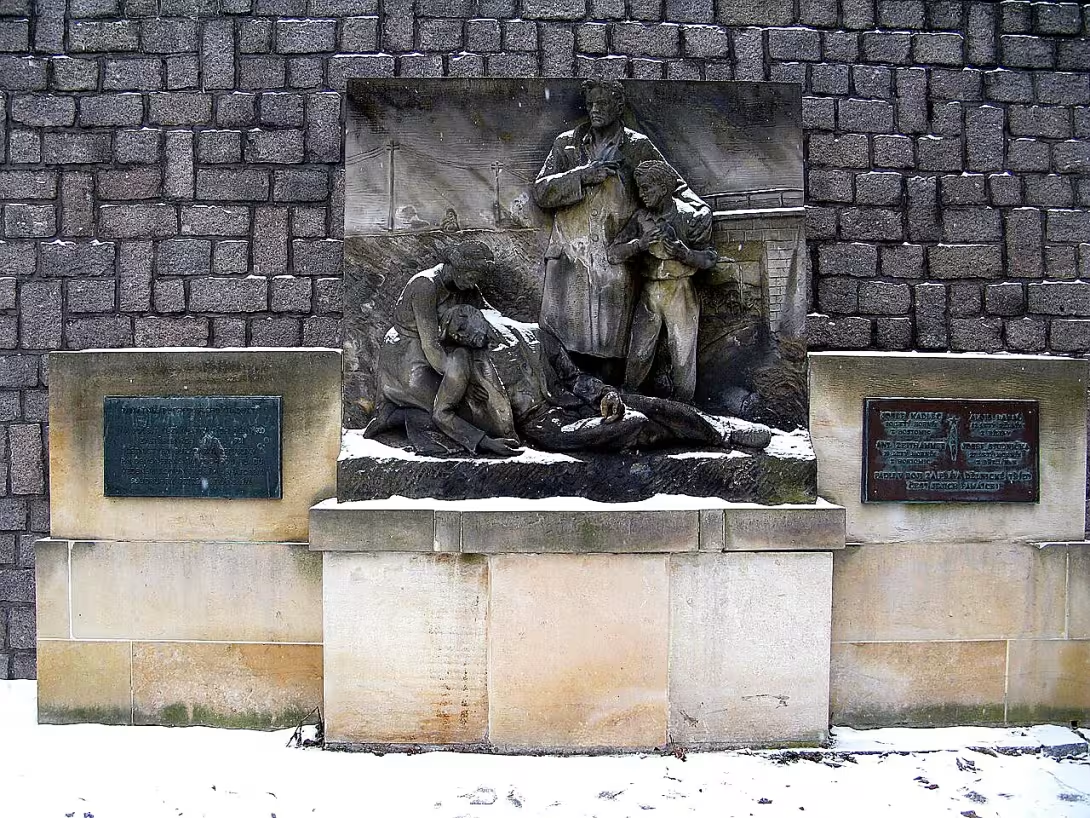
Památník duchcovského viaduktu is a cultural monument located in the village Duchcov. Reminds of the tragic event of February 4, 1931, when four unemployed workers, known as Duchcov strikes, were shot during a hungry march with gendarmes. This monument is an important historical monument of the Czech Republic and serves as a place of memory of the victims of this tragedy.
The idea of building it began in the early '50s, with the original proposal from academic sculptor Vlastimil Děřa. However, the implementation took place according to the design of Karl Lerch. The central element is the relief of the "Worker's Pieta," which captures a fallen worker in the arms of a woman and a standing man with a boy. The discovery took place on September 7, 1954 at the viaduct, at the scene of the tragedy. In 1957, the sculptures "Militias with a rifle" and "Workers with a closed fist" were added, also the work of Karl Lerch.
In 1962, the viaduct was declared a national cultural monument, stressing its historical significance. There were changes in 1963: the memorial was moved to the city centre. The sculptures of the workers and militias remained, but behind the bronze relief was built a symbolic wall that evoked the lost authenticity of the railway viaduct. During the socialist era he served as a central point for various events and manifestations.
In 1987, his own monument was included on the list of cultural monuments, which confirmed his importance. In 1991, the statues of militias and workers were removed, which changed the original form of the monument. The declaration of the Viaduct for a national cultural monument was cancelled in 1995, but protection as a cultural monument was preserved.
Today, the monument stands in a place of transfer and is a protected cultural heritage. Despite the changes, it remains an important historical monument, reminiscent of the tragedy and determination of the population of Duchcova. It's a place where you can feel the weight of the past and appreciate the importance of memory for future generations.
The memorial is not only a witness to historical events, but also to the determination and struggle for justice. It is a place worthy of visiting everyone interested in history and cultural monuments of the Czech Republic. Visit him and appreciate his historical value and importance.
Then and now
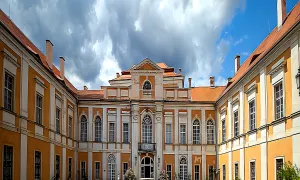
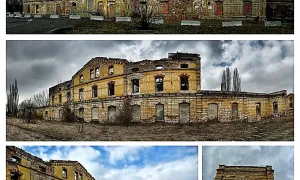
Drag the slider to compare how the landmark may have looked when it was built with the view today.
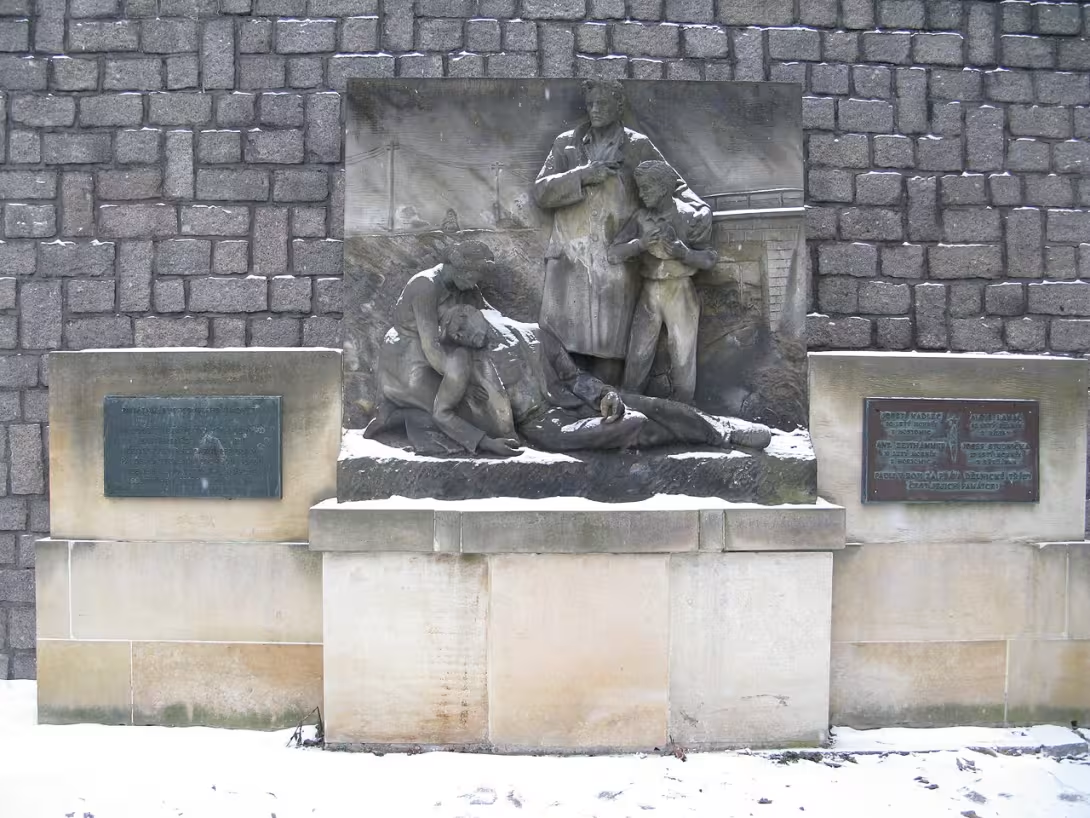
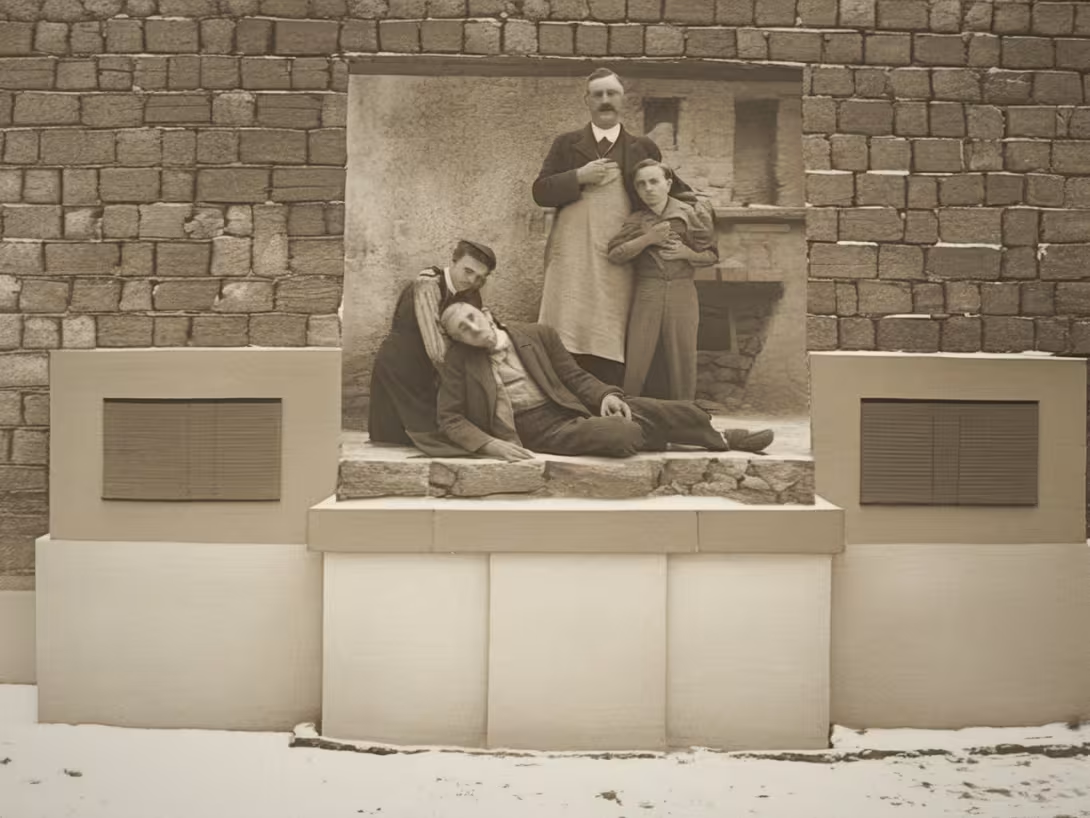
The historical appearance on the left is an AI-generated visualisation and serves as inspiration only.
Historical milestones
- 1931
- Conflict of a hungry march with the gendarmes.
- 1954
- Exposing the original appearance of the monument.
- 1962
- Declaration of the Viaduct as a national cultural monument.
- 1991
- Removing statues of militias and workers.
Architectural development
Originally designed by Vlastimil Dinner, the memorial was realized according to the design of Karl Lerch. After the discovery in 1954, there were changes, including the transfer to the city centre and the addition of a symbolic wall in 1963.
Historical events
- 1931
- Conflict of a hungry march with gendarmes in Duchcov.
- 1954
- Exposing the original appearance of the monument at the viaduct.
- 1962
- Declaration of the Viaduct as a national cultural monument.
- 1991
- Removing statues of militias and workers.
Points of interest
- Památník duchcovského viaduktu is a cultural monument located in the village Duchcov. - Reminds of the tragic event of February 4, 1931, when four unemployed workers were shot during the hunger march with the gendarmes. - The central element of the memorial is the relief "Worker's Pieta" which captures a fallen worker in the arms of a woman and a standing man with a boy. - There were changes in 1963: the monument was moved to the city centre, a symbolic wall was built behind the bronze relief. - The declaration of the viaduct for the national cultural monument was cancelled in 1995, but protection as a cultural monument was preserved.
Guide
Show guide text
This text was created by artificial intelligence and has not been editorially reviewed. It may contain inaccuracies.
Welcome to Duchcov. Stop for a second and take a deep breath. You're standing in front of a place that carries the very heavy weight of history. A monument to the spirit viaduct stands before you. At first glance, it may seem to be just one of many observations of the past, but if you look at it more carefully, you will feel deep sadness and anger, which has been in it for many decades. Feel the atmosphere of this place and try to imagine that time is coming back almost a century.
To understand why this monument is here and what it actually reminds us of, we have to move on to the freezing February of 1931. Imagine that time. The world was in a deep economic crisis. Thousands of people lost their jobs, many families lacked basic food, and hopelessness became the everyday companion of thousands of workers. It is from this despair that so-called hunger marches have arisen. People who had nothing left to lose went out on the streets to call for help, for work, and for a decent life.
On February 4th, 1931, these people found themselves here in Duchcov. But what began as a request for survival ended in tragedy. There was a strong conflict between the hungry and the gendarmes who were supposed to keep the situation under control. There were gunshots in chaos and tension. Four unemployed workers, fathers and sons, husbands and brothers, were shot. This event shook the entire region and became a symbol of the social suffering of that time. It is this bloody event that is why you stand before this monument today.
Now pay attention to the very form of the monument. The architects Vlastimil Večeřa and Karel Lerch were invited to create it. Their job was to create a space that wasn't just a dry record of data, but that would create emotions. Look at the central element you see in front of you. It's a relief called the Workers' Pieta. The word pieta comes from the tradition of depicting the Mother of God held in the arms of a dead son. Here, however, this motive is transferred to the world of working class. Relief captures pain and loss, reminding us that behind every number in the historical records was a real man and behind every fallen worker the family remained in misery.
When you go around the monument, feel its overall composition. It's important to know that what you see today is not exactly what people saw at the time of the discovery of the monument in 1954. At that time, the monument was supplemented by other sculptures, namely a statue of a worker and a statue of a milicialist. These figures should have expressed belonging and the struggle for a better future in the spirit of the time. However, history is variable and so is how we interpret our past.
Let's move on to 1991. After major political changes in our land, many monuments were revised. In this year, the statues of millionaires and workers were removed from the memorial. But the principal relief of the Workers' Piety remained, which is a timeless symbol of pain, independent of the political system. It is fascinating to see how this monument has changed along with the time it stands in. Yet he maintained his fundamental value, as confirmed by the Viaduct's declaration as a national cultural monument in 1962. This means that the state has recognised this space as an invaluable part of our common heritage.
Now try asking yourself what you would feel if you walked in that hungry march in 1931. Would you feel fear, or rather determination? This monument is not only about the death of four men, but about deep injustice and how much people sometimes pay for their efforts to survive. It is a place that teaches us empathy and reminds us that peace and social security, which we often take for granted today, have been redeemed in the past by great suffering.
The interesting thing about this place is its ability to survive various regimes and ideologies. While some parts of the memorial disappeared, the core remained. The workers' pieta keeps talking to anyone who stops in front of it. He is a silent witness to the events that took place on this soil, as well as a warning for future generations.
Now that you've learned the story of this place, I suggest you stay quiet for a while at the memorial. Look at the details of the relief, see the line of statues and think about the people who fought for their lives here decades ago. Duchcov has many layers of history and this monument is one of the most emotional.
Thank you for accompanying me to this sad but important story. Now invited to further explore the surroundings. Go through the viaduct, see the landscape, and look for the other traces of the past that this city has hidden inside of you. I wish you a peaceful and inspiring continuation of your journey. Goodbye.
Tips for visitors
The best time to visit the Memorial of the Spirit Viaduct is in the spring or autumn season when the weather is pleasant and fewer people. This time of year is also suitable for ideal light for photography.
The monument can be reached by car and public transport. Parking possibilities are limited, therefore it is advisable to use buses or trams. You can check current connection information online.
When visiting, remember the protective sunglasses, blankets and clues if you plan to explore the surroundings. Photography is best in the afternoon when light is not too strong.
In the area of the Memorial there are several attractions that can be visited during one day. The city of Duchcov with its historical architecture and cultural events is within 30 minutes of the journey.
For families with children, the Memorial is a suitable place to learn about history. You can look at information boards or visit some of the surrounding cultural events that are often focused on younger audiences.
Businesses nearby
Do you run a restaurant, accommodation, shop, museum, rental, wellness or other visitor service near this monument? Show yourself directly to the people heading to it — this is how they will see you in the app and on the web:
Events nearby
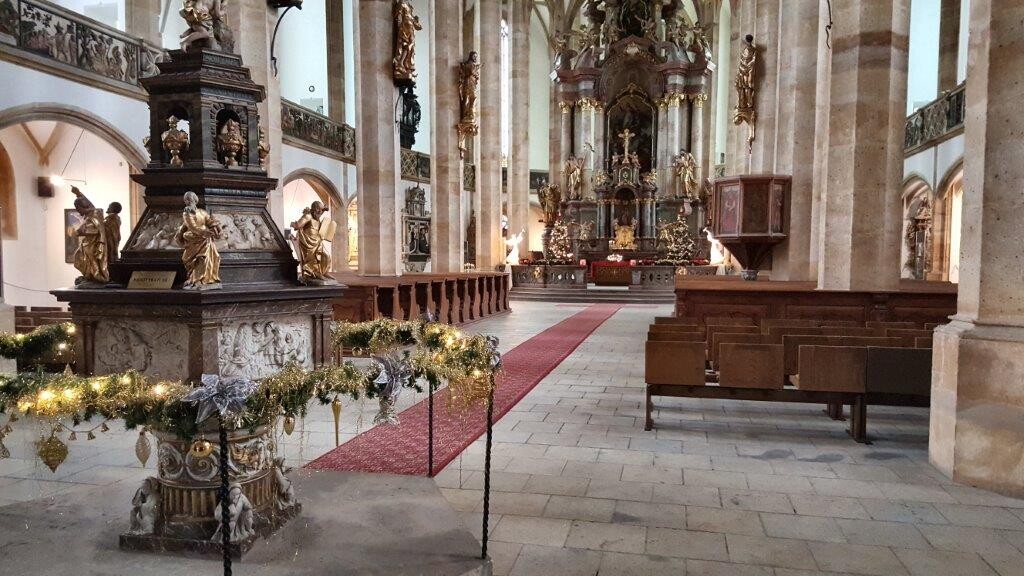

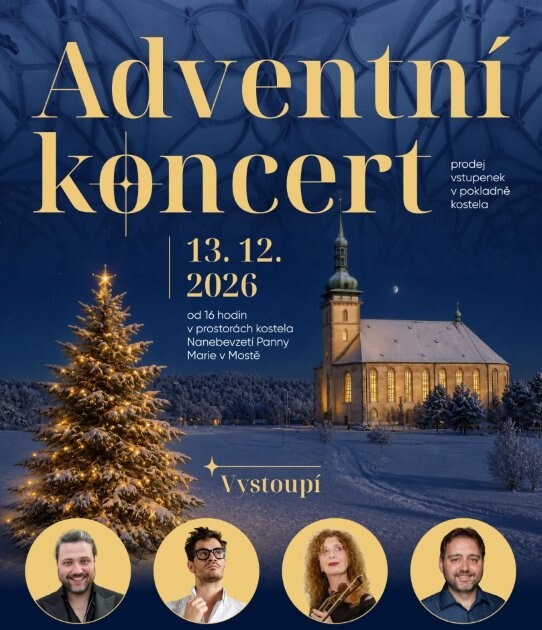
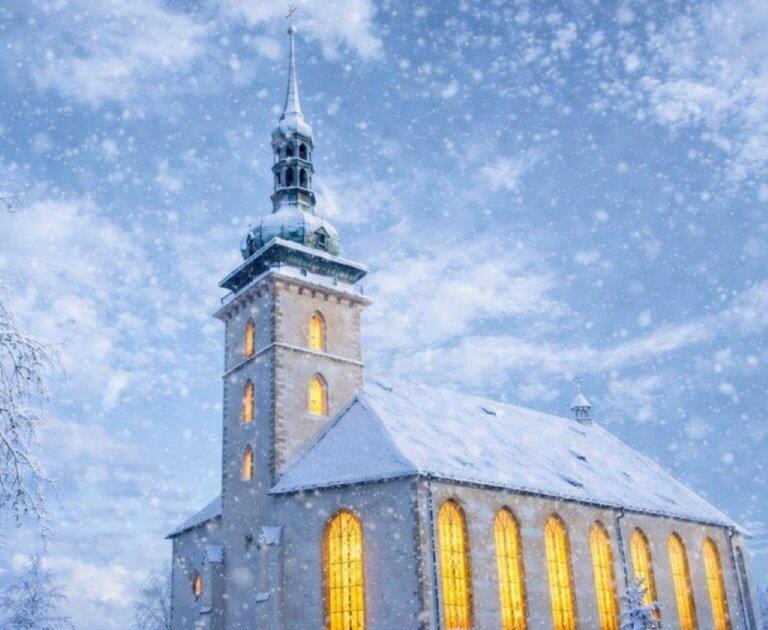
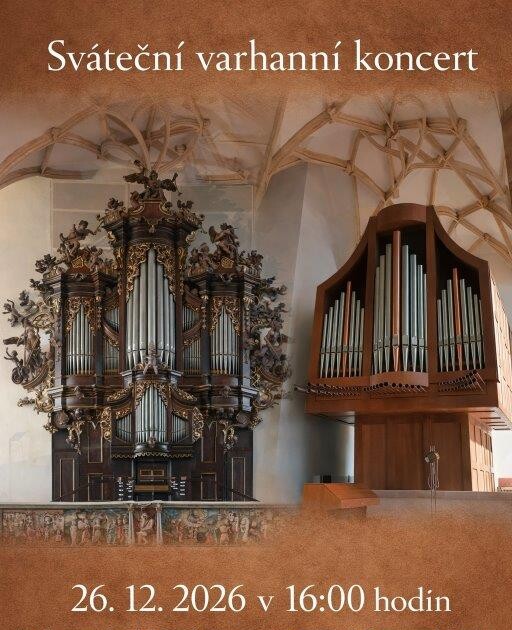
Zdroj akcí: otevřená data měst a obcí ČR (Národní katalog otevřených dat) a kalendář akcí Národního památkového ústavu.
Nearby
🏰 Historic sites (128)
- Socha Karla Havlíčka Borovského 0.1 km
- Muzeum města Duchcova 0.2 km Masarykova 71/7
- Morový sloup Nejsvětější trojice 0.3 km
- Zámek Duchcov 0.3 km nám. Republiky 202/9 +420 417 835 301 web
- Pomník obětem 1. světové války 0.4 km
- Památník Rudé Armády 0.7 km
- Památník katastrofy na dole Döllinger 0.7 km
- Památník na katastrovu dolu 3.1 km
- Zámek Tuchlov 4.8 km
- Obětem katastrofy na dole Nelson 4.9 km
- Pomník obětem 1. světové války 5.3 km
- Kudlichův pomník 5.7 km
- Bývalý letohrádek Ladenburg 5.7 km web
- Pohřebiště u dolu Bílina 5.8 km
- Hornické muzeum Hrob 5.9 km +420 723 301 009 web
- Obětem koncentračních táborů 6.3 km
- Francisco Ferrer 6.3 km
- John Halstead Banks 6.3 km
- Pomník obětem 2. světové války 6.4 km
- Pomník Miloslava Stingla 6.5 km
🍽️ Restaurants and dining (266)
- Turbo Pizza 0.1 km
- Viktoria Bar 0.2 km
- Casanova 0.4 km
- Tippac 0.4 km
- Hotel Casanova 0.6 km
- Zastávka u Svijan 3.3 km
- Golf Resort Barbora 3.7 km
- Pivovar Ossegg 4.0 km web
- U Ondřeje Stropník 4.1 km
- café Osek 4.1 km
- Černý orel 4.4 km +420 417 837 082 web
- Horal 4.6 km
- U Hajných 4.8 km
- Stop Cafe 5.1 km
- Stop Cafe 5.2 km
- Johny 5.6 km Teplická 464
- Hostinec Sokolovna 5.7 km Mírové náměstí 1
- Beseda 5.8 km
- Rozhled 5.9 km +420725115511 web
- Koruna 6.0 km
🏨 Accommodation (58)
- Hotel Casanova 0.6 km web
- Motel Sport 0.8 km
- EuroCamp 3.9 km
- Autocamp Osek 4.7 km +420-603 523 489 web
- U Hořáků 5.6 km 417875197
- Prince de Ligne 6.7 km Zámecké náměstí 136/8 web
- Hotel u Lva 6.7 km
- trampska osada "Husovka" 6.8 km
- U Kozičky 6.9 km Rooseveltova 262/11 +420 417 417 816 411 web
- Karolína 7.1 km
- Miami 7.2 km
- Pivovar Monopol 7.3 km +420 727844404 web
- Kemp Kyselka 7.3 km
- Kemp Kyselka 7.3 km +420-417 823 254 web
- Autokemp 7.3 km
- Hotel Giovanni Giacomo 7.6 km Vrchlického 1243/17 +420 255 708 926 web
- Selský dvůr, s.r.o. 7.6 km Bílinská 16
- Zlatý Kříž 7.6 km Masarykova třída 2417/43 +420 417 531 343 web
- Antonietta 7.8 km +420 777 072 318 web
- Lázeňský dům Florentini 7.8 km
🚲 Rentals and sport (50)
- Tenisové kurty 0.8 km
- 3D bludiště v korunách stromů 4.4 km
- Koupaliště Osek 4.5 km
- Černá hala Bílina 6.0 km Studentská 584/7
- Lanový park Teplice 6.5 km
- Půjčovna loděk 6.5 km
- Motokros Světec 6.7 km
- A3 SPORT 6.7 km
- Intersport 6.7 km +420 724 447 788 web
- Kuželna Letná 6.9 km Dr. Vrbenského 3343
- Volleyball 6.9 km
- Fotbalový stadion Bílina 6.9 km
- Sport center (hockeyball, florball, football) 7.0 km
- Atletický stadion Bílina 7.0 km
- Plavecká hala 7.0 km Žižkovo údolí 276/6 web
- Zelená hala 7.0 km Tyršova 374
- Tenisové kurty Bílina 7.1 km Kyselská 410 775 547 956 web
- Alpin sport 7.3 km +420 417 534 644 web
- Koloshop.cz 7.5 km +420 417 532 677 web
- Armyshop MILITARY RANGE 7.7 km Celní 3369 +420 606 640 545 web
🥾 Hiking and nature (228)
- Sady Bedřicha Smetany 0.4 km
- Sady B. Němcové 0.7 km
- Liptická vyhlídka 1.3 km
- Jalovcový vrch 5.2 km
- Husův vrch 5.2 km
- Salesiova výšina 5.3 km
- Ve chvojkách 5.6 km
- Kostrlík 6.0 km
- Zbořený evangelický kostel 6.0 km
- Špičák 6.1 km
- Chlum 6.3 km
- Stropnik 6.3 km
- Stropník 6.3 km
- Dušanova vyhlídka 6.5 km
- mx světec 6.6 km
- Střelenská louka 6.7 km web
- Vyhlídková věž Jana Křtitele 6.8 km web
- Pramen Pravřídla 6.8 km web
- Lázeňský park u císařských lázní 6.9 km
- Dětský klub Smíškov 6.9 km
Accommodation nearby
Trips and activities nearby
Guided tours, tickets and activities nearby from GetYourGuide
Affiliate link: if you buy from the partner, we may receive a commission. The price for you does not change.
Search tours and activities →Themed route
Thematic cruise route Duchcov
1.Památník duchcovského viaduktu - Type: Historical landmark - Why it is worth a visit: This monumental monument is the most significant element of local architecture and reminds of the history of railway transport in the region. It is a unique place where you can see the details of the construction and understand its meaning.
2. Duchcov Square - Type: Urban public area - Why is it worth a visit: The square is the center of the city and offers beautiful opportunities to walk. Here you will find some historical buildings that reflect the rich history of the village.
3rd Duchcov Park - Type: Local green area - Why is it worth a visit: The park is an ideal place to relax and relax after a viaduct tour. It offers beautiful landscapes, pavements and places to sit under old trees.
4. Local Museum in Duchcov - Type: Cultural institutions - Why is worth visiting: The museum provides insight into the history and culture of the village, with emphasis on regional traditions and lifestyle. It's a great way to learn more about Duchcov.
5. Duchcov Library - Type: Cultural institutions - Why is worth visiting: The library is not only a place for readers, but also hosts various cultural events and exhibitions. It's an ideal local center for culture and art.
This route offers a comprehensive view of the Duchcov, from its historical monuments to current cultural institutions.
Seasonal recommendations
Spring: In the spring season, the spirit viaduct is decorated with flowers and trees that are beginning to frown. The sun illuminates memory in living colors, which adds to its historical impression of a new life. At this time the opening of the parking lot and the base of the sights may be unpredictable, so it is advisable to check before travelling. Visitors are advised to wear comfortable clothes to protect against possible rain or cold storms. The best time to visit is in the afternoon, when the sun rays can hold on for a long time while avoiding morning hairs.
Summer: In the summer months, the ghost viaduct is a popular destination for tourists seeking escape from the city flood. The sun illuminates the memory long and creates ideal conditions for photography. The atmosphere is full of life, but due to large crowds it is recommended to visit in the morning or evening when people are less numerous. When visiting you should wear light clothes and sun protection such as tie and sunflower. Don't forget to bring drinking water, because warm weather can be exhausting.
Autumn: In the autumn period, the spirit viaduct of melancholic beauty takes place with colorful tree leaves and finer sunlight. The atmosphere is calmer as the number of tourists decreases compared to the summer season. For the visit it is advisable to wear warmer clothes and perhaps an umbrella, because autumn weather can be variable. The best time to walk is in the afternoon when the sun stops over the landscape and creates views full of color contrasts.
Winter: Winter visit to the spirit viaduct offers a unique impression when the monument appears in the snow dress. The sunlight shines on clean ice and trees, creating views full of peace and mystery. The opening hours of the parking lot are limited this season, so it is important to check in before travelling. Visitors are advised to wear warm clothes and protective pants to avoid cold. The best time to walk is in the afternoon, when the sun's rays are long kept above the landscape.
Visualizations and artistic views


The visualisations are generated by artificial intelligence and serve as inspiration.
Photos from the area
Real photos taken near the monument


Zdroj a licence jsou uvedeny u každého snímku.
Tips from visitors
No tips yet. Be the first!
Log in and add your tip.
Sources and literature
Photos: Narrator13 / CC BY-SA 3.0 — Wikimedia Commons. The author and licence also appear when you hover over the image.
Faktickým podkladem tohoto textu byl článek na Wikipedii, jehož autory jsou přispěvatelé Wikipedie. Článek je dostupný pod licencí CC BY-SA 4.0.
Location on the map
Příběhy a pověsti
Legendy, pověsti a příběhy spjaté s touto památkou
Fotografie návštěvníků
Zatím žádné fotografie. Buďte první, kdo přidá fotografii z návštěvy!
Log in a přidejte svou fotografii nebo hodnoťte.
Za ověřenou návštěvu v aplikaci získáte víc bodů — poznáme podle GPS, že jste na místě.
Reviews and comments