



Peterkův dům Other
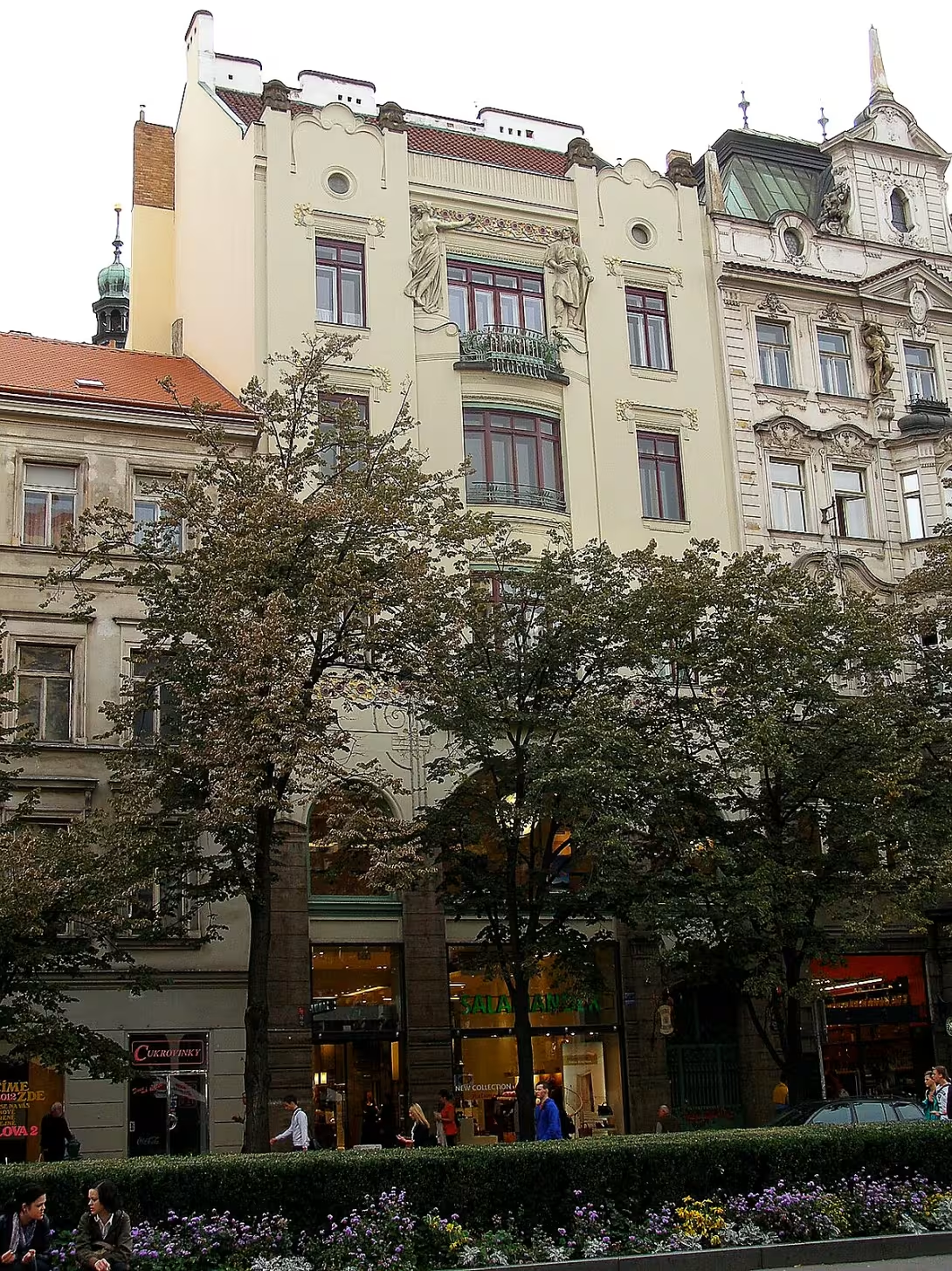
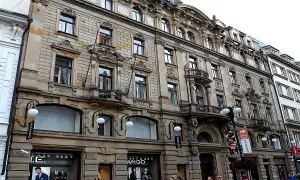
Peterkův dům at Wenceslas Square in Prague is one of the first and most important examples of Art Nouveau architecture in Czech countries. This four-storey building from 1899 is the groundbreaking work of architect Jan Kotera. At the time of its creation, it triggered a turbulent reaction and significantly influenced the direction of modern Czech architecture.
The building grew at the end of the 19th century at the site of the original township house at the Black Eagle. Prague was going through a transformation at the time, from historical styles to modern decorative styles. The project was created as a joint work by Wilhelm Thierhier, who designed the layout solution, and Jan Kotěra. For the professor of the School of Arts in Prague, the facade and lobby of the house was the first realization in the capital. The building became the headquarters of the People's Bank and other companies in 1900. The name comes from a banker named Peter, who lived in one of the apartments.
The architectural concept of the house is row and three-axis. The middle axis is slightly looped and ended on the fourth floor with a balcony. The ground floor serves as a commercial space with an unusually wide oval glazed arcade, supplemented by two narrower side arcades. There are three living floors above the commercial floor. The rear part of the large parcel is adjacent to the grounds of the Church of Our Lady of Snow. The main building is surrounded by a three-storey courtyard wing with a uniformly divided Art Nouveau front, the belt of which passes to the wall.
The decoration of the facade and interiors was created in cooperation with the leading artists of the time. The sculptor Stanislav Sucharda created other plastic elements over the main entrance, while Jan Pekárek designed stucco details. A triptych Jaro from the painter Jan Preisler was created in the representative premises of Peterka's banker's apartment, which were preserved in the front wing. The premises of the building contain a number of other valuable details that illustrate the high level of the craft at the time.
Although Peterkův dům was the target of a sharp criticism of its style, it is now listed in the list of cultural monuments. Visitors of Wenceslas Square offer a view of the beginnings of modern construction and harmonious connection of architecture with fine art. The building remains a valuable testament to the courage of the creators who defined the new face of Prague on the threshold of the 20th century.
Then and now
Drag the slider to compare how the landmark may have looked when it was built with the view today.
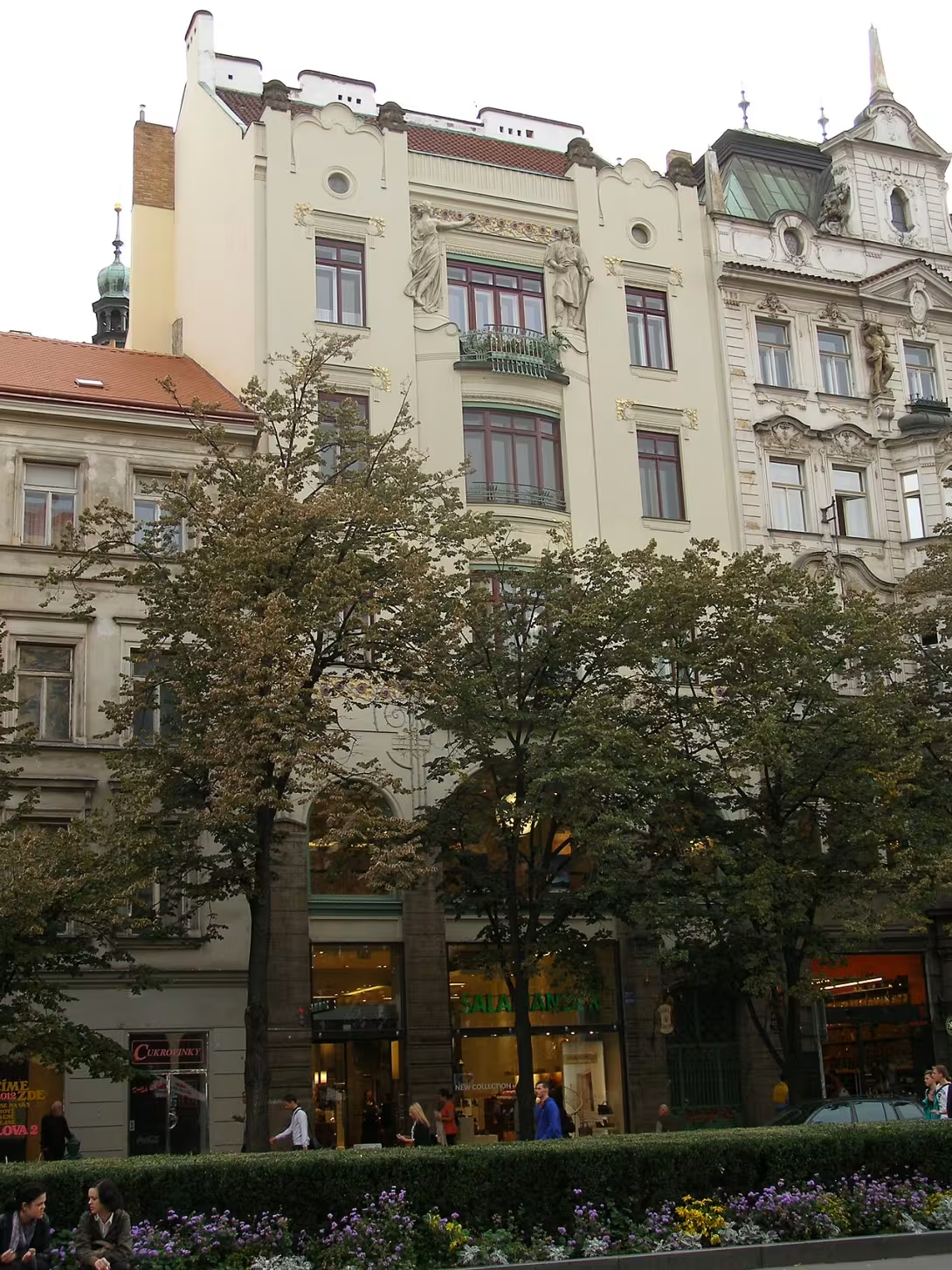
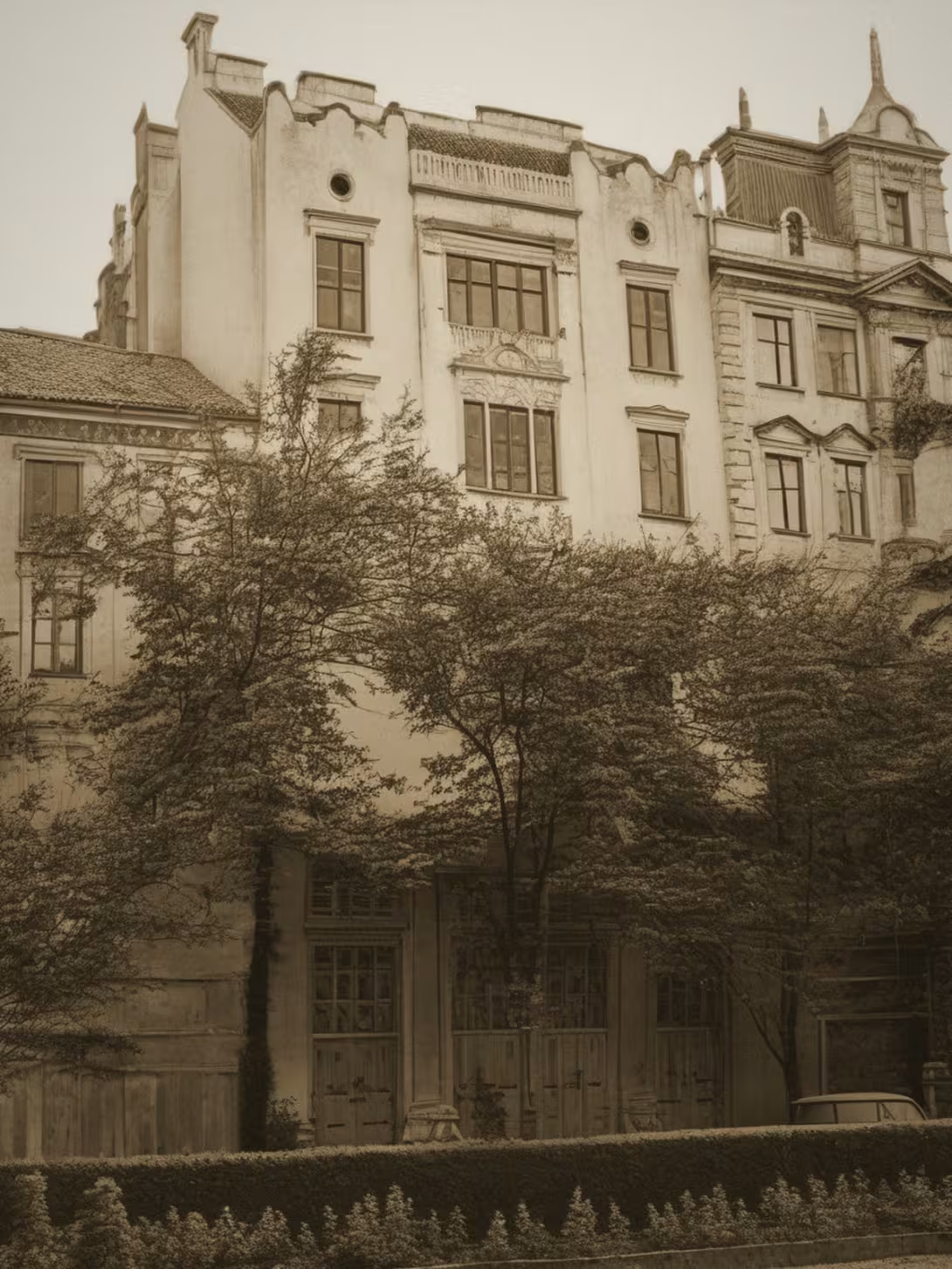
The historical appearance on the left is an AI-generated visualisation and serves as inspiration only.
Historical milestones
- 1899
- Building a house on the site of the original house U Black Eagle
- 1900
- The building became the headquarters of the People's Bank and other companies
- 1900
- Establishment of Peter the banker's apartment in the front of the building
- 1950
- Entry into the list of cultural monuments
Architectural development
It is a three-axis row object with an Art Nouveau front and a connecting three-story courtyard wing. On the ground floor there is an unusually wide oval glazed arcade and two narrower side arcades. The building is spread out to the commercial ground floor and three floors with apartments.
Historical events
In 1899 the house was built in the place of the former township house at the Black Eagle. In 1900, the People's Bank and other companies began to reside in the building.
Points of interest
- The building from 1899 is one of the first and most important examples of Art Nouveau architecture in Czech countries. - At the time of its creation, it triggered a stormy reaction and was the target of a sharp criticism of its style. - The ground floor has an unusually wide oval glass arcade and two narrower side arcades. - There is a statue of Madonna above the main entrance created by Stanislav Sucharda. - In the preserved premises of Peter the banker's apartment was created a painting of the triptych Jaro by the painter Jan Preisler.
Guide
Show guide text
This text was created by artificial intelligence and has not been editorially reviewed. It may contain inaccuracies.
Welcome to one of the most interesting addresses in Wenceslas Square. You are standing right in front of Peter's house, a building that tells its appearance and history about the time of great changes and courage in Czech construction. If you look at it now, you will see a four-story house, which, with its elegance and its specific rhythm, differs from many surrounding buildings. It is a place where the business dynamics of the centre of Prague meet with artistic search for a new identity.
Let us now return in time more than a hundred years back, to the year one thousand eight hundred ninety-nine. It was this year that the house was built where the house of the Black Eagle originally stood. Why is this building so important? Because it is the first Prague project of famous architect Jan Kotera, who took care of the design of the facade and entrance hall, i.e. the lobby. Vilém Thierhier worked with him on the project. At that time Prague was a city looking for a new style, and this house became one of the first examples of Art Nouveau architecture in our capital. It was designed to perform two functions simultaneously. On the lower floors, it was to serve as the seat of the bank and of the companies, whereas the upper parts were intended for housing.
Now pay attention to the details you see right in front of you. Look at the bottom of the building. Note the unusually wide oval glazed arcade on the ground floor, supplemented by two narrower side arcades. This element gives the building ease and at the same time the open way attracts the views of bystanders. Look at the overall facade and see its harmony. Kotera worked here with purity and modernity, which was very brave at the time. It is this space that you are now surrounding that was the year of the thousand eight hundred ninety-ninth symbol of the new beginning in Czech architecture.
When we talk about people who were connected to the house, we can't forget the character of the banker, Peter. It's the house that's got its name on it. In the year of a thousand and nine hundred he built his apartment in the front of the building where he could watch the events in the square. At the same time, the building became the headquarters of the People's Bank and other companies, making it the centre of the financial movement of that time. In addition to Peterka's banker, the names of other prominent figures such as Jan Pekárek, Stanislav Sucharda and Jan Preisler are connected to the building. They are people who have influenced the culture and art of their time by their actions and their connection to this place only underlines the importance of the building as a cultural hub.
And now I'm going to transfer you to the part that may be the most fascinating. Imagine today's admiration for this construction wasn't always obvious. At the time of its creation, Peterkův dům caused a stormy reaction. People were used to other, more traditional shapes, and this new, different form was the target of sharp criticism. Many critics' contemporaries were unable to accept such a distinctive style difference. It is fascinating to think that what we now consider a harmonious piece of Prague's heritage was once seen as provocation. But this courage for new shapes has brought recognition within a much wider time frame. It was because of its uniqueness and importance that the house was entered in the list of cultural monuments in the year one thousand and nine hundred and fifty, which guaranteed it protection for future generations.
When you stand in front of this house today, see it as a bridge between the old world and modern. It is a monument to the time when architects were not afraid to go upstream and when Prague was becoming a metropolis that follows the latest European trends. Peterkův dům is not only a pile of bricks and glass, but an embodiment of the ambitions of people who wanted to create something really new and unique in the city centre.
Thank you for stopping by this beautiful building. I hope this short trip to history helped you see Peterkův dům in a new light. Now I invite you to look around in peace, perhaps once again see the details on the ground floor and then continue to explore other hidden treasures of New Town. I wish you a pleasant walk and many other discoveries in the streets of Prague. Goodbye.
Tips for visitors
The best time to visit is in the morning or late afternoon when the sun hits the front of the building and highlights the details of Art Nouveau style. The building is located in the heart of the city, so it is best to use public transport or walk; Check the current connection in the search engine.
We recommend taking shoes suitable for walking around the city centre.
For the best photos we recommend to observe the building from the street level to excel its height and architecture. The ideal light for facade images is in times when the sun is not in direct zenith.
In the immediate vicinity you can visit the church of Our Lady of Snow. For families with children we recommend focusing on finding interesting ornaments on the facade, which can be a playful activity for children.
Frequently asked questions
Can the monument be visited?
We have not verified whether this monument is accessible. Please ask the owner or operator, or the local municipal office.
Where is the monument?
Location: Nové Město. The map on this page shows the exact spot.
Why is the monument protected?
It is listed in the Central List of Cultural Monuments of the Czech Republic as a cultural monument (register no. 1000152007).
Businesses nearby
Do you run a restaurant, accommodation, shop, museum, rental, wellness or other visitor service near this monument? Show yourself directly to the people heading to it — this is how they will see you in the app and on the web:
Events nearby

Zdroj akcí: otevřená data měst a obcí ČR (Národní katalog otevřených dat) a kalendář akcí Národního památkového ústavu.
Nearby
V bezprostřední blízkosti se nachází kostel Panny Marie Sněžné.
Accommodation nearby
Trips and activities nearby
Guided tours, tickets and activities nearby from GetYourGuide
Affiliate link: if you buy from the partner, we may receive a commission. The price for you does not change.
Search tours and activities →Themed route
1. The Facade of Peter's House Type: External architectural element of the main monument. Why to visit: The decorative facade of the building captures at first sight its exceptional artistic value and valuable details. From the street space offers a great opportunity to admire the masterful work of the then builders.
2. Interior of Peter's house Type: Internal spaces of the main monument. Why to visit: The interior of the building reveals a thoughtful breakdown of space and preserved craft elements. The tour provides a comprehensive view of the construction solution of this magnificent city estate.
3. Church of the Virgin Mary Snow Type: Sacral monument. Why to visit: This important temple stands in the immediate vicinity of the house and fascinates you with its majestic historical architecture. It offers visitors a peaceful environment for contemplation and knowledge of the spiritual history of the village.
Seasonal recommendations
Spring - In spring days, the first leaves and flowers develop around Peter's house, creating a fine pastel background and a soft scattered light that highlights the historical details of the facade. It is recommended to come early in the morning, when there is still peace and the sun's rays fall at an angle that underlines the texture of the stone. Laminated light clothes and possibly waterproof jacket ensure comfort even in unexpected showers; The small umbrella is also suitable for protection against spring drops.
Summer - In the main summer season dominates a long day and strong sunlight, which can illuminate the facade until late afternoon hours. Due to higher temperatures, it is advisable to visit the memory in the late afternoon, when the sun is slightly curved and the atmosphere gets a warm golden touch. It is recommended to wear loose cotton or linen clothes, a sun hat and carry a bottle of water at hand; a light sun screen or scarf can protect your eyes from glare.
Autumn - Autumn leaves surround the house with golden and red tones, which together with soft autumn light create a nostalgic and calm atmosphere. There are fewer people in this period, so the ideal time is late afternoon, when the sun slowly boils down and illuminates architecture with warm light. It is recommended to wear layered clothes - sweater or light jacket over shirt, tight shoes for wet leaves and possibly a scarf that protects against a colder breeze.
Winter - In winter, it dominates a short day, often snowy surroundings and a quiet, almost mystical atmosphere, where solar rays fall at an angle and highlight snow crystals on window frames. The best time is noon, when the most light and temperature is highest. Dress in warm layers - thermal linen, sweater, thick jacket, hat and gloves; Slide-proof footwear will help on a slippery surface, if necessary. In winter it is also advisable to have a thermal bottle with a hot drink, which will warm up during walks.
Visualizations and artistic views


The visualisations are generated by artificial intelligence and serve as inspiration.
Photos from the area
Real photos taken near the monument


Zdroj a licence jsou uvedeny u každého snímku.
Tips from visitors
No tips yet. Be the first!
Log in and add your tip.
Sources and literature
Photos: Michal Kmínek / CC BY-SA 3.0 — Wikimedia Commons. The author and licence also appear when you hover over the image.
Faktickým podkladem tohoto textu byl článek na Wikipedii, jehož autory jsou přispěvatelé Wikipedie. Článek je dostupný pod licencí CC BY-SA 4.0.
Location on the map
More monuments – Nové Město
Show all in the municipality


Příběhy a pověsti
Legendy, pověsti a příběhy spjaté s touto památkou
Fotografie návštěvníků
Zatím žádné fotografie. Buďte první, kdo přidá fotografii z návštěvy!
Log in a přidejte svou fotografii nebo hodnoťte.
Za ověřenou návštěvu v aplikaci získáte víc bodů — poznáme podle GPS, že jste na místě.
Reviews and comments