



Pinkasova synagoga Synagogue
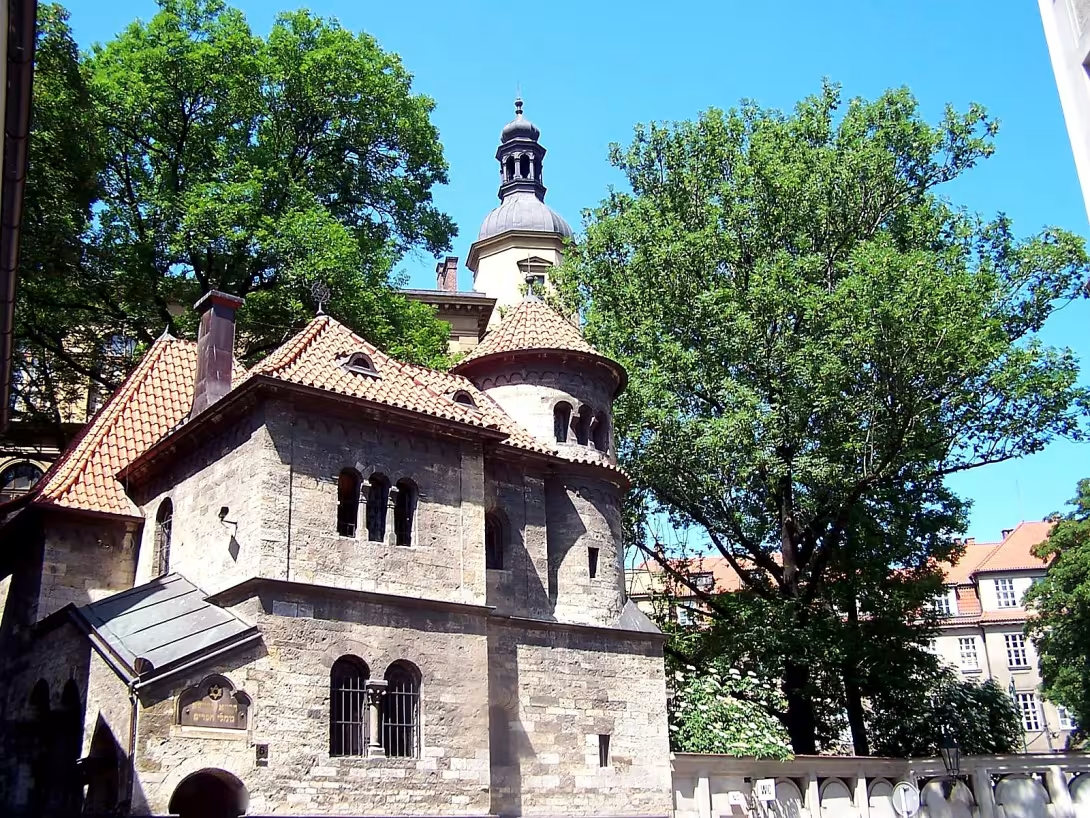
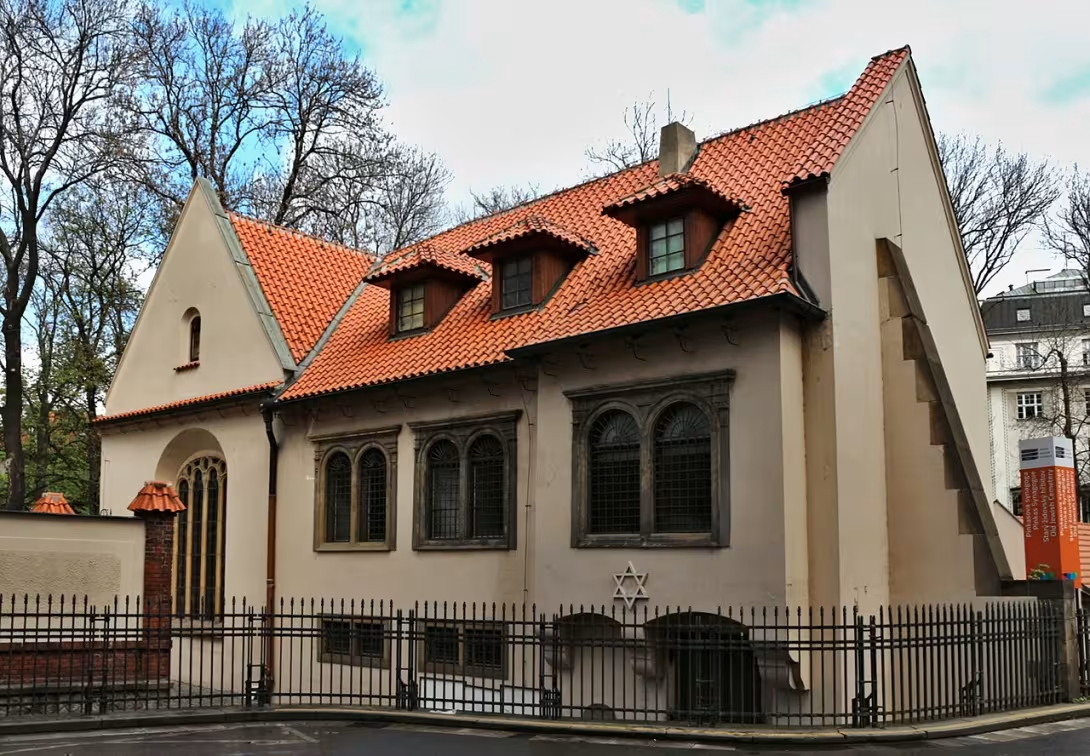
Pinkasova synagoga in Prague, built in the first half of the 16th century, is the second oldest synagogue preserved in the capital of the Czech Republic. Today it serves as a memorial for over 80 000 Czech Jews victims of the Holocaust. It is managed by the Jewish Museum in Prague.
The oldest records of Jewish settlements in this place date back to the end of the 15th century, which is confirmed by the remnants of the well and the mikvah. In 1492 there is a mention of a private prayer house in the Erba house, which belonged to the Horovic family. The synagogue was built by Aharon Mesulam Zalman Horowitz in 1535.
The architecture of the building combines late Gothic and Renaissance style. The main ship is finished with a late Gothic network vault, while the entrance portal and other decorative elements are Renaissance. Between 1607 and 1625 it was expanded by architect Juda Coref de Herz by the lobby, female boat and gallery. In the second half of the 18th century, bima, aron ha-codesh and the stage for reading from the Torah were modified in Baroque style using red marble stucco. In 1793 Joachim von Popper donated a forged grate with the motif of a medieval Jewish hat in David's star.
A significant change of interior took place in 1860 when it was modified into a new Romanesque style. Due to frequent flooding, the floor in the vestibule and the main area was raised by half a second meter in a way that led to the loss of the original bimas and the sealant of the Renaissance portal. The seats have been moved from the perimeter of the walls to the rows.
During World War II, the synagogue served as a warehouse for Jewish liturgical equipment and since 1942 as a storage and preservation site of the Jewish Central Museum. After nationalization in 1950, the total reconstruction (1950-1954) took place, in which the form was returned from before 1860.
Between 1954 and 1959, the painters Václav Boštík and Jiří John wrote the names of 78 000 Czech Jews victims of Nazi persecution on the walls of the vestibule. Names are arranged by place of origin with dates of birth and deportation. The monument was opened in 1960, but after eight years closed due to damage to the inscription of lower water and political reasons. After 1989 a reconstruction took place and the synagogue was reopened in 1992. Further building interventions were needed after the floods in 2002.
Today at the synagogue, an annual wake for Shoo victims is held on the anniversary of the murder of the Teresian family camp in Auschwitz. During high holidays, premises are used for worship by a conservative community or the Union of Jewish Youth.
On the first floor there are 4 387 children's drawings from Terezin, which were kept secret by Friedl DickerBrandeis. These documents have been entered in the International Register of World Memory of UNESCO since 2025. The outdoor exposition of Journey without return is dedicated to deportation of the Jewish population from the Protectorate of Bohemia and Moravia. In the evening, video mapping of the Faces of Shoe Victims, visible from the Wide Street, is shown on the shield of the synagogue mik. Visitors can use a digital database with portraits of victims and search for their location on walls.
Pinkasova synagoga presents a unique combination of Renaissance architecture and deep historical suffering. It is a compulsory place for anyone who wants to understand the fate of the Jewish community in Czech countries. Visiting this drinking space offers a deep insight into the tragic history of the 20th century.
Then and now
Drag the slider to compare how the landmark may have looked when it was built with the view today.
The historical appearance on the left is an AI-generated visualisation and serves as inspiration only.
Historical milestones
- 1535
- Status of synagogue by Aharon Mesul Horovico
- 1607
- The beginning of the Renaissance building expansion
- 1793
- Donations forged by Joachim von Popper
- 1860
- Significant floor reconstruction and increase due to flooding
- 1954
- Beginning of the production of the Shoah Memorial on the synagogue walls
Architectural development
The original state combined the late Gothic vaults with the Renaissance portal. In the 17th century, a Renaissance reconstruction took place with the addition of a lobby and a female ship. In the 19th century the building was modified into a new Romanesque style and increased floor.
Historical events
The position of the synagogue in the 16th century, the Renaissance enlargement in the 17th century and the creation of a monument to the victims in the 20th century.
Owners
Jewish Museum in Prague (from 1950)
Points of interest
- It is the second oldest preserved synagogue in Prague, built in the first half of the 16th century. - It serves as a memorial for over 80,000 Czech Jews victims of the Holocaust. - The names of 78 000 Czech Jews of the victims of Nazi persecution are listed on the walls. - On the first floor there are 4 387 children's drawings from Terezín, registered to the International Register of World Memory of UNESCO. - A video mapping of the faces of the shoo victims is shown on the shield of the synagogue mik.
Guide
Show guide text
This text was created by artificial intelligence and has not been editorially reviewed. It may contain inaccuracies.
Welcome. You're standing in front of one of the most important and exciting places in the city. At this moment, when you're looking at the Pinkas Synagogue building, you're in the heart of a historic Jewish neighborhood, where every wall and every stone seems to carry deep and often painful stories. Feel this atmosphere. It has a sense of calm, but also of immense serious importance. This building is not just another historical object in the panoramic view of Prague. It is a living witness of centuries, who survived both ups and downs, natural disasters and the darkest chapters of human history.
Now let's go back to the deep past to understand how this place came to be. Pinkasova synagoga is the second oldest preserved synagogue in Prague. Its roots date back to the first half of the sixteenth century. In 1535, it was built by Aharon Mesulam Horovice, a man whose name remained written in the history of this place thanks to this construction. Originally, the synagogue was built in a late Gothic style, which carried its typical verticality and spiritual ascension, but over time the elements of the Renaissance got in. This combination of styles gives the building its unique character, which you can perceive even now when you are looking at its face.
But the history of this place is not static. The building was constantly changing along with the needs of the community and the outside world. In 1607 the extensive Renaissance enlargement started, which gave the construction additional dimensions and space. In the next centuries, the synagogue supplemented its beauty and functionality with other details. Note, for example, the forged grate that Joachim von Popper donated in 1793. This element is not only an ornament, but a symbol of care and respect that individuals have given to this sacred place.
Now pay attention to how the building had to deal with the relentless force of nature. In the middle of the nineteenth century, namely in 1860, Prague had to deal with devastating floods. These events also had a direct impact on the synagogue. In order to protect itself and to ensure its continued existence, a significant reconstruction had to take place in which the floor of the building was raised. This technical change, although practical, has significantly affected the internal space you are visiting today. The architecture of this place is therefore the result of a constant dialogue between human faith, artistic expression and constant efforts to preserve the monument in a challenging environment.
Now that you're looking at the building, you might be wondering how this place turned from a regular prayer to a monumental monument. This transformation is one of the most important aspects that you will experience here. The synagogue is currently managed by the Jewish Museum in Prague and its main function is to serve as a piety monument of Czech Jews who became victims of the Shoa. This role began to form in 1954, when the creation of a monument was started right on the walls of the synagogue.
What awaits you inside is an experience that cannot be easily described by words. Names are engraved on the walls of the synagogue. Names that can no longer speak alone, but that remain so that the world will not forget them. The names of 78 000 Czech Jews who fell victim to Nazi persecution are listed here. The total number of victims for which this space serves as a monument exceeds 80,000 people. When you move inside and your eyes meet these names, you realize the incredible weight of this place. Each name represents one life, one family and one history that has been violently interrupted.
If you decide to proceed to the first floor, you will encounter another incredibly strong exposure. Here you will find a creation that belongs to children. Specifically here you will see 4,387 children's drawings. This part of the exhibition offers a deep contrast to the seriousness of the names on the walls. It is a view of innocence, of the world through the eyes of the youngest who were part of this tragic history. It's a reminder of humanity trying to tell its story through colors and simple shapes, even when it was so brutally attacked.
You may realize that this place is not only about sadness, but especially about memory and how humanity retains its integrity even in the darkest times. The figures such as Václav Boštík or Jiří John are associated with the history and meaning of this whole, and although their stories may seem distant, their reference within this historical space is undeniable.
The interesting thing that you might find interesting when you look at the building is the constant transformation. Pinkasova synagoga is not just a static monument from 1535. It is a petrified whole where gothic spiritual depth, Renaissance elegance, nineteenth-quarter resistance to floods and modern need to preserve the memory of the tragic events of the twentieth century. Every era has put a piece of its own identity in the building.
So now I cordially urge you to enter. Leave yourself to the V8 silence in these spaces. Let the names on the walls penetrate your heart and pay attention to the children's drawings upstairs. Let's just watch, feel and think. Pinkasova synagoga has something to offer if you approach it with respect and open mind. Thank you for joining us on this short journey of history, and we wish you a deep and moving experience during the next tour.
Tips for visitors
The best time to visit the Pinkas Synagogue is early in the morning during working days when there are fewer visitors and you can enjoy the atmosphere of the historic building. In the summer months it is recommended to arrive after the afternoon peak, when the crowd is reduced and the light in the interior is softer, which is ideal for both sightseeing and photography.
The synagogue is well accessible both by car and public transport. Always check the latest traffic information before departure.
We recommend to wear comfortable shoes because part of the tour includes walking on stone floors and stairs. The best places for photography are at windows with natural light and in the main hall where you can capture details of Renaissance and Gothic motifs. Photographs are permitted, but respect the ban on the use of lightning in sensitive areas and be respectful of other visitors.
In the vicinity of the Pinkas Synagogue you can visit other sights of the Jewish Museum in Prague within half an hour, including the Old Oncoming Synagogue and the Jewish Cemetery. A tour of these objects will complete your experience and provide a wider context of Jewish history in Prague.
Families with children appreciate the interactive programs that the museum sometimes offers; Check with them on site. Children can have fun finding old signs and symbols in synagogue, so it is advisable to carry a small notebook and crayons.
FAQ: Q: What are the conditions for entering the Pinkas Synagogue? Q: Is it possible to rent audio guides? A: Yes, the audio guide is available at the entrance counter and provides detailed information on the history and architecture of the synagogue. Q: Is it allowed to photograph inside? A: Photography is permitted without lightning; certain holy spaces may be restricted, so follow the instructions of the staff. Q: How best to get to the synagogue by public transport? A: The synagogue is easily accessible by trams and buses that stop in the nearby Jewish ghetto; Check the current connection in the public transport search engine. Q: What to do with the children during the visit? A: Take advantage of interactive programs and prepare simple tasks such as searching for specific characters or drawing of advanced motifs so that children enjoy the tour actively.
Frequently asked questions
Can the monument be visited?
Religious buildings are usually open mainly during services; at other times a visit is normally arranged with the parish or the operator. We have not verified specific times.
Where is the monument?
Location: Praha 1, Hlavní město Praha. The map on this page shows the exact spot.
Why is the monument protected?
It is listed in the Central List of Cultural Monuments of the Czech Republic as a cultural monument (register no. 1000150881).
Businesses nearby
Do you run a restaurant, accommodation, shop, museum, rental, wellness or other visitor service near this monument? Show yourself directly to the people heading to it — this is how they will see you in the app and on the web:
Events nearby

Zdroj akcí: otevřená data měst a obcí ČR (Národní katalog otevřených dat) a kalendář akcí Národního památkového ústavu.
Nearby
Pražské ghetto a další objekty Židovského muzeum v Praze.
Accommodation nearby
Trips and activities nearby
Guided tours, tickets and activities nearby from GetYourGuide
Affiliate link: if you buy from the partner, we may receive a commission. The price for you does not change.
Search tours and activities →Themed route
Prague ghetto This historical territory forms the basic context for understanding the life of the Jewish community in Prague. A walk through the streets, which retain the medieval character, prepares the visitor for a deeper introduction to history and cultural heritage, which are closely linked to architecture and monuments.
Jewish Museum in Praze This institution serves as a key point for orientation in the region and offers a comprehensive overview of the history, culture and art of the Jewish nation. It is an ideal place to get tickets, get acquainted with current exhibitions and plan visits to individual synagogues and cemeteries nearby.
Pinkasova synagoga The main destination of the route is located in the immediate vicinity of other monuments. It is worth a visit thanks to its unique display of the Holocaust Memorial where the victims' names are displayed on the walls and ceiling. The atmosphere of this place is deeply moving and leaves a lasting impression for every visitor.
Prague ghetto Once again a walk through the historical core, this time with emphasis on the connection between the individual museum objects. It allows itself to feel the seen and explore the details of architecture that are part of this specific urban complex.
Jewish Museum in Praze The final stop where you can complete the knowledge from the synagogue visit. It provides space for discussion, purchase of literature or visit other exposure areas that are part of this extensive institution.
Seasonal recommendations
Spring: In the spring life is awakened around Josefov and soft sunlight highlights the details of historical architecture. The atmosphere is fresh, which creates an interesting contrast to the quiet and airy space of the monument. We recommend wearing layered clothes because the morning cold can be severe while the afternoon is warmer. It is ideal to visit in the morning when crowds are even less than in the season.
Summer: Summer months bring intense sun and high temperatures to Prague's centre, which can increase in narrow alleys. The atmosphere is very lively and busy due to a large number of tourists. In order to avoid the greatest inconvenience, we recommend you come right after opening, which will help you avoid the biggest rush of people and heat. Dress lightly and comfortably, but don't forget to protect yourself from the sun on your way to the monument.
Autumn: Autumn season offers a melancholy and deep atmosphere that is perfectly complementary to the spiritual character of the synagogue. The golden light of the autumn sun creates a very beautiful environment for photography in the surrounding streets. It is advisable to prepare a coat or scarf, because it can be colder in the shaded parts of the city. At this time, it is more peaceful in the memory, which allows better concentration and perception of history.
Winter: In the winter it is a short day in Prague and the light is often grey and muted, which deepens the seriousness of this place. The atmosphere is quiet and very calm, which is ideal for those looking for a room for contemplation. Due to lower temperatures, it is recommended to choose very warm clothes and high quality shoes.
Visualizations and artistic views


The visualisations are generated by artificial intelligence and serve as inspiration.
Photos from the area
Real photos taken near the monument

Zdroj a licence jsou uvedeny u každého snímku.
Tips from visitors
No tips yet. Be the first!
Log in and add your tip.
Sources and literature
Photos: VitVit / CC BY-SA 4.0 — Wikimedia Commons. The author and licence also appear when you hover over the image.
Faktickým podkladem tohoto textu byl článek na Wikipedii, jehož autory jsou přispěvatelé Wikipedie. Článek je dostupný pod licencí CC BY-SA 4.0.
Location on the map
Příběhy a pověsti
Legendy, pověsti a příběhy spjaté s touto památkou

Fotografie návštěvníků
Zatím žádné fotografie. Buďte první, kdo přidá fotografii z návštěvy!
Log in a přidejte svou fotografii nebo hodnoťte.
Za ověřenou návštěvu v aplikaci získáte víc bodů — poznáme podle GPS, že jste na místě.
Reviews and comments