






Pivoňský klášter Monastery
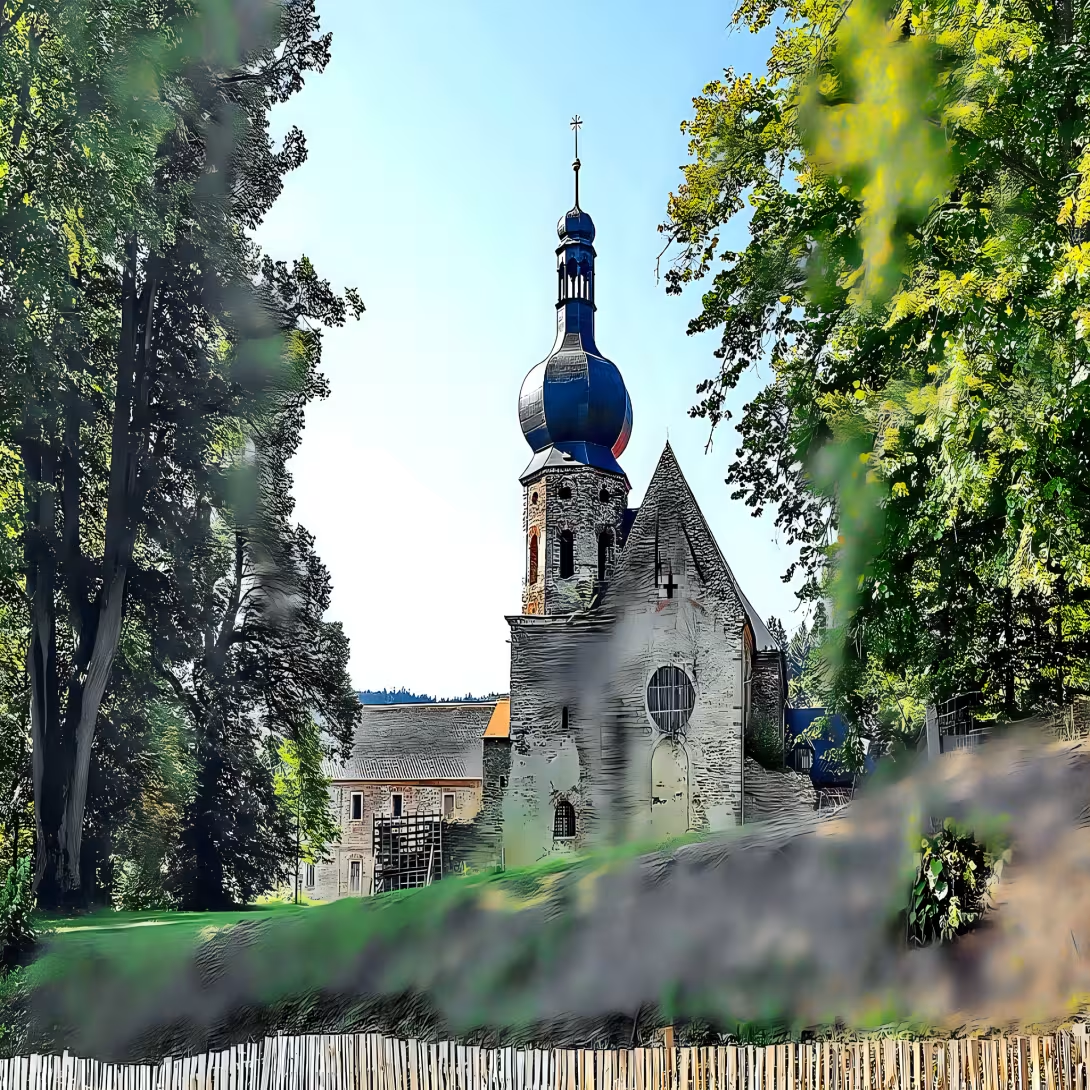
Pivoňský Klášter: A Baroque Ruin with a Rich History
Located in Pivon, the former Augustinian monastery turned baroque ruin has witnessed significant events throughout its history. Founded in the 13th century, this monument stands as a testament to key periods of Czech history.
The monastery's origins date back to the 13th century, with the first written record appearing in 1379. The Augustinian order brought monks to Pivon, and over time, the complex grew into an important center of learning and culture in Bohemia. A fire destroyed part of the monastery in 1573, which was subsequently rebuilt.
The baroque period saw significant renovations, including the construction of the refectory in 1666 and the church renovation in 1686. The current ruinous state is a result of later neglect. Despite its decline, the Pivoňský Klášter remains an important cultural heritage site, reflecting the styles of the time.
Throughout its history, the monastery has had several owners, including Leonard Stöhr, who purchased it in 1800, and Leopold Felix z Thun-Hohensteinu, who added it to his poběžovické panství. The complex was also affected by Emperor Joseph II's reforms, leading to its eventual closure in 1787.
Today, the Pivoňský Klášter stands as a testament to the region's rich history and cultural heritage. Visitors can explore the ruinous state of the monastery, taking in the unique architecture and artistry that remains. Despite its current state, this monument is still worth visiting for those interested in history and culture.
Then and now
Drag the slider to compare how the landmark may have looked when it was built with the view today.
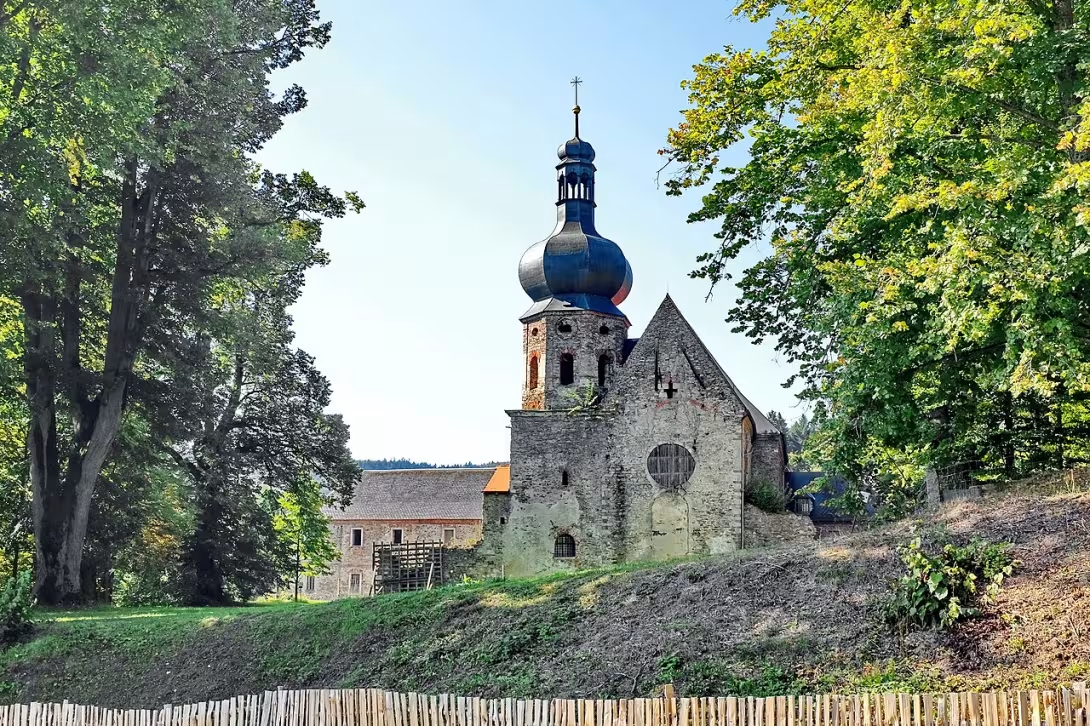
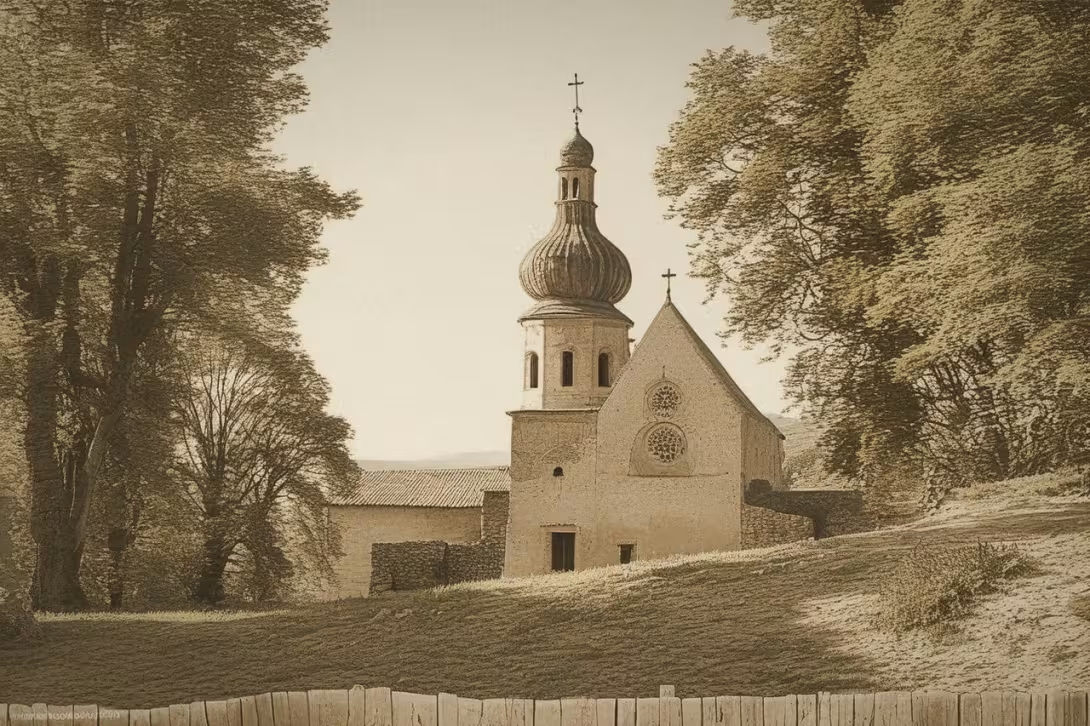
The historical appearance on the left is an AI-generated visualisation and serves as inspiration only.
Historical milestones
- 1250
- Foundation of the monastery
- 1379
- First written record of the monastery
- 1573
- Fire destroys part of the monastery
- 1666
- Construction of the refectory during the Baroque period
- 1686
- Renovation of the church during the Baroque period
- 1787
- Closure of the monastery due to Emperor Joseph II's reforms
- 1800
- Purchase of the monastery by Leonard Stöhr
Architectural development
The monastery underwent significant baroque renovations in the 17th century, with the refectory built in 1666 and the church renovated in 1686. The current ruinous state is a result of later neglect.
Historical events
Founded in the 13th century
Rebuilt after a fire in 1573
Baroque renovation in 1666 and 1686
Ruined by Emperor Joseph II in 1787
Owners
Augustiniánský řád
Leonard Stöhr
Leopold Felix z Thun-Hohensteinu
Hraběcí rod Coudenhove-Kalergi
Points of interest
– The Pivoňský Klášter was once a significant center of learning and culture in Bohemia, with monks from the Augustinian order bringing knowledge and artistry to the region.
– Despite its current ruinous state, the monastery's baroque refectory, built in 1666, still features intricate stone carvings and ornate decorations that are worth exploring.
– The complex has had several unusual owners throughout its history, including Leonard Stöhr, who purchased it in 1800, and Leopold Felix z Thun-Hohensteinu, who added it to his poběžovické panství.
– Emperor Joseph II's reforms led to the monastery's eventual closure in 1787, marking a significant turning point in its history.
– The Pivoňský Klášter is said to be haunted by the ghost of a former abbot, whose spirit is rumored to roam the ruins late at night.
Guide
This guide is narrated by a synthetic voice generated by artificial intelligence.
Show guide text
This text was created by artificial intelligence and has not been editorially reviewed. It may contain inaccuracies.
The Pivoň Monastery stands in the village of Pivoň near Mnichov in the Domažlice district. The Augustinians founded it in the second half of the thirteenth century, though the first written mention of it dates from 1379. The first monks came here from the monastery of Saint William in Bavaria.
The monastery suffered heavy losses several times. In 1573 it burned down and reconstruction did not begin until 1595. During the Thirty Years' War, the Swedes plundered it in 1641 and 1648. Then came the Baroque period. In 1666 a new refectory was built and in 1686 the monastery church of the Annunciation of the Virgin Mary received its Baroque appearance. The present-day look of the complex is mainly the result of extensive reconstruction from 1733. At that time the monastery consisted of three courtyards connected by gates. One served agricultural purposes, the church stood in the second, and the monastery itself was in the third. Its single-story buildings surrounded a cloister courtyard with a fountain in the middle. The Augustinians of Pivoň also founded a castle in Ždánov between 1728 and 1731.
In 1787 Emperor Joseph II dissolved the monastery. The property, valued at 141 thousand gold coins, was taken over by the religious fund. In 1800 it was bought at auction by Prague lawyer Leonard Stöhr, who converted the buildings into a four-winged château with thirty rooms. In 1843 it was acquired by Leopold Felix of Thun-Hohenstein and attached to the Poběžovice estate. From 1864 to 1945 it belonged to the Coudenhove-Kalergi family of counts. During the First Republic it housed a Czech school and a gendarmerie station and there were also several apartments there.
After 1948 the buildings were used by the unified agricultural cooperative and the church was converted into a granary. On the tower there was a border guard observation post. In 1953 one of the border guards threw down a cigarette butt and caused a fire in the entire complex. The church walls were secured that same year. The church received a new roof and restored tower only at the turn of the seventies and eighties. After 1990 the Aurelius association began repairs and has owned the complex since 2002, though the work was not completed. As of July 1, 2023, the former monastery is a national cultural monument.
The church is a single-nave building with a flat chancel and a two-story tower on the south side. The western façade ends with a high triangular gable with three elliptical windows stacked above each other. The stone portal beneath it bears the date 1691 and the monogram of Christ JHS, that is Jesus, Savior of men. On the gable is the monastery's coat of arms, a flaming heart beneath a mitre and an abbot's crosier.
Tips for visitors
Pivoňský klášter is best visited during the spring and autumn seasons, when the surrounding landscape is particularly picturesque. The ruin's unique architecture and scenic views are even more breathtaking during these times of year. Make sure to wear comfortable shoes for exploring the site, as it spans a significant area. Don't forget your camera, as there are plenty of photogenic spots throughout the klášter. For families with children, consider bringing snacks and water, as well as a map or guidebook to help navigate the site. As you explore, take note of the intricate stone carvings and ornate details that adorn the walls and towers. Be sure to capture the stunning views from the top of the klášter's highest tower for an unforgettable photo opportunity.
Frequently asked questions
Can the monument be visited?
Religious buildings are usually open mainly during services; at other times a visit is normally arranged with the parish or the operator. We have not verified specific times.
Where is the monument?
Location: Pivoň 1, 34522 Mnichov, Plzeňský kraj. The map on this page shows the exact spot.
Why is the monument protected?
It is listed in the Central List of Cultural Monuments of the Czech Republic as a national cultural monument (register no. 486).
Businesses nearby
Do you run a restaurant, accommodation, shop, museum, rental, wellness or other visitor service near this monument? Show yourself directly to the people heading to it — this is how they will see you in the app and on the web:
Nearby
The surrounding landscape is characterized by rolling hills and forests, with nearby towns including Domažlice and Plzeň.
Accommodation nearby
Themed route
Pivoňský klášter Tour
This thematic tour takes you through the picturesque surroundings of Pivoň, a charming town in western Bohemia. The main attraction is Pivoňský klášter, a historic monastery that dates back to the 13th century.
1. Domažlice Town Square: Start your journey in Domažlice, a nearby town with a rich history and architecture. Visit the town square, surrounded by beautiful Baroque buildings and ornate fountains. 2. Pivoňský klášter (approx. 5 km): Head to Pivoň and explore the monastery complex, which includes a stunning church, cloisters, and a museum showcasing its rich history. 3. Plzeň Forest: After visiting the monastery, take a leisurely walk through the nearby Plzeň Forest, offering scenic views of rolling hills and dense forests.
This tour provides a unique blend of history, architecture, and nature, allowing you to experience the best of Pivoň and its surroundings.
Seasonal recommendations
Spring
As you visit the ruined Pivoňský klášter, you'll be surrounded by the gentle warmth of spring. The blooming flowers and lush greenery create a serene atmosphere, perfect for contemplation. Be prepared for moderate-sized crowds, especially on weekends. Wear comfortable shoes and clothing suitable for mild weather. Consider visiting early in the morning or late in the afternoon to avoid the peak tourist hours.
Summer
In the summer, the Pivoňský klášter takes on a lively atmosphere, with warm sunshine and lush foliage. Be prepared for larger crowds, especially during peak holiday season. Wear light, breathable clothing and comfortable shoes suitable for walking. Arrive early in the morning to beat the heat and avoid the midday rush.
Autumn
As autumn arrives, the Pivoňský klášter is bathed in a warm, golden light. The foliage turns vibrant shades of orange and red, creating a picturesque scene. Moderate-sized crowds are typical during this time. Wear layers for changing weather conditions and comfortable shoes suitable for walking. Consider visiting late in the afternoon or early evening to enjoy the soft, golden light.
Winter
In the winter, the Pivoňský klášter takes on a serene, peaceful atmosphere, with snow-covered ruins and crisp air. Be prepared for smaller crowds, especially during weekdays. Wear warm, layered clothing and comfortable shoes suitable for walking in snowy or icy conditions. Consider visiting early in the morning or late in the afternoon to avoid peak tourist hours.
Visualizations and artistic views


The visualisations are generated by artificial intelligence and serve as inspiration.
Photos from the area
Real photos taken near the monument


Zdroj a licence jsou uvedeny u každého snímku.
Atmosphere of the place
This atmospheric visualisation of the place and period was generated by artificial intelligence. It is not real footage of the location.
Tips from visitors
No tips yet. Be the first!
Log in and add your tip.
Sources and literature
Photos: Lubor Ferenc / CC BY-SA 4.0, rozlišení zvýšeno umělou inteligencí — Wikimedia Commons. The author and licence also appear when you hover over the image.
Location on the map
More monuments – Pivoň
Show all in the municipality

Fotografie návštěvníků
Zatím žádné fotografie. Buďte první, kdo přidá fotografii z návštěvy!
Log in a přidejte svou fotografii nebo hodnoťte.
Za ověřenou návštěvu v aplikaci získáte víc bodů — poznáme podle GPS, že jste na místě.
Reviews and comments