






Pivovar v Žirovnici Brewery building
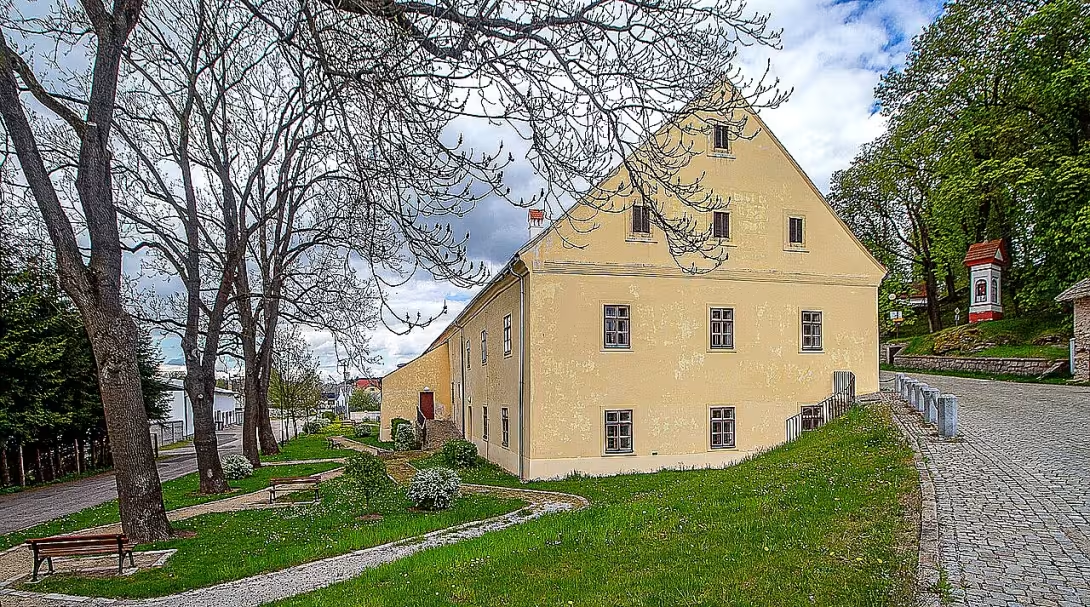
The Žirovnik brewery, located near the castle in Žirovnice, is a museum with a rich history dating back to the first half of the 16th century. In the past, this two-story Renaissance building was a key place for brewing, reflecting the importance of this industry in Central European countries. Today, the building is protected as a cultural monument and serves as a museum with exhibitions dedicated to perlet, button shop, sewing machines and the history of brewing. Its fascinating history and architecture make it an essential destination for every traveler.
The roots of the brewery in Žirovice dates back to the first half of the 16th century, when it belonged to the masters of Vrchoviště. The explicit mention of it appears in the purchase agreement of Petr Vencelik from Vrchoviště with Albrecht from Gutštejn in 1544, which confirms his existence at the time. Between 1589 and 1592, a new Renaissance building was built under the leadership of the Italian architects Baltazar Maggio and Antonio Cometta, evidencing the strong influence of Italian architecture on the then Czech countries. In the 18th century, the brewery was owned by the family of Šternberk and its annual production amounted to around 1.350 hl, indicating its economic importance.
The architecture of the building is characterized by Renaissance style and a two-storey building with a saddle roof. The façade is decorated with partially preserved written sgraffiti, which increases its historical importance and aesthetic attractiveness. After the completion of the brewery operation in 1893, the premises were adapted for various purposes, including the inn, gym and flats. A comprehensive revitalisation took place between 2007 and 2011, which included removing insensitive reconstructions and restoring the original elements.
The ownership of the brewery has changed over the years. The lords of Vrchoviště followed him Albrecht z Gutštejna, Adam II. z Hradce and finally the family of Šternberk. Karel Štěpánek was the last brewer to run until 1893. After production, there were various facilities in the building, such as a power plant with Wolf locomobile, which shows its adaptability and its lasting importance to the local community.
Key events in the history of the brewery include a reference to the 1544 purchase agreement, the construction of a new Renaissance building between 1589 and 1592, the cessation of beer production in 1893 and the declaration of the building as a cultural monument in 1967. Revitalization of the site from 2007 to 2011 brought him a new life and made him part of the museum.
Today, the Žirovnik brewery is open to the public as a museum offering valuable knowledge about pearly, knockery, sewing machines development and the history of brewing. Rich history and architecture make this place a necessary stop for anyone interested in the cultural heritage of the Czech Republic. Visit this object to learn its history and appreciate its importance to the local community.
The Girovnik brewery is an example of how the historical site can be preserved and restored to serve as a living witness to the past. Its presence in Žirnice not only enriches the cultural landscape of the region, but also offers insight into the traditions of the local population. Visit this building and appreciate its importance for Czech culture and heritage.
Historical milestones
- 1544
- Reference in the purchase contract of Petr Vencelik from Vrchoviště
- 1589
- The beginning of the new Renaissance brewery
- 1893
- End of beer production
- 1967
- Protection as a cultural monument
- 2011
- Completion of site revitalisation
Architectural development
The original Renaissance building has a facade with preserved letter sgraffiti. After the completion of the brewery operation in 1893 various adaptations to the inn, gym and apartments took place. Comprehensive revitalisation has taken place between 2007 and 2011 to eliminate insensitive reconstructions.
Historical events
1544 - reference in the purchase contract; 1589-1592 - construction of a new renaissance brewery; 1893 - end of beer production; 1967 - declaration for cultural heritage; 2007- 2011 - revitalization of the object.
Owners
Lords from Vrchoviště (1st half of the 16th century), Albrecht z Gutštejna (1544), Adam II. z Hradce (end of 16th century), the House of Šternberk (beginning of 18th century).
Points of interest
- The brewery belonged in the first half of the 16th century to the masters of Vrchoviště and its existence is confirmed by the purchase agreement of 1544. - The new Renaissance building was built between 1589 and 1592 under the leadership of Italian architects Baltazar Maggio and Antonio Cometta. - In the 18th century, the annual beer production reached around 1.350 hl, which indicated the economic importance of the operation. - After the completion of the brewery operation in 1893, the premises served as a inn, gym, apartments and even a motor power plant with locomobile Wolf. - The facade of the building is decorated with partially preserved letter sgraffiti, which increases its historical and aesthetic importance.
Guide
Show guide text
This text was created by artificial intelligence and has not been editorially reviewed. It may contain inaccuracies.
Welcome to Žirnice. Right now, when you're standing in front of this impressive two-storey building, you're in a place where history can't just be read from books, but where you can literally feel it in every rock and shadow that throws down Renaissance walls. Take a look at this object, which stands near the castle. His presence here is not random. This building is not just a simple house, but a witness of centuries, a bit of human work, technological progress and changes that have been going through this entire area. Feel the atmosphere of peace and stability that this Renaissance entity radiates. It is a building that has survived various ages, governments and changes in social order, and yet has retained its dignity.
To understand why this place is standing right here and why it's so important, we need to go back to the past with you until the first half of the sixteenth century. The history of this place is not short. Already at that time, namely in 1544, a mention of a brewery belonging to the masters of Vrchoviště appears in one of the sales contracts. Imagine a time when beer production was not only a matter of taste, but above all a question of the survival and economic stability of the entire estate. Petr Vencelík z Vrchovišť, whose name appears in these documents, was one of those who laid the foundations for the future boom of this place. At that time, it was a functional, vital part of the economy that supplied the surrounding humanity and brought profit to the noble families.
But now pay attention to the architecture itself, which is right before your eyes. What you see is the result of a magnificent intent that took place in the late 16th century. Between 1589 and 1592, this new building was built in a typical Renaissance style. But it was not the work of local craftsmen without a higher mandate. The construction was attended by top experts of their time, Italian architecture, Baltazar Maggi and Antonio Cometto. It is thanks to their influence and expertise that the building has acquired its specific face, its symmetry and the Renaissance elegance that you can perceive today. Notice the two-story structure that seems so balanced. The Italian school brought a new view to the Czech countries of the space and how the building was supposed to affect the surroundings - it was supposed to give the impression of order, strength and culture. Now, when you look at the facade, try to imagine the workload, the materials and the level of craft these masters put into the building.
When looking at these walls, you cannot stop at names that are closely related to this place. The history of the brewery is interwoven with stories of powerful generations and prominent personalities. In addition to those gentlemen from Vrchoviště there were other administrators and owners such as Albrecht z Gutštejna and Adam II. z Hradce at different times. Each of them saw this brewery as an important pillar of his estate. The place was part of a wider circle of power and wealth, which revolved around the castle and its economic operations. The figures like Karel Štěpánek then represent later layers of history that help us understand how this place transformed over the centuries. It's fascinating to think how many different faces and voices these premises have heard in the last 500 years.
Now, if you think about how much this place has changed, you'll find an interesting contrast. After centuries of intensive production, which reached huge proportions in the eighteenth century and was a key engine of the local economy, in 1893 the time came when the beer production in this particular building was finally finished. From a place where the boilers were boiling and where the smell of malt and hops was ruled, a building had to find its new meaning. Although production stopped, the building didn't die. On the contrary, its value was so high that in 1967 it was recognised and protected as a cultural monument. After a long period of waiting and subsequent revitalization, which was completed in 2011, this space reopened itself to the world.
Today, however, you will not only feel the smell of beer, but rather the smell of history and craft. The building serves as a museum that will guide you through a world of traditions that were as important to this region as the brewery itself. Here you can explore the fascinating expositions dedicated to perlettery and button shop. Imagine the patience and precision that the people who made these small but beautiful objects had to have. This connection between great architecture and small, human craft is what makes this place so special.
You may find it strange how an industrial object becomes a place for culture and education, but that is where its greatest mystery and strength lies. This building was able to adapt its existence to every new era. The brewery for the noble estate became a pillar of the economy, the industrial building became a protected monument and finally became a home for rare collections. It is a story about durability and how human work and creative spirit can survive even when the very purpose of the original work changes.
We now cordially invite you to further explore. Let yourself be drifting through the atmosphere of the inner space, see the exhibits and try to imagine in every corner of the museum the people who worked here, lived and formed centuries ago. We leave you now with your own pace of discovery so you can enjoy these impressions in peace. Thank you for your attention and we wish you a pleasant visit to this special place in Žirnice.
Tips for visitors
The best time to visit is spring and summer, when the surrounding landscape is green and weather friendly for walking around Žirnice. In these months you can better appreciate the architectural details of the Renaissance building and enjoy the quiet environment of the city. If you prefer a smaller crowd, consider a visit in the late autumn when leaves change and the monument becomes romantic.
Access to the brewery is possible both by car and public transport. For visitors arriving by car, it is advisable to find parking places near the historical centre Žirovice, which are usually available around the castle and square. If you travel by public transport, check the current connections and times of departure in the search engine as the lines may vary according to the day of the week and the season.
Take comfortable shoes with you to the monument, as you move on historic streets and perhaps even uneven terrain around the castle. We recommend taking a light snack and water, especially if you plan a longer walk around the city and its surroundings. In winter, don't forget to wear warm clothes because the outdoor areas can be cold.
For photography is ideal morning or afternoon light that highlights the texture of bricks and stone Renaissance building. The most beautiful shots are obtained from angles that capture the connection of the brewery to the surrounding building and the nearby Žirovnik lock. Try to avoid sharp midday sun, which can create hard shadows and reduce the detail of the image.
In the surroundings, specifically in the immediate vicinity of the brewery, there is a Žirovnik Castle, which is ideal for a short walk and tour. This combination of visits to both monuments allows you to get a comprehensive picture of the history and architecture of the city. If you have time, pay attention to the surrounding park environment, which offers a peaceful atmosphere for relaxation.
Businesses nearby
Do you run a restaurant, accommodation, shop, museum, rental, wellness or other visitor service near this monument? Show yourself directly to the people heading to it — this is how they will see you in the app and on the web:
Nearby
The giraffe's castle.
Accommodation nearby
Trips and activities nearby
Guided tours, tickets and activities nearby from GetYourGuide
Affiliate link: if you buy from the partner, we may receive a commission. The price for you does not change.
Search tours and activities →Themed route
1. Pivovar v Žirovnici (Museum), Type: Museum. A tour of exhibitions dedicated to the history of brewing beer. 2. Žirovnik castle, Type: Castle. A tour of historical halls and interiors. 3. Zirovnik Castle Station, Type: Area. Walk in the center of the historic building. 4. Park near Žirovnik Castle, Type: Park. Rest in the immediate vicinity of the monument.
Seasonal recommendations
Spring: In October and November, Pivovar v Žirovnici is surrounded by flowers that colour the surrounding landscape into living shades. The sunny spring days provide ideal lighting for the historical state of the brewery and its architecture. Local vegetables, such as leafy trees, are beginning to become colorful, which adds space to the atmosphere. Visitors are advised to wear clothes suitable for mild temperatures and to keep in mind potential rain weather. The best time to visit is a good time because we usually avoid big crowds.
Summer: In summer, especially during the main summer season, Pivovar v Žirovnici is a popular destination for visiting. Sunny days and warm night climate attract a large number of tourists. The bright sun provides excellent lighting for exploring museums and surrounding areas, but also recommends UV protection. Visitors are advised to wear light clothes and sunflowers as well as drinking enough water for warm temperatures. Early arrival is an appropriate strategy to minimise waiting times.
Autumn: In September and October Pivovar v Žirovnici becomes a unique atmosphere when leafy trees start to change colour. The sunny autumn days provide a beautiful opportunity for a tour of the museum and surrounding gardens in ideal lighting, with a classic colour spectrum of leaves. Visitors are advised to wear clothes suitable for mild temperatures and keep in mind the possibility of rain weather. This time is ideal for those who want to enjoy a place without large crowds.
Winter: During winter Pivovar v Žirovnici gets a quiet and quiet atmosphere. Sundays are shorter, but medium winter temperatures allow a tour of the museum outside. The disadvantage is the possibility of snow or frost, so visitors are advised to wear warm clothes and protective pants. The museum opening hours are usually shorter, which means it is appropriate to plan a visit within the time frame available for opening. The winter atmosphere brings peace and tranquility, which are ideal for those seeking rest from the summer noise.
Visualizations and artistic views


The visualisations are generated by artificial intelligence and serve as inspiration.
Photos from the area
Real photos taken near the monument


Zdroj a licence jsou uvedeny u každého snímku.
Tips from visitors
No tips yet. Be the first!
Log in and add your tip.
Sources and literature
Photos: VitVit / CC BY-SA 4.0 — Wikimedia Commons. The author and licence also appear when you hover over the image.
Faktickým podkladem tohoto textu byl článek na Wikipedii, jehož autory jsou přispěvatelé Wikipedie. Článek je dostupný pod licencí CC BY-SA 4.0.
Location on the map

Příběhy a pověsti
Legendy, pověsti a příběhy spjaté s touto památkou
Fotografie návštěvníků
Zatím žádné fotografie. Buďte první, kdo přidá fotografii z návštěvy!
Log in a přidejte svou fotografii nebo hodnoťte.
Za ověřenou návštěvu v aplikaci získáte víc bodů — poznáme podle GPS, že jste na místě.
Reviews and comments