






pomník Mistra Jana Husa v Kolíně Monument
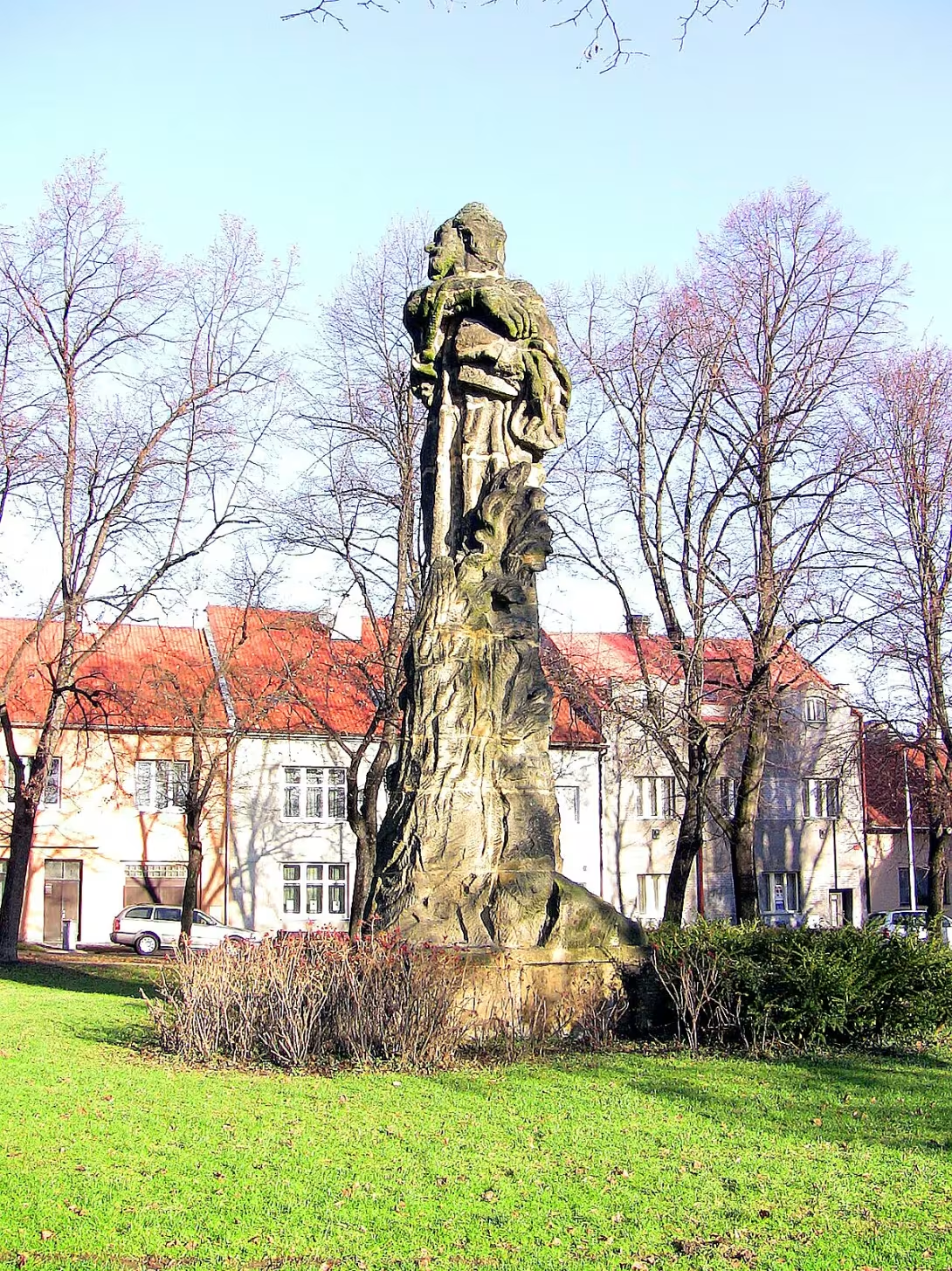
The Jan Hus Monument in Kolín is a sculptural work by František Bílek, created in 1914. Standing at 7 meters tall and crafted from sandstone, it depicts Jan Hus as a burning tree, symbolizing his martyrdom and enduring influence. Located on Husovo náměstí in Kolín III, near the building of Husova sboru, this monument holds significant historical value due to its association with Czech nationalism and resilience through periods of destruction and restoration.
The origin of the Jan Hus Monument dates back to 1909 when Kolín's Sokol organization commissioned František Bílek to design a sculpture honoring Jan Hus. Initially proposed at an ambitious height of 15 meters, the design was later reduced. The monument was unveiled on September 20, 1914, after being postponed from its original date due to the assassination of Archduke Franz Ferdinand. This delay reflects the turbulent political climate leading up to World War I, during which Jan Hus emerged as a symbol of Czech national identity.
Architecturally, the monument is notable for its sandstone construction and artistic representation of Jan Hus as a burning tree. The design captures the essence of Hus's martyrdom while also reflecting nationalist sentiments prevalent in early 20th-century Bohemia. Despite suffering damage during World War II when Nazi occupiers ordered it to be sawed and removed, the monument was restored and reassembled after the war. It now bears visible marks from this wartime damage, serving as a testament to its historical journey.
Throughout its history, the Jan Hus Monument has experienced significant changes in ownership and location. Originally placed on Karlovo náměstí, it was relocated to Husovo Square (formerly Vinařické náměstí) after World War II. The monument's base once bore an inscription that is now illegible: "A tree struck by lightning, which burned forever – 1914," further emphasizing its symbolic representation of Jan Hus.
Key events in the monument's history include its unveiling in 1914 and its removal during Nazi occupation in 1941. After being restored post-war, it was rededicated on July 5, 1949, marking a new chapter in its existence. These events highlight the monument's resilience and enduring significance as a symbol of Czech heritage.
Today, the Jan Hus Monument stands as a testament to both artistic expression and historical endurance. Visitors can explore its urban surroundings at Husovo Square, appreciating its intricate design and the marks of history it bears. The monument remains an important cultural landmark in Kolín, inviting those interested in Czech history and art to reflect on its significance.
The Jan Hus Monument is not only a remarkable piece of sculpture but also a symbol of resilience and national identity. Its journey through periods of turmoil and restoration makes it a compelling site for visitors seeking to connect with the rich tapestry of Czech history. Come and witness this enduring monument, where the legacy of Jan Hus continues to inspire generations.
Then and now
Drag the slider to compare how the landmark may have looked when it was built with the view today.
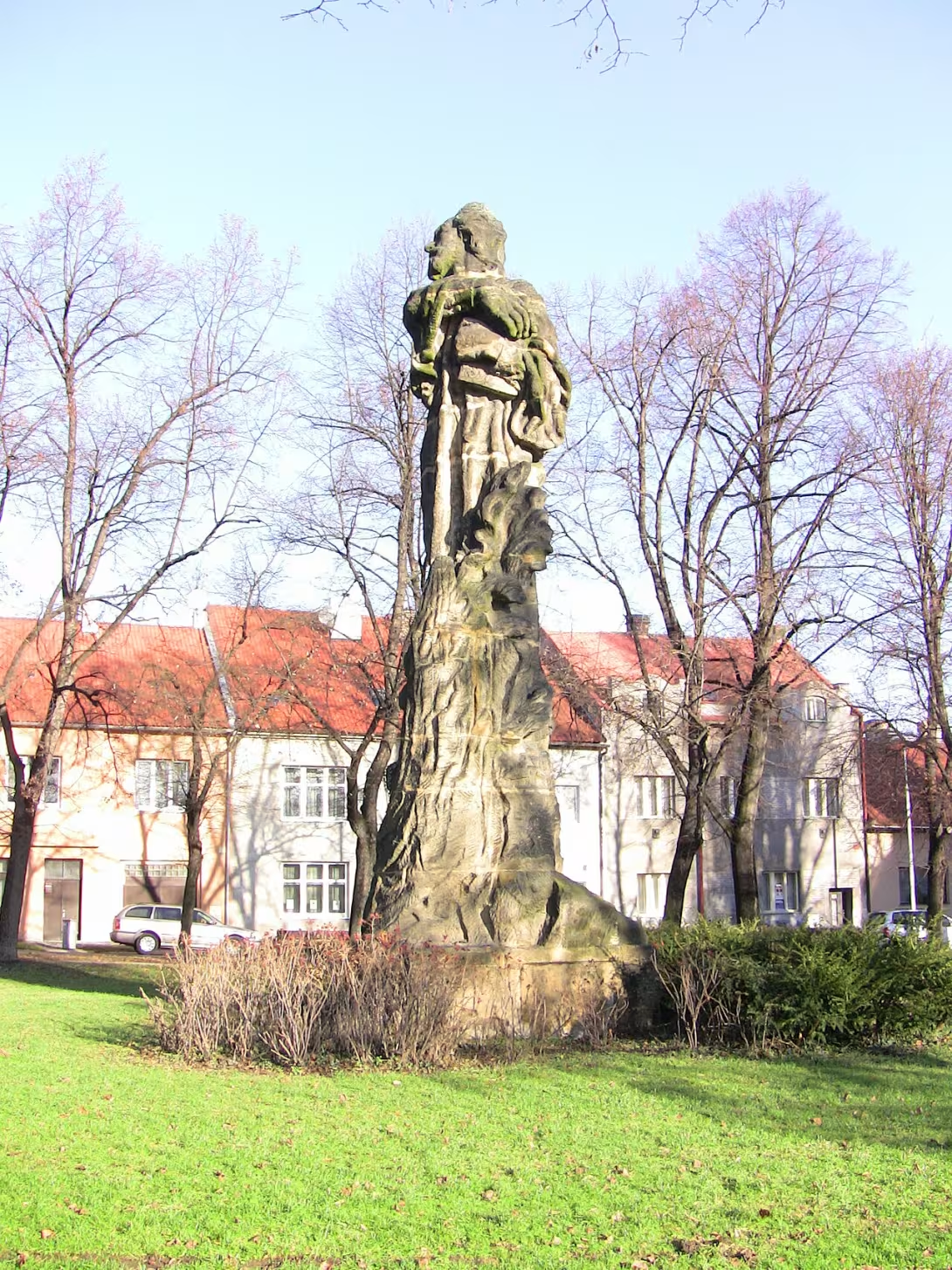
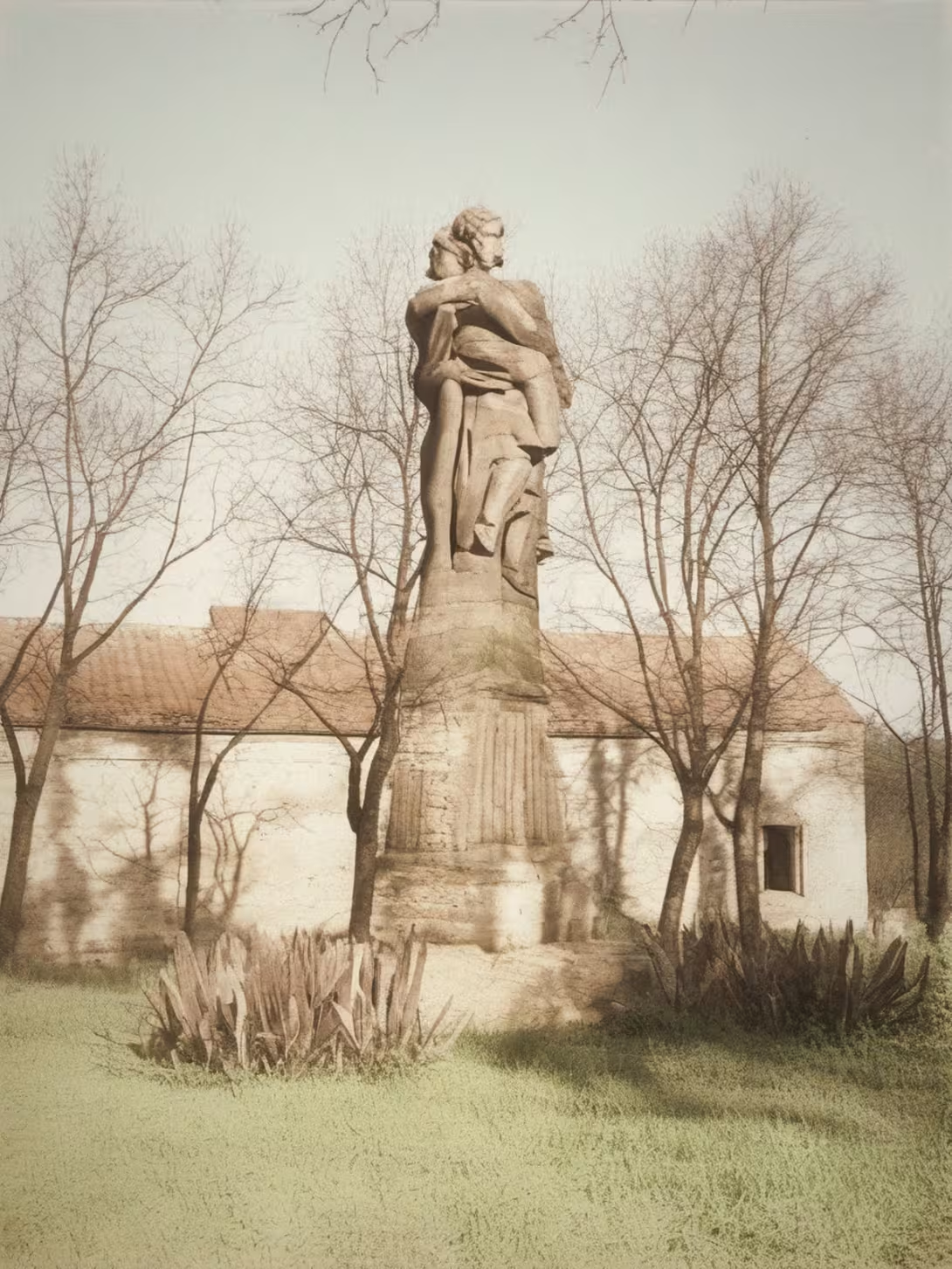
The historical appearance on the left is an AI-generated visualisation and serves as inspiration only.
Historical milestones
- 1914
- The monument was unveiled on September 20.
- 1941
- The monument was sawed and removed by Nazi occupiers.
- 1949
- The restored monument was rededicated on July 5.
Architectural development
The original design for the monument proposed a height of 15 meters, which was later reduced. The sculpture is made from sandstone and features visible marks from its wartime damage. It has undergone restoration after World War II to preserve its historical integrity.
Historical events
The monument was unveiled on September 20, 1914, after being commissioned by Kolín's Sokol organization in 1909. Originally planned for July 5, the unveiling was postponed due to the assassination of Archduke Franz Ferdinand.
During World War II, in late 1941, Nazi occupiers ordered the monument to be sawed and removed. After the war, it was restored and reassembled but relocated to Husovo Square (formerly Vinařické náměstí), where it was rededicated on July 5, 1949.
Points of interest
- The Jan Hus Monument was initially proposed to be 15 meters tall before its height was reduced to the current 7 meters, reflecting both artistic and practical considerations during its design phase.
- During World War II, Nazi occupiers ordered the monument to be sawed apart and removed, leaving visible scars that serve as a testament to its wartime experiences and resilience.
- The monument's base once featured an inscription reading "A tree struck by lightning, which burned forever – 1914," symbolizing Jan Hus’s enduring legacy, though this is now illegible due to time and damage.
- After World War II, the monument was relocated from Karlovo náměstí to its current location at Husovo Square (formerly Vinařické náměstí), marking a significant change in both ownership and setting.
- The unveiling of the Jan Hus Monument on September 20, 1914, was postponed due to the assassination of Archduke Franz Ferdinand, linking it directly to the onset of World War I and its broader historical context.
Guide
This guide is narrated by a synthetic voice generated by artificial intelligence.
Show guide text
This text was created by artificial intelligence and has not been editorially reviewed. It may contain inaccuracies.
A seven-meter-high sandstone monument to Master Jan Hus in Kolín was created by sculptor František Bílek in 1914. Hus was not depicted as a figure in the usual sense, but as a burning tree. This was also related to the inscription on the pedestal: A tree struck by lightning, which burned forever, 1914. Today it can no longer be read.
The Kolín Sokol members asked Bílek for the design of the statue in 1909. He originally planned a monument fifteen meters high. The design was approved two years later, but with a recommendation to reduce the height.
The solemn unveiling was planned for July 5, 1914 in the central Karlovo náměstí. Shortly before that, on June 26, an assassination attempt was carried out on the heir to the throne, František Ferdinand d'Este. The ceremony was therefore postponed and the statue was unveiled only on September 20, 1914.
At the end of 1941, during the German occupation of the Czech lands, the occupying authorities had the statue cut up and removed. Its parts then lay stored in crates on Kalcovce in the Zálabí city district until the end of the Second World War.
After the war, the monument was restored and reassembled. However, it did not return to its original location. It was decided to place it in Vinařické náměstí, which on this occasion received a new name, Husovo náměstí. The second solemn unveiling took place on July 5, 1949, exactly on the day when the first one had once been planned.
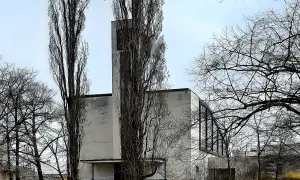
The monument stands to this day in Husovo náměstí near the building of Husův sbor. Traces of the cutting from the time of occupation are still visible on the sandstone.
Tips for visitors
The best time to visit the Jan Hus Monument in Kolín is during late spring or early autumn when the weather is pleasant, allowing for a comfortable exploration of the urban surroundings. During these months, you can enjoy the monument without the crowds that may gather on public holidays or during peak tourist seasons. Additionally, visiting at this time allows you to appreciate the surrounding architecture and cityscape in optimal lighting conditions.
Public transport is highly recommended as it provides convenient access to Kolín III. Always check for the latest schedules and routes online before your visit.
When visiting the Jan Hus Monument, consider bringing a camera with a zoom lens if you wish to capture detailed shots of the intricate sandstone sculpture. Comfortable walking shoes are advisable as well, especially if you plan to explore nearby areas on foot. A small backpack or bag can be useful for carrying water and any personal items.
For photography enthusiasts, the best spot to capture the Jan Hus Monument is from a slightly elevated position around the square where natural light enhances the texture of the sandstone during the morning hours. The soft lighting at dawn provides an excellent opportunity for capturing the monument's details without harsh shadows. Additionally, photographing in the late afternoon can create dramatic effects with the setting sun.
Within 30 minutes from Husovo Square, you can visit the Kolín Chateau, which offers a glimpse into the region’s historical architecture and art collections. It is an ideal spot for families with children as it often hosts interactive exhibitions and educational programs that engage young visitors while providing insight into local history.
Frequently asked questions
Can the monument be visited?
This is a structure in a public space that can usually be seen from outside free of charge. We have not verified that this particular one is freely accessible.
Where is the monument?
Location: Kolín, Středočeský kraj. The map on this page shows the exact spot.
Why is the monument protected?
It is listed in the Central List of Cultural Monuments of the Czech Republic as a cultural monument (register no. 1000472043).
Businesses nearby
Do you run a restaurant, accommodation, shop, museum, rental, wellness or other visitor service near this monument? Show yourself directly to the people heading to it — this is how they will see you in the app and on the web:
Nearby
Located at Husovo Square in Kolín III, near the building of Husova sboru. The area features urban surroundings with no significant natural landmarks within a 5 km radius.
Accommodation nearby
Trips and activities nearby
Guided tours, tickets and activities nearby from GetYourGuide
Affiliate link: if you buy from the partner, we may receive a commission. The price for you does not change.
Search tours and activities →Themed route
Thematic Walking Tour: Kolín's Husovo Square and Surroundings
1. **Pomník Mistra Jana Husa (Monument) Begin your tour at the heart of Husovo Square, where you'll find the striking monument dedicated to Jan Hus. This iconic statue commemorates the influential Czech theologian and philosopher who became a symbol of religious reform and national identity. Standing near the building of Husova sboru, this site offers insight into Kolín's rich historical tapestry.
2. **Husovo Sboru Building (Cultural Institution) Just a short walk from the monument is the building of Husova sboru. This cultural hub serves as a focal point for community events and gatherings, celebrating local heritage and fostering artistic expression. Visitors can explore exhibitions that delve into regional history and contemporary culture, making it an enriching stop on your tour.
3. **Husovo Square (Public Space) Spend some time wandering around Husovo Square itself, a lively urban space surrounded by the architectural charm of Kolín III. The square is not only significant for its historical associations but also serves as a vibrant meeting place for locals and tourists alike. Enjoy the atmosphere and observe how this area continues to play an integral role in community life.
4. **Local Cafés and Shops (Commercial Area) Nearby, explore the quaint cafés and shops that line the streets around Husovo Square. These establishments offer a taste of local cuisine and artisanal products, providing a perfect opportunity for visitors to relax and immerse themselves in the everyday life of Kolín's residents.
This tour offers a compact yet enriching experience, focusing on the cultural and historical significance of Kolín’s central area while allowing you to engage with its contemporary community spirit.
Seasonal recommendations
Jaro: In springtime Kolín, the Jan Hus Memorial comes to life with blooming trees and sunny rays that create an inviting atmosphere for visitors. This season is known for the city starting to buzz with initial tourist flows, leading to moderate crowds around the monument. When planning your visit, it's advisable to dress in appropriate clothing that can handle both warm sunshine and cool spring air. The best time to visit is in the afternoon when the light is brightest and locals begin engaging in more active recreation.
Summer: Summer in Kolín brings long sunny days and warm weather, making the Jan Hus Memorial a popular spot for countryside relaxation. During peak summer season, the monument may attract more visitors, increasing the chance of encountering crowds. Arriving early in the morning or later in the afternoon is recommended to avoid the height of tourist season. Given the warm months, it's advisable to bring sun-protective clothing and plenty of water to ensure hydration during your visit.
Autumn: Autumn offers Kolín a unique view of the Jan Hus Memorial with colorful foliage and a more tranquil atmosphere as the city prepares for winter. This time of year is ideal for visiting because there are significantly fewer crowds than in summer months, allowing for a more intimate experience at this historic site. Given the cooler days, it's advisable to dress warmly and consider visiting during daylight hours when sunlight still provides enough warmth for a comfortable tour.
Winter: Winter Kolín offers a frosty and serene environment around the Jan Hus Memorial, where the atmosphere is often dominated by icy and snowy scenes. This period brings shorter daylight hours and sometimes closures of certain areas, so it's important to check the monument's opening times. Given the cold temperatures, it's essential to dress in warm, layered clothing, including protective boots for frosty ground. The best time to visit is during daylight when sunlight illuminates the historic monument and creates magical winter effects.
Visualizations and artistic views


The visualisations are generated by artificial intelligence and serve as inspiration.
Photos from the area
Real photos taken near the monument


Zdroj a licence jsou uvedeny u každého snímku.
Tips from visitors
No tips yet. Be the first!
Log in and add your tip.
Sources and literature
Photos: Jstojanov / CC BY-SA 3.0 — Wikimedia Commons. The author and licence also appear when you hover over the image.
Faktickým podkladem tohoto textu byl článek na Wikipedii, jehož autory jsou přispěvatelé Wikipedie. Článek je dostupný pod licencí CC BY-SA 4.0.
Location on the map

Příběhy a pověsti
Legendy, pověsti a příběhy spjaté s touto památkou

Fotografie návštěvníků
Zatím žádné fotografie. Buďte první, kdo přidá fotografii z návštěvy!
Log in a přidejte svou fotografii nebo hodnoťte.
Za ověřenou návštěvu v aplikaci získáte víc bodů — poznáme podle GPS, že jste na místě.
Reviews and comments