






Pomník Šimona Nitzky Monument
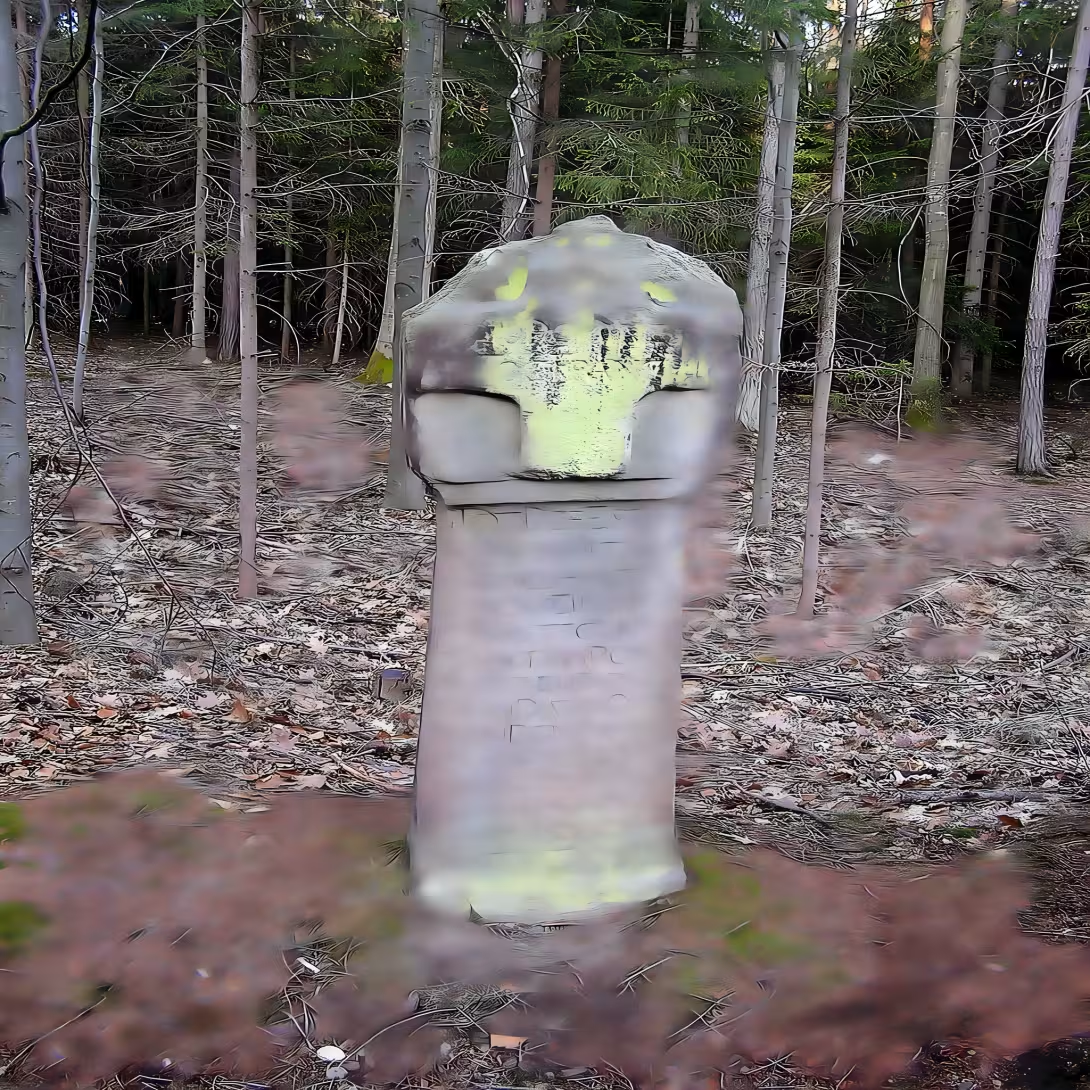
The Simon Nitzky Reconciliation Cross is a significant historical monument situated in Ostrolovský Újezd, near the II/156 road between Strážkovice and Veselka. This granite cross was erected in 1577 to commemorate swordsman Šimon Nitzky, who was robbed and murdered at this location.
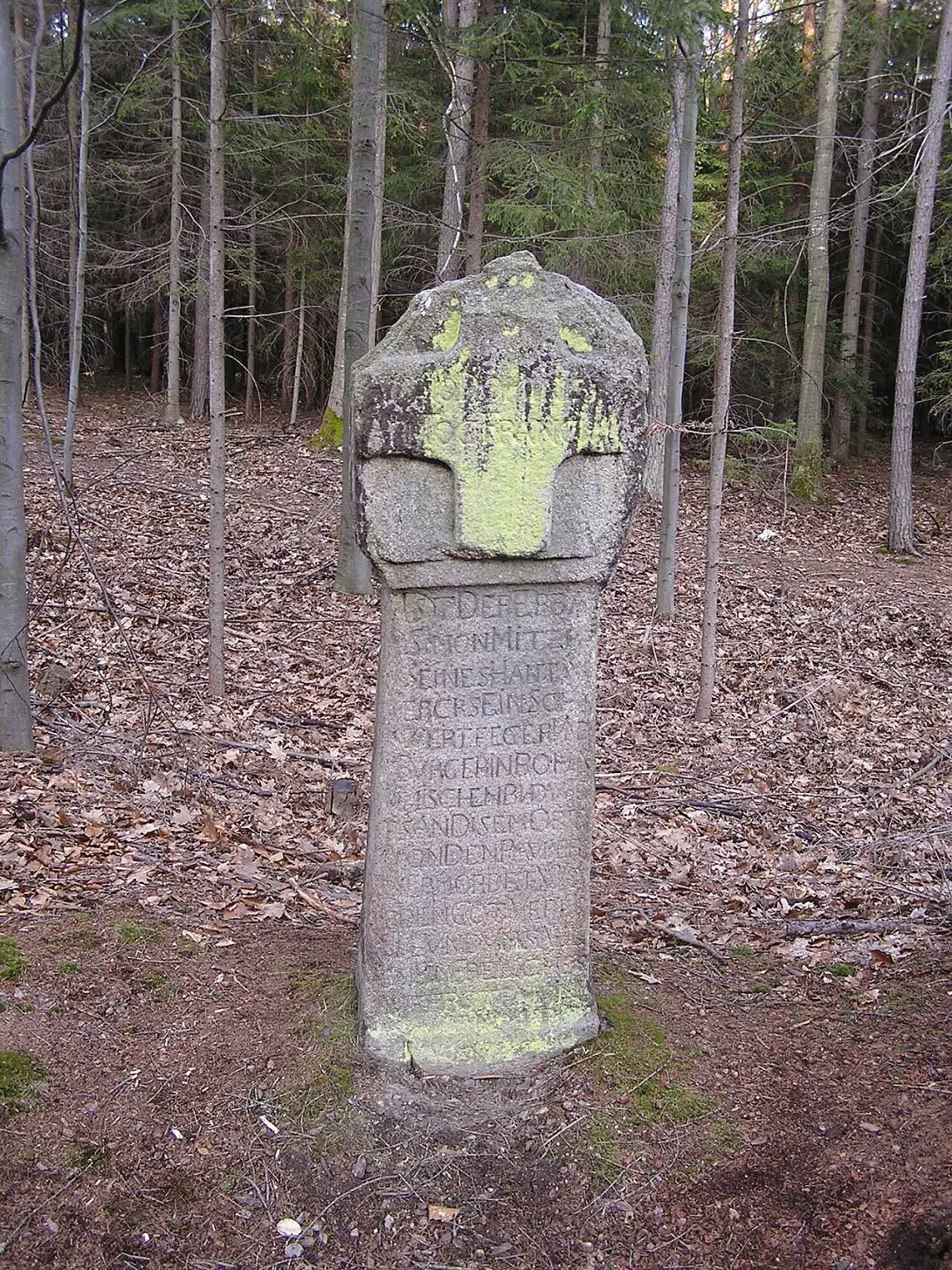
The monument features a tall stone cross with a carved Greek cross relief on its head. It has stood in its original position for centuries, serving as a memorial to a violent crime. The structure is characterized by its tapering pillar and oval-shaped head.
In 1577, robbers attacked and killed Šimon Nitzky and others near the site. In 1581, Ondřej Plemátl confessed to the murder following an investigation. After his confession, Plemátl died in prison, while his accomplice Johanka was executed by drowning.
The monument is constructed from granite, comprising a widened plinth, tapering pillar, and oval head. It features a carved Greek cross on its front. The stone has remained in its original location since the late 16th century, accompanied by two larch trees.
The inscription on the stone is partially legible. The cross is slightly tilted forward. This monument serves as a testament to violent crimes that took place in this region during the late 16th century, when the Rožmberk family held significant influence.
Today, the Simon Nitzky Reconciliation Cross remains an important piece of local history and culture. Visitors can still see the monument standing tall, a reminder of tragic events that occurred centuries ago.
Then and now
Drag the slider to compare how the landmark may have looked when it was built with the view today.
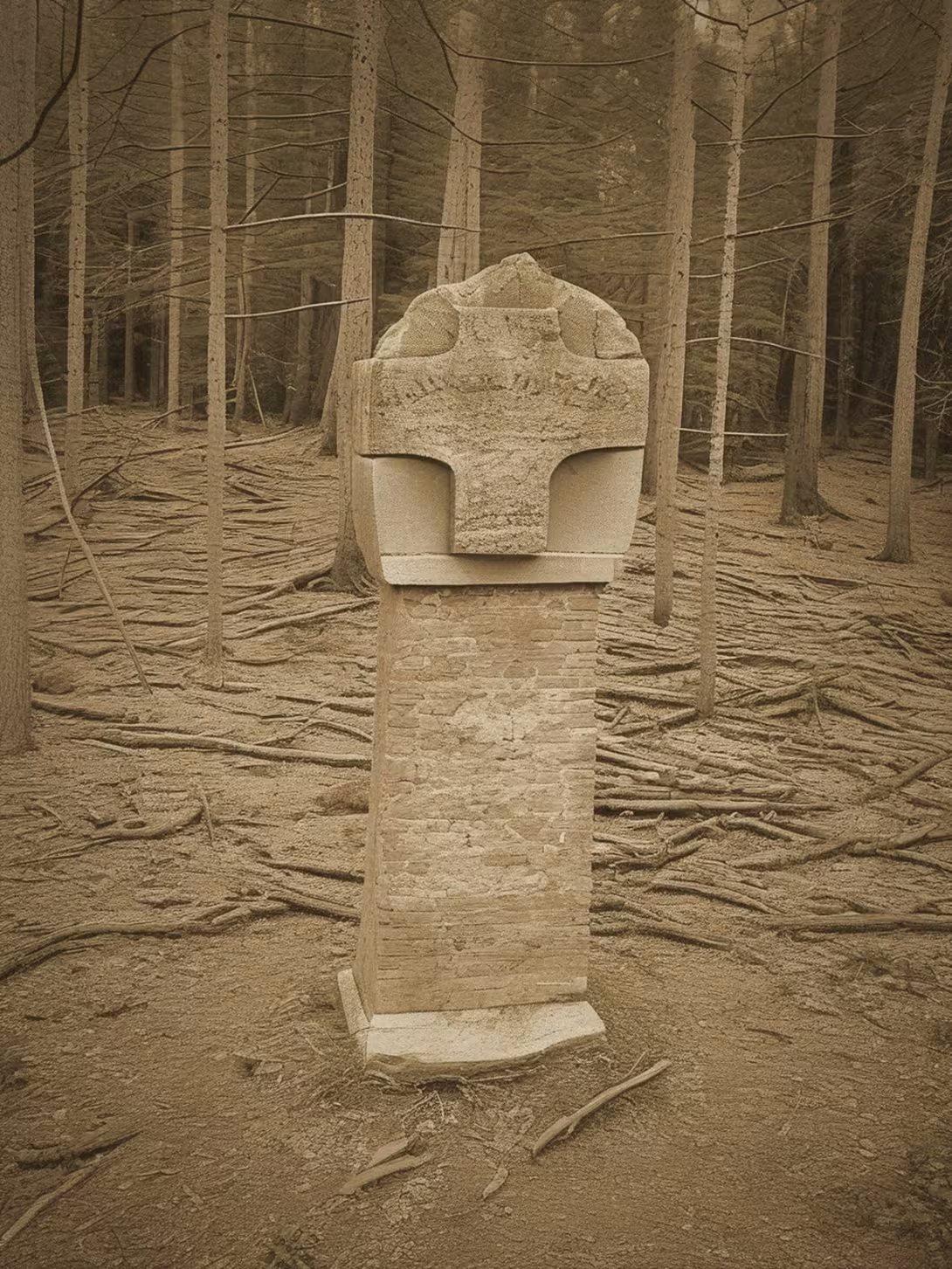
The historical appearance on the left is an AI-generated visualisation and serves as inspiration only.
Historical milestones
- 1577
- Robbers attack and kill Šimon Nitzky and others near the site.
- 1581
- Ondřej Plemátl confesses to the murder following an investigation.
- 1581
- Plemátl dies in prison, while his accomplice Johanka is executed by drowning
Architectural development
The monument is constructed from granite and consists of a widened plinth, a tapering pillar, and an oval head. It features a carved Greek cross on the front of the head. The stone has remained in its original location since the late 16th century.
Historical events
In 1577, a group of robbers attacked and killed Šimon Nitzky and several others near the site. In 1581, the criminal Ondřej Plemátl confessed to the murder following an investigation. Following the confession, Plemátl died in prison and his accomplice Johanka was executed by drowning.
Points of interest
– The monument was erected in 1577 to commemorate swordsman Šimon Nitzky, who was robbed and murdered at this location.
– In 1581, Ondřej Plemátl confessed to the murder following an investigation, while his accomplice Johanka was executed by drowning.
– The stone has remained in its original location since the late 16th century, accompanied by two larch trees.
– The monument is constructed from granite, comprising a widened plinth, tapering pillar, and oval head, featuring a carved Greek cross on its front.
Guide
Show guide text
This text was created by artificial intelligence and has not been editorially reviewed. It may contain inaccuracies.
Welcome. As you stand here in the quiet surroundings of Ostrolovský Újezd, take a moment to settle into the atmosphere of this place. Before you stands a silent, weathered witness to a tragedy that occurred centuries ago. You are looking at the Pomník Šimona Nitzky, a granite reconciliation cross that has occupied this very spot for hundreds of years. Even in its stillness, the monument carries a heavy sense of history, acting as a bridge between the peaceful landscape you see today and the violent events that once unfolded on this very ground.
As you approach the monument, please take a closer look at its form. Notice the material from which it is crafted; it is a sturdy, enduring granite, a stone chosen to withstand the passage of time and the elements. The structure is characterized by a tall, tapering pillar that draws the eye upward. If you look toward the head of the cross, you will see a specific, carved detail: a relief of a Greek cross. This symbol, combined with the monument's distinct oval-shaped features, gives the structure a solemn and dignified presence. It is not merely a decorative object, but a purposeful piece of stone masonry designed to mark a moment of profound loss.
To understand why this cross was placed here, we must travel back in time to the year 1577. Imagine this landscape not as it is now, but as it was in the late sixteenth century—a time of different laws, different dangers, and a much more unpredictable sense of security. In that year, a man named Šimon Nitzky was traveling through this area. He was a swordsman, a man likely accustomed to handling weapons and navigating the risks of travel, yet he could not escape the fate that awaited him here. Šimon Nitzky was robbed and murdered at this exact location. The violence of the attack was so significant that it left a permanent scar on the memory of the community, necessitating a monument that would serve as a reconciliation cross.
A reconciliation cross, or smírčí kříž, is a powerful concept. It was often erected to mark the site of a crime, serving as a way to settle spiritual or social debts and to ensure that the memory of the victim was never truly lost to the earth. For Šimon Nitzky, this granite pillar became his lasting legacy, a way to transform a site of sudden, brutal violence into a place of remembrance and, eventually, a place of peace.
The story of the crime, however, did not end with the attack in 1577. The mystery of who was responsible lingered for several years, haunting the local area. It was not until 1581, four years after the murder, that the truth finally began to emerge through a formal investigation. It was during this time that a man named Ondřej Plemátl came forward and confessed to the murder. His confession brought a sense of closure to the investigation, but the justice of the sixteenth century was swift and unforgiving.
The fates of those involved were as grim as the crime itself. Following his confession, Ondřej Plemátl did not face a long trial or a standard sentence; instead, he died while in prison. His accomplice, a woman named Johanka, met an even more harrowing end. As part of the judicial process of that era, she was executed by drowning. These names—Šimon Nitzky, Ondřej Plemátl, and Johanka—are now inextricably linked to this piece of granite, forever tied to this specific coordinate in Ostrolovský Újezd.
As you stand here, contemplate the weight of these names and the passage of time. It is fascinating to think that while the people involved—the victim, the murderer, and the accomplice—have long since passed into history, the monument they left behind remains. The granite has weathered the rain, the wind, and the changing seasons, yet the Greek cross carved into its head remains visible, a testament to a human story that refused to be forgotten.
There is a certain mystery in the endurance of such monuments. Why does a community choose to mark a place of death with such a permanent structure? Perhaps it is because, by marking the spot, they reclaim the land from the chaos of the crime. By erecting the Pomník Šimona Nitzky, the people of that era turned a site of terror into a site of reflection.
As you prepare to continue your journey, take one last look at the tapering pillar and the texture of the stone. Let the silence of the monument remind you of the layers of history that lie beneath the surface of every landscape. Thank you for visiting this site and for taking the time to listen to the story of Šimon Nitzky. We invite you to keep exploring the surroundings and to discover the many other stories waiting to be uncovered in this beautiful region. Safe travels on the rest of your journey.
Tips for visitors
Best time to visit this historic monument is during the spring or autumn when the weather is mild and sunny, making it ideal for photography. The monument's surroundings are particularly beautiful during these seasons, with blooming flowers and lush greenery adding a touch of color to the landscape.
Businesses nearby
Do you run a restaurant, accommodation, shop, museum, rental, wellness or other visitor service near this monument? Show yourself directly to the people heading to it — this is how they will see you in the app and on the web:
Nearby
The monument is situated near the road II/156 between the settlements of Strážkovice and Veselka.
Accommodation nearby
Trips and activities nearby
Guided tours, tickets and activities nearby from GetYourGuide
Affiliate link: if you buy from the partner, we may receive a commission. The price for you does not change.
Search tours and activities →Themed route
Tour Route
1. Šimon Nitzky Monument (Pomník Šimona Nitzky): This monument stands as a tribute to an important figure in history, making it a must-visit attraction. 2. Strážkovice Village: Take a stroll through this charming village and get a glimpse into rural life. The scenic views of the surrounding countryside are also worth exploring. 3. Veselka Settlement: Visit this quaint settlement and experience the local culture. You might even stumble upon some hidden gems, such as traditional shops or cafes.
Approximate Distances
* Šimon Nitzky Monument to Strážkovice Village: 2 km * Strážkovice Village to Veselka Settlement: 1.5 km
This tour route offers a unique blend of history, culture, and scenic views, making it an enjoyable experience for visitors.
Seasonal recommendations
Spring
As you visit the Simon Nitzky Monument in Ostrolovský Újezd during the spring season, you'll be treated to a picturesque atmosphere with blooming flowers and lush greenery. The monument's surroundings come alive with the sounds of birds chirping and gentle breezes rustling through the trees.
Practical tips: Be prepared for moderate weather conditions and dress accordingly in layers. Arrive early to avoid the morning rush, as visitors tend to flock to the monument during this time. Best time to visit is between 10 am and 2 pm when the sun shines brightly.
Summer
During the summer months, the Simon Nitzky Monument takes on a warm and inviting ambiance. The lush greenery surrounding the monument provides shade from the hot summer sun, making it an ideal spot for picnics or relaxation.
Practical tips: Plan your visit early in the morning to beat the crowds that tend to gather later in the day. Wear comfortable clothing and shoes suitable for walking, as you'll want to take in the scenic views of the surrounding countryside. Best time to visit is between 9 am and 12 pm when the sun is gentle.
Autumn
As autumn sets in, the Simon Nitzky Monument takes on a cozy and rustic charm. The changing foliage creates a kaleidoscope of colors against the monument's backdrop, making for breathtaking views.
Practical tips: Be prepared for cooler weather conditions and dress warmly. Arrive early to avoid the afternoon rush, as visitors tend to congregate around this time. Best time to visit is between 11 am and 3 pm when the sun casts a warm glow over the surroundings.
Winter
During the winter months, the Simon Nitzky Monument takes on a serene and peaceful atmosphere. The snow-covered landscape creates a tranquil setting, perfect for contemplation or taking in the monument's historical significance.
Practical tips: Plan your visit during the morning hours to avoid the afternoon rush. Dress warmly and wear comfortable shoes suitable for walking on potentially icy surfaces. Best time to visit is between 10 am and 1 pm when the sun shines brightly through the snow-covered trees.
Visualizations and artistic views


The visualisations are generated by artificial intelligence and serve as inspiration.
Photos from the area
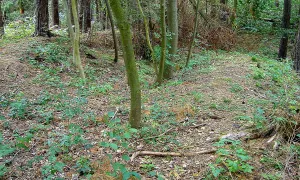
Real photos taken near the monument


Zdroj a licence jsou uvedeny u každého snímku.
Tips from visitors
No tips yet. Be the first!
Log in and add your tip.
Sources and literature
Fotografie: JAn Dudík / CC BY-SA 3.0, rozlišení zvýšeno umělou inteligencí — Wikimedia Commons. The author and licence also appear when you hover over the image.
Faktickým podkladem tohoto textu byl článek na Wikipedii, jehož autory jsou přispěvatelé Wikipedie. Článek je dostupný pod licencí CC BY-SA 4.0.
Location on the map
Příběhy a pověsti
Legendy, pověsti a příběhy spjaté s touto památkou
Fotografie návštěvníků
Zatím žádné fotografie. Buďte první, kdo přidá fotografii z návštěvy!
Přihlaste se a přidejte svou fotografii nebo hodnoťte.
Za ověřenou návštěvu v aplikaci získáte víc bodů — poznáme podle GPS, že jste na místě.
Reviews and comments