



Pravěká mohyla Grave
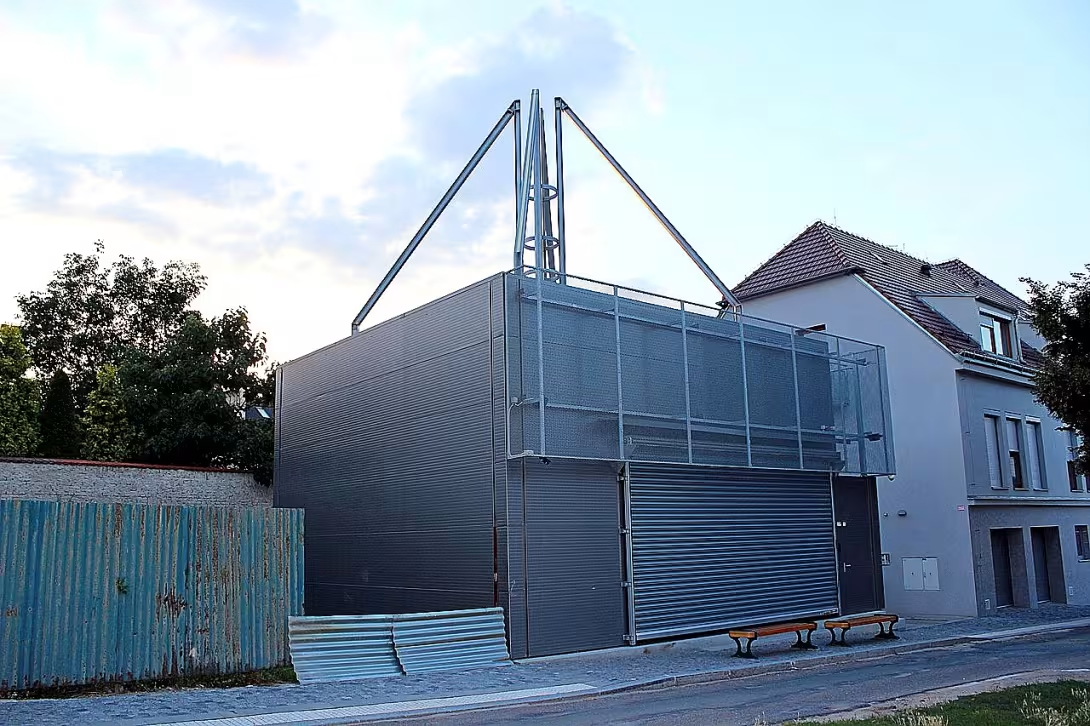
Pravěká mohyla in Nymburk, street Na Příkopě, is a unique archaeological site from the late Stone Age, namely from the eneolithic. This box mound grave from the year 3,600 B.C. bears witness to the ancient prehistoric settlement of the city and is protected as a cultural monument of the Czech Republic.
It comes from the period of eneolite, which represents the transition from stone to bronze age. At this time, the first complex companies began to develop in Bohemia. The found grave with megalithic stone lining, in which the skeleton of a man lay in a slightly crouched position, points to the beginnings of the funeral rituals and social differentiation. Archaeological research also revealed the remains of a fortified settlement from the age of bronze and ancient moat, which subsequently copied the original prehistoric fortification.
The modern pavilion was completed in April 2013 for the presentation of the mound. Work on this construction began in November 2007 with the architectural studio Matyas. It's a monolithic structure built on a carrier steel base, covered with panel walls. The building is equipped with technologies for proper microclimate mode, shutters and information system for visitors. The spiritual dimension of the building is supplied by the construction on the roof, from which the light beam comes towards the sky with a light of 500 meters.
The key milestone for knowing this place was the discovery of a box of mound graves and other findings in 1994 during archaeological research.
The monument is freely available during the tourist season from April to October, every day from 9 a.m. to 5 p.m. The reduced model of the mound is located in the display room in the hall of the information centre.
This archaeological monument represents a rare find that allows you to look into the oldest history of the city. Her visit is an opportunity to understand the beginnings of human settlements and early social structures.
Historical milestones
- 1994
- The discovery of a box mound from the age of eneolithic.
- 2013
- Finishing the pavilion for the presentation of the mound.
Architectural development
In 2013, the modern pavilion was completed, which ensures the maintenance of the right microclimate and service of the information system for visitors. The construction consists of a supporting steel structure with panels and a light beam towards the sky.
Historical events
- 1994
- The discovery of the box's mound grave and other archaeological findings.
- 2007
- Opening of the pavilion for presentation of the mound.
Points of interest
The monument is protected as a cultural monument of the Czech Republic.
Available during the tourist season from April to October.
Guide
Show guide text
This text was created by artificial intelligence and has not been editorially reviewed. It may contain inaccuracies.
Welcome to the place where time has stopped and where today's world meets a deep, almost intact past. You are standing in front of something much older than the city of Nymburk itself, much older than any building you can see in the area. You may not see a monumental tower, a decorative temple or a high wall at first sight, but what you see has a much deeper and stronger meaning. It's moila. The silent, immobile witness of the millennium, who stands here while the whole worlds, languages, and the entire human settlement have changed. Feel this atmosphere. Can you feel the weight of history in every grain of earth and every stone? This place in Nymburk is not just an archaeological site. It is a gateway to the ancient past, to a time when the world was different, much more crude, but also fascinating by its depth and effort of the people who lived here.
Let's go back together to when everything was starting to form. Imagine a period that we call an era of copper, the age of eneolithic. That was approximately three thousand six hundred years before our current number of years. At the time, people didn't just go through the roads of stone, they started to discover the power of the first metals. This mound was not built randomly or without thought. It was a grave, instead of honoring something or someone who was extremely important to the community back then. This box structure of the grave, which the archaeologists later discovered, is indicative of incredible care and endurance. People believed in something more than the present moment. They wanted to leave a trail that would last even after they left, a trail that would be resistant to time and elements.
Now pay attention to what you see here and what you find here. Although most of these treasures are now hidden beneath the surface or in a protected environment, you can imagine the huge work that people had to do. Mohila was lined with large stones, which we call a megalithic lining. These huge pieces of nature have been carefully deployed to create a solid and impenetrable box for the grave. In the year one thousand nine hundred ninety-four, this mysterious structure, for the first time in thousands of years, reappeared to the world. Thanks to the discovery at that time, we can now understand how difficult life in this area has been. Notice the surroundings surrounding this place. This mound is not lonely. The remains of the settlement, which belonged to the Bronze Age, were found nearby. It tells us that this place has been inhabited for many generations, that people have built their houses here, grown their livelihoods and made their homes. We also see traces of an ancient ditch, which was probably used to protect or determine the boundaries of space. In order to preserve this precious monument for us and for future generations, in the year two thousand and thirteen a modern pavilion was completed, which serves to present it. This space allows us to observe in peace and respect what was once hidden in the darkness of the earth.
Although we do not know the names of those who built this mound, their story is written here in stone and clay. We have no record of kings or heroes whose names might appear in our books. Yet they are present. They are people who knew the rhythm of the seasons, who fought for survival and who had the ability to create something lasting. Every stone in the grave, every trace in the ditch is their voice. You stand before their work. It's a quiet dialogue between them and you. They built to stay, and you are here today to find them again, and their existence will not disappear in the dust of time.
The interesting thing that might interest you is the very process of revealing this monument. Imagine the excitement that researchers must have felt in the year one thousand nine hundred ninety-four when this box structure began to reveal itself beneath the layers of the earth. How long was she lying there in total silence? What secret did she carry? This mound is not just a pile of stone and land, it is a protected cultural monument of the Czech Republic. This means that its value is acknowledged and that it is part of our common history. There is also a mystery - how did it happen that this area remained such an important place for human settlement for so long? What is it that still attracts us to this place, even though they are so far from the people back then?
Now I beg you to continue your search and let the atmosphere of this place drift. Feel the connection between the past and the present. This monument is accessible to you during the tourist season, from April to October, when nature is around the most lively and when you can best perceive the beauty of this place. I hope that this short journey to the past has brought you new insights into how deep our roots are and how many secrets the country still holds. Thank you for coming to this place. We wish you a beautiful rest of the day and another pleasant discovery of history.
Tips for visitors
For the best visual experience we recommend a visit during late spring or autumn when the surrounding nature is quieter. The best light to capture the details of the megalithic stone panelling offers low sun during morning or evening hours which creates interesting shadows on the surface of ancient stones.
The location can also be reached by car through public transport. Please check the current traffic connections and the possibility of stopping nearby in internet search engines or traffic applications.
Since it is a cemetery and a piety place, we recommend that visitors take with them mainly peace and respect for history. For families with children it may be interesting to observe ancient stones, but it is advisable to carry comfortable shoes for field movement.
Photography is advisable to take from an angle that captures the overall structure of its stone lining as well. We recommend focusing on detailed pictures of stone texture in soft daylight.
Frequently asked questions
Can the monument be visited?
Cemeteries and graves are usually accessible; please respect the dignity of the place. We have not verified the opening hours of this cemetery.
Where is the monument?
Location: Nymburk. The map on this page shows the exact spot.
Why is the monument protected?
It is listed in the Central List of Cultural Monuments of the Czech Republic as a cultural monument (register no. 1000124058).
Businesses nearby
Do you run a restaurant, accommodation, shop, museum, rental, wellness or other visitor service near this monument? Show yourself directly to the people heading to it — this is how they will see you in the app and on the web:
Nearby
🏰 Historic sites (119)
- Mohyla 0.0 km web
- Svatý Vojtěch 0.1 km
- mariánský sloup 0.2 km
- Josef Pollak, Filip Pollak, Otilie Pollaková 0.3 km
- Svatý Jan Nepomucký 0.3 km
- Mistr Jan Hus a památník padlých v 1. a 2. světové válce 0.4 km
- Vlastivědné muzeum 0.4 km
- Pickovi 0.4 km
- Božena Němcová v Nymburce 0.4 km
- Bohumil a Pavla Steinerovi 0.4 km
- František Löwit 0.6 km
- Glückner Rudolf 0.6 km
- Glücknerová Matylda 0.6 km
- Glückner Josef 0.6 km
- Lustigová Josefina 0.7 km
- Lustigová Hedvika 0.7 km
- Lustig Leopold 0.7 km
- Tyrš 1.0 km
- Rusínek - hřbitov ruských vojáků z roku 1813 1.3 km
- Zámek Kovanice 2.8 km
🍽️ Restaurants and dining (174)
- Balada 0.1 km
- Long Bistro 0.1 km
- U Gregorů 0.1 km
- Sklep 0.1 km
- Art Deco 0.1 km
- Stará rybárna 0.1 km
- Café Society 0.1 km
- Pizzeria Castello 0.2 km
- U Anny Šmejdířky 0.2 km
- Biograf 0.2 km Náměstí Přemyslovců 40/6
- U vodárny 0.2 km
- Di Wang 0.3 km
- Záložna 0.3 km
- Havana 0.3 km Náměstí Přemyslovců 169
- Jídelna 0.3 km
- Eliška 0.3 km
- Charlies 0.3 km
- Hospoda u Kocoura 0.4 km
- U Janouška 0.4 km
- Bistro Na Staré poště 0.6 km Tyršova 226/23 +420 727 835 455 web
🏨 Accommodation (38)
- Grand hotel Postřižiny 0.1 km
- Penzion U Vinotéky 0.1 km
- Penzion Na Staré poště 0.6 km Tyršova 226/23 +420 727 835 455 web
- Hotel NED HOCKEY 0.8 km
- Hotel Bene 1.3 km
- U mašinky 1.4 km
- Rehabilitační centrum Máj 6.5 km 9. května 640 +420 325 503 380 web
- Hotel Zámeček 6.7 km Husova 232/II +420 325 503 300 web
- Villa A. Málka 6.9 km
- Hotel Ostrov Garni 7.0 km web
- Hotel Park 7.1 km
- Spa Hotel Felicitas 7.1 km nám. T.G. Masaryka 1437/3 +420 704 970 964 web
- Mamma’s Boutique Hotel 7.1 km
- Twenty 7.1 km Jiřího náměstí 34/20
- Depandance Felicitas 7.1 km
- Dagmar 7.1 km
- Alfa 7.1 km nám. T.G. Masaryka 653/4 +420 704 172 825 web
- Hotel Bellevue Tlapák 7.1 km nám. T.G.Masaryka 654/2 +420 325 606 666 web
- Hotel Libenský 7.2 km nám. T.G.Masaryka 437/II +420 325 606 333 web
- Homér 7.2 km
🚲 Rentals and sport (32)
- LUKYSPORT 0.1 km
- Veřejné přístaviště Nymburk 0.2 km
- Sokolovna 0.5 km
- Cyklo-house 0.5 km
- MTB shop 0.6 km
- Vodní sporty 0.9 km
- Sportovní centrum Nymburk 1.5 km Sportovní 1802
- Městská sportovní hala 6.4 km Na Vinici 766 +420 733 184 793
- Sokolovna 6.5 km
- Sokol Podebrady 7.3 km Tyršova 26/9
- BSR Podebrady 7.3 km Tyršova 26
- Cyklo Vondr 7.6 km +420 776 627 471 web
- Sportovní centrum Linhart 7.7 km +420 325 610 161 web
- TJ LTC Poděbrady 7.7 km
- Sokol Všejany 10.0 km
- sportovní střelnice 10.3 km
- Sokolovna 10.8 km
- Policejní střelecký klub Union Praha 10.8 km
- Cyklomont 11.2 km
- Na Růžku 11.5 km
🥾 Hiking and nature (60)
- Park Na Hradišti 0.1 km
- Park Pod Hradbami 0.1 km
- Park Ing. Emila Zimmlera 0.2 km
- Park U Vodárenské věže 0.2 km
- Park Ing. Emila Zimmlera 0.2 km
- Svatojánský park 0.3 km
- Park Hrdinů 0.3 km
- Svatojánský park 0.3 km
- Löwittova vila 0.6 km
- Park Ing. Wilhelma Hellwaga 0.8 km
- Park v Kolonii 0.8 km
- Svatojiřský park 0.8 km
- Lokomotiva 702 514-6 1.9 km
- Písečný přesyp u Píst 4.3 km
- Lázeňský park 7.0 km
- Květinové hodiny 7.1 km
- Purkyňovy sady 7.5 km
- Kubovy sady 7.6 km
- Sadka 7.7 km
- rozhledna Romanka 8.0 km
Accommodation nearby
Themed route
Thematic cruise route from the village Nymburk
1. Pravěká mohyla (archaeological site)
Type: Archaeological site
This place is fascinating for antiques lovers, where there is an ancient mound. It is a unique example of a wooden tomb from the Bronze Age and offers a view of the life and rituals of ancient people. Study its history and architecture, which you can see in exhibitions directly on the premises.
2. Nymburk Castle
Type: Historical castle
Known for its beautiful Baroque architecture, the Nymburk Castle is an ideal place for those who want to know the history and culture of the area. Its tower offers a view of the whole area while the interior of the castle halls tells stories of the past.
3. Nymburk Park
Type: Park
It is located near the castle itself and is an ideal place to relax after visiting the castle or archaeological site. Its beautiful garden design and quiet pavements offer an opportunity to relax and walk in the natural environment.
4. Nymburk Town Hall
Type: Historical construction site
This Baroque building is not only an administrative centre of the city, but also an architectural pearl with significant historical elements. It is suitable for those interested in the history and architecture of urban buildings.
5. Nymburk rectory
Type: Historical parish
This Baroque building is one of the most important buildings in Nymburk. It is famous for its rich interior and historic frescoes that attract visitors from all over the region.
This route offers a combination of archaeological discoveries, historical monuments and natural beauty Nymburk.
Seasonal recommendations
Spring brings to the Nymburk landscape the awakening of nature that surrounds the mound with fresh greenery and flowering meadows. Light is usually soft and scattered during this period, creating a calm and thoughtful atmosphere suitable for quiet observation of the archaeological area. Plants around the grave are gaining strength, but they are not yet dense enough to cover the view of the memory itself. For visitors it is ideal to choose the morning when the air is fresh and temperatures are already convenient to walk. Clothes should be layered because spring weather is usually variable; light jacket and comfortable footwear on uneven terrain are necessary. Nature around the mound at this time offers a beautiful contrast between ancient soil and newly grown life, which underlines the feeling of connection with nature's history and cycle.
Summer brings the full power of vegetation, where the mound stands in the middle of high grass and possibly flowering herbs, creating an idyllic but even shady nature. The sun is strong in the morning, so it is best to visit the place either early in the morning or late in the afternoon when the light is warmer and less sharp. Since this is a piety place, it is important to respect the peace and quiet that exists here in the summer months, especially when the surroundings are filled with visitors to other Nymburk monuments. Clothes should be light, breathable and light to withstand heat, and protection of the head and eyes from the sun is essential. Nature in full bloom gives the place a specific summer atmosphere where the roaring of leaves and the singing of birds reach the silence of the grave.
Autumn brings to the landscape a palette of warm colors, where the leaves around the mound change color to gold and red, creating a dramatic and melancholy visual effect. Light is usually lower and softer, often cloudy skies give the scene depth and sad beauty, which matches the piety of the place. It's an ideal time to walk, because temperatures are colder, but still cold, and the air is clean and fresh. It is recommended to wear warm layers, scarves and waterproof shoes, as autumn rains can leave mud on the ground and dirt inequalities can be slippery. The atmosphere of autumn, when nature prepares for sleep, amplifies the sense of time dimension and reflection on the past.
Winter will expose the mound and its surroundings, because the trees are without leaves and the landscape seems exposed and sharp. Snow, if it falls, covers the ground with a white blanket and highlights the contours of the grave, while ice crusts can be dangerous to move. The light is short in winter and is often grey, which creates a quiet, isolated atmosphere where only the rustling of snow under your feet is heard. It is necessary to dress in multiple layers, including a warm cap, gloves and heavy-duty shoes with a good heel to avoid slipping on ice surfaces. Winter visit is the quietest because there are fewer people, and the silence of the snow landscape allows for a deeper focus on the historical context of the place without disturbing influences of the surrounding nature.
Visualizations and artistic views

The visualisations are generated by artificial intelligence and serve as inspiration.
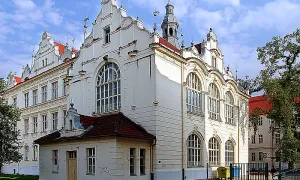
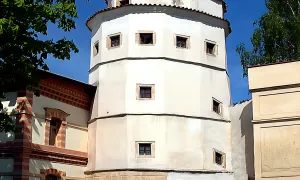
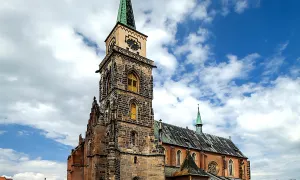
Photos from the area
Real photos taken near the monument


Zdroj a licence jsou uvedeny u každého snímku.
Tips from visitors
No tips yet. Be the first!
Log in and add your tip.
Sources and literature
Photos: Jan Polák / CC BY-SA 3.0 — Wikimedia Commons. The author and licence also appear when you hover over the image.
Faktickým podkladem tohoto textu byl článek na Wikipedii, jehož autory jsou přispěvatelé Wikipedie. Článek je dostupný pod licencí CC BY-SA 4.0.
Location on the map
Příběhy a pověsti
Legendy, pověsti a příběhy spjaté s touto památkou

Fotografie návštěvníků
Zatím žádné fotografie. Buďte první, kdo přidá fotografii z návštěvy!
Log in a přidejte svou fotografii nebo hodnoťte.
Za ověřenou návštěvu v aplikaci získáte víc bodů — poznáme podle GPS, že jste na místě.
Reviews and comments