



Přemyslovský krucifix Statue
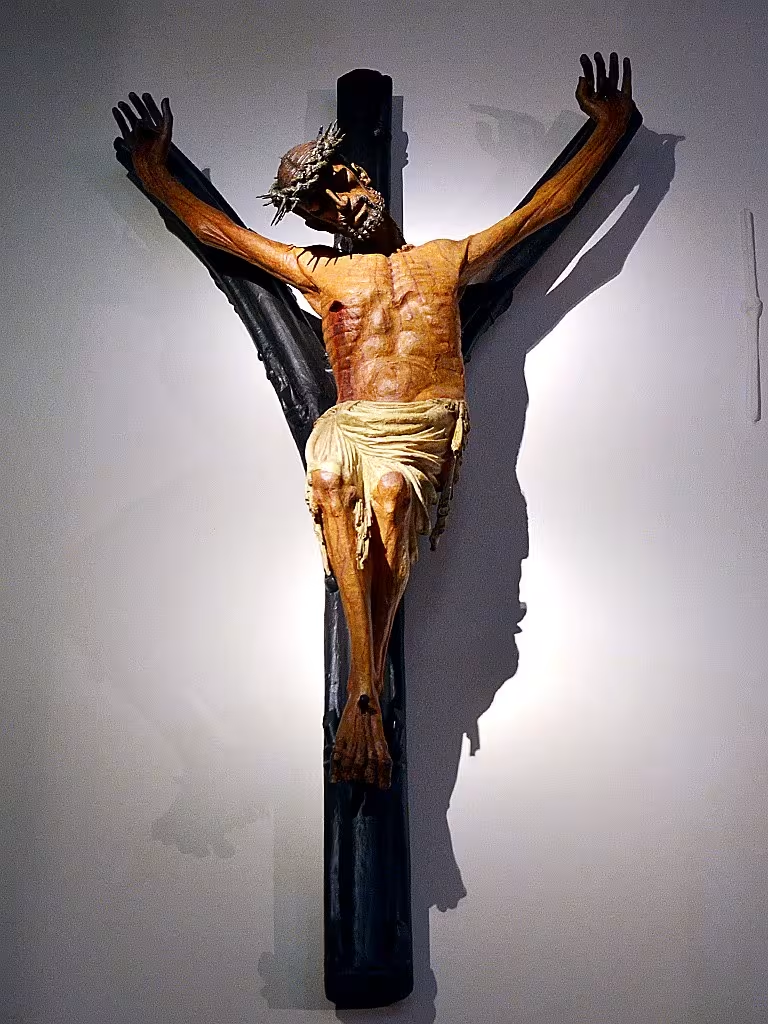
The Přemyslovský Krucifix is a polychromed wooden cross from the early 14th century, originally crafted in Germany before being brought to Jihlava. It serves as an expressive representation of Christ's suffering, embodying the 'mystical crucifixes' tradition from the German Rhineland. Currently housed at the Picture Gallery of Strahov Monastery in Prague, it was declared a National Cultural Monument of the Czech Republic in 2010 due to its historical significance and artistic value.
The origins of the Přemyslovský Krucifix trace back to around 1330 when it was likely created in Germany. It arrived in Jihlava during the 14th century, possibly dedicated by King Ottokar II or Ottokar I. Initially intended for the Dominican Church of the Raising of the Holy Cross, founded in mid-13th-century Jihlava, its stylistic roots are linked to Cologne, a spiritual center for the Dominican Order in Central Europe. The cross's expressive style and dramatic depiction reflect influences from other notable crucifixes such as those in Fabriano, Palermo, and near Salzburg.
Architecturally, the Přemyslovský Krucifix is a Gothic-style sculpture characterized by its large dimensions and exaggerated features that emphasize emotional intensity. The cross itself measures 309 cm tall, with Christ's body standing at 245 cm and his arms spanning 158 cm across. Its form resembles a deeply branching tree trunk, symbolizing the Tree of Knowledge of Good and Evil. The crucifix showcases sharp geometric stylization in its carving, with pronounced wounds on Christ’s hands and feet, and an open wound streaming blood from his side.
Ownership and location changes have marked the history of the Přemyslovský Krucifix. Initially located in Jihlava, it was moved to the Church of St. Ignatius following the Josephine reforms when Dominicans relocated there. Later, under Communist rule, Strahov Monastery abolished its operations, allowing for a specialist evaluation and restoration between 1994 and 1997 after which a synthetic-resin replica was made for display in Jihlava.
Key events include its modern restoration that began in 1994, during which all later overpainting was removed to reveal the original Gothic polychromy. The crucifix underwent significant documentation of its ten foundation layers and overpaintings, retaining only the oldest layers such as the grey-pink fragments on Christ’s hand and an ivory-colored loincloth with a golden hem.
Today, the Přemyslovský Krucifix is accessible to visitors at the Picture Gallery of Strahov Monastery in Prague. Its dramatic depiction of suffering and historical journey make it a compelling site for those interested in Gothic art and religious history. As a National Cultural Monument, it offers insight into medieval spirituality and artistic expression, inviting exploration and appreciation from all who visit.
Then and now
Drag the slider to compare how the landmark may have looked when it was built with the view today.
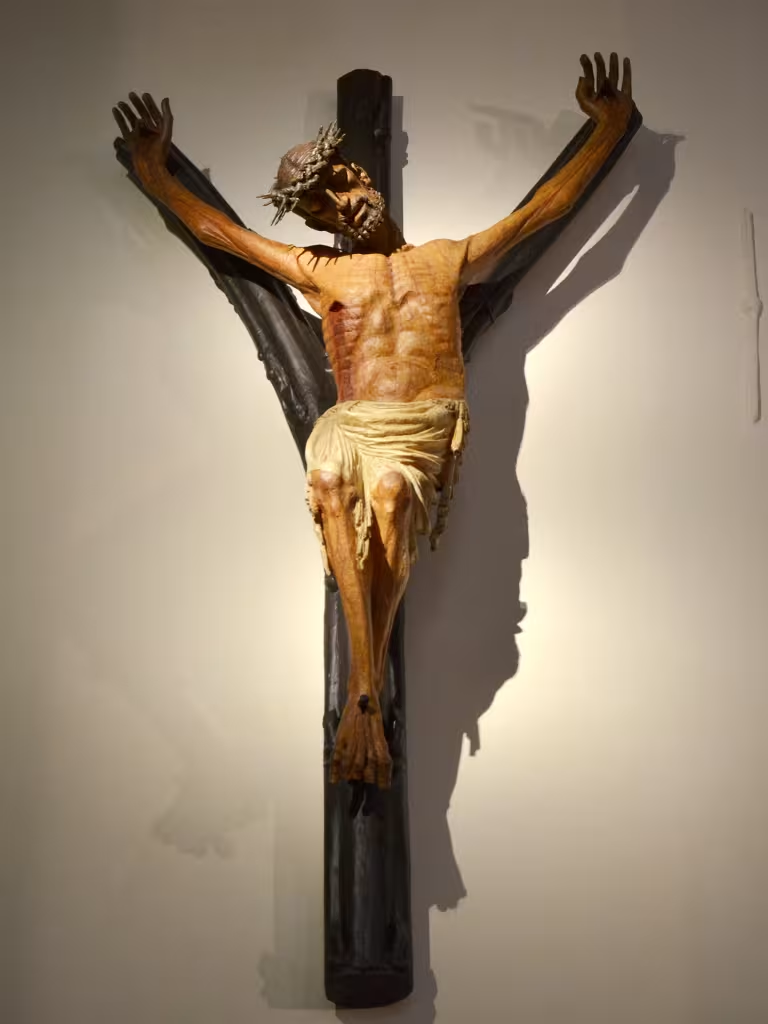

The historical appearance on the left is an AI-generated visualisation and serves as inspiration only.
Historical milestones
- 1330
- The crucifix was likely created around this time.
- 2010
- Declared a National Cultural Monument of the Czech Republic.
Architectural development
The Přemyslovský Krucifix is a Gothic-style sculpture characterized by its dramatic and expressive form. It features a large cross with Christ depicted in suffering, showcasing detailed carvings that emphasize geometric stylization. The crucifix underwent restoration between 1994-1997 to preserve its condition.
Historical events
In the early 14th century, the crucifix was created in Germany and brought to Jihlava.
In 1781, Dominicans moved to a Jesuit monastery, relocating the crucifix to St. Ignatius Church.
After World War II, it was transferred to Strahov Monastery where it underwent restoration from 1994-1997.
Owners
Initially located in Jihlava, the crucifix was moved to various locations including the Church of St. Ignatius and later the Church of St. James before being transferred to Strahov Monastery after World War II.
Points of interest
- The Přemyslovský Krucifix's journey from Germany to Jihlava highlights the mobility of art and religious artifacts in medieval Europe, reflecting the interconnectedness of cultural centers across regions.
- Despite its dramatic depiction of suffering, the cross's stylistic influences trace back to Cologne, a major spiritual hub for the Dominican Order, linking it indirectly to broader European theological movements of the time.
- The restoration process that began in 1994 uncovered ten layers of overpainting, revealing original Gothic polychromy and providing insights into historical preservation techniques and artistic evolution over centuries.
- A synthetic-resin replica was created during its restoration period, allowing both for continued public display in Jihlava while preserving the original artifact at Strahov Monastery, illustrating modern approaches to heritage conservation.
- The cross's design as a deeply branching tree trunk symbolizes the Tree of Knowledge of Good and Evil, intertwining religious symbolism with artistic representation, which adds depth to its interpretation within medieval spirituality.
Guide
This guide is narrated by a synthetic voice generated by artificial intelligence.
Show guide text
This text was created by artificial intelligence and has not been editorially reviewed. It may contain inaccuracies.
Welcome to a remarkable journey through time and artistry as you stand before the Přemyslovský Krucifix in Prague's vibrant heart. This striking wooden cross, with its vivid colors and dramatic expression, immediately captures your attention. Its imposing stature and exaggerated features draw you into an emotional narrative of suffering and redemption.
The origins of this captivating piece trace back to the early 14th century, likely crafted around 1330 in Germany. It embodies the 'mystical crucifixes' tradition from the German Rhineland, known for their expressive style that vividly portrays Christ's agony. These crosses were not merely religious symbols but powerful tools of devotion and reflection.
As you gaze upon it now, notice the intricate polychromy and the intense expression on Christ’s face—details that speak volumes about its stylistic influences and emotional depth. The exaggerated features are designed to evoke a visceral response, pulling you into the scene depicted with almost tangible intensity.
The journey of this crucifix from Germany to Jihlava and eventually here in Prague tells a fascinating tale of medieval art mobility. It highlights how cultural and religious artifacts traveled across Europe, weaving together diverse artistic traditions and connecting distant communities through shared spiritual expressions.
This cross is not just an object but a witness to history, linked to the legendary Přemyslov family—Přemysl Otakar II and Přemysl Otakar I. Their reigns were marked by significant cultural and political developments in Bohemia, with art playing a crucial role in expressing royal power and piety.
Now, let your imagination wander to the cross's journey across Europe—a testament to the interconnectedness of medieval societies. Despite its origins far from here, it found a home in Prague, becoming an integral part of the city’s cultural heritage. In 2010, this remarkable piece was declared a National Cultural Monument of the Czech Republic, underscoring its significance and enduring legacy.
As you stand here, enveloped by history and artistry, I invite you to delve deeper into the stories that surround this magnificent crucifix. Explore its details, reflect on its journey, and let it inspire you with its profound narrative.
Thank you for joining me in appreciating the Přemyslovský Krucifix. May your exploration of Prague's treasures continue to be as enriching and enlightening as this encounter. Safe travels through time and history!
Tips for visitors
The best time to visit the Přemyslovský Krucifix is during late spring or early autumn, when the weather is pleasant for exploring both the Strahov Monastery complex and its surrounding gardens. These seasons offer comfortable temperatures and fewer crowds compared to summer months, allowing you to fully appreciate the serene atmosphere of this historic site.
Parking and transportation options are convenient around the Strahov Monastery area. While there may be limited parking directly at the monastery, nearby streets or public lots can accommodate visitors' vehicles. Public transport is also a viable option; consider using trams or buses that connect to Prague's city center for an easy journey. Always check current routes and schedules in advance to ensure smooth travel.
When visiting, it’s advisable to bring comfortable walking shoes as you’ll be exploring both indoor spaces and outdoor gardens. A light jacket might also be useful, especially if you plan to visit during the cooler months or early evenings when temperatures can drop. Don’t forget your camera for capturing the stunning architecture and intricate details of the Krucifix.
For photography enthusiasts, the best spots to capture the Přemyslovský Krucifix are within its dedicated chapel where natural light enhances its dramatic features. Early morning visits might offer softer lighting, ideal for photographs. Additionally, exploring the monastery gardens provides excellent backdrops and opportunities for landscape shots, especially during sunrise or sunset when the light is most flattering.
Nearby attractions within a 30-minute walk include the Strahov Library, known for its impressive collection of historical manuscripts and stunning architecture. For families with children, consider visiting the nearby Botanical Garden, which offers educational exhibits and beautiful landscapes that can engage young visitors while providing a relaxing experience for adults.
Frequently asked questions
Can the monument be visited?
Yes. We verified the opening hours or admission on the official website (8. 8. 2026); you will find them in the visitor information on this page. Please double-check with the operator before you travel.
What are the opening hours and admission?
Details verified on the official website (8. 8. 2026) are listed in the visitor information on this page. Official website: https://www.strahovskyklaster.cz/
Where is the monument?
Location: Strahovské nádvoří 132/1, Hradčany, Praha, Hlavní město Praha. The map on this page shows the exact spot.
Why is the monument protected?
It is listed in the Central List of Cultural Monuments of the Czech Republic as a national cultural monument (register no. 375).
Businesses nearby
Do you run a restaurant, accommodation, shop, museum, rental, wellness or other visitor service near this monument? Show yourself directly to the people heading to it — this is how they will see you in the app and on the web:
Events nearby

Zdroj akcí: otevřená data měst a obcí ČR (Národní katalog otevřených dat) a kalendář akcí Národního památkového ústavu.
Nearby
Located within the Strahov Monastery complex in Prague, the crucifix is part of a historic site that includes monastic buildings and gardens.
Accommodation nearby
Trips and activities nearby
Guided tours, tickets and activities nearby from GetYourGuide
Affiliate link: if you buy from the partner, we may receive a commission. The price for you does not change.
Search tours and activities →Themed route
Tematická výletní trasa: Strahovský klášter a jeho historické skvosty
1. Strahovský klášter – Hlavní nádvoří
- Typ: Historický klášterní komplex
- Proč stojí za návštěvu: Začněte svůj výlet na hlavním nádvoři Strahovského kláštera, kde se můžete dozvědět o bohaté historii a architektonických rysy tohoto klášterního komplexu. Nádvoří poskytuje úchvatný pohled na klášterní budovy a je ideálním místem pro pochopení celkové struktury a významu Strahovského kláštera.
2. Strahovská knihovna
- Typ: Historická knihovna
- Proč stojí za návštěvu: Pokračujte do Strahovské knihovny, jedné z nejstarších a nejznámějších knihoven v Evropě. Je to skvostný příklad barokní architektury s bohatou sbírkou starých rukopisů a tisků. Návštěva nabídne pohled na historické dokumenty a unikátní prostor, který zachycuje ducha minulosti.
3. Přemyslovský krucifix
- Typ: Socha
- Proč stojí za návštěvu: Cesta pokračuje k Přemyslovskému krucifixu, jedné z nejvýznamnějších soch v klášterním komplexu. Tato socha je připomínkou historických událostí a symbolizuje duchovní hodnoty kláštera. Je umístěna v klidné zahradě, což poskytuje ideální prostředí pro reflektivní chvíli.
4. Strahovské zahrady
- Typ: Klášterní zahrady
- Proč stojí za návštěvu: Zaverejte svůj výlet procházkou Strahovských zahrad, které jsou nejen krásným přírodním úkrytem, ale také mají historický význam. Zahradní prostor nabízí klidné chvíle k odpočinku a pozorování různých rostlinných druhů, které jsou zde pěstovány již několik století.
Tato trasa vám umožní prozkoumat nejen hlavní cíl – Přemyslovský krucifix – ale také další historické a kulturní skvosty Strahovského kláštera.
Seasonal recommendations
Spring: As spring breathes new life into Prague, the Prémyslovec Crucifix becomes a serene backdrop to blooming gardens and gentle rains. The soft, diffused light of early mornings or late afternoons casts a warm glow over the statue, enhancing its intricate details. This season is ideal for those seeking tranquility away from the bustling tourist crowds that peak during summer. Visitors are advised to dress in layers as temperatures can fluctuate; comfortable walking shoes and an umbrella are practical additions for unexpected spring showers.
Summer: The Prémyslovec Crucifix basks under the bright, clear skies of Prague's summer, offering a stark contrast between the historic stone and vibrant greenery surrounding it. Long daylight hours provide ample time to explore, though it is best to arrive early in the morning or later in the evening to avoid the midday crowds. Light clothing is recommended due to warmer temperatures, and visitors should stay hydrated while enjoying the lively atmosphere of this peak tourist season.
Autumn: Autumn drapes Prague in a tapestry of reds, oranges, and yellows, creating a picturesque setting for the Prémyslovec Crucifix. The crisp air and golden sunlight enhance the statue's features, making it an ideal time for photography enthusiasts. As days shorten, planning visits during daylight hours is advisable to fully appreciate the site. Layered clothing will help accommodate the cooler temperatures, and comfortable shoes are recommended for exploring the charming cobbled streets of Prague.
Winter: In winter, the Prémyslovec Crucifix stands against a backdrop of snow-dusted rooftops and festive lights, offering a magical experience in the heart of Prague. The shorter days mean visits should be planned during daylight hours to capture the statue's beauty under soft, wintery light. Visitors are advised to dress warmly with coats, hats, gloves, and scarves due to cold temperatures. Despite reduced opening hours for some sites, the atmosphere is often quieter, providing a peaceful setting to appreciate this historic monument.
Visualizations and artistic views


The visualisations are generated by artificial intelligence and serve as inspiration.
Photos from the area
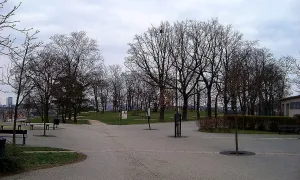
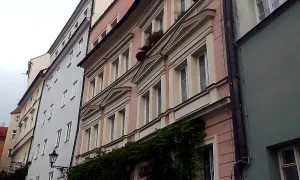
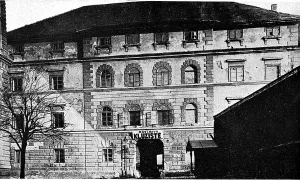
Real photos taken near the monument


Zdroj a licence jsou uvedeny u každého snímku.
Tips from visitors
No tips yet. Be the first!
Log in and add your tip.
Sources and literature
Photos: Jindřich Nosek (NoJin) / CC BY-SA 3.0 — Wikimedia Commons. The author and licence also appear when you hover over the image.
Faktickým podkladem tohoto textu byl článek na Wikipedii, jehož autory jsou přispěvatelé Wikipedie. Článek je dostupný pod licencí CC BY-SA 4.0.
Location on the map

Příběhy a pověsti
Legendy, pověsti a příběhy spjaté s touto památkou
Fotografie návštěvníků
Zatím žádné fotografie. Buďte první, kdo přidá fotografii z návštěvy!
Log in a přidejte svou fotografii nebo hodnoťte.
Za ověřenou návštěvu v aplikaci získáte víc bodů — poznáme podle GPS, že jste na místě.
Reviews and comments