



Průmyslové muzeum Museum building
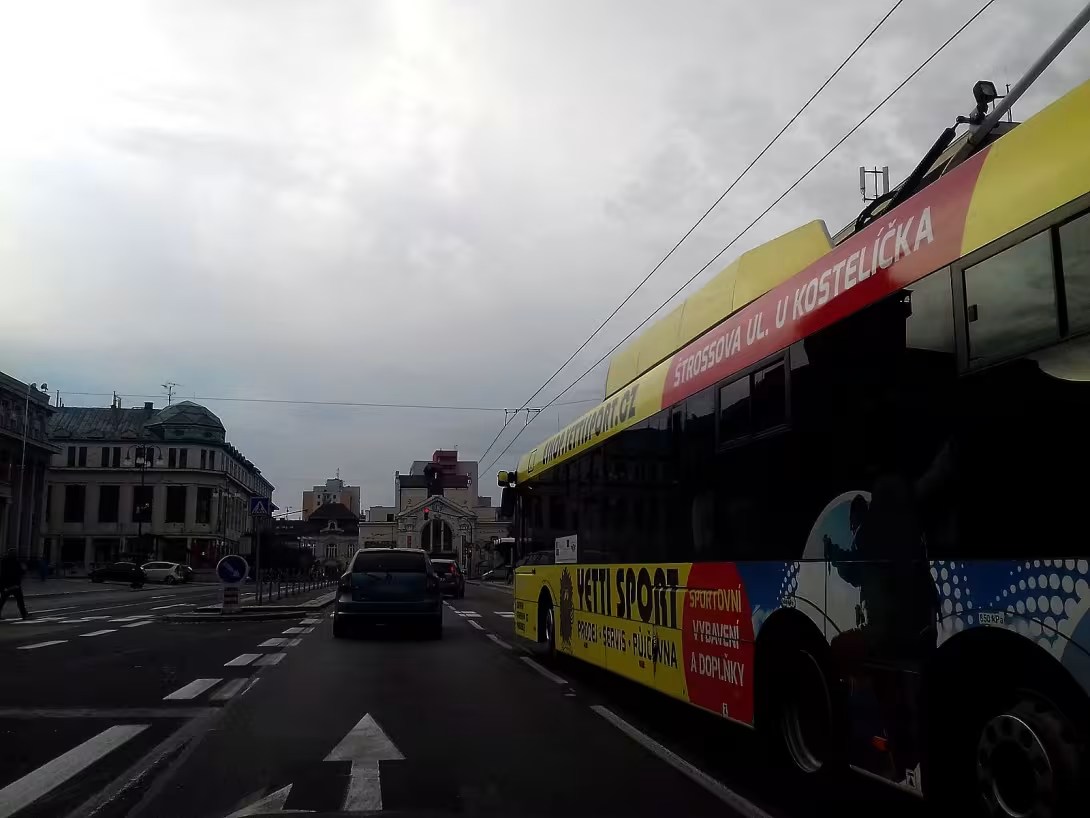
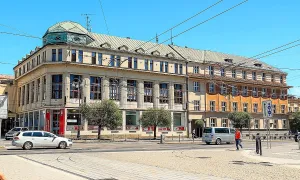
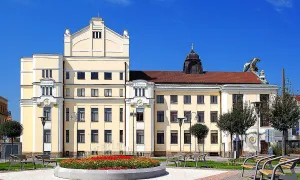
Průmyslové muzeum in Pardubice is a significant functionalist building from 1927-1931, which stands on the Republic Square in the city area Zelené Předměstí. It was originally built as the main pavilion of the national Exhibition of Physical Education and Sport. Currently serves as the headquarters of the Central Industrial School of Food and Services.
The building was created during the interwar construction expansion of Pardubice, when the city underwent modernization and flourishing contemporary architecture. The impetus to construction was the preparation of the extensive Exhibition of Physical Education and Sport, held in 1931. This event was intended to present the architectural and physical progress of the then first public Czechoslovakia. A number of other functionalist buildings were built in the adjacent Tyršová orchards as part of the preparations, with Průmyslové muzeum being their central point.
The history of the building is associated with an architectural competition published in the mid-1920s. It was originally won by architect František Kerhart. However, his proposal was not implemented because the city's councilmen and representatives considered him too courageous. The priority was eventually given to a more conservative concept of Karl Řepa. The construction itself took place between 1927 and 1931.
The building is conceived in pure functionalist style. Although it was seen in its time as a more moderate alternative to winning design, it is now a highly valuable piece of modern interwar architecture. The building is adjacent to the Tyršová orchards and the East Bohemian Theatre. It is located near the Pardubice castle, thus complementing the urban complex of the city centre.
The key moment in the history of the building was 1931. At that time the building was completed and ceremonially opened on the occasion of the opening of the national exhibition. After the event was completed, its use changed and today the building is firmly linked to education. As the headquarters of the Central Industrial School of Food and Services, it remains a functional part of urban life even in the 21st century.
Visiting the surroundings of this monument offers a comprehensive view of the development of Czechoslovak architecture of the 1930's. The building of the former Industrial Museum is one of the most important stops for everyone interested in the history of modern urbanism and functionalism in the Czech Republic.
Then and now
Drag the slider to compare how the landmark may have looked when it was built with the view today.
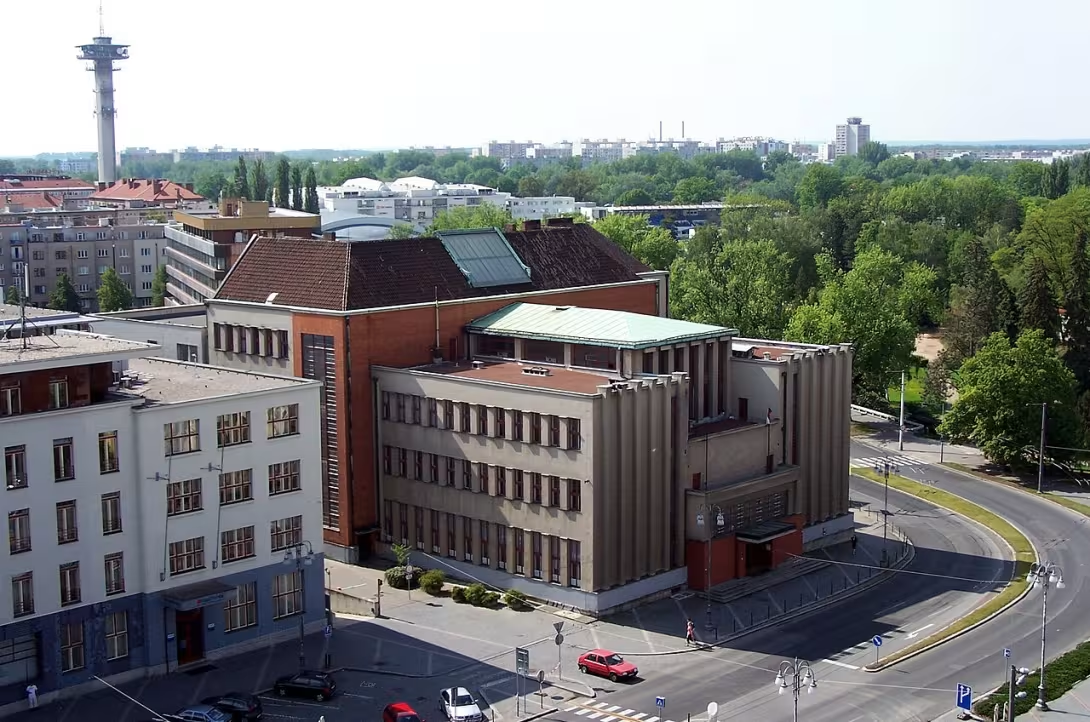

The historical appearance on the left is an AI-generated visualisation and serves as inspiration only.
Historical milestones
- around 1925
- List of architectural competition for museum construction
- 1927
- Opening of the building itself according to the design of Karl Řepa
- 1931
- Completion of the construction and holding of the Exhibition of Physical Education and Sport
- 21st Century
- The building serves as a seat of an industrial school
Architectural development
The construction was designed and realized in a pure functionalist style in 1927-1931. The original winning competition design by František Kerhart in the mid-1920s was rejected by the city's management as being too courageous and therefore the more conservative concept of architect Karel Řepa was chosen to implement.
Historical events
Half of the 1920s: Organizing an architectural competition on the museum building. 1927-1931: Construction of the building according to the Karl Řepa project. 1931: Festive use of the building as the main pavilion of the national Exhibition of Physical Education and Sport.
Points of interest
- The building was originally built as the main pavilion of the national Exhibition of Physical Education and Sport. - Although František Kerhart won the architectural competition, his proposal was rejected as too bold. The priority was finally given to a more conservative concept developed by Karel Řepa. - At present, the building serves as the headquarters of the Central Industrial School of Food and Services. - The museum was the central point of a set of buildings built in adjacent Tyršová orchards.
Guide
Show guide text
This text was created by artificial intelligence and has not been editorially reviewed. It may contain inaccuracies.
Welcome to Pardubice. Right now, at this point, they stopped before one of the most important building units in this part of town. You are standing in the square of the Republic, in the heart of the Zelené Předměstí district, and before your eyes there is a building that bears the reflection of one of the most important architectural directions of the last century. Right now, when you stop and put on headphones, you're opening the gate to an era where the modern world was trying to define its new values through clean lines, reason and functionality. This building, known as Průmyslové muzeum, is not just walls and windows, it is a living witness to the great human ambitions and sports excitement that once ruled here. Feel the atmosphere of a place where history meets everyday life, and try to imagine what this space looked like almost a century ago.
Let's go back together to about 1925. Imagine the atmosphere at that time - the country was building up, looking for its new face and wanting to show the strength of its people and its modern spirit. It was at that time that an architectural competition was announced to decide what one of the key objects of the city would look like. The goal was not just to build an ordinary building object, but to create a main pavilion for the national Exhibition of Physical Education and Sport. This event was to be a magnificent celebration of the health, strength and unity of the nation. The construction began in 1927 and lasted until 1931 when it was finished and prepared for the opening ceremony of the exhibition itself. It is fascinating to think of how this space that students use today was once a place where thousands of people gathered to celebrate movement, discipline and sports enthusiasm. From the beginning, the whole process of creating this building was accompanied by a vision of a modern person who values both a healthy body and a modern way of life.
Now pay attention to the very appearance of the building that is surrounding you. Feel her characteristic functionalist style. If you look at its shapes, you will notice that there is not a prime role of unnecessary decorative detail, but of substance and utility value. Functionalism was that the form must follow the function. Every element, every line you see here, has a clear meaning. Even though the building is now used for completely different purposes, such as the headquarters of the Central Industrial School of Food and Services, its architecture still emits ancient, industrial and modern energy. Look at the facade and try to grasp the purity and order that the architects of the time considered to be the pinnacle of progress. Feel how the building floats over the surrounding area with its clear geometry and how it can act monumentally and yet very reasonably and friendly. This building was not built to impress you with unnecessary luxury, but to impress you with its logic and pure expression of its function.
The names behind this quite unique work, which left a deep mark in Czech architecture. The main architect for this project was Karel Řepa. His vision was able to combine the demanding demands of the time with aesthetic purity and practicality. But history also has unexpected twists and dramatic moments that took place before the first brick was laid. Welcome to the backstage architectural struggle, which was very intense about this place. Before the construction really started, there was a competition where the great masters of their time met. One of them was František Kerhart. His proposal was considered at that time to be extremely courageous, almost revolutionary in its concept.
And right here lies the interesting thing that gives this place depth and a little mystery. Although František Kerhart may have won in its courage and innovation in a creative perspective, its project was eventually rejected. Why? Because he was too radical, too brave for then's needs and then his perception. In the end, the Architectural Commission decided for a more conservative but more secure concept developed by Karel Řepa. Imagine the tension, the debate between those who wanted to jump into the unknown and create something completely new, and those who sought stability and proven principles. If you saw Kerhart's original design today, you might feel like you're standing in front of a building from the future that came too soon. This choice between bold and conservative has shaped the face of today's Pardubice and determined what this place will look like for the next decade.
Today, this building serves a new generation. It is the seat of a school where future experts are prepared, which in some sense is a beautiful return to its original, practical and industrial character. A place where physical education was once celebrated has become a place where expertise and knowledge are cultivated. This transformation from the pavilion for sports exhibitions to the educational institution shows how the needs of society can change, but at the same time how architecture can remain a fixed point that will survive these changes. The building has survived for decades, survived various political and social regimes and is still standing here, in the Republic Square, as a reminder of its era and as proof that well-designed space has the ability to serve people no matter how time changes.
Now that you've learned more about her roots, the people who designed her, and the fight that took place behind the scenes of her creation, I suggest you continue your walk around this building. Feel his presence in space, watch how light changes on his surfaces and let the green suburb atmosphere drift. Every part of this building has a story waiting for you to discover it when you look at it. Thank you for choosing to share this story with us. Brief what other parts of our city have for you and enjoy the rest of your trip. Goodbye.
Tips for visitors
For the best tour experience we recommend a visit in the morning or late afternoon. In these times the light is ideal for capturing the details of the unique architecture of the building, which will be especially appreciated by the photo lovers looking for the best angles for pictures of the functionalist facade.
you can easily reach the museum by car and via public transport.
When visiting, bring drinking water and clothes suitable for indoor and nearby movements. If you are planning a longer tour of exhibitions, comfortable shoes are essential for your overall comfort.
After visiting the museum, you can take advantage of the proximity of the surrounding areas such as Tyrše orPardubice Castle. For families with children, this location is an excellent opportunity to combine education in the museum with subsequent rest in a nearby natural environment.
Frequently asked questions
Can the monument be visited?
Some buildings of this kind are open for guided tours, others serve another purpose or are privately owned. We have not verified whether and when this monument is open – please ask the operator.
What are the opening hours and admission?
We have not verified the opening hours or admission. Current information is published by the operator.
Where is the monument?
Location: Zelené Předměstí, Pardubický kraj. The map on this page shows the exact spot.
Why is the monument protected?
It is listed in the Central List of Cultural Monuments of the Czech Republic as a cultural monument (register no. 1000158947).
Businesses nearby
Do you run a restaurant, accommodation, shop, museum, rental, wellness or other visitor service near this monument? Show yourself directly to the people heading to it — this is how they will see you in the app and on the web:
Events nearby

Zdroj akcí: otevřená data měst a obcí ČR (Národní katalog otevřených dat) a kalendář akcí Národního památkového ústavu.
Nearby
In the immediate neighbourhood there are Tyršová sets, Square of the Republic, East Bohemian Theatre and nearby Pardubice Castle.
Accommodation nearby
Themed route
1. Tyršova sady, park, offer a pleasant and peaceful environment for the start of the trip. 2. Nástí Republiky , the square, represents a busy center of the village where you can observe everyday life. 3. East Bohemian Theater , theatre, is interesting in its architecture and importance for local culture. 4. Průmyslové muzeum, museum, is the main item of the program focused on technical history. 5. Pardubice castle , the castle, represents the historical culmination of the route in the nearby area.
Seasonal recommendations
Spring at the Industrial Museum on Green The suburb brings awakening surrounding nature, where the historic brick facade of the museum is beautifully supplemented with fresh greenery and first flowering trees in the adjacent area. The sunlight penetrates large industrial windows and creates a unique shadow game on exposed exhibits of old machines, which will please every lover of photogenic corners. You will usually meet fewer visitors here during this period, so you will enjoy the tour in complete peace. We recommend wearing layered clothes because it is colder in spacious brick halls, but you can easily warm up when walking. The best time to visit is in the morning right after the opening time, when the inner space is pleasantly quiet.
Summer on the Green The suburb offers a lively atmosphere associated with the main tourist season, where the museum uses long, famous days to maximize the use of daylight, which illuminates the upper gallery beautifully. The surrounding area of the museum is heated with rich colours and full of vegetation, which attracts for walks in the surrounding outdoor area before or after the tour. Due to the holiday period and families with children it is necessary to expect more visitors, especially around noon. Wear light, breathable clothes, but think that in some parts of historic buildings without modern air conditioning can be warmer. The best time for a visit appears in the late afternoon, when crowds of people are gradually leaving and you can enjoy the final hours of operation in peace.
Autumn covers the Průmyslové muzeum into a melancholy and nostalgic mood, underlined by leaves falling in the surrounding parks and silenced, soft light flowing through the foggy morning mist. The museum's interiors are getting more familiar in character due to early dimming and artificial lighting of old machines will excel with much more drama. Visiting is significantly reduced after summer rush hour, which is appreciated by all fans of the peaceful discovery of technical monuments without pressures. For outdoor movements and cooler halls, a warmer sweater, tight shoes and waterproof jacket are suitable for more frequent rains. The ideal time to enter the exhibition is early afternoon, when the sun can still partially heat the outdoor space.
Winter in the industrial environment of Green Suburb breathes a raw and authentic atmosphere, amplified by early twilight and industrial silhouettes of buildings looming against the grey sky. The inner spaces of the museum are heated, but they still retain their specific colder character of the old factory halls, providing artificial lighting to the exposures with a warm and cosy touch. In Advent time, people like to come here to escape outdoor soggy weather, so it is slightly more full on weekends. The basis of the successful expedition is warm winter clothes, which you will appreciate in the possible transition between individual buildings, and don't forget the hat and gloves. It is best to set off in the morning so that you have enough time for the tour before the museum is closed.
Visualizations and artistic views


The visualisations are generated by artificial intelligence and serve as inspiration.
Photos from the area
Real photos taken near the monument


Zdroj a licence jsou uvedeny u každého snímku.
Tips from visitors
No tips yet. Be the first!
Log in and add your tip.
Sources and literature
Photos: Nadkachna / CC BY 3.0 — Wikimedia Commons. The author and licence also appear when you hover over the image.
Faktickým podkladem tohoto textu byl článek na Wikipedii, jehož autory jsou přispěvatelé Wikipedie. Článek je dostupný pod licencí CC BY-SA 4.0.
Location on the map
More monuments – Zelené Předměstí
Show all in the municipality

Příběhy a pověsti
Legendy, pověsti a příběhy spjaté s touto památkou
Fotografie návštěvníků
Zatím žádné fotografie. Buďte první, kdo přidá fotografii z návštěvy!
Log in a přidejte svou fotografii nebo hodnoťte.
Za ověřenou návštěvu v aplikaci získáte víc bodů — poznáme podle GPS, že jste na místě.
Reviews and comments