






Prunéřovská brána Gate
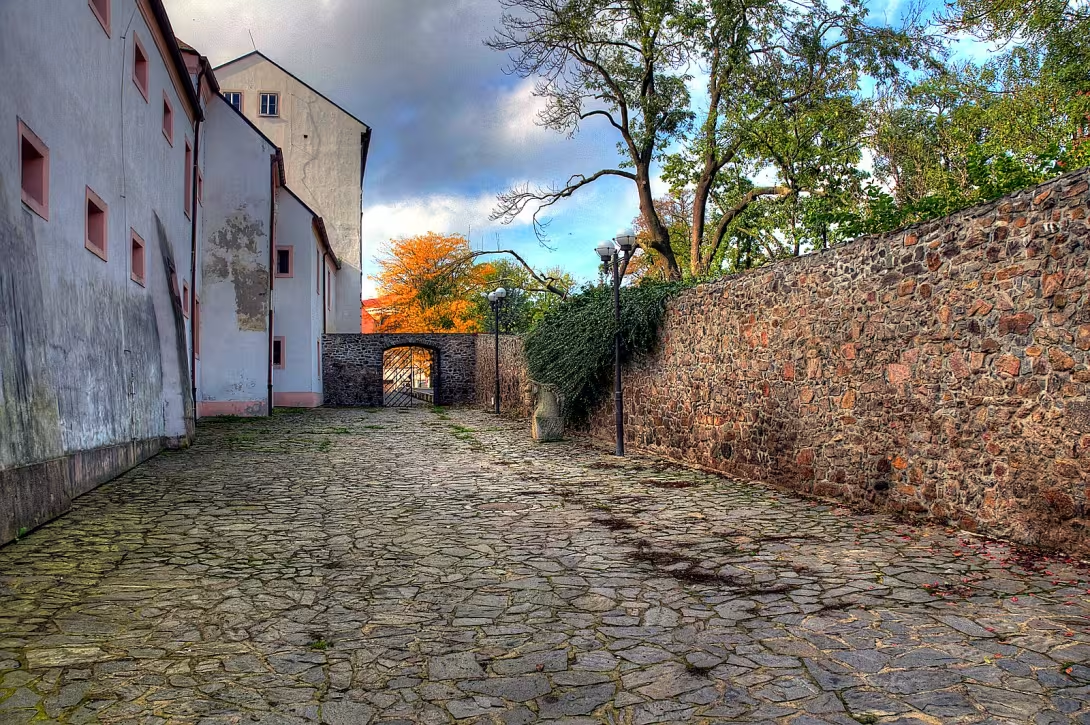
Objekt se nedochoval — na místě dnes nestojí. Následující text popisuje jeho historii, ne současnou návštěvu.
Prunéřovská brána stands as a testament to medieval fortification architecture in Kadaň, located within the Ústecký kraj region of the Czech Republic. Constructed at the turn of the 13th and 14th centuries, this Gothic gateway served as one of the main entrances to the royal town, highlighting its strategic importance during a period marked by urban growth and fortification in Bohemia under the Přemyslid dynasty. The gate's demolition in 1834 signified the end of an era for Kadaň’s robust defensive structures.
The origin of Prunéřovská brána is rooted in its role as a critical entry point to Kadaň, reflecting the broader trend during medieval times of enhancing urban defenses. The gate was part of a larger fortification system that included multiple layers of walls and moats designed to protect the town from potential threats. Its construction coincided with a period when trade and urban development were flourishing in Bohemia, necessitating fortified structures like Prunéřovská brána.
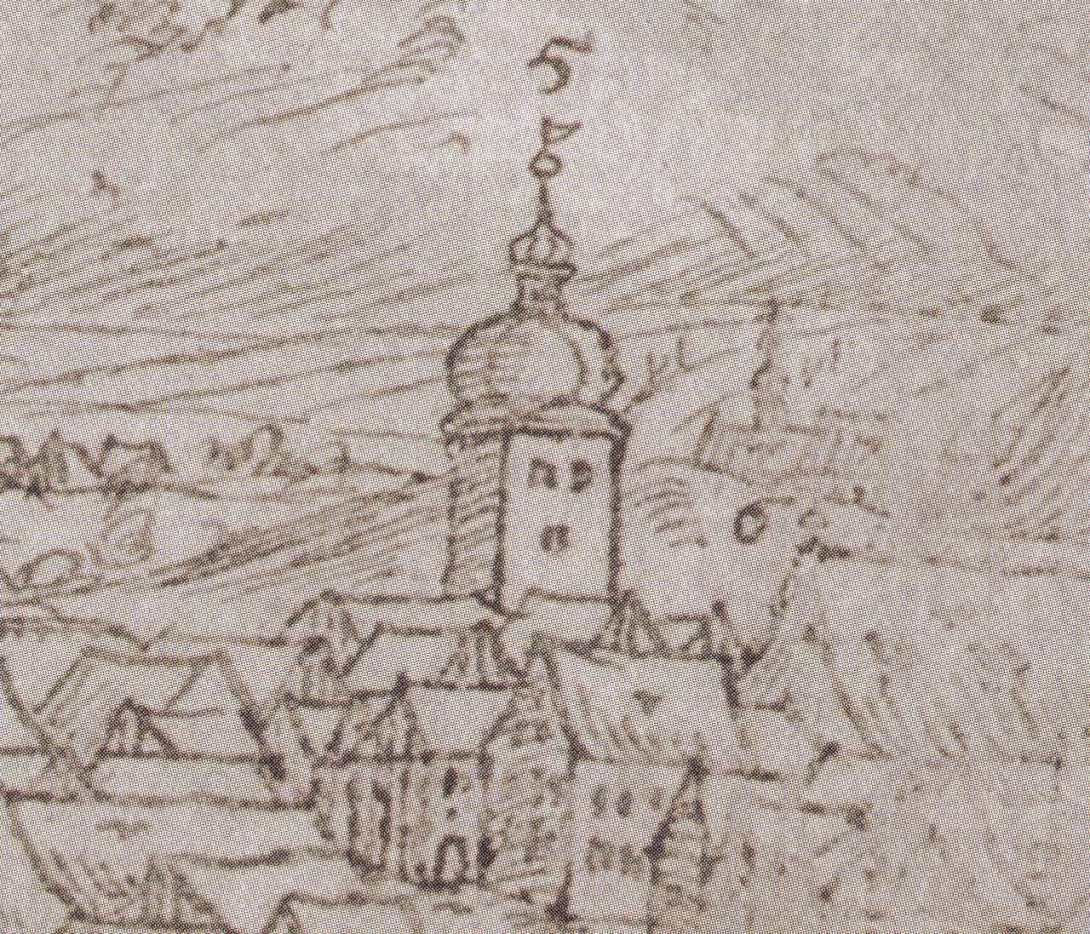
Architecturally, Prunéřovská brána underwent significant enhancements during the 15th century, most notably with the addition of a massive barbican. This feature was part of an effort to strengthen the town's defenses as fortification techniques evolved. The gate originally featured a cupola-like roof, as depicted in Jan Willenberg’s city view from 1602, showcasing its Gothic architectural style and importance within Kadaň’s urban landscape.
Throughout its history, Prunéřovská brána was integral to the town's defense system, which included three layers of walls with a moat that was later filled in. The surrounding area featured additional defensive structures such as the Minorite Monastery and various bašty (towers), including the Židovský templ and the Minoritská bašta. These elements underscored the strategic significance of Prunéřovská brána within Kadaň’s fortifications.
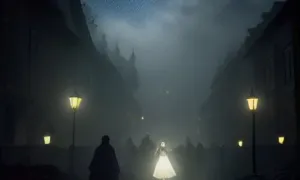
Key events associated with Prunéřovská brána include its role in controlling access to the town, as it was closed nightly until 1820. The surrounding Prunéřovské předměstí developed into a distinct urban area by the 13th century and played an important part in Kadaň’s expansion. A local legend adds intrigue to the site: Violanta, a mysterious woman said to forewarn of disasters, was reportedly seen near the gate before major fires in 1362 and 1811.
Today, Prunéřovská brána no longer stands, having been demolished in 1834 during urban fortification renovations. However, its historical significance remains evident through the remnants of medieval fortifications and structures like the Minorite Monastery that still exist in the area. Visitors can explore these sites to gain insight into Kadaň’s rich history and architectural heritage.
Prunéřovská brána's legacy as a key defensive structure offers valuable insights into medieval urban planning and architecture. Its historical context, coupled with local legends, makes it an intriguing site for those interested in the past of Kadaň. While the gate itself is no longer present, its story continues to captivate historians and tourists alike, inviting exploration of the surrounding area's enduring historical landmarks.
Then and now
Drag the slider to compare how the landmark may have looked when it was built with the view today.

The historical appearance on the left is an AI-generated visualisation and serves as inspiration only.
Historical milestones
- c. 1300
- The Prunéřov Gate was built as part of the city fortifications.
- 15th century
- The gate received a barbican to strengthen its defense.
- 1362
- Local legend: Violanta predicts a fire.
- 1811
- Local legend: Violanta again predicts a fire.
- 1820
- The gate was opened daily, ending an old practice.
- 1834
- The Prunéřov Gate was demolished during renovations.
Architectural development
Prunéřovská brána underwent significant architectural development in the 15th century when it was enhanced with a massive barbican. Originally featuring a cupola-like roof as depicted in Jan Willenberg's city view of 1602, the gate was part of Kadaň's evolving fortification system.
Historical events
The gate was constructed at the turn of the 13th and 14th centuries, serving as a key entry point to Kadaň.
In 1834, Prunéřovská brána was demolished during urban fortification renovations.
Points of interest
- The legend of Violanta adds a mystical layer to Prunéřovská brána's history; this enigmatic woman was said to appear near the gate before major fires in 1362 and 1811, hinting at her possible role as an omen or protector.
- Despite its demolition in 1834, remnants of Prunéřovská brána’s defensive structures, like the Minorite Monastery, continue to offer insights into medieval urban planning and architecture, preserving Kadaň's historical narrative.
- The gate was closed nightly until 1820, emphasizing its role not just as a physical barrier but also as a symbol of control over access to the town, reflecting the strategic importance placed on security during that era.
- Prunéřovská brána underwent significant architectural enhancements in the 15th century with the addition of a massive barbican, showcasing the evolution of fortification techniques and the continuous efforts to strengthen Kadaň’s defenses.
- The surrounding Prunéřovské předměstí developed into a distinct urban area by the 13th century, highlighting how the gate was integral not only for defense but also for facilitating the town's expansion and growth.
Guide
This guide is narrated by a synthetic voice generated by artificial intelligence.
Show guide text
This text was created by artificial intelligence and has not been editorially reviewed. It may contain inaccuracies.
Welcome to the historic site of Prunéřovská brána in Kadaň, Ústecký kraj. As you stand before this once-grand medieval gateway, imagine its towering presence as a sentinel guarding the fortified city. Though it no longer stands, its legacy endures through stories and remnants that echo its past grandeur.
Prunéřovská brána was constructed around 1300 at the turn of the 13th and 14th centuries, serving as one of the main entrances to this royal town. Its strategic importance is reflected in its Gothic architectural style, a testament to the era's craftsmanship and defensive ingenuity. Over time, it became more than just an entry point; it was a symbol of Kadaň’s strength.
As you take in your surroundings, notice how the site evokes the atmosphere of medieval fortifications. Although the gate itself is no longer standing, remnants suggest its once formidable structure. The surrounding area offers a glimpse into what would have been a bustling hub of activity as people entered and exited through this significant gateway.
One cannot discuss Prunéřovská brána without mentioning the intriguing legend of Violanta. This enigmatic figure adds a mystical layer to the site’s history. Local lore tells us that Violanta appeared near the gate before major fires in 1362 and again in 1811, hinting at her possible role as an omen or protector. Her presence is woven into the fabric of Kadaň's past, leaving visitors with a sense of wonder about what might have been.
In the 15th century, Prunéřovská brána was fortified further with the addition of a barbican, enhancing its defensive capabilities. This adaptation underscores how critical it was to protect the town from potential threats. Yet, by 1820, the gate had shifted from being a symbol of defense to one of daily passage, as it was opened each day for public access—a significant change in its role within the community.
Despite its importance and storied past, Prunéřovská brána met an end in 1834 when it was demolished during renovations. This marked not just the physical removal of a structure but also the end of an era of strong urban defense that had defined Kadaň for centuries.
As you continue your exploration, let the stories and history of Prunéřovská brána inspire your imagination. Picture its past life as part of a larger fortification system and ponder the countless lives it touched over the years. We invite you to delve deeper into Kadaň’s rich tapestry of history and discover more about this fascinating region.
Thank you for joining us on this journey through time at Prunéřovská brána. May your visit leave you with a lasting appreciation for the layers of history that shape our world today. Safe travels as you continue to explore!
Businesses nearby
Do you run a restaurant, accommodation, shop, museum, rental, wellness or other visitor service near this monument? Show yourself directly to the people heading to it — this is how they will see you in the app and on the web:
Nearby
The surrounding area includes remnants of medieval fortifications and the Minorite Monastery. The landscape features historical roads leading to nearby villages like Prunéřov.
Visualizations and artistic views


The visualisations are generated by artificial intelligence and serve as inspiration.
Photos from the area
Real photos taken near the monument


Zdroj a licence jsou uvedeny u každého snímku.
Tips from visitors
No tips yet. Be the first!
Log in and add your tip.
Sources and literature
Photos: Johann Willenberger / Public domain — Wikimedia Commons. The author and licence also appear when you hover over the image.
Faktickým podkladem tohoto textu byl článek na Wikipedii, jehož autory jsou přispěvatelé Wikipedie. Článek je dostupný pod licencí CC BY-SA 4.0.
Location on the map
More monuments – Kadaň
Show all in the municipality
Příběhy a pověsti
Legendy, pověsti a příběhy spjaté s touto památkou
Fotografie návštěvníků
Zatím žádné fotografie. Buďte první, kdo přidá fotografii z návštěvy!
Log in a přidejte svou fotografii nebo hodnoťte.
Za ověřenou návštěvu v aplikaci získáte víc bodů — poznáme podle GPS, že jste na místě.
Reviews and comments