



Rokoska Homestead
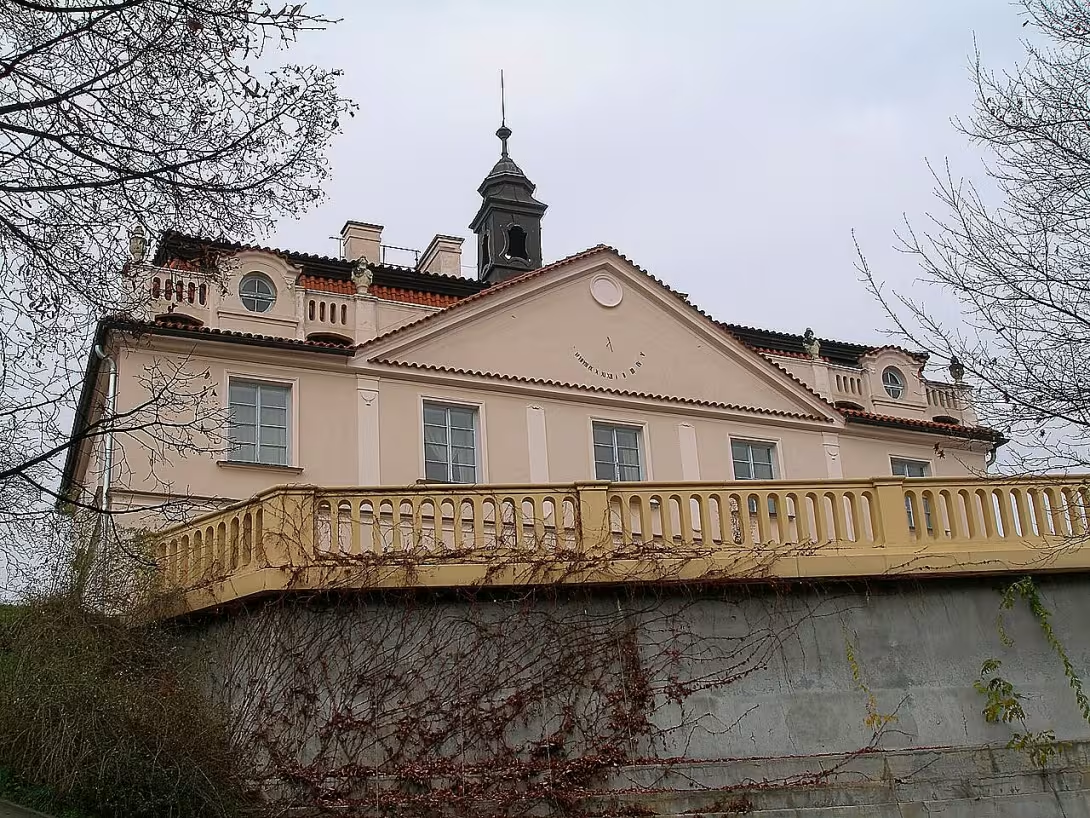
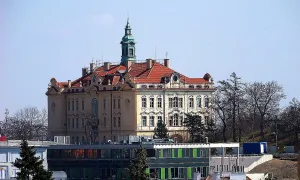
Rokoska is a Rococo manor with an adjacent former hoarder on a high-rise in Prague 8 in Libni. The object in its present form dates back to the last quarter of the 18th century. Since 1964 it has been registered as a real-estate cultural monument.
The current form of the estate was established in the last quarter of the 18th century. The author of the reconstruction was the owner of Prokop Gindela at the time, although other sources mention the city of Prague J. Štember. In the vicinity of the building there were at that time scattered vineyards which were later unified into one whole.
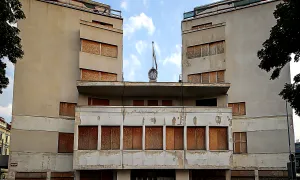
The castle is a storey building of a rectangular plan with dimensions of 21 × 11 meters with a mansard roof. The south facade ends with a large triangle shield with a sun clock. There's a four-sided turret on the ridge of the roof. The north facade is architecturally richer thanks to the side terraces and the rizalities with arcades on the first floor, which closes the triangle shield.
Throughout history, the object changed its function and its owners. After 1836, J. Lendecke bought the building, which turned it into a sugar factory. Since 1890, there has been a workhouse. In 1903 the castle was purchased by the Prague village and established a municipal governess. A separate building with a descriptive number 830 east of the castle was built for this institution in 1907, where it later moved.
West of the main building is the building of the former shouchau, probably from the 18th century, which in the 19th century underwent a barbaric reconstruction. In 1903 or 1907 it was converted into an extreme hall or chapel. During this adjustment, the wooden ceiling was removed, six windows were demolished in the longitudinal wall and the entrance in the eastern forehead was modified. The interior was paved and supplemented with linoleum, while the roof walls were undercut and pegged. Around the main wall there was a quarter-round factory with lunettes above the windows. Due to insufficient ventilation through the skylight, six ventilation vents were set up under the windows in 1935 and a awning was placed above the entrance. Later, the chapel was consecrated and used to store hospital tools. The building has a mansard roof and a facade with a segmented ledge and a triangular shield.
Rokoska presents an architectural very valuable example of Rococo architecture in Prague. Its visit allows for an insight into the variable fates of the estate, which served as a luxury residence, industrial and social facilities.
Then and now
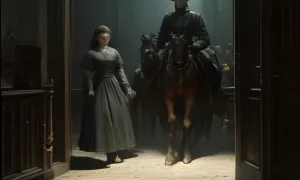
Drag the slider to compare how the landmark may have looked when it was built with the view today.
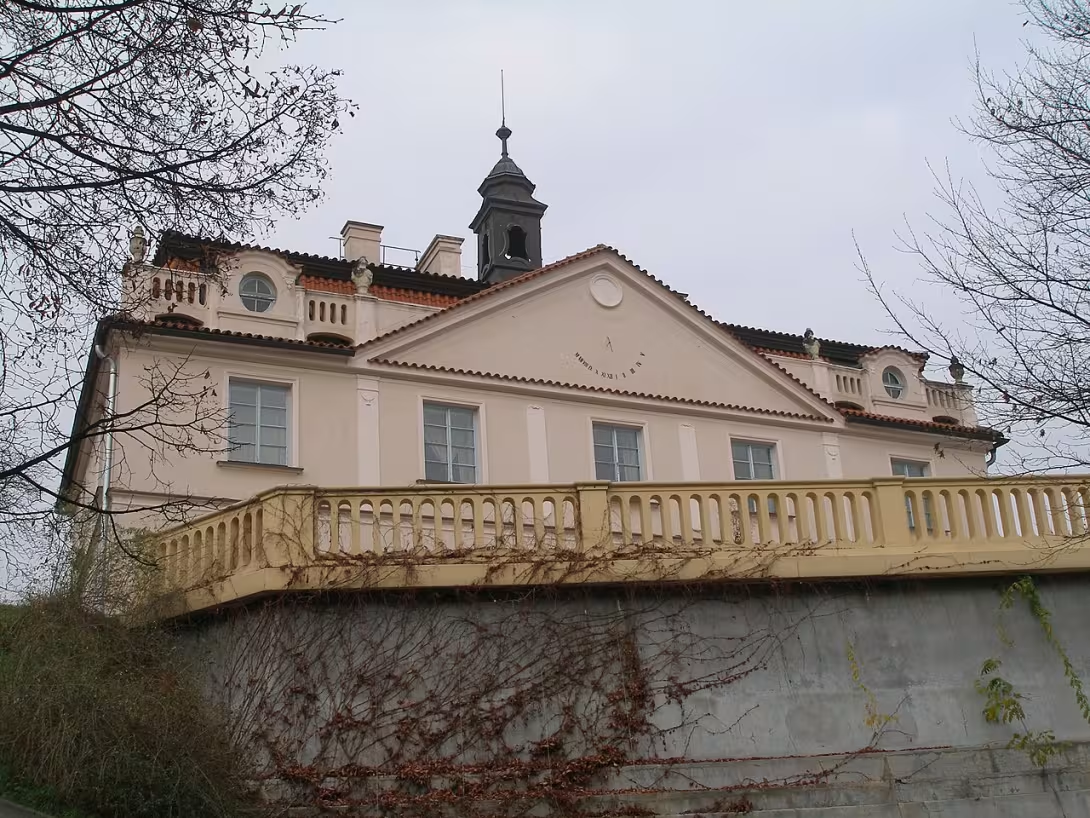
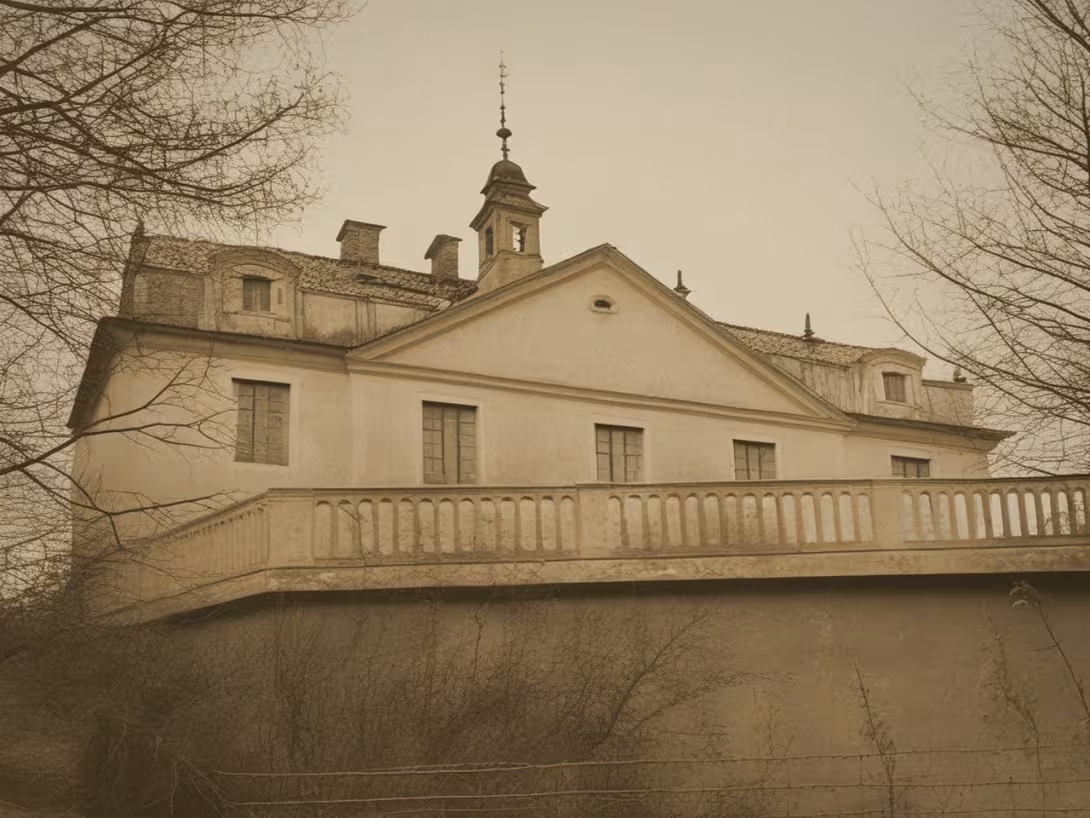
The historical appearance on the left is an AI-generated visualisation and serves as inspiration only.
Historical milestones
- 1836
- J. Lendecke bought the building and turned it into a sugar factory.
- 1890
- A workhouse was set up in the building.
- 1903
- The castle was bought by the Prague municipality for the needs of the town governess.
- 1907
- Beginning construction of a new building of a governess east of the castle.
- 1964
- The castle was declared a cultural monument.
Architectural development
In the last quarter of the 18th century, the estate was converted into a rococo style. The castle has a rectangular plan with a mansard roof, a tower and a risalite with arcades on the north front. The former 18th-century hoarder underwent a barbaric reconstruction in the 19th century and was converted into an extreme chapel in 1907.
Historical events
1836 - conversion of the building into a sugar factory, 1903 - purchase of a castle by prague municipality and establishment of a governess, 1964 - announcement of a real cultural monument
Owners
Prokop Gindela (last quarter of the 18th century), J. Lendecke (after 1836), Prague village (since 1903)
Points of interest
- Rokoska is the last quarter of the 18th century Rococo Castle, which has been a cultural monument since 1964. - The building has a Mansard roof, a turret, and a southern sun-clock shield. - Over time, it served as a luxury mansion, a sugar factory, a workhouse and a city governess. - The former 18th century hoarder was later rebuilt into a chapel and subsequently used to store hospital tools. - In the vicinity of the building there used to be scattered vineyards which were later unified.
Guide
Show guide text
This text was created by artificial intelligence and has not been editorially reviewed. It may contain inaccuracies.
Welcome to the Liberec part of Prague. You are standing right in front of a building that, by its appearance and location on a high surface, attracts the attention of anyone who passes by it. In front of you is Rokoska, an elegant castle, which is a silent witness to many of the changes that this place has been through over the centuries. The first impression of this construction is a sense of harmony and lightness, which is typical of the period in which it was completed in its present form.
Let us now look together at how this monument originated and what its historical context is. The building you see was rebuilt in the last quarter of the eighteenth century. At that time a seat was established, which was intended to emit the luxury and social position of its owners. Names associated with this place include, for example, Prokop Gindela. The whole complex was designed to benefit from the advantages of the terrain, making the castle very noble today. It is an architecturally very valuable object that completes the picture of the liberal landscape with its beauty.
Now pay attention to the architecture itself and the details that you can observe right in front of you. Please look up on the roof. Notice its specific shape, which is the so-called Mansard roof, which gives the building a characteristic silhouette. A small turret should not escape your eyes, which complements the overall appearance of the building. If you focus now on the south shield of the building, you'll see a sundial. These are tiny but very charming details that return us to a time when time was measured differently than using digital devices. The whole appearance of the building bears traces of Rococo style, which you can see from the softness and playfulness of the elements. The site also includes the building of the former Šhoškharu, which was a building designed to store grain, which, however, later served as a chapel.
When we stop over history, we find that Rokoska has experienced incredibly diverse fates in her life. It's fascinating how one building can serve such different purposes. Let's move on to the year one thousand eight hundred thirty-six. At that time, a man named Jan Lendecke bought the building. He decided to make the luxury mansion something completely practical and industrial, so he set up a sugar factory here. So imagine that there was once a boil of work in the spaces that are so peaceful today and a sweet mixture of sugar cane or sugar beet smelled.
But time went on and there were other changes. In the year one thousand eight hundred and ninety, the function of the building changed again, but this time it was aimed at helping the most needy. A workhouse was set up in the building, a place for people who find themselves in a difficult situation. The sugar factory has thus become an area of attack and welfare. Several years later, in the year one thousand nine hundred and three, the Prague municipality bought the building. The city was looking for a suitable place for the needs of the city's governess, which was a space for the education and education of children. This function was so significant that in the year one thousand and nine hundred and seven the construction of an entirely new building of the governess, which originated on the east side of the castle itself.
It is easy to imagine how generations of people were changing in these areas, from rich owners to workers in the sugar factory to children in the nursery. It is this level of history that makes Rokoska unique. In a thousand and nine hundred and sixty-four, the building was officially registered as a cultural monument, which ensured that its beauty and history would be preserved for future generations.
Where's the interesting thing in this story that might interest you? It's in this incredible contrast. There is very few buildings in Prague that would undergo such transformation in such a short period of time. From a luxury aristocratic mansion to industrial operations, to an institution for the poor to educational facilities. It's almost like a mirror of the social development of the whole city and its surroundings. Each of these stages left an invisible mark in the building. Now, if you look again at the facade and the sun clock, try to imagine how many different views of the world have been created in this house over the years.
Now that you know the story of this house, I suggest you observe it quietly for a while. Feel the atmosphere of this high rise and think about the people who lived and worked here. Rokoska is proof that although the functions of buildings change, their architectural value and spirit can last for decades and centuries.
Thank you for spending time with us at this beautiful memorial. Now you can continue to explore around Libna and discover other hidden corners of this city. We wish you a pleasant walk and many other beautiful experiences. Goodbye.
Tips for visitors
The best time to visit is late spring or summer, when the surrounding green is in full bloom and the building on the top excels in natural light. You can reach Libna by car and public transport; Check the specific connection in the current search engine.
For a walk we recommend to wear comfortable shoes because it is a construction in a high place. As it is a residential or economic building, the tour is possible only from the outside, so we recommend taking a telescope with us for a better view of the facade details.
For the best photos we recommend to come at late afternoon hour when the sun illuminates the rococo details of the castle. The most significant shots are taken from an angle that captures the position of the building on a high surface.
In addition to the castle itself there were large vineyards in the past, which gives the place a specific atmosphere. Families with children can use a visit to tell about what the winery in Prague looked like centuries ago.
Frequently asked questions
Can the monument be visited?
This is a residential or farm building, not a museum with opening hours. Please view it from public space and respect the owners' privacy. We have no information about access to the interior.
Where is the monument?
Location: Libeň. The map on this page shows the exact spot.
Why is the monument protected?
It is listed in the Central List of Cultural Monuments of the Czech Republic as a cultural monument (register no. 1000152766).
Businesses nearby
Do you run a restaurant, accommodation, shop, museum, rental, wellness or other visitor service near this monument? Show yourself directly to the people heading to it — this is how they will see you in the app and on the web:
Events nearby

Zdroj akcí: otevřená data měst a obcí ČR (Národní katalog otevřených dat) a kalendář akcí Národního památkového ústavu.
Nearby
V okolí stavby se v minulosti nacházely rozsáhlé vinice.
Accommodation nearby
Trips and activities nearby
Guided tours, tickets and activities nearby from GetYourGuide
Affiliate link: if you buy from the partner, we may receive a commission. The price for you does not change.
Search tours and activities →Themed route
Here is the design of the cruise route:
1. Rokoska (monument) - The main destination of the journey, where you can admire the unique structure and its architecture. 2. Vineyards (historical areas) - Walk through places where large wine-growing areas in the surrounding area of the building have been decomposed in the past.
Seasonal recommendations
In spring, the surrounding area of the building wakes up in green and fresh air gives new energy to the place. The best is to arrive in the morning when the colors are brightest and the sun gently illuminates the facade. We recommend shoes suitable for wet grass and a light jacket against the wind.
In the summer months, the atmosphere of heat and intense light dominates the building's details. Ideal is a visit in the early morning or late evening to avoid the sharp sun. It is advisable to choose light, breathable clothes and take water with you.
Autumn brings golden shades of leaves and melancholy mood to Libna, which approaches the historical appearance of the house naturally. Soft underevening light is ideal for watching the exterior. It's practical to carry a waterproof coat and mud-resistant shoes.
Zimą works in quiet and often in the dark of short days, which underlines its solitary character. Snow can change the appearance of the surroundings and give them purity. Hot clothing, lining of clothing and solid footwear with anti-slip sole are essential.
Visualizations and artistic views


The visualisations are generated by artificial intelligence and serve as inspiration.
Photos from the area
Real photos taken near the monument

Zdroj a licence jsou uvedeny u každého snímku.
Tips from visitors
No tips yet. Be the first!
Log in and add your tip.
Sources and literature
Photos: Jan Polák / CC BY-SA 3.0 — Wikimedia Commons. The author and licence also appear when you hover over the image.
Faktickým podkladem tohoto textu byl článek na Wikipedii, jehož autory jsou přispěvatelé Wikipedie. Článek je dostupný pod licencí CC BY-SA 4.0.
Location on the map
More monuments – Libeň
Show all in the municipality
Příběhy a pověsti
Legendy, pověsti a příběhy spjaté s touto památkou
Fotografie návštěvníků
Zatím žádné fotografie. Buďte první, kdo přidá fotografii z návštěvy!
Log in a přidejte svou fotografii nebo hodnoťte.
Za ověřenou návštěvu v aplikaci získáte víc bodů — poznáme podle GPS, že jste na místě.
Reviews and comments